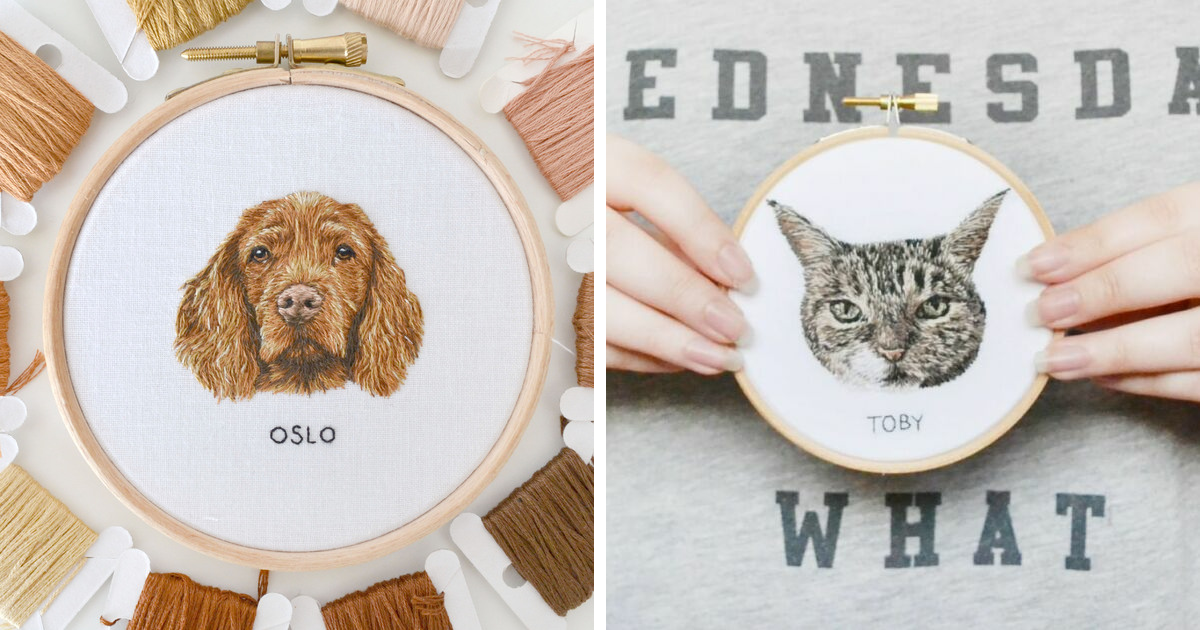
There are hobbies, there are side hustles, and then there is pet portrait embroiderythe glorious craft of staring at a dog’s eyebrow for 45 minutes and calling it “creative fulfillment.” I say that lovingly, because once you start stitching whiskers, floppy ears, and suspicious side-eyes into fabric, you realize something important: embroidered pet portraits are never just décor. They are memory, personality, inside jokes, and tiny celebrations of the animals who run our homes like furry little landlords.
That is exactly why I love making them. A good custom pet portrait does more than resemble a photo. It captures the spark in the eyes, the tilt of the head, the chaos of the fur, and the look that says, “Yes, I stole the sandwich, and I’d do it again.” In this collection, I’m sharing the 19 embroidered pet portraits I’m proudest ofnot because they are mathematically perfect, but because each one taught me something about texture, thread painting, color, and the emotional weight of handmade pet art.
Why Pet Portrait Embroidery Hits So Differently
There is a reason embroidered pet portraits have become such a beloved form of handmade pet art. Pets are family, and for many people, commissioning or creating a portrait feels more personal than buying a generic print off the internet. When the subject is a beloved dog, cat, rabbit, or bird, every stitch becomes intentional. The medium matters, too. Unlike a fast digital mockup, embroidery has texture, depth, and patience built right into it. You can literally see the labor of love.
That tactile quality is what makes thread painting so powerful. With layered stitches, subtle color changes, and careful direction in the thread, fur starts to look soft, eyes begin to glisten, and a flat surface suddenly feels alive. It is part art, part craft, part emotional damage courtesy of one especially expressive golden retriever.
My Best 19 Embroidered Pet Portraits
1. The Side-Eye Beagle
This portrait taught me that expression matters more than symmetry. The beagle’s face was adorable, sure, but the magic was in the skeptical side-eye. I used fine directional stitches around the muzzle and tighter satin-like stitching on the nose to keep the focus on that wonderfully judgmental look. It was the first time I felt like I had stitched personality, not just anatomy.
2. The Senior Golden With the Snowy Face
White fur sounds easy until you realize it is basically a puzzle made of cream, gray, pale tan, and shadow. This dog portrait embroidery piece pushed me to layer thread in soft gradients instead of treating light fur like blank space. The result felt gentle, warm, and a little emotionallike stitching a hug into a hoop.
3. The Black Cat With Copper Eyes
Dark fur is where embroiderers either become very brave or very dramatic. I chose both. To keep the cat from becoming a mysterious floating blob, I used multiple blacks, smoky grays, and hints of blue in the stitch direction. The copper eyes did the rest. They looked so intense that I felt like I owed the cat rent by the end.
4. The Smiling Rescue Pit Mix
Some portraits are beautiful because of precision. Others win because they radiate joy. This one had a goofy open-mouth smile, uneven ears, and the kind of happy expression that makes strangers say hello at the park. I leaned into bold contrast and warm thread colors to keep the portrait energetic and full of life.
5. The Persian Cat Who Looked Like Royalty
This cat portrait embroidery piece was all about volume. Long fur can go wrong quickly if the stitch direction does not make visual sense, so I mapped the flow of the coat before I stitched a thing. It took patience, and probably a small amount of muttering, but the final portrait had that fluffy, overqualified-to-judge-you elegance I wanted.
6. The Tiny Chihuahua in a Blue Sweater
Not every great pet portrait has to be ultra-serious. This one was ridiculously fun. The sweater added color, structure, and a break from all the usual fur blending. It also reminded me that accessories can help a portrait feel more specific. A tiny dog in knitwear is not just cuteit is branding.
7. The Hound With Velvet Ears
This work became one of my favorites because of texture alone. I angled the stitches in the ears differently from the face so the portrait would feel tactile even from a distance. The contrast between sleek ears and scruffier facial fur made the whole piece more believable. Sometimes realism comes from contrast, not complication.
8. The Tabby Cat Mid-Blink
Most people choose wide-open, camera-ready photos. This client chose a half-blink, and honestly, it was brilliant. The portrait felt intimate and unposed, like a private little moment. The stripes required careful thread changes, but the sleepy expression gave the whole piece charm. It looked like a cat who had exactly three opinions, and all of them were unprintable.
9. The Border Collie With Windblown Fur
Movement is tricky in embroidery because thread wants structure, while fur wants drama. Here, I used longer layered stitches and directional shifts to suggest motion around the neck and chest. The portrait felt alive, almost as if the dog had just turned toward the camera after hearing the word “walk.” That kind of energy is hard to fake and wonderful when it works.
10. The Memorial Portrait of a White Rabbit
This was one of the most meaningful works I’ve ever stitched. Memorial portraits require a different kind of care. You are not just making something pretty; you are creating an object people may treasure for years. I kept the background minimal, focused on the softness of the fur, and added the pet’s name in understated lettering. Quiet pieces can be the loudest emotionally.
11. The French Bulldog With One Ear Up
Frenchies are made for portraits because their faces are already tiny masterpieces of chaos. This one had one ear standing tall and one flopping slightly to the side, which gave it comic timing built right in. I emphasized the facial folds with subtle shadow threads instead of harsh outlines so the piece stayed sweet, not cartoonish.
12. The Calico in a Sunbeam
Calico cats are basically color theory exams with whiskers. Cream, orange, black, and warm reflected light all had to work together without turning muddy. This portrait forced me to slow down and make better decisions about thread temperature. It ended up being one of the most painterly pieces in the collection, which felt appropriate for such a gloriously complicated cat.
13. The Pair Portrait: Two Labs, One Hoop
Stitching two pets in one composition is a balancing act. You want them to feel like a pair, but each still needs an individual presence. One dog was serious, the other looked like he had never completed a single thought in his life. Capturing both expressions without making the composition crowded was the real challenge, and that is exactly why I still love this piece.
14. The Dachshund Puppy With Giant Paws
Puppy portraits are dangerous because they are almost too cute to handle responsibly. This one worked because I resisted over-detailing. Instead of obsessing over every hair, I focused on proportion, soft transitions, and the oversized paws that made the puppy look permanently surprised by gravity. It was playful, fresh, and impossible to dislike.
15. The Gray Cat on Olive Linen
Background fabric can make or break a portrait. On this piece, I skipped plain white and used olive linen, which made the cat’s silver fur look richer and the green eyes pop. It reminded me that embroidered pet portraits are not only about the animal; they are also about the mood created by fabric, spacing, and color choices around the subject.
16. The Cocker Spaniel With Impossible Curls
Curls are where embroidery humbles you. Fast. I used overlapping stitch directions and multiple thread lengths to suggest the layered bounce of the ears. It took forever, and by “forever,” I mean enough time to reconsider several life choices. Still, the finished piece had dimension and softness that made the effort worth every dramatic sigh.
17. The Pet Memorial Hoop With Wildflowers
Some of my favorite pet memorial gift designs include small floral details because they soften the portrait without distracting from it. In this hoop, the wildflowers framed the pet’s face and gave the piece a keepsake feel. It was tender without being overly sentimental, which is a hard line to walk and exactly why I consider it one of my best.
18. The Mischievous Orange Cat
Orange cats come with energy. This one had a lopsided smirk and bright, almost comically alert eyes. The trick was not overworking the fur. Ginger coats can lose their sparkle when you muddy the tones, so I kept the palette crisp and let the expression do the heavy lifting. The result looked like a cat planning something illegal but charming.
19. The “Just Because” Mixed-Breed Portrait
Not every commissioned portrait is for a birthday, adoption anniversary, or memorial. This one was simply because someone loved their dog and wanted that love hanging on the wall. Honestly, I think that spirit sums up the whole art form. This portrait was warm, uncomplicated, and full of affection. No grand backstory. Just devotion in thread.
What Makes a Great Embroidered Pet Portrait?
After stitching enough noses, whiskers, and suspiciously fluffy necks, I’ve learned that great pet portrait embroidery usually comes down to five things: a clear reference photo, thoughtful thread color choices, smart stitch direction, restraint in the details, and emotional accuracy. That last one matters most. A portrait can be technically strong and still feel flat if it misses the animal’s vibe.
Good materials help, too. A sturdy hoop, suitable fabric, reliable floss, and the right needle make the process smoother. Basic stitches go a long way, especially when you use them with intention. Long-and-short stitching helps with blending; satin-style areas can create shine and structure; careful linework can define the eyes, mouth, and tiny features that make the portrait recognizable. Fancy supplies are nice, but observation is everything.
What I’ve Learned From Embroidering Pets
Embroidery has taught me that pet lovers notice details other people miss. They will spot the exact white patch on the chest, the tiny scar near the eyebrow, or the one ear that never fully cooperates. Those details are not flaws. They are the biography. In fact, the so-called imperfections are often what make a custom pet portrait embroidery piece feel emotionally true.
I’ve also learned that handmade portraits sit in a special place between art and memory. They can be playful, decorative, funny, elegant, or deeply sentimental all at once. That makes them incredibly satisfying to create and even more satisfying to give.
More Experience From the Hoop: The Real Story Behind These 19 Works
If I had to describe the experience of making these 19 portraits in one sentence, it would be this: every pet teaches me a new way to see. That might sound poetic, but embroidery has a way of forcing honesty. You cannot bluff your way through fur direction. You cannot fake a soulful eye with lazy stitching. And you definitely cannot rush a nose and expect the portrait to forgive you later.
What surprised me most over time was how emotional the process became. At first, I was focused on technical improvementhow to blend thread better, how to choose fabric, how to keep the stitches clean. Then clients started telling me stories. This dog helped them through college. That cat slept beside them every night for 14 years. That rabbit belonged to a child who wanted “one more thing to remember him by.” Suddenly, I was not just making embroidery art. I was handling memory in a very physical form.
That changed how I work. I spend more time studying reference photos now, especially the tiny details that say something real. A crooked tooth. A wonky whisker pattern. The way one eye looks slightly more mischievous than the other. Those details are rarely dramatic, but they are often the reason a client says, “That’s exactly my pet.” And that reaction never gets old.
I also learned that not every portrait needs to chase photo realism at all costs. Some of my strongest pieces are the ones where I left room for softness and interpretation. A portrait can still be accurate without becoming stiff. Sometimes the best decision is to simplify the chest fur, loosen the background, or let the thread texture speak for itself. Handmade art should still look handmade. That is part of its charm.
Then there is the humor. Pets are funny. Even the dignified ones are one yawn away from looking ridiculous. Some of my favorite portraits came from photos that were not conventionally “perfect,” but absolutely perfect for the animal. A tongue slightly out. A dramatic blink. A face that says, “I heard a snack wrapper from three rooms away.” Those pieces have life because they are honest. People do not just want a beautiful portrait. They want their pet.
On a practical level, these works also made me more patient. Embroidery rewards consistency more than speed. A portrait grows one decision at a time, one strand at a time, one small correction at a time. There is something deeply satisfying about that. In a world obsessed with fast content and instant output, hand embroidery asks you to slow down and really look. That may be the biggest reason I keep coming back to it.
So when I look at these 19 works, I do not just see finished hoops. I see lessons in observation, restraint, storytelling, and affection. I see dogs, cats, and other beloved animals who mattered enough to be stitched carefully and remembered beautifully. And honestly, that feels like a pretty wonderful way to spend my timeone eyebrow, one ear, and one impossibly cute face at a time.
Conclusion
I Embroider Pet Portraits, And Here Are My Best 19 Works is really a story about more than embroidery. It is about why pet portrait embroidery continues to resonate: because it turns affection into something tangible. Whether the portrait is funny, formal, colorful, or created as a memorial, the goal is the sameto make people feel like their pet has been truly seen. And when that happens, a hoop of thread becomes much more than wall art. It becomes a keepsake.