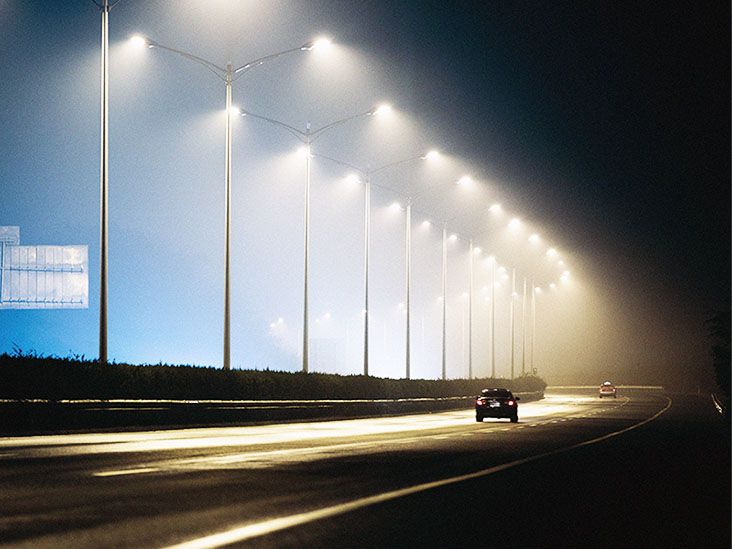
Have streetlights started looking as though they are auditioning for a science-fiction mog lines, traffic signals wear fuzzy halos, or every tiny bulb becomes a dramatic starburst. These effects are often called astigmatism lights, although astigmatism does not create light from nowhere. Instead, it changes how the eye focuses light that is already present.
Astigmatism is a common refractive error caused by uneven curvature in the cornea, the clear front surface of the eye, or sometimes the lens inside the eye. Rather than bringing incoming light to one sharp focus on the retina, the eye focuses it unevenly. The result may be blurred, stretched, shadowed, or distorted vision at both near and far distances.
The unusual appearance of lights is often most obvious after dark, but nighttime glare is not automatically proof of astigmatism. Dry eye, cataracts, keratoconus, an outdated prescription, contact lens problems, and other eye conditions can produce similar symptoms. Understanding what astigmatism lights may look likeand when to schedule an eye examinationcan help you see the situation more clearly, both literally and figuratively.
What Do Astigmatism Lights Look Like?
There is no single pattern that everyone with astigmatism sees. Online comparison pictures can be useful illustrations, but they are simulations rather than diagnostic tests. The appearance depends on the strength and orientation of the astigmatism, whether nearsightedness or farsightedness is also present, pupil size, tear-film quality, lighting conditions, and whether the person is wearing an accurate prescription.
Common descriptions of astigmatism lights include:
- Streaks: Light appears to extend vertically, horizontally, or diagonally from a headlight, lamp, or illuminated sign.
- Starbursts: Multiple thin rays seem to radiate outward from a bright point.
- Halos: A hazy ring or glow surrounds the light source.
- Ghost images: A second, faint copy of the light appears beside or above the original.
- Smearing: The light looks dragged across part of the visual field, as though someone wiped a wet paintbrush over it.
- General glare: Bright lights feel excessively large, harsh, or dazzling and may temporarily reduce contrast.
Some people notice only mild fuzziness. Others find that oncoming headlights resemble tiny exploding suns. The effect may occur in both eyes, although it can be stronger in one. It can also change after blinking, particularly when dry eye contributes to the distortion. Astigmatism can cause blurred or distorted vision at all distances, as well as squinting, eyestrain, headaches, and difficulty driving at night.
Why Astigmatism Distorts Light
How a normally focused image forms
In a well-focused optical system, the cornea and lens bend incoming light so that it meets at a precise location on the retina. The retina converts that light into signals that travel to the brain, where they are interpreted as an image.
What changes with astigmatism
With astigmatism, different areas of the cornea or lens have different focusing powers. A popular comparison is that a typical cornea is shaped more like a basketball, while an astigmatic cornea is curved more like a football. The analogy is not anatomically perfect, but it captures the central idea: one direction is curved differently from another.
Because light does not converge at one clean point, fine details lose sharpness. A tiny point of light may be spread into a line, oval, flare, or irregular blur. The same optical problem can soften printed letters, distant road signs, facial details, and the edges of objectsnot just headlights.
Why Astigmatism Lights Often Look Worse at Night
Astigmatism does not necessarily become stronger when the sun goes down. The viewing conditions simply make its effects harder to ignore.
Your pupils become larger
In dim environments, the pupils expand to allow more light into the eyes. A larger pupil exposes more of the cornea and lens, including peripheral areas where optical imperfections may be more noticeable. More scattered or imperfectly focused light can therefore reach the retina.
Bright lights sit against dark backgrounds
A glowing headlight surrounded by darkness creates extreme contrast. Even a modest blur becomes obvious because the scattered light spills into an otherwise dark area. During the day, surrounding brightness can make the same distortion less noticeable.
Night vision already has limitations
Low-light conditions reduce visual detail, color discrimination, contrast sensitivity, and depth perception. Add glare from wet pavement, reflective signs, dirty windshields, or modern high-intensity headlights, and the eyes have quite a complicated evening shift. Night vision problems can include blur, glare, and halos, and they can affect driving safety.
Are Halos and Starbursts Always Caused by Astigmatism?
No. Although astigmatism is a common cause of distorted lights, similar effects can arise from several other conditions.
Dry eye
A stable tear film helps create a smooth optical surface. When the surface becomes dry or irregular, lights may develop halos, blur, or glare. Symptoms that improve briefly after blinking may suggest that tear quality is contributing, although an examination is needed to identify the cause.
Nearsightedness or farsightedness
Uncorrected myopia or hyperopia can make lights appear fuzzy, particularly at a distance. These refractive errors frequently occur alongside astigmatism, so more than one prescription component may need correction.
Cataracts
A cataract clouds the eye’s natural lens and scatters light. Common symptoms include hazy vision, light sensitivity, difficulty seeing at night, fading colors, and increased glare from headlights. Cataracts generally become more common with age and cannot be diagnosed by looking at an online astigmatism chart.
Keratoconus and irregular astigmatism
Keratoconus occurs when the cornea becomes thinner and gradually bulges outward. It can produce increasing or irregular astigmatism, rapidly changing prescriptions, glare, light sensitivity, and distorted vision. A person whose correction changes frequently or who cannot achieve clear vision with ordinary glasses may need corneal mapping and further evaluation.
Contact lens or eyeglass issues
A smudged lens, scratched coating, poorly centered frame, rotating toric contact lens, or outdated prescription can all create extra blur. New glasses may also require a brief adjustment period, but persistent streaking or discomfort deserves a prescription and fitting check.
Eye surgery
Some people notice glare, halos, or starbursts after cataract or refractive surgery. These effects may improve during healing, but persistent or severe symptoms should be discussed with the surgeon. Certain artificial lens designs and laser procedures can produce low-light visual effects even when daytime acuity is good.
Astigmatism Lights Versus Flashes of Light
This difference matters. Astigmatism generally changes the appearance of a visible light source. A streetlamp may streak, but the streetlamp is still there. Retinal flashes can occur without an external light and may resemble lightning, sparks, or a camera flash at the side of the visual field.
Seek urgent eye care for a sudden shower of new floaters, repeated flashes, a dark curtain or shadow, or sudden vision loss. These may be warning signs of a retinal tear or retinal detachment, which requires prompt treatment. Severe eye pain, redness, headache, nausea, and rainbow-colored halos also warrant urgent medical assessment rather than a leisurely experiment with new glasses.
How Astigmatism Is Diagnosed
A comprehensive eye examination is more reliable than closing one eye, staring at a traffic light, and conducting an amateur investigation in the grocery-store parking lot.
The examination may include:
- Visual acuity testing to measure how clearly each eye sees at different distances.
- Refraction to determine the sphere, cylinder, and axis values needed for corrective lenses.
- Slit-lamp examination to inspect the cornea, lens, tear film, and other eye structures.
- Keratometry or corneal topography to measure corneal curvature and identify regular or irregular astigmatism.
- Dilated retinal examination when symptoms or medical history suggest a need to inspect the retina and optic nerve.
The cylinder value on an eyeglass prescription represents the amount of astigmatism correction, while the axis describes its orientation. These numbers are useful for making lenses, but they do not reliably predict exactly how a person will describe every headlight or holiday decoration.
How Astigmatism Lights Are Treated
Prescription eyeglasses
Glasses are the simplest and most common treatment. Cylindrical lens power compensates for uneven focusing and can sharpen both ordinary objects and bright lights. An anti-reflective coating may reduce distracting reflections from the front and back surfaces of the lenses, but it does not replace an accurate prescription or cure astigmatism.
Toric contact lenses
Soft toric contact lenses are designed to correct astigmatism while remaining in a stable orientation on the eye. Rigid gas-permeable and scleral lenses may provide clearer vision for some people with higher or irregular astigmatism. Contact lenses require professional fitting, appropriate replacement, careful cleaning, and prompt attention to redness or pain.
Refractive surgery
Procedures such as LASIK or PRK may reshape the cornea to reduce certain forms of astigmatism. Candidacy depends on prescription stability, corneal thickness and shape, tear-film health, age, expectations, and other clinical factors. Surgery may reduce dependence on glasses, but no responsible consultation should advertise it as a guaranteed ticket to superhero vision.
Treatment of an underlying condition
When glare comes from dry eye, cataracts, keratoconus, corneal swelling, or another disorder, simply changing the cylinder power may not solve the problem. Treatment must address the actual cause.
Practical Ways to Reduce Nighttime Glare
- Wear your current prescription consistently, especially when driving.
- Schedule an eye examination if the prescription seems weaker or night vision has changed.
- Clean eyeglasses, contact lenses, mirrors, and the inside and outside of the windshield.
- Replace heavily scratched lenses rather than polishing them with optimism.
- Use properly aimed headlights and keep the dashboard at a comfortable, lower brightness.
- Avoid staring directly into oncoming headlights; guide your gaze toward the lane markings instead.
- Do not drive at night when glare prevents you from seeing pedestrians, signs, or lane boundaries safely.
- Discuss dryness, allergy symptoms, contact lens discomfort, or fluctuating vision with an eye-care professional.
Dark or strongly tinted “night-driving glasses” can reduce the amount of light reaching the eyes, which may be counterproductive in already dim conditions. A clear, accurate prescription and clean optical surfaces are usually more useful starting points than mystery lenses marketed with pictures of neon sports cars.
Astigmatism in Children
Children may not realize that their vision is blurry because they have no clearer experience for comparison. They may squint, sit close to screens, lose interest in reading, complain of headaches, tilt their head, or struggle to recognize details at a distance.
Significant uncorrected refractive error can interfere with normal visual development and may contribute to amblyopia, commonly called lazy eye. Routine vision screening and comprehensive examinations when concerns arise are therefore important. Children with astigmatism are commonly treated with cylindrical eyeglass lenses, while other options may be considered later depending on age and individual needs.
Frequently Asked Questions About Astigmatism Lights
Can someone have astigmatism and still see 20/20?
Yes. A person with mild astigmatism may read the standard eye chart well under bright clinical lighting yet still notice ghosting, glare, or reduced contrast at night. Visual acuity is important, but it does not measure every aspect of visual quality.
Does squinting improve astigmatism?
Squinting can temporarily narrow the opening through which light enters and reduce some blur. It does not reshape the cornea or treat the underlying refractive error. Frequent squinting is a reason to have the prescription checked, not a long-term vision strategy.
Can astigmatism change over time?
Yes. Astigmatism may remain stable, change gradually with age, or shift because of changes in the cornea or lens. A rapid or substantial change, especially in one eye, should be evaluated for causes such as keratoconus or other corneal conditions.
Do all people with astigmatism see long light streaks?
No. Some see streaks, while others notice halos, starbursts, double edges, general fuzziness, or no special light effect at all. The absence of dramatic nighttime streaks does not rule out astigmatism, and seeing them does not confirm it.
Real-World Experiences With Astigmatism Lights
The following composite scenarios illustrate commonly reported experiences. They are not individual medical testimonials and should not be used for self-diagnosis.
The nighttime commute that suddenly feels harder
A driver may see comfortably during the day but feel tense after sunset. Oncoming headlights seem wider than the vehicles producing them, and each streetlamp has a soft tail extending downward. Rain makes the effect more dramatic because every wet surface reflects additional light. The driver leans forward, squints, and slows downnot because the road has changed, but because visual contrast has.
An examination might reveal mild astigmatism that was previously uncorrected or an older prescription that no longer provides crisp distance vision. After receiving updated glasses, the lights may not become perfectly tiny pinpoints, but lane markings, signs, and vehicle edges can become noticeably clearer. The greatest improvement is often not cinematic sharpness; it is reduced effort. The person arrives home without feeling as though every headlight challenged them to a staring contest.
Vision that changes after hours at a screen
Another person may notice that office lights and text become smeared late in the afternoon. Morning vision seems acceptable, but after several hours of computer work, small white letters on a dark screen develop shadows. Blinking temporarily sharpens them. At night, traffic signals appear surrounded by haze.
That pattern can involve both astigmatism and an unstable tear film. Concentrated screen use often reduces normal blinking, allowing the eye’s surface to dry between blinks. An eye-care professional may check the prescription while also evaluating eyelids, tear quality, contact lens wear, and environmental factors. Correcting only one part of the problem may leave the other part waving cheerfully from the sidelines.
The new glasses that feel strange
A first-time wearer of astigmatism correction may initially feel that floors slope, doorframes lean, or objects look slightly stretched. The brain has adapted to an old pattern of blur and now has to interpret a sharper but optically different image. Mild adjustment symptoms often settle as the wearer uses the glasses consistently.
However, severe distortion, headaches that continue, poor vision in one eye, or lights that look worse rather than better should prompt a recheck. The frame may be sitting incorrectly, the lenses may not be centered as intended, or the prescription may require verification. “You will get used to it” should not become an eternal subscription plan.
The child who never complained
A child may pass through several school years without saying that the board is blurry. Instead, the child avoids detailed reading, moves close to the television, or assumes that everyone sees glowing tails around holiday lights. A screening or comprehensive examination identifies astigmatism, and glasses provide a level of clarity the child did not know was missing.
The initial reaction may be delight at seeing individual leaves on trees, followed five minutes later by disappointment that glasses must be kept clean. For parents, the important lesson is that children do not always describe blurry vision directly. Changes in school performance, eye comfort, squinting, or viewing distance can be useful clues.
When familiar glare changes suddenly
A person with lifelong astigmatism may know exactly how headlights usually appear. If the pattern suddenly changes in one eye, becomes accompanied by pain, or arrives with flashes, new floaters, or a curtain-like shadow, it should not be casually blamed on the old prescription. Familiar astigmatism tends to create a repeatable distortion of external lights; new neurological or retinal-style phenomena require proper assessment.
Keeping track of when symptoms began, whether they affect one or both eyes, whether blinking changes them, and whether they occur only around visible lights can help the eye-care professional narrow the possibilities. The goal is not to become your own ophthalmologist. The goal is to provide useful observations while leaving the microscopes, measurements, and difficult vocabulary to the people who keep those things in their offices.
Conclusion
Astigmatism lights may appear as streaks, halos, starbursts, ghost images, or diffuse glare because an uneven cornea or lens prevents light from focusing at one precise point. The effects often stand out at night, when pupils are larger and bright lights contrast sharply with dark surroundings.
Still, nighttime glare has many possible causes. An accurate diagnosis may require refraction, corneal measurements, tear-film evaluation, lens examination, and sometimes a dilated retinal examination. Most regular astigmatism can be managed effectively with glasses or properly fitted contact lenses, while selected adults may consider refractive surgery.
If distorted lights interfere with driving, reading, work, or daily comfort, schedule a comprehensive eye examination. Seek urgent care for sudden flashes, numerous new floaters, a curtain-like shadow, sudden vision loss, or painful red eyes with halos.
Note: This article provides general educational information and does not replace an examination, diagnosis, or treatment plan from a licensed optometrist or ophthalmologist.