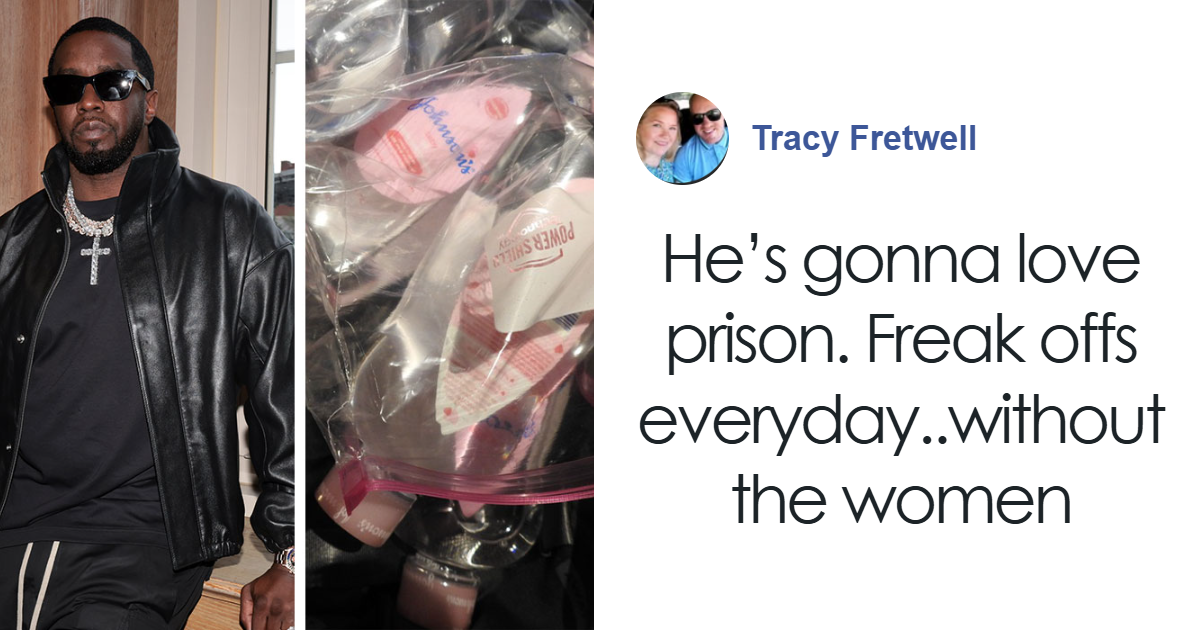
In a courtroom saga already loaded with celebrity shockwaves, federal prosecutors introduced photos they said helped explain how Sean "Diddy" Combs allegedly prepared for the sexual encounters witnesses called "freak offs." The images, presented during testimony in his Manhattan federal trial, showed items such as baby oil, lubricant, mood lighting, drugs, cash, and other objects investigators said they found in hotel rooms and residences connected to Combs.
But this was not simply a case of tabloid curiosity meeting courtroom exhibit labels. Prosecutors used the photos as part of a broader argument: that the events were not spontaneous, private adult encounters, but organized, resourced, and allegedly controlled activities tied to coercion, abuse, and transportation for prostitution. Combs’ defense rejected the government’s framing, arguing that the sexual activity was consensual and that prosecutors had exaggerated a messy, damaging personal life into a criminal enterprise.
The trial ultimately ended with a mixed verdict. Combs was acquitted of the most serious racketeering conspiracy and sex trafficking counts, but convicted on two prostitution-related counts under the Mann Act. Later, he was sentenced to 50 months in federal prison, fined $500,000, and ordered to serve five years of supervised release. His legal team has pursued an appeal, arguing in part that the sentence improperly relied on conduct tied to counts the jury rejected.
Why the Photos Became Central to the Diddy Trial
Photos can be deceptively powerful in court. A witness may stumble, a lawyer may object, a juror may miss a detail during testimonybut a photograph sits there, silent and stubborn, saying, "Look at me." In Combs’ trial, prosecutors leaned on images to connect testimony about "freak offs" with physical evidence they said showed preparation, repetition, and control.
According to reporting on the trial, Homeland Security presented photos from Combs’ Park Hyatt New York hotel suite after his September 2024 arrest. The images reportedly included baby oil, Astroglide lubricant, a lighting device described as "mood lighting," a Louis Vuitton bag, medication tied to the alias "Frank Black," pink powder that tested positive for ketamine and MDMA, and a black fanny pack containing $9,000 in cash.
Prosecutors also showed evidence photos from searches of Combs’ homes, including images of baby oil, lubricant, intimate items, drugs, ammunition, and firearms. These exhibits were not introduced merely to provoke gaspsalthough, let’s be honest, the internet gasped so loudly you could hear it through the Wi-Fi. The prosecution’s point was that the objects lined up with witness testimony describing elaborate, recurring sexual events that allegedly required planning, supplies, travel, drugs, and staff assistance.
What Witnesses Said About the So-Called "Freak Offs"
Casandra "Cassie" Ventura, Combs’ former girlfriend and one of the prosecution’s key witnesses, testified that the "freak offs" were highly choreographed. She described large quantities of baby oil, sexual activity involving paid men, drug use, filming, and emotional pressure. In one widely reported portion of testimony, she said a typical event could involve roughly 10 large bottles of Johnson’s baby oil and that the oil was sometimes heated in hot water before use.
Ventura’s testimony was difficult and graphic, but the courtroom importance was straightforward: prosecutors sought to show that these encounters were allegedly orchestrated by Combs and that Ventura participated under coercive conditions. Her account described not just sexual activity, but controlover her appearance, schedule, emotional life, career, and sense of safety.
The defense, however, pushed back hard. Combs’ lawyers emphasized messages, relationship complexity, and consent. They admitted that Combs had engaged in domestic abuse, but argued that abuse did not equal sex trafficking or racketeering. Their case asked jurors to separate moral condemnation from criminal conviction. In other words: bad behavior, they argued, is not automatically every crime prosecutors charged.
Inside the Evidence Photos: Baby Oil, Lubricant, Drugs, Cash, and Mood Lighting
The newly released and courtroom-presented photos attracted attention partly because of their specificity. Baby oil became an unlikely recurring symbol of the triala household product dragged from the bathroom shelf into federal court, where nobody was asking for skincare tips.
Baby Oil and Lubricant
Investigators said they found bottles and bags of baby oil and lubricant in Combs’ hotel suite and homes. Prosecutors argued these items matched testimony about the supplies used during "freak offs." In isolation, baby oil proves very little. In context, prosecutors said it helped corroborate accounts of repeated events with a particular pattern.
Mood Lighting
Photos from the Park Hyatt suite reportedly included a lighting device. Prosecutors treated this as one more detail in what they portrayed as preparation for staged sexual encounters. The significance was not that lighting is inherently suspiciousAmerica’s living rooms would be in trouble if it werebut that witnesses had described a controlled setting with specific atmosphere, supplies, and instructions.
Pink Powder and Prescription Bottles
According to testimony and reporting, investigators found pink powder in a medication bottle, and testing indicated ketamine and MDMA. Drugs were a recurring element in witness testimony about the alleged events. Prosecutors argued that narcotics helped show the environment in which the encounters occurred and supported their broader theory of coercion and impaired consent.
Cash
The reported $9,000 in cash found in a fanny pack also mattered because prosecutors alleged that paid male escorts were transported and compensated in connection with the events. Cash by itself is not a crime; cash plus testimony about payments, travel, and sexual services became part of the government’s Mann Act theory.
How Prosecutors Used the Photos to Build a Larger Story
Evidence photos rarely win a case alone. Prosecutors typically use them as puzzle pieces. In this trial, the photos supported a timeline: witnesses described "freak offs," investigators showed items allegedly connected to those events, and prosecutors argued the pattern demonstrated planning and control.
The government’s charging theory began with sweeping allegations. The federal indictment accused Combs of abusing, threatening, and coercing women and others while leading an alleged racketeering conspiracy involving sex trafficking, forced labor, kidnapping, arson, bribery, and obstruction. At trial, however, the jury did not accept all of those allegations as proven beyond a reasonable doubt.
That distinction is crucial for any responsible article about the case. Prosecutors presented dramatic evidence, but a jury acquitted Combs of racketeering conspiracy and two sex trafficking counts. The same jury convicted him of two counts of transportation to engage in prostitution. The courtroom story, therefore, is not "prosecutors said it, so it became fact." It is: prosecutors alleged, witnesses testified, evidence was shown, jurors accepted some charges and rejected others.
The Defense Strategy: Consent, Exaggeration, and Legal Boundaries
Combs’ defense did not pretend the trial evidence was flattering. Instead, his lawyers argued that prosecutors were trying to criminalize consensual sexual behavior and repurpose a chaotic, abusive relationship into a racketeering case. They also emphasized that Combs denied sex trafficking and racketeering allegations.
This strategy had some success. The jury cleared Combs of the most severe charges, sparing him from the possibility of a life sentence tied to racketeering or sex trafficking convictions. But the convictions under the Mann Act showed jurors still believed prosecutors proved unlawful transportation for prostitution beyond a reasonable doubt.
That mixed outcome made the case legally complicated and culturally explosive. For critics of Combs, the evidence confirmed a pattern of power and abuse. For his defense, the verdict proved the government overcharged. For everyone watching from the cheap seats of the internet, it was a reminder that federal trials are not comment sections with subpoenas.
Why the Term "Freak Off" Became a Search Trend
From an SEO perspective, the phrase "Diddy freak off" became one of the most searched terms connected to the case because it was memorable, strange, and repeatedly used in testimony and reporting. It also condensed a complex federal trial into two wordssomething the internet loves, even when the subject matter deserves more care.
Related searches included "Diddy trial photos," "Diddy baby oil evidence," "Cassie testimony," "Sean Combs Mann Act conviction," and "Diddy prosecution photos." These queries show that readers were not only looking for celebrity gossip. Many wanted to understand how ordinary-looking objects became court evidence and how testimony connected those items to federal charges.
The challenge for publishers is to cover the topic without turning alleged abuse into spectacle. Sensational headlines may pull clicks, but careful context keeps readers from walking away with half-truths, and half-truths are basically junk food for the braintempting, salty, and bad for long-term judgment.
The Verdict and Sentencing: What Happened After the Photos
On July 2, 2025, the jury acquitted Combs of racketeering conspiracy and sex trafficking counts involving Ventura and another woman identified in court as Jane. The jury convicted him on two counts of transportation to engage in prostitution. That legal split shaped the sentencing fight.
In October 2025, U.S. District Judge Arun Subramanian sentenced Combs to four years and two months in prison. The sentence was lower than what prosecutors requested, but higher than what the defense sought. The judge also imposed a $500,000 fine and five years of supervised release.
By April 2026, Combs’ appeal had become the next major chapter. His lawyers argued that the sentencing judge improperly considered allegations connected to acquitted counts. Prosecutors responded that the judge properly considered the aggravated circumstances surrounding the Mann Act offenses. As of that appeal hearing, Combs was serving his sentence at FCI Fort Dix in New Jersey and had a projected release date in 2028.
What the Photos Really Showand What They Do Not
The prosecution’s photos showed objects: bottles, bags, lighting, drugs, money, and personal items. What they did not show, by themselves, was the full truth of every allegation. That is why testimony, cross-examination, forensic testing, timelines, messages, and jury instructions mattered so much.
For readers, this is the key lesson. A photo can support a claim, but it does not automatically explain intent, consent, coercion, or criminal liability. Prosecutors said the images showed preparation for the "freak offs." The defense argued the government was assigning criminal meaning to private conduct. Jurors had to decide which pieces fit, which did not, and which charges met the high standard of proof beyond a reasonable doubt.
Experience-Based Takeaways: How to Read a Case Like This Without Getting Lost in the Noise
High-profile trials can feel like a hurricane made of headlines. One minute you are reading about federal statutes; the next minute your timeline is arguing about baby oil like it just got nominated for Best Supporting Evidence. The best way to approach a case like the Diddy trial is to slow down and separate five things: allegation, testimony, exhibit, verdict, and sentencing.
First, an allegation is a claim. It may be serious, detailed, and supported by evidence, but it remains a claim until tested in court. Second, testimony is a witness’s account under oath. It matters, but it can be challenged through cross-examination. Third, an exhibit is physical or digital evidence, such as a photo, video, drug test, receipt, text message, or hotel record. It may corroborate testimony, but it still requires interpretation. Fourth, a verdict tells us what jurors concluded prosecutors proved beyond a reasonable doubt. Fifth, sentencing reflects punishment for convictions, but judges may consider broader conduct within legal limits, which is exactly why Combs’ appeal has drawn attention.
This framework helps readers avoid the two most common mistakes. The first mistake is assuming every disturbing detail equals a conviction on every charge. The jury did not do that here. The second mistake is assuming acquittal on some charges means nothing bad happened. The defense acknowledged domestic abuse, and Combs was still convicted on two federal counts. Reality, annoyingly, often refuses to fit into a neat social media caption.
Another practical lesson is that evidence photos can create emotional certainty before legal certainty. Seeing baby oil, drugs, cash, and hotel-room images may make the prosecution’s story feel vivid. But courts require more than vividness. They require relevance, admissibility, witness foundation, and proof. A photo becomes powerful when it connects to credible testimony and a legally specific charge.
For journalists, bloggers, and readers, the responsible approach is careful wording. Say "prosecutors alleged," "witnesses testified," "investigators said," and "the jury found." Those phrases may not sparkle like a gossip headline, but they keep the article accurate. In legal reporting, precision is not boring; precision is the seat belt.
Finally, this case shows why celebrity power changes how the public processes evidence. A famous defendant brings fans, critics, memes, conspiracy theories, brand nostalgia, and cultural baggage into the conversation. But federal court is not an awards show, and exhibits are not props. The photos presented in the Diddy trial mattered because prosecutors used them to support a theory of organized conduct. The verdict mattered because jurors accepted only part of that theory. The appeal matters because it tests how punishment should be calculated after a mixed verdict. That is the real story beneath the spectacle.
Conclusion
The prosecution’s released photos in Sean "Diddy" Combs’ trial gave the public a rare look at physical evidence tied to the alleged preparation for "freak offs." Baby oil, lubricant, drugs, cash, and mood lighting became part of a larger courtroom narrative about control, coercion, sex work, travel, and celebrity power. Yet the legal result was not one-dimensional: Combs was acquitted of racketeering and sex trafficking, convicted of prostitution-related transportation offenses, sentenced to more than four years in prison, and continued fighting the outcome on appeal.
The safest takeaway is also the smartest one: the photos were important, but they were not the whole case. They were evidence in a broader legal battle shaped by testimony, cross-examination, jury findings, and post-trial arguments. In a story this sensational, context is not optionalit is the difference between reporting and rumor with better lighting.
Editorial note: This article discusses allegations, testimony, evidence, convictions, acquittals, sentencing, and appeal arguments. It uses attribution where appropriate and should not be read as claiming that every prosecution allegation was proven at trial.