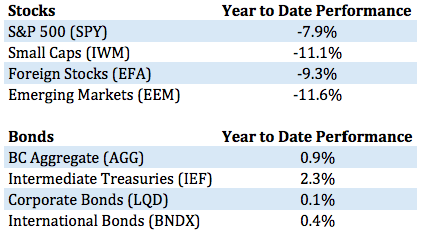
When the market sells off, the financial world suddenly develops the personality of a smoke alarm with a podcast. Headlines get louder. Portfolio apps glow red. Commentators speak in dramatic tones, as if the S&P 500 personally insulted their grandmother. And ordinary investors are left wondering: “Should I sell everything, buy more, hide under my desk, or all three?”
A market sell-off is uncomfortable because it turns abstract risk into a very real number on a screen. Yesterday’s “long-term investing plan” becomes today’s “Why is my retirement account doing interpretive dance?” But a sell-off is not automatically a disaster. It is a stress test. It reveals whether your portfolio, your cash reserves, and your behavior are built for real lifenot just for sunny bull-market brochures with smiling people holding coffee.
The three things that matter most during a market sell-off are surprisingly simple: your plan, your liquidity, and your discipline. Not hot tips. Not perfect timing. Not a secret chart pattern whispered by a guy on social media who uses rocket emojis as financial analysis. The investors who usually make the best decisions during volatile markets are not the ones who predict every drop. They are the ones who prepare before the drop, act calmly during it, and learn from it afterward.
This article explains what really matters when stocks fall, why panic is expensive, and how to use market volatility as a moment for thoughtful review instead of emotional reaction. It is educational content, not personalized financial advice, but it can help you think more clearly when markets get messy.
What Is a Market Sell-Off?
A market sell-off happens when a large number of investors sell stocks, bonds, funds, or other assets over a short period, pushing prices lower. Sometimes the trigger is obvious: inflation data, recession fears, interest-rate changes, weak earnings, banking stress, geopolitical conflict, or a sudden shock no one had in their tidy spreadsheet. Other times, the market simply decides it has had too much coffee and not enough confidence.
Sell-offs can be sharp but temporary, or they can develop into broader corrections and bear markets. A correction is commonly described as a decline of about 10% from a recent high, while a bear market is often associated with a 20% or greater decline. But labels matter less than behavior. Whether the market is down 7%, 17%, or enough to make your stomach request a transfer, the key question is the same: What should you do next?
The answer depends on your goals, time horizon, risk tolerance, cash needs, and investment mix. A 30-year-old investing for retirement in 35 years faces a different decision than a retiree who needs portfolio withdrawals next month. A diversified investor with an emergency fund is in a very different position from someone who invested rent money into one speculative stock because the internet seemed enthusiastic.
The First Thing That Matters: Your Plan
During a market sell-off, your investment plan becomes your financial seat belt. You may not enjoy the ride, but you will be glad it exists. A good plan answers the important questions before emotions storm the room with a megaphone.
Your Plan Should Match Your Time Horizon
Money needed soon should not be treated the same way as money needed decades from now. If you are saving for a home down payment next year, a heavy stock allocation may expose you to losses at exactly the wrong time. If you are investing for retirement far in the future, short-term volatility may be painful but less damaging if you can stay invested and keep contributing.
Time horizon is one of the most practical filters in investing. It helps separate temporary discomfort from actual financial danger. A market sell-off may look scary on a one-week chart, but long-term investors need to ask whether the decline changes their future goal. Did retirement move from age 67 to age never? Probably not. Did the price of broad-market index funds fall? Yes. Did your long-term plan automatically become useless? Not necessarily.
Your Plan Should Reflect Real Risk Tolerance
Risk tolerance is easy to exaggerate when markets are rising. Everyone is brave when the portfolio line is climbing up and to the right like it has a motivational speaker contract. The real test comes when prices fall. If a 15% decline makes you want to sell everything, your portfolio may be more aggressive than your actual comfort level.
This does not mean you should abandon stocks whenever they become volatile. It means your asset allocation should be realistic. A mix of stocks, bonds, cash, and other assets can help balance growth potential with stability. The goal is not to eliminate risk completelybecause that is impossiblebut to choose risks you can live with long enough for your strategy to work.
Your Plan Should Include Rules for Action
A strong investment plan does not say, “Do whatever feels right when CNBC starts yelling.” It includes rules. For example:
- Rebalance when your portfolio drifts more than a set percentage from your target allocation.
- Keep three to six months of essential expenses in an emergency fund, or more if your income is unstable.
- Continue automated retirement contributions unless your financial situation changes.
- Review individual holdings when the business case changes, not merely because the stock price fell.
- Avoid making major portfolio decisions within 24 hours of a frightening headline.
Rules are useful because they reduce the need for improvisation. And during a sell-off, improvisation often looks suspiciously like panic wearing a necktie.
The Second Thing That Matters: Liquidity
Liquidity means having access to cash or stable assets when you need them. During a market sell-off, liquidity is what keeps temporary market losses from becoming permanent personal problems. If you have enough cash for near-term expenses, you are less likely to sell long-term investments at depressed prices.
Cash Reserves Protect Your Portfolio
Cash is not exciting. It does not brag at parties. It will not double overnight. But when markets fall and life sends an unexpected bill, cash becomes the quiet hero of the story. An emergency fund can cover car repairs, medical costs, job disruptions, or basic living expenses without forcing you to liquidate investments during a downturn.
For working households, a common starting point is several months of essential expenses in a high-yield savings account, money market fund, or other accessible cash vehicle. For retirees or people drawing from portfolios, the cash cushion may need to be larger because withdrawals during downturns can increase sequence-of-returns risk. Selling assets after they have dropped can make it harder for a portfolio to recover, especially when withdrawals continue.
Liquidity Helps You Avoid Bad Timing
Many investors do not sell during downturns because they carefully analyzed future returns. They sell because they need money or because fear makes cash feel safe. The problem is that moving entirely to cash after a decline creates a second decision: when to get back in. That second decision is harder than it sounds.
Market recoveries often begin before the news feels good. If you wait until the economy looks perfect, prices may already have moved higher. That is why market timing is so difficult. Selling near the bottom and missing the early rebound can damage long-term results more than the original decline.
Liquidity gives you breathing room. It lets you pay bills, stay invested, rebalance thoughtfully, and avoid treating your retirement account like an ATM with mood swings.
Liquidity Is Not the Same as Hiding Forever
Holding appropriate cash is smart. Holding too much cash for long-term goals can create another risk: inflation. Over time, inflation can reduce purchasing power. A dollar that sits safely in cash may still lose real value if prices rise faster than the return on that cash.
The point is not to choose between “all cash” and “all stocks.” The point is to give different dollars different jobs. Short-term money should be stable and accessible. Long-term money can usually accept more volatility in exchange for growth potential. When each dollar has a job description, a market sell-off becomes less confusing.
The Third Thing That Matters: Discipline
Discipline is the ability to follow a rational strategy when your emotions are auditioning for a disaster movie. During a market sell-off, discipline matters because fear can turn temporary losses into permanent ones.
Do Not Confuse Price Drops With Broken Investments
A falling price does not automatically mean an investment is bad. Broad markets can decline because investors are repricing risk, reacting to economic uncertainty, or selling indiscriminately. High-quality companies and diversified funds can fall alongside weaker assets because sell-offs often pull many boats down with the tide.
That said, discipline does not mean stubbornly holding everything forever. If the reason you bought an investment has changed, reviewing it makes sense. A company that lost its competitive advantage, cut its dividend because cash flow collapsed, took on dangerous debt, or no longer fits your strategy may deserve a closer look. But that decision should come from analysis, not adrenaline.
Rebalancing Can Turn Volatility Into a Process
Rebalancing means restoring your portfolio to its target asset allocation. Suppose your target is 70% stocks and 30% bonds. After a stock sell-off, your portfolio might drift to 62% stocks and 38% bonds. Rebalancing could mean buying stocks or stock funds to return to your target mix.
This feels uncomfortable because it often requires buying what has recently fallen. But that is the point. Rebalancing creates a disciplined way to buy low and sell high over time. It also prevents your portfolio from becoming too aggressive after big rallies or too conservative after big declines.
You do not need to rebalance every Tuesday because the market sneezed. Many investors use calendar-based reviews, percentage thresholds, or a combination of both. The important part is having a method before volatility arrives.
Dollar-Cost Averaging Can Reduce Emotional Pressure
Dollar-cost averaging means investing a fixed amount at regular intervals, regardless of market conditions. This approach does not guarantee profits or prevent losses, but it can reduce the emotional burden of deciding the “perfect” day to invest.
For long-term investors contributing to a 401(k), IRA, or brokerage account, regular investing during a sell-off can buy more shares when prices are lower. That does not mean every dip is a bargain or that investors should use emergency savings to buy stocks. But for money already assigned to long-term goals, continuing contributions can be a powerful habit.
Common Mistakes Investors Make During a Sell-Off
Mistake 1: Panic Selling Everything
Panic selling may feel like taking control, but it often locks in losses and creates the challenge of re-entry. The investor who sells after a large decline must be right twice: first about when to exit, then about when to return. That is a lot of pressure for a person whose main qualification in the moment may be “I refreshed my portfolio app 37 times before lunch.”
Mistake 2: Ignoring the Reason for the Decline
Not all sell-offs are the same. A temporary valuation reset is different from a credit crisis. A sector-specific decline is different from a broad recession fear. A single company missing earnings is different from a global liquidity shock. Before acting, ask what is actually happening and whether it changes your personal plan.
Mistake 3: Taking Too Much Risk With Short-Term Money
If you need money within the next year or two, it should not be exposed to large market swings. A sell-off is a painful reminder that stocks are long-term tools, not short-term storage containers. Money for rent, tuition, taxes, emergency expenses, or a near-term home purchase should be protected from volatility.
Mistake 4: Believing Every “This Time Is Different” Prediction
Every downturn comes with persuasive reasons why the market may never recover. Some risks are serious and deserve respect. But investors should be careful with dramatic forecasts. The future is uncertain, and markets can recover while the headlines still look gloomy. A wise investor listens, analyzes, and avoids turning one scary prediction into an entire strategy.
Specific Example: Two Investors in the Same Sell-Off
Imagine two investors, Sarah and Mike. Both have $100,000 invested in diversified portfolios. A market sell-off drops their portfolios by 20%, leaving each with $80,000 on paper.
Sarah has an emergency fund, a long time horizon, and a written investment plan. She reviews her allocation, notices that stocks are now below her target percentage, and rebalances gradually. She continues her monthly retirement contributions. She is not thrilledno one throws confetti because their portfolio droppedbut she understands the plan.
Mike has no cash cushion and checks his portfolio constantly. He sees the same decline, panics, and sells everything into cash. The market continues to wobble for a while, which makes him feel smart. But when the recovery begins, he hesitates. The headlines still look bad. By the time he feels comfortable buying again, prices have already risen sharply.
The difference between Sarah and Mike is not intelligence. It is preparation. Sarah had a system. Mike had a reaction. During sell-offs, systems usually age better than reactions.
How to Review Your Portfolio During a Market Sell-Off
Step 1: Check Your Cash Needs
Start with real-life obligations. Do you have enough cash for upcoming expenses? Is your emergency fund intact? Are you expecting a job change, major purchase, tuition payment, tax bill, or medical cost? If money is needed soon, protect it.
Step 2: Review Your Asset Allocation
Look at your mix of stocks, bonds, cash, and other assets. Has the sell-off pushed your allocation away from your target? Is your portfolio still appropriate for your goals and risk tolerance? If you are losing sleep, the issue may not be the market; it may be a mismatch between your portfolio and your personality.
Step 3: Separate Broad Market Declines From Investment-Specific Problems
If a broad index fund falls because the whole market is down, that is different from a single company falling because its business is deteriorating. Review individual holdings carefully. Ask whether the long-term thesis still holds. If you cannot explain why you own something, the sell-off may be doing you an odd favor by exposing clutter.
Step 4: Consider Tax Opportunities
In taxable accounts, a sell-off may create tax-loss harvesting opportunities. This involves selling an investment at a loss to offset capital gains, while following tax rules such as wash-sale restrictions. This strategy can be useful, but it should be done carefully and preferably with help from a tax professional.
Step 5: Limit Noise
Information is useful. Doom-scrolling is not. If constant market updates make you more anxious and less rational, reduce the noise. Your portfolio does not need you to stare at it every seven minutes like it is a soufflé in a wind tunnel.
Why Sell-Offs Can Create Long-Term Opportunity
Market sell-offs can be painful, but they can also improve future expected returns if prices fall more than fundamentals justify. Long-term investors with cash flow, diversified portfolios, and patience may find opportunities to buy quality assets at lower prices.
This does not mean blindly “buying the dip” every time prices fall. Some dips become deeper dips, and some investments deserve to stay down. The smarter approach is selective and rules-based. Broad-market investors may continue scheduled contributions. Active investors may build a watchlist of high-quality assets they wanted to own at better prices. Retirees may rebalance cautiously while protecting near-term income needs.
The key is to treat a sell-off as a planning moment, not a casino invitation. Opportunity belongs to investors who know what they are buying, why they are buying it, and how long they can hold it.
Experience Section: Lessons From Real Market Sell-Off Behavior
One of the most valuable experiences during a market sell-off is discovering how different people react to the same information. In calm markets, investors often sound similar. Everyone likes diversification. Everyone says they are long-term. Everyone nods wisely when someone mentions “staying the course.” Then the market falls, and suddenly the room divides into planners, gamblers, bargain hunters, doom prophets, and people who forgot their brokerage password and may accidentally outperform everyone.
The first lesson is that preparation feels boring until it becomes priceless. An emergency fund does not feel exciting when stocks are rising 20% a year. It may even feel inefficient. But when layoffs increase, bills arrive, and investment balances are down, cash reserves provide emotional and financial oxygen. Investors with cash can think. Investors without cash often have to react.
The second lesson is that sell-offs reveal whether a portfolio was built intentionally or collected randomly. Many people discover during downturns that they own overlapping funds, speculative stocks, trendy assets, or positions they bought because a friend said, “Trust me, bro,” which is not an investment thesis. A sell-off shines a flashlight into the junk drawer. It shows which holdings truly belong and which ones were adopted during a bull-market sugar rush.
The third lesson is that the urge to “do something” can be dangerous. Action feels productive, but not all action is useful. Sometimes the best move is to rebalance, keep contributing, harvest losses, or update a financial plan. Other times, the best move is to make coffee, take a walk, and not turn a temporary decline into a lifelong regret. Patience is not passive when it is backed by a plan.
The fourth lesson is that investors should write down their reasoning before markets become chaotic. A simple investment journal can help. Why do you own this fund? What role does it play? Under what conditions would you sell? What would make you buy more? Written rules protect you from rewriting history under stress. Without notes, fear becomes the editor of your memory.
The fifth lesson is that every sell-off feels unique, but investor emotions are remarkably repetitive. The causes change: inflation, recessions, wars, interest rates, banking stress, tech bubbles, policy shocks. The emotional cycle is familiar: denial, anxiety, panic, regret, cautious optimism, and eventually the phrase, “I wish I had stayed invested.” Not every market recovers quickly, and losses can be serious. But disciplined investors give themselves better odds by focusing on what they can control: savings rate, diversification, costs, taxes, rebalancing, and behavior.
Finally, market sell-offs teach humility. No one knows the exact bottom. No one rings a bell when fear peaks. No app notification says, “Congratulations, this is the perfect entry point.” The goal is not to be perfect. The goal is to be prepared enough that an ugly market does not force an ugly decision. In investing, survival is underrated. Stay solvent, stay diversified, stay thoughtful, and let your long-term plan do the heavy lifting.
Conclusion
Three things matter most during a market sell-off: your plan, your liquidity, and your discipline. Your plan tells you why you are invested. Your liquidity keeps you from selling at the worst possible time. Your discipline helps you avoid emotional decisions when volatility tries to hijack the steering wheel.
Sell-offs are never fun, but they are part of investing. They test assumptions, expose weak spots, and reward preparation. Instead of asking, “How do I avoid every decline?” a better question is, “How do I build a financial life that can withstand declines?” That shift changes everything.
When the market falls, breathe before you act. Review your goals. Check your cash. Revisit your allocation. Rebalance if needed. Keep long-term money focused on long-term outcomes. And remember: the market may be volatile, but your behavior does not have to be.