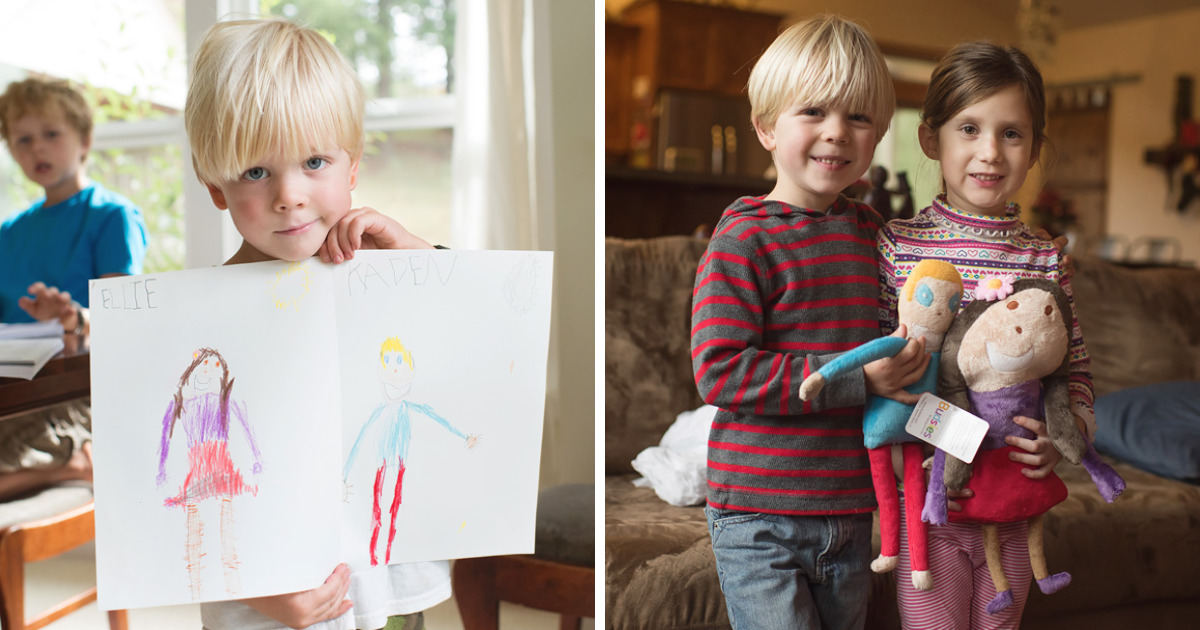
Some friendship stories arrive with marching bands. Others arrive wearing tiny shoes, holding crayons, and quietly melting the internet into a puddle. The story of 6-year-old Kaden and his hospitalized BFF, Ellie, belongs firmly in the second category. It is sweet, simple, and dangerously adorablethe kind of story that makes adults say, “Who is chopping onions in here?” even when everyone knows the onions are innocent.
Kaden, a young boy who loved drawing, had a favorite subject: his best friend Ellie. When Ellie had to go to the hospital for surgery, Kaden wanted to do more than send a quick “get well soon.” He wanted to give her something that felt personal, comforting, and full of friendship. So he drew two pictures: one of himself and one of Ellie. Those drawings were turned into custom plush dolls, often known through Budsies-style creations, so Ellie could have a huggable version of her best friend with her while she was away.
That is the heart of this story: a child saw another child going through something scary and responded with creativity. No grand speech. No complicated plan. Just crayons, love, and the emotional intelligence of a tiny human who somehow understood what many adults forgetsometimes the best gift is the one that says, “You are not alone.”
Why Kaden’s Gift Felt So Special
The cutest gift ever was not cute simply because it involved plush dolls, although plush dolls do have a long history of winning emotional arguments. What made Kaden’s gift meaningful was the thought behind it. Ellie was not just receiving another stuffed animal. She was receiving a tiny symbol of friendship, familiar play, and emotional comfort during a medical experience that could feel strange or overwhelming.
For children, a hospital stay can interrupt everything that feels normal: home routines, school, playdates, bedtime rituals, favorite snacks, and the dependable chaos of being a kid. A comforting object can act like a little bridge between the hospital room and the child’s everyday world. In Ellie’s case, that bridge looked like a handmade plush version of her best friend.
A Drawing Became a Friendship Keepsake
Kaden’s drawings were more than scribbles on paper. They were a child’s way of saying, “This is us.” Children often use art to explain feelings they do not yet have grown-up words for. A drawing can hold excitement, worry, love, humor, and imagination all at once. When Kaden drew himself and Ellie, then turned those drawings into dolls, he gave his friend something that could be seen, held, and hugged.
That is why the story spread so quickly online. People were not just reacting to a toy. They were reacting to a moment of pure childhood loyalty. Kaden did not need a committee, a motivational quote calendar, or a twelve-step kindness strategy. He saw his friend needed comfort, and he made comfort with the tools he had.
The Power of Comfort Gifts for Hospitalized Children
Hospitals do incredible work, but even the best hospital can feel intimidating to a child. There are bright lights, unfamiliar rooms, medical equipment, new faces, and routines that may not make sense at first. For young patients, comfort itemssuch as plush toys, blankets, books, photos, drawings, and cardscan make a hospital room feel less like a clinical space and more like a place where they still belong.
Child life specialists in pediatric hospitals often use play, distraction, art, and familiar objects to help children cope with medical procedures and hospital routines. That matters because children do not stop being children when they become patients. They still need imagination. They still need control where they can get it. They still need joy, even if joy has to squeeze itself between a nurse check-in and a nap.
Why a Plush Gift Works Emotionally
A plush toy can be hugged during a nervous moment. It can sit beside a child during recovery. It can become a pretend patient during medical play, helping a child process what is happening. It can also become a silent friend when the room is quiet. For Ellie, Kaden’s gift carried an extra layer of meaning because it represented someone she loved and trusted.
That is the magic of a custom gift. A regular teddy bear says, “Feel better.” A plush created from your best friend’s drawing says, “I know you. I miss you. I made this just for you.” That difference is enormous, especially to a child who may be dealing with discomfort, uncertainty, or being away from familiar routines.
What Adults Can Learn From Kaden
Adults sometimes overthink kindness. We wonder what to say, what to buy, how much to spend, whether the gift is impressive enough, and whether we should include a card with tasteful handwriting. Children, meanwhile, march straight into the emotional center of the situation with a crayon and a plan.
Kaden’s gift teaches a simple lesson: the best supportive gestures are often personal, specific, and sincere. He did not send Ellie a random toy because the internet told him it was trending. He created something based on their friendship. That is why the story feels so warm. It reminds us that kindness does not need to be fancy to be unforgettable.
Kindness Is Stronger When It Feels Personal
A personalized hospital gift can help a child feel remembered as a whole person, not just as a patient. A drawing, a favorite character, a playlist, a silly video message, or a handmade card can say, “We still see you as you.” That matters because medical experiences can sometimes make children feel like life is happening around them instead of with them.
Kaden’s gift also shows that children are capable of deep empathy. Adults can encourage that by asking simple questions: “What do you think your friend might be feeling?” “What would help them smile?” “Is there something we can make?” These questions help children move from feeling concern to taking compassionate action.
Hospital Gift Ideas Inspired by Kaden and Ellie
If Kaden’s story has you ready to assemble a kindness kit for a hospitalized child, that is wonderful. Before you start shipping giant glitter-covered mystery boxes to every pediatric unit in America, take a breath. Hospitals often have safety rules for gifts because patients may have infection risks, allergies, medical restrictions, or unit-specific needs.
Many children’s hospitals ask that donated toys be new, unused, recently purchased, and in original packaging. Some units limit plush toys, flowers, food, latex, or items that cannot be cleaned. For a specific child, it is always wise to check with the family or hospital care team before sending anything. Kindness is best when it arrives with common sense wearing a seatbelt.
Thoughtful Gift Ideas for a Child in the Hospital
Here are several gift ideas that capture the spirit of Kaden’s gesture while staying practical:
- Custom drawings: A hand-drawn picture of the child, their pet, their favorite superhero, or a shared memory.
- Personalized plush toys: A custom stuffed animal based on a drawing or character, when allowed by the hospital and family.
- Photo cards: A small album or printed photos from friends, classmates, cousins, or teammates.
- Activity kits: Coloring books, washable markers, sticker books, puzzle books, and simple craft supplies.
- Comfort blankets: Soft, new blankets that meet the hospital’s donation or patient gift guidelines.
- Video messages: Short, cheerful clips from friends saying hello, telling a joke, or showing a pet doing something ridiculous.
- Books: Funny, age-appropriate stories that offer escape without needing batteries, chargers, or a software update.
The key is not price. The key is connection. A five-dollar card with a thoughtful message may mean more than an expensive gift that feels generic. Kaden’s idea worked because it carried the fingerprint of friendship.
Why Children’s Friendships Matter During Hard Times
Friendship is not a small thing in childhood. It is practice for trust, empathy, communication, humor, forgiveness, and belonging. When a child is hospitalized, friendship can become even more important because it reminds them that life outside the hospital is still waiting for them. Their friends are still there. Their inside jokes are still alive. Their place in the group has not disappeared.
For Ellie, having a plush version of Kaden may have helped make the distance feel smaller. It gave her a playful reminder that her best friend was thinking of her. That kind of emotional support does not replace medical care, of course, but it can sit beside it like a warm lamp in a room that feels too bright.
Small Gestures Can Create Big Emotional Memories
Children often remember the small things adults underestimate. They remember who made them laugh. They remember who visited. They remember the card with the dinosaur sticker. They remember the friend who sent a stuffed version of himself so they could “play together” even while apart. Those memories can become part of how a child understands care, loyalty, and courage.
Kaden’s gift is also a reminder for parents, teachers, and caregivers: when children want to help, give them a way to help. They may not be able to change the medical situation, but they can create comfort. They can draw. They can record a message. They can choose a book. They can decorate a card. They can learn that compassion is not just a feeling; it is something we do.
The Role of Art, Play, and Imagination in Healing Environments
Art and play are not side dishes in childhood. They are the main course, with extra fries. Through play, children test ideas, express fears, rehearse experiences, and create stories that help the world make sense. In a hospital, play can help children feel less powerless. It can turn a scary medical object into something familiar. It can give a child a voice when they are tired of answering serious questions.
Kaden’s gift combined art, play, and friendship in one object. The drawings came from imagination. The plush dolls invited play. The purpose came from love. That combination is why the story has stayed memorable years after it first appeared online.
A Child’s Drawing Can Say What Words Cannot
Many adults would struggle to find the perfect words for a hospitalized friend. A 6-year-old solved the problem by drawing. That is one of the beautiful things about children’s art: it does not apologize for being imperfect. The crooked lines, oversized heads, tiny arms, and heroic smiles are part of the charm. In fact, the imperfections make the gift more real.
A polished store-bought item can be lovely, but a child’s drawing has a heartbeat. It says, “I made this while thinking about you.” When transformed into a plush doll, that drawing becomes something a child can carry into a hospital bed, a waiting room, or a recovery day at home.
How Parents Can Encourage Kids to Show Compassion
Kaden’s story is not just a cute internet moment; it is also a practical example of how adults can nurture kindness in children. Compassion grows stronger when children are invited to notice others’ feelings and act in age-appropriate ways. That does not mean forcing children into grand gestures. It means helping them understand that their choices can comfort someone else.
Parents can encourage this by keeping the process simple. Ask a child what their friend likes. Offer a few safe options. Let the child choose. Maybe they draw a picture, pick a joke, record a song, or make a paper chain countdown until their friend comes home. The goal is not perfection. The goal is participation.
Helpful Questions to Ask a Child
When a child wants to support a sick or hospitalized friend, try questions like these:
- “What do you think would make your friend smile today?”
- “What is something the two of you love doing together?”
- “Could we make something that reminds them of home or school?”
- “Should we ask their family what is allowed at the hospital?”
- “Would you like to write a message, draw a picture, or make a short video?”
These questions help children connect empathy with action. They also teach an important boundary: helping someone includes respecting their needs, their family, and the rules of the place where they are receiving care.
Experiences Related to Kaden’s Gift: What This Story Reminds Us About Friendship
Stories like “6-Year-Old Kaden Made The Cutest Gift Ever For His Hospitalized BFF” feel powerful because almost everyone has experienced a moment when a small act of care meant more than expected. Maybe it was a classmate who saved your seat after you were absent. Maybe it was a neighbor who left soup on the porch. Maybe it was a friend who sent a ridiculous meme exactly when your day was going sideways. The object itself may be simple, but the message behind it can be huge.
For a hospitalized child, that message may be even more important. Hospitals can make time feel strange. Days may revolve around checkups, medicine, rest, waiting, and unfamiliar sounds. A personal gift can break through that routine and remind a child of birthday parties, playground races, school projects, cartoons, pets, and all the wonderfully normal things waiting outside the hospital doors. That is why a drawing, plush toy, card, or video message can carry so much emotional weight.
Imagine a child receiving a handmade card covered in wobbly stars from classmates. Maybe the spelling is creative enough to make a dictionary sweat. Maybe the dog in the drawing looks suspiciously like a potato with ears. It does not matter. The child sees effort. They see names they know. They see proof that their friends are thinking about them. That proof can be comforting on a hard day.
Kaden’s gift also highlights the value of giving children permission to be part of the support system. Adults often try to protect kids from difficult situations by keeping them away from anything medical or sad. Sometimes that is appropriate, depending on the child and the situation. But when guided gently, children can respond with surprising tenderness. They may not understand every medical detail, and they do not need to. They can understand, “My friend is in the hospital, and I want to help them feel loved.”
One practical experience many families discover is that personalized gifts often become keepsakes. A store-bought toy may be loved for a season, but a gift tied to a meaningful moment can stay in a memory box for years. The card from a best friend, the blanket from a grandparent, the handmade bracelet from a sibling, or the plush doll based on a drawing can become part of the story a family tells later: “Remember when you were in the hospital and your friend made this for you?” Suddenly, the gift is not just an object. It is evidence of love during a vulnerable time.
Another lesson from this story is that support does not have to stop after surgery or discharge. Many children continue recovering at home, missing school, activities, or playdates. Friends can help by staying connected in small ways: sending short voice messages, mailing jokes, sharing drawings, choosing a book to read “together,” or scheduling a gentle video call when the family says it is a good time. These small check-ins tell the child, “You are still part of our world.”
Finally, Kaden’s gift reminds us that children notice more than we think. They notice when someone is missing. They notice when a friend is scared. They notice when grown-ups are worried. And sometimes, with a little encouragement, they turn that noticing into kindness. That is the real beauty of the story. A 6-year-old did not just make a cute gift. He showed what friendship looks like when it puts on sneakers, grabs crayons, and gets to work.
Conclusion: The Cutest Gift Was Really a Lesson in Love
Kaden’s gift for Ellie was adorable, yes. But it was also wise in the way only children can be wise. He understood that his hospitalized BFF did not just need something to hold; she needed a reminder that their friendship could travel into the hospital room with her. By turning drawings into plush companions, he gave Ellie comfort, play, and a little piece of normal life during an uncertain time.
That is why this story continues to resonate. It is not about the fanciest present or the most expensive toy. It is about seeing someone you love going through something hard and asking, “What can I do to make them feel less alone?” In Kaden’s case, the answer was simple, soft, and impossibly sweet.
Note: This article is based on public reporting about Kaden and Ellie’s friendship gift, combined with general U.S. pediatric hospital guidance on comfort items, child life support, toy safety, and thoughtful gift-giving for hospitalized children. Always check with a child’s family or hospital care team before sending toys, plush gifts, food, flowers, or handmade items.