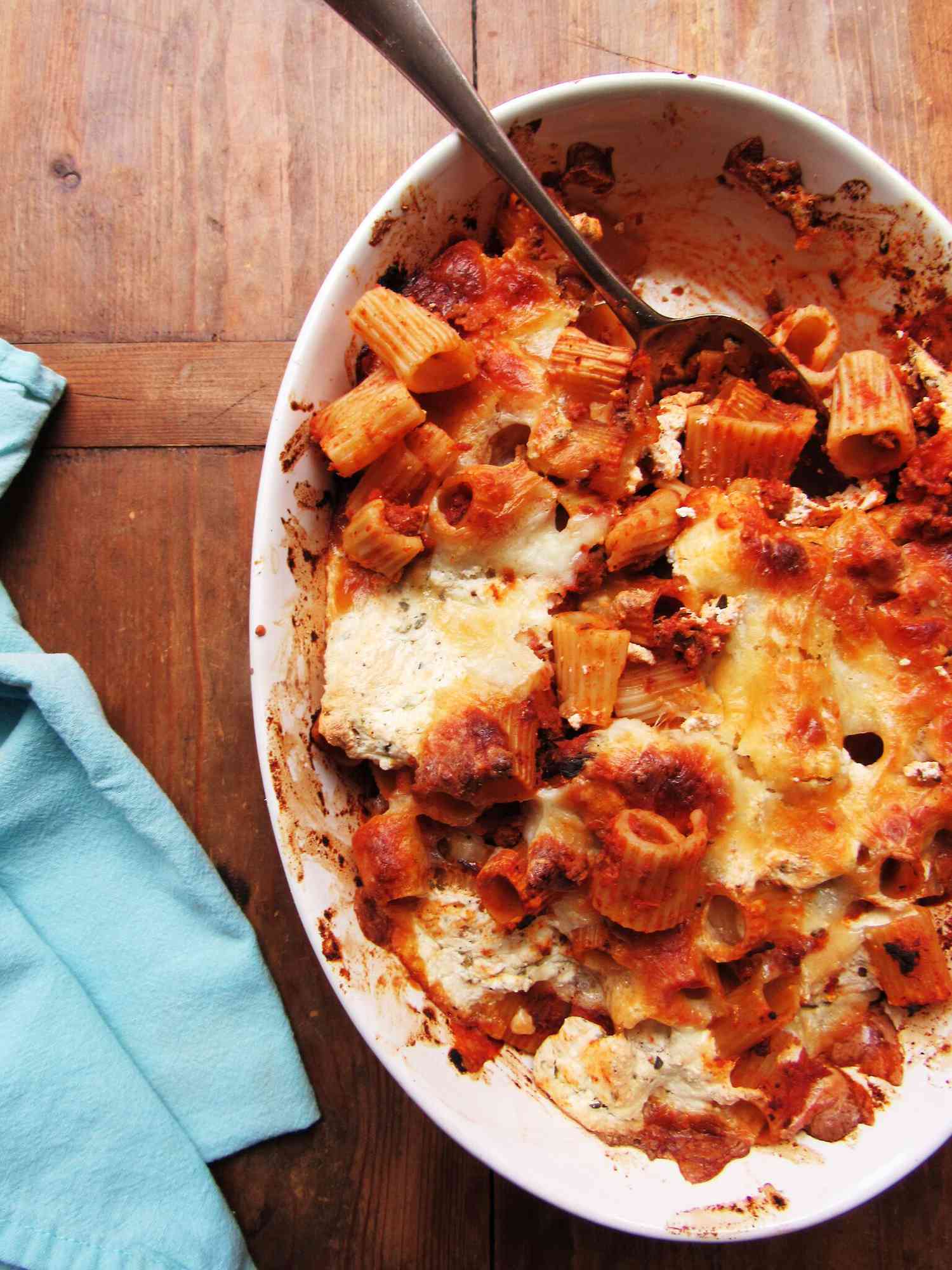
If comfort food had a group chat, baked pasta would be the loudest one in it. It’s bubbly, cheesy, saucy, and always acting like it didn’t just save dinner. This Simple Baked Pasta With Bolognese Sauce Recipe takes the best ideas from classic baked ziti and slow-cooked ragù traditions, then trims the fuss so normal people (with normal schedules and very hungry families) can still pull it off on a weeknight.
The big idea: make a rich but straightforward Bolognese-style meat sauce, cook the pasta just shy of done, layer everything with cheese, and bake until the top turns golden in places and the corners get that glorious crispy-chewy edge. You’ll get deep flavor, a creamy center, and a recipe that feels fancy enough for guests but forgiving enough for Tuesday.
And yes, it reheats beautifully. Which means tomorrow-you is about to feel very loved.
Why This Baked Pasta Works
A lot of baked pasta recipes go wrong in one of three ways: the pasta turns mushy, the center goes dry, or the sauce tastes like it showed up late to the party. This version avoids all three.
- Bolognese-style base: We build flavor with onion, carrot, celery, tomato paste, meat, and a slow simmer. It tastes like you tried hard (you did), without requiring an all-day project.
- Undercooked pasta on purpose: The pasta finishes cooking in the oven, so it keeps texture instead of collapsing into a soft casserole puddle.
- Layered cheese strategy: Mixing some cheese into the pasta and adding some in layers gives you creamy bites and a golden top.
- Extra moisture insurance: A splash of reserved pasta water and a slightly loose sauce help the dish stay saucy after baking.
- Resting time: Letting it sit after baking makes it easier to serve and helps the cheese set instead of lava-sliding across the plate.
Simple Baked Pasta With Bolognese Sauce Recipe
Yield, Time, and Tools
Serves: 8–10
Prep time: 25 minutes
Cook time: 1 hour 10 minutes (plus 10–15 minutes resting)
Total time: About 1 hour 45 minutes
Tools: Large pot, large Dutch oven or deep skillet, colander, 9×13-inch baking dish, mixing spoon, ladle, and a box grater (unless you’re using pre-shredded cheese and nobody is judging).
Ingredients
For the Bolognese-style sauce:
- 2 tablespoons olive oil
- 1 small yellow onion, finely diced
- 1 medium carrot, finely diced
- 1 celery stalk, finely diced
- 3 cloves garlic, minced
- 1 tablespoon tomato paste
- 1 pound ground beef (80/20 or 85/15)
- 1/2 pound Italian sausage (sweet or hot), casings removed
- 1 teaspoon kosher salt (plus more to taste)
- 1/2 teaspoon black pepper
- 1 teaspoon dried oregano
- 1/4 teaspoon red pepper flakes (optional)
- 1/2 cup dry white wine (or use broth)
- 1 (28-ounce) can crushed tomatoes
- 1 (15-ounce) can tomato sauce or 1 cup passata
- 1/2 to 1 cup low-sodium beef or chicken broth (as needed)
- 1/2 cup whole milk or heavy cream (optional but recommended for a softer, richer finish)
- 1 bay leaf
For the pasta and cheese layers:
- 1 pound ziti, rigatoni, or penne
- Salt for pasta water
- 1 cup ricotta cheese
- 1 large egg (optional, helps bind the ricotta)
- 2 cups shredded low-moisture mozzarella, divided
- 1 cup grated Parmesan or Pecorino Romano, divided
- 1/4 cup chopped parsley or basil, plus more for serving
- 1/2 cup reserved pasta water (you may not need all of it)
Step-by-Step Instructions
- Start the sauce base.
Heat the olive oil in a large Dutch oven or deep skillet over medium heat. Add the onion, carrot, and celery. Cook for 6–8 minutes, stirring often, until softened and fragrant. Add the garlic and tomato paste and cook for 1 minute more, until the tomato paste darkens slightly. That little darkening move adds a lot of flavor for very little effort.
- Brown the meat like you mean it.
Add the ground beef and sausage. Break the meat into small pieces and cook until browned and no longer pink, about 8–10 minutes. Season with salt, pepper, oregano, and red pepper flakes. If there’s a lot of fat in the pan, spoon off some, but leave a little behind for flavor and moisture.
- Build the Bolognese-style sauce.
Pour in the wine and scrape up any browned bits from the bottom of the pan. Let it simmer for 2–3 minutes. Add crushed tomatoes, tomato sauce, bay leaf, and 1/2 cup broth. Bring to a gentle simmer, then reduce heat to low and cook uncovered for 35–45 minutes, stirring occasionally. If it gets too thick, add a splash more broth.
Stir in the milk or cream during the last 10 minutes of cooking. The sauce should be rich and spoonablenot dry. Taste and adjust salt and pepper. Remove the bay leaf.
- Boil the pasta (but stop early).
While the sauce simmers, bring a large pot of generously salted water to a boil. Add the pasta and cook it 1–2 minutes less than the package says for al dente. The pasta should still feel firm in the center. Before draining, reserve 1/2 cup pasta water. Drain the pasta well.
- Mix the cheese base.
In a medium bowl, stir together ricotta, egg (if using), 1 cup mozzarella, 1/2 cup Parmesan, and chopped parsley or basil. Mix lightlydon’t overwork it. A few thicker dollops are fine and actually great in the final bake.
- Combine pasta and sauce.
Add the drained pasta to a large bowl (or back into the pasta pot). Add about 3 1/2 to 4 cups of the Bolognese sauce and toss to coat. Stir in a splash of reserved pasta water if the mixture looks tight. You want it saucy, because the oven will absorb some of that liquid.
- Layer the baked pasta.
Preheat the oven to 375°F (190°C). Spoon a thin layer of sauce into the bottom of a 9×13-inch baking dish. Add half the pasta mixture. Dollop half the ricotta-cheese mixture over it. Sprinkle with 1/2 cup mozzarella and 1/4 cup Parmesan.
Add the remaining pasta, then top with the rest of the sauce (as much as you like), the remaining ricotta mixture, the remaining mozzarella, and the rest of the Parmesan.
- Bake until bubbly and irresistible.
Bake uncovered for 25–30 minutes, until the cheese is melted, the edges are bubbling, and the top has some golden spots. If you want a darker top, broil for 1–2 minutes at the end (watch it closelycheese can go from golden to “why is the smoke alarm involved?” very fast).
- Rest before serving.
Let the baked pasta rest for 10–15 minutes before slicing and serving. This helps the layers set and keeps the sauce where it belongs: in your dinner, not running across the plate like a red carpet.
Flavor Tips That Make a Big Difference
1) Use a mix of meats for deeper flavor
A lot of the best Bolognese and baked ziti recipes use more than one meat for a reason. Ground beef gives body, while Italian sausage (or pork) adds seasoning and richness. If you want to go extra traditional, a beef-pork-veal mix is fantastic. If you want to keep it simple, beef + sausage is the sweet spot.
2) Don’t rush the simmer
You can absolutely make a quick red meat sauce, but Bolognese-style sauce gets noticeably better with time. Even 35–45 minutes creates a more rounded flavor. If you have extra time, let it go for an hour. The difference is real.
3) Keep the sauce slightly looser than you think
Baked pasta keeps cooking after it enters the oven. If your sauce looks perfect before baking, it may be too thick afterward. Add broth or reserved pasta water until it looks a little more fluid than usual. Future-you (the one eating leftovers) will be grateful.
4) Shred your own mozzarella if you can
Pre-shredded cheese is convenient, but freshly shredded low-moisture mozzarella usually melts more smoothly and gives better cheese pulls. Pre-shredded works in a pinch, thoughand honestly, most weeknight wins involve a little shortcut.
5) Let it rest, even though it smells amazing
Resting is not punishment. It’s strategy. A short rest helps the cheese set, keeps the layers neat, and makes the texture creamier instead of soupy.
Common Mistakes to Avoid
- Overcooking the pasta before baking: This is the #1 reason baked pasta goes soft. Stop 1–2 minutes early.
- Using too little sauce: Pasta absorbs liquid while baking. Dry baked pasta is a heartbreak nobody needs.
- Skipping seasoning checks: Taste the sauce before assembling. Cheese adds salt, but your sauce still needs enough flavor on its own.
- Overmixing ricotta: Gentle dollops create creamy pockets. Smooth cheese paste can disappear into the pasta.
- Serving immediately from the oven: Let it rest or prepare to serve “cheese avalanche” instead of slices.
Easy Variations
Weeknight Shortcut Version
Use a high-quality jarred marinara and simmer it with browned beef, sausage, onion, garlic, and tomato paste for 20–25 minutes. It won’t be full Sunday-sauce mode, but it will still be excellent and dinner-friendly.
Creamier Baked Pasta Version
Swap half the ricotta for a quick béchamel (butter, flour, milk, pinch of nutmeg). This makes the baked pasta extra silky and less grainy, especially if you’re reheating leftovers later.
Spicier Version
Use hot Italian sausage, add more red pepper flakes, and finish with a little chili oil. Cozy meets chaoticin a good way.
Vegetable-Boosted Version
Add finely chopped mushrooms, zucchini, or spinach to the sauce. Mushrooms are especially good because they bring a savory, meaty vibe without changing the soul of the dish.
Make-Ahead, Storage, and Reheating
Make Ahead
You can assemble the whole dish (without baking), cover it tightly, and refrigerate it for up to 24 hours. Let it sit at room temperature for about 20–30 minutes before baking, or add a few extra minutes in the oven.
Storage
Store leftovers in an airtight container in the refrigerator for up to 4 days. If you want longer storage, freeze portions for up to 2 months. For best texture, thaw overnight in the fridge before reheating.
Reheating
Reheat individual portions in the microwave with a spoonful of water or extra sauce to keep them moist. For larger portions, cover with foil and warm in a 350°F oven until hot. If reheating a meat-based casserole, make sure it’s heated through; leftovers and casseroles are commonly reheated to 165°F for food safety.
Food Safety Notes for Meat Pasta Bakes
Because this recipe uses ground beef and sausage, use a food thermometer when you’re unsure. Ground meat is generally cooked to 160°F, and casseroles/leftovers are commonly reheated to 165°F. Also, avoid using color alone to judge donenessthermometers are much more reliable than “it looks done-ish.”
What to Serve With Baked Pasta
- Simple salad: Arugula, lemon, olive oil, salt, pepper
- Garlic bread: Obviously. This is not the time for restraint.
- Roasted vegetables: Broccoli, Brussels sprouts, or green beans add balance
- Sparkling water or red wine: Something refreshing to cut the richness
Kitchen Experiences and Real-Life Notes (Extended Section)
The funny thing about a simple baked pasta with Bolognese sauce is that it somehow feels different every time you make it, even when you follow the same recipe. The first time I made a version like this, I treated it like a science project: measured everything, set timers, and stared at the oven window like I was waiting for a major life update. It came out delicious, but a little stiff, because I was too careful with the sauce. Lesson learned: baked pasta needs generosity. If the sauce looks a tiny bit too loose before baking, you’re probably doing it right.
Another time, I made it for a family dinner and used a mix of sweet and hot Italian sausage. That was the version people talked about for weeks. Not because it was dramatically spicy, but because the flavor had layerssavory, a little sweet from the tomatoes and onions, and a warm kick at the end. One person asked if I’d been cooking all day. I did what any sensible person would do: smiled and accepted the compliment without mentioning the playlist was longer than the actual cooking time.
If you cook for kids, this recipe is also a sneaky win. Finely diced onion, carrot, and celery melt into the sauce, so nobody feels like they’re “eating vegetables,” but the sauce tastes more balanced and sweet naturally. I’ve seen picky eaters refuse a bowl of spaghetti and then destroy a square of baked pasta because, somehow, cheese on top changes everything. Kids are mysterious. Cheese is powerful.
This recipe also shines as a make-ahead meal. I’ve assembled it in the afternoon, covered it, and baked it later when everyone was tired and hungry. That’s the kind of dinner planning that feels like a gift to your future self. You still get the smell of bubbling cheese and sauce in the kitchen, but you skip the chaos of doing every step right before dinner. If your evenings are busy, this is the version you want in your rotation.
And then there are leftoversarguably the best part. Baked pasta the next day is like pizza the next day: still great, sometimes better. The slices hold together more cleanly, the flavors settle in, and lunch becomes suspiciously exciting. I like reheating a portion in the oven when I have time, because the edges crisp up again. But microwaving works too, especially with a spoonful of extra sauce or water to wake it back up.
One practical note from experience: bake it on a sheet pan if your dish is very full. Baked pasta loves to bubble over at exactly the wrong moment. A sheet pan underneath catches drips and saves you from scrubbing tomato sauce off the oven floor later. This is one of those tiny habits that makes you feel like a kitchen genius.
Finally, this dish is a crowd-pleaser without being boring. You can dress it up with basil and better cheese for company, or serve it straight from the pan on a random Wednesday in sweatpants. It works both ways. That’s why this kind of recipe lasts: it’s not trying to be trendy, it’s just reliably delicious. And in a world full of complicated dinner ideas, a pan of bubbling baked pasta with a rich Bolognese sauce is exactly the kind of simplicity worth keeping.
Conclusion
If you want a pasta dinner that feels cozy, generous, and just a little impressive without being complicated, this Simple Baked Pasta With Bolognese Sauce Recipe is the one to save. It borrows the best ideas from classic baked ziti and traditional ragù techniquesslow flavor building, undercooked pasta before baking, and thoughtful layeringwhile staying easy enough for real life. Make it once, and there’s a very good chance it becomes your “people are coming over” pasta, your “I need leftovers” pasta, and your “today was a lot” pasta.