Getting perfect pelts in Red Dead Redemption 2 is one of those activities that sounds simple until Arthur Morgan accidentally turns a pristine rabbit into a furry pancake with the wrong weapon. The game’s hunting system is deep, picky, and wonderfully dramatic. If you want the best clothing, satchel upgrades, camp decorations, extra money, and bragging rights, you need to understand how animal quality, weapon choice, and clean kills work together.
The short answer is this: to get a perfect pelt or hide in RDR2, you must find a pristine three-star animal, use the correct weapon and ammo, and kill it with one clean shot to a vital area. The long answer is where the fun begins. This guide breaks down every important step, from studying animals and choosing weapons to using Dead Eye, tracking wounded game, and deciding whether to sell to the Trapper or donate to Pearson.
What Makes a Pelt Perfect in RDR2?
Every animal in Red Dead Redemption 2 has a quality rating. When you aim at an animal, study it through binoculars, or inspect it after discovery, you will usually see a star rating. One star means poor quality, two stars means good quality, and three stars means pristine quality. Only a three-star animal can reliably produce a perfect pelt, hide, skin, or carcass.
Think of it like buying produce at a frontier grocery store. A three-star deer is the shiny apple. A one-star deer is the apple that has been rolling around under the wagon since Valentine. You can still use it, but nobody is turning it into a luxury satchel.
The Perfect Pelt Formula
Use this formula every time:
- Find a three-star animal. Do not waste time trying to turn a poor animal into a perfect one.
- Use the correct weapon. The wrong gun can ruin the hide instantly.
- Use the right ammo. Small Game Arrows, Varmint Rifle rounds, rifle ammo, and improved arrows all have their place.
- Make a clean kill. Aim for the head, neck, heart, or other vital areas.
- Avoid extra shots. If you pepper a deer like a saloon wall during a shootout, the pelt will suffer.
Study Animals Before You Shoot
The easiest mistake beginners make is shooting first and asking questions later. In RDR2, that approach usually ends with poor pelts, wasted ammo, and Arthur muttering like he just stepped in mud again.
Before you hunt, equip binoculars or use a scoped weapon to inspect the animal from a safe distance. Studying an animal reveals its species, condition, and recommended weapon. Once studied, that information is added to the Compendium, where you can check it later. This is especially helpful for animals that look similar from far away, such as deer, pronghorns, foxes, coyotes, and birds.
If the animal is not three-star quality, let it go unless you need meat, feathers, or quick cash. Your perfect pelt hunting time is better spent searching for pristine animals.
Best Weapons for Perfect Pelts and Hides
Weapon choice is the backbone of perfect hunting in Red Dead Redemption 2. Bigger is not always better. A shotgun may solve many problems in the Wild West, but it is not the answer when hunting squirrels. Unless your goal is squirrel confetti, choose carefully.
Small Animals: Bow with Small Game Arrows
Small animals include squirrels, rats, bats, chipmunks, frogs, toads, snakes, and many tiny birds. These animals require a delicate touch. Use the bow with Small Game Arrows for the best chance at a perfect carcass or skin.
Small Game Arrows can be crafted, and they are absolutely worth carrying. They may feel silly at first, but once you try hunting a perfect squirrel with a regular arrow, you will understand why Rockstar gave players tiny ammunition for tiny targets.
Moderate Animals: Varmint Rifle
The Varmint Rifle is your best friend for moderate-sized animals. Use it for rabbits, badgers, raccoons, skunks, opossums, muskrats, beavers, iguanas, and many medium-small birds. It is accurate, light, and designed to avoid destroying the animal’s condition.
If you plan to craft satchels early, buy the Varmint Rifle as soon as possible. Pearson will ask for several perfect pelts and carcasses that are much easier to collect with this weapon.
Medium Animals: Repeaters and Bow
For animals like foxes, coyotes, and similar mid-sized targets, a repeater can be the correct choice. The bow with regular arrows can also work well when used carefully. The goal is still the same: one clean shot to a vital area.
Repeaters are useful because they provide solid accuracy without the excessive force of a shotgun. Just do not panic-fire. One careful shot is better than five “I got excited” shots.
Large Animals: Rifles and Improved Arrows
Large animals such as deer, bucks, pronghorns, goats, sheep, wolves, cougars, panthers, and boars often require a rifle or a bow with improved arrows. The Springfield Rifle and Bolt Action Rifle are excellent choices for many of these hunts. Aim for the head or neck if you can line up the shot.
For predators like cougars and panthers, distance matters. These animals can erase Arthur’s confidence very quickly. Use Dead Eye, stay calm, and do not wait until the animal is already flossing with Arthur’s bandana.
Massive Animals: Powerful Rifles, Sniper Rifles, and Improved Ammo
Massive animals include elk, moose, bison, bears, oxen, bulls, cows, and large alligators. Use a powerful rifle, sniper rifle, improved arrows, poison arrows, or appropriate high-powered ammo. Massive animals can survive weak shots, which often ruins the hide.
When hunting these giants, do not rush. Use a scope, steady your aim, and make sure your rifle is clean. A dirty gun can lose accuracy and power, which is exactly what you do not want when staring down a grizzly bear with anger issues.
How to Make a Clean Kill
A clean kill means the animal dies quickly from a properly placed shot. In most cases, that means aiming for the head, neck, or heart. Once you unlock stronger Dead Eye upgrades, vital areas become easier to spot. Even before then, patience and positioning can do most of the work.
Never shoot an animal in the rear, legs, or random body parts if you care about pelt quality. Wounding an animal can reduce the final condition, and chasing it across half the county is not exactly efficient. It also makes Arthur look less like a master hunter and more like a man who forgot how circles work.
Use Dead Eye Wisely
Dead Eye is incredibly useful for hunting, especially when animals are moving. Use it to slow time, line up vital shots, and avoid unnecessary follow-up shots. However, do not rely on Dead Eye to fix bad preparation. If you use the wrong weapon on the wrong animal, even the prettiest slow-motion shot can still ruin the pelt.
Get the Legendary Buck Antler Trinket Early
One of the best upgrades for serious hunters is the Legendary Buck Antler Trinket. This trinket improves your chances of receiving higher-quality pelts from clean kills and can help protect pelt quality when things are slightly imperfect.
To get it, hunt the Legendary Buck in Big Valley, West Elizabeth. After collecting the Legendary Buck Antler, take it to a Fence and craft the trinket. Once crafted, its benefit is permanent. You do not need to equip it manually.
The trinket is not magic. It will not reliably transform a one-star disaster animal into a perfect pelt. But it does make hunting more forgiving, especially when a shot lands a little less perfectly than planned. For players chasing satchel upgrades or Trapper outfits, this item is worth getting as early as possible.
Use Cover Scent, Bait, and Eagle Eye
Perfect hunting is not just about shooting. The setup matters. Use Cover Scent Lotion when stalking skittish animals. It reduces the chance that animals detect your smell. Use bait when you need to lure herbivores or predators into a better position. Use Eagle Eye to follow tracks, trails, and clues.
Move slowly, crouch when close, and approach from a direction that gives you a clear shot. If you gallop straight into a meadow like a caffeinated cowboy, do not be surprised when every deer in New Hanover leaves the county.
Where to Find Good Hunting Spots
Animals spawn across the entire RDR2 map, but some areas are especially useful for perfect pelt hunting. The Heartlands is great for deer, rabbits, badgers, foxes, and coyotes. Big Valley is excellent for deer, elk, cougars, wolves, and the Legendary Buck. Lake Owanjila and river areas are strong choices for beavers. Bluewater Marsh is useful for alligators, birds, frogs, and other wetland animals.
For panthers, check the woods south of Braithwaite Manor, especially near Old Harry Fen. For cougars, try the roads and forests northwest of Lake Owanjila or areas near Roanoke Ridge. These predators are dangerous, so bring a strong rifle, keep your horse calm, and save before hunting if you are carrying valuable pelts.
What to Do With Perfect Pelts
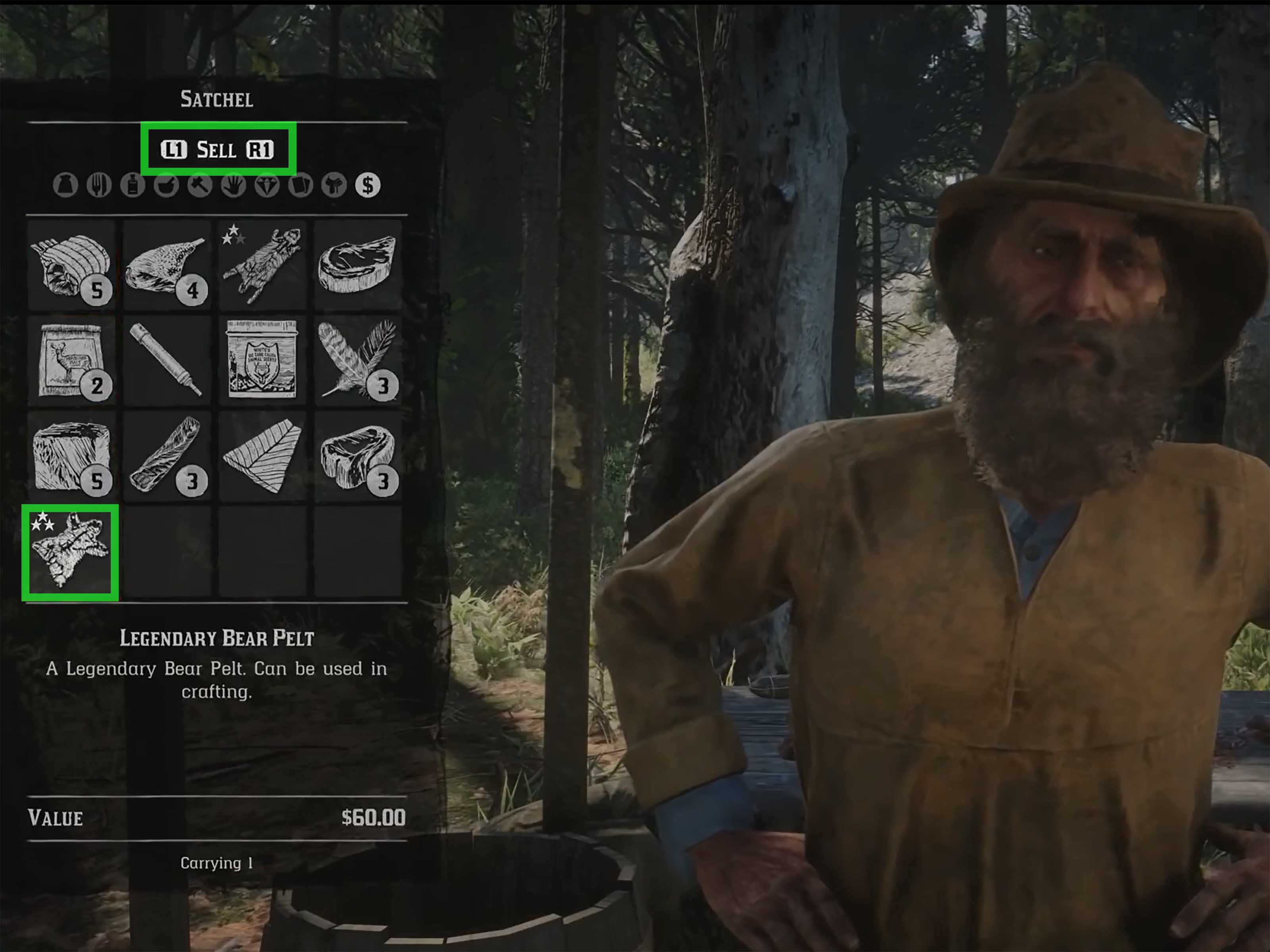
Perfect pelts are valuable because they unlock crafting options. You can sell them to the Trapper, donate them to Pearson, or sell them to a Butcher. The best choice depends on what you are trying to build.
Give Pelts to Pearson for Satchel and Camp Upgrades
At camp, Pearson can craft satchel upgrades and cosmetic improvements after you unlock the leather working tools through the ledger. Many of these upgrades require perfect pelts, hides, skins, or carcasses. The Legend of the East Satchel is especially useful because it greatly improves inventory carrying capacity.
If your goal is practical progression, prioritize Pearson early. Better satchels make the entire game more convenient, especially if you loot, hunt, craft, and hoard supplies like Arthur is preparing for a frontier warehouse sale.
Take Pelts to the Trapper for Clothing and Gear
The Trapper uses perfect and legendary pelts to craft unique outfits, hats, chaps, gloves, saddles, and reinforced gear. If you care about style, the Trapper is where your hunting trophies become fashion statements. Nothing says “responsible outlaw” like wearing half the local ecosystem as a coat.
The Trapper has several locations, including Saint Denis and remote wilderness spots. Once you sell or deliver the required materials to him, they become available for crafting recipes.
How to Transport Pelts Safely
After skinning an animal, stow the pelt on your horse. Small pelts can stack, but massive pelts take up the large cargo slot. That means you can only carry one huge pelt, such as a bear, bison, or elk hide, on the back of your horse at a time.
Do not wander around forever while carrying rare pelts. Fast travel, accidents, ambushes, and horse disasters can turn a perfect hunting trip into a sad campfire story. Visit Pearson, the Trapper, or a Butcher as soon as you have something important.
Common Mistakes That Ruin Perfect Pelts
The most common mistake is using the wrong weapon. The second most common mistake is shooting an animal more than once. The third is forgetting to check whether the animal was three-star quality in the first place.
Other mistakes include using explosive ammo, firing from too far away with a weak weapon, letting predators maul you mid-shot, trampling carcasses with your horse, or accidentally running into the animal after killing it. Yes, your horse can absolutely sabotage your hunting trip. Horses are loyal, but they are not always art critics when it comes to carcass preservation.
Quick Perfect Pelt Checklist
- Carry a bow, Small Game Arrows, Varmint Rifle, repeater, and a strong rifle.
- Study animals before shooting.
- Only hunt three-star animals for perfect pelts.
- Use the weapon recommended in the Compendium.
- Aim for the head, neck, or heart.
- Use Dead Eye for moving targets.
- Craft the Legendary Buck Antler Trinket early.
- Deliver important pelts quickly.
Field Experience: What Hunting Perfect Pelts Feels Like in Practice
The best way to approach perfect pelt hunting in Red Dead Redemption 2 is to treat it like a slow, satisfying side career instead of a quick errand. When players rush, they usually waste time. When they plan, the game becomes calmer, richer, and strangely relaxing. A good hunting run begins before the first animal appears. Stock up on arrows, clean your rifle, buy Varmint Rifle ammo, craft Small Game Arrows, eat something for your cores, and make sure your horse is carrying only what you need. It feels excessive until you are deep in Big Valley with a perfect elk in sight and realize you brought the wrong weapon. That is the kind of mistake that teaches humility with antlers.
One reliable habit is to ride slowly into an area, stop often, and scan with binoculars. The game rewards patience. Three-star animals are not always rare, but they are easy to miss if you are sprinting from marker to marker. In the Heartlands, for example, it is common to spot groups of deer and rabbits from a ridge. Instead of charging downhill, crouch, study each animal, pick the three-star target, and wait for it to turn broadside. That extra ten seconds can mean the difference between a perfect deer pelt and another “good enough” hide that sits in your inventory judging you.
Predator hunting is a different beast, sometimes literally. Panthers and cougars require confidence, but not reckless confidence. The safest method is to prepare before entering known spawn areas. Save the game, apply Cover Scent, keep a rifle ready, and listen carefully. Your horse often reacts before you see the predator. When the red dot appears, do not panic. Activate Dead Eye, aim for the head, and fire once. If you miss, the animal may close the distance fast. At that point, the perfect pelt is no longer the main concern. The main concern is whether Arthur becomes lunch with a hat.
Small animal hunting teaches the opposite lesson. It is not about power; it is about restraint. A perfect squirrel or snake can be more annoying than a perfect bison because the target is tiny, fast, and usually hiding in grass. Small Game Arrows feel awkward at first, but once you learn to slow down and aim carefully, they become essential. The Varmint Rifle also earns its place quickly. For rabbits, raccoons, beavers, and badgers, it is one of the most useful tools in the game.
The real secret is building routes. Start near camp, collect deer and rabbit pelts, swing toward rivers for beavers or muskrats, then head to the Trapper or Pearson before taking on dangerous predators. Perfect pelts are easier when you stop treating every hunt as random luck and start treating the map like a living supply chain. That is when RDR2 hunting clicks. You are no longer just chasing animals. You are reading terrain, wind, sound, movement, and opportunity. Also, you are still occasionally being humiliated by a badger, because the frontier has a sense of humor.
Conclusion
Learning how to get perfect pelts and hides in Red Dead Redemption 2 comes down to discipline. Find a pristine three-star animal, study it, use the correct weapon, land a clean vital shot, and transport the pelt safely. Once you understand those rules, hunting becomes one of the most rewarding systems in the game.
Perfect pelts are not just collectibles. They are the key to better satchels, unique clothing, camp upgrades, Trapper gear, and a smoother overall adventure. Whether you are chasing the Legend of the East Satchel or simply want Arthur to look like the most fashionable predator in the West, smart hunting pays off.