Wedding planning has a magical ability to turn ordinary adults into part-time accountants, full-time diplomats, and occasional amateur wrestlers over seating charts. One minute, everyone is calmly discussing flowers. The next, Aunt Linda is demanding a plus-one for a man she met during a cruise buffet in 2009.
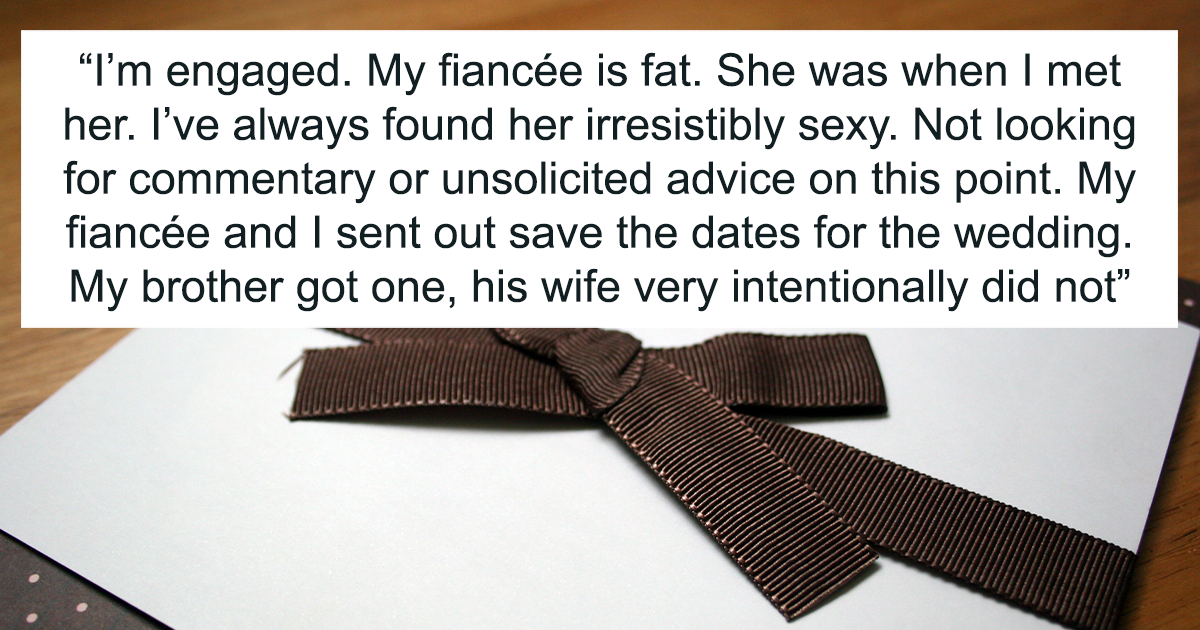
But some wedding guest-list conflicts are more serious than a disagreement over chicken versus fish. In one widely discussed family drama, a man decided not to invite his brother’s wife to his wedding after she had insulted his fiancée’s body at her own wedding. The sister-in-law reportedly excluded the fiancée from the bridal party because she believed her weight would complicate bridesmaid dress shopping and affect wedding photos. Later, when the couple planned a smaller celebration, the brother received an invitation while his wife did not. Suddenly, the woman who had once made someone else feel unwelcome was upset about being left out herself.
It is the kind of story that makes people pause halfway through scrolling and mutter, “Well, that is certainly a choice.” Because while family relationships can be messy, body shaming is not a harmless personality quirk. It is cruelty dressed up in a party outfit.
When Wedding Photos Become More Important Than People
The central conflict was not really about bridesmaid dresses. It was about respect.
According to the reported account, the sister-in-law told the man that his fiancée’s body would make dress selection more difficult and could ruin the visual effect of the wedding photos. That explanation may sound practical on the surface, but it carries a deeply insulting message: that someone’s worth in a family celebration depends on whether they fit a preferred aesthetic.
A wedding is not a fashion catalog. It is not a perfume commercial where every guest must appear in slow motion while holding champagne near a suspiciously perfect sunset. It is supposed to be a celebration of relationships, history, love, and the people who showed up when life was less glamorous than a Pinterest board.
When someone is excluded because of their size, the emotional injury goes far beyond one missed bridesmaid dress. The person is being told that their body is a problem to be managed, hidden, or edited out. That message can linger long after the flowers wilt and the dance floor clears.
Weight stigma includes negative assumptions, stereotypes, and unfair treatment directed at people because of their body size. Experts note that it can appear through insulting comments, so-called “health concerns,” social exclusion, and the assumption that body size reflects someone’s character, discipline, or value.
Why the Fiancé’s Decision Was Not “Petty”
When the man later chose not to invite his sister-in-law to his own wedding, some relatives reportedly became upset because much of the guest list came from that side of the family. To them, the exclusion may have looked dramatic or unnecessarily harsh.
But boundaries often look dramatic to people who were comfortable benefiting from the absence of boundaries.
The couple was not banning someone because she preferred a different cake flavor or made an unfortunate toast involving tequila and karaoke. They were responding to a person who had humiliated the bride-to-be over her body and treated her as less deserving of inclusion.
There is a difference between a difficult relative and a relative whose behavior makes someone feel unsafe, unwelcome, or constantly judged. Weddings are emotional events. They involve vulnerable moments, complicated families, old grudges, expensive centerpieces, and at least one person crying in a bathroom. Inviting someone who has already hurt one half of the couple can turn a joyful day into a tense performance.
Wedding experts generally advise couples to prioritize people who support their relationship and bring genuine joy to their lives. A guest list does not need to follow a mathematical formula where every branch of the family receives equal representation. It should reflect the couple’s relationships, budget, comfort, and vision for the day.
A Wedding Invitation Is Not a Family Membership Card
One of the biggest misunderstandings in family wedding drama is the belief that being related automatically guarantees a seat at the reception.
Family ties matter. Of course they do. But they do not erase harmful behavior. A person can be someone’s sister-in-law, cousin, uncle, or distant relative who always posts inspirational quotes online while starting chaos at Thanksgiving. None of those titles create a permanent right to attend every milestone.
A wedding invitation is an invitation, not a constitutional amendment.
Couples are allowed to choose guests based on closeness, mutual respect, emotional safety, venue capacity, and whether people genuinely support the marriage. Guidance for smaller weddings often recommends prioritizing immediate family, close friends, and people the couple actively wants around them, rather than inviting relatives strictly out of obligation.
That does not mean every difficult family member should be immediately removed from the list like an expired coupon. Sometimes a conversation, apology, or changed behavior can repair a relationship. But when someone refuses accountability, minimizes hurtful comments, or acts entitled to celebration without offering respect, exclusion may be a reasonable consequence.
The Problem With “But Her Husband Is Still Invited”
The part that made this story especially complicated was that the brother was invited while his wife was not.
Normally, wedding etiquette encourages couples to invite married or long-term partners together. Nobody wants to be the guest who arrives alone, tries to make small talk with a floral arrangement, and spends the evening pretending they are fascinated by the dessert table.
However, etiquette is not a magic shield that protects people from consequences. A spouse is usually included because the couple wants to honor an existing relationship. But when one spouse has personally mistreated the bride or groom, the situation changes.
The brother’s invitation was not necessarily an attack on his marriage. It was a recognition that he had a relationship with the groom and may not have been responsible for his wife’s behavior. The sister-in-law’s exclusion, meanwhile, was directly connected to the way she treated the future bride.
This kind of arrangement may feel awkward, but awkwardness is not the same as unfairness. It is often the unavoidable result of someone behaving badly and then discovering that other people remember things.
Wedding planners acknowledge that guest-list decisions become especially difficult when relatives are estranged or have caused ongoing conflict. In those cases, couples are encouraged to consider whether the person’s presence would create anxiety, drama, or discomfort for the people getting married.
Body Shaming Is Not Honest Advice
People who make body-focused comments often try to defend themselves with familiar phrases:
- “I was just being honest.”
- “I was concerned about her health.”
- “I did not mean it that way.”
- “Everyone is too sensitive these days.”
These statements may sound reasonable until you notice that they rarely come with kindness, curiosity, or accountability. They are often used as decorative wrapping paper around an insult.
There is no need to publicly critique someone’s body in order to select bridesmaid dresses, plan a menu, or organize wedding photos. Designers make dresses in a wide range of sizes. Tailors exist. Alterations exist. Cameras have survived people of different body types for more than a century. Humanity will continue.
More importantly, body size is not a moral failure. It does not reveal whether someone is generous, loyal, funny, intelligent, hardworking, or capable of loving another person deeply. Reducing a person to a visual problem is dehumanizing, especially during a milestone event where they should be treated as family.
Research and public-health guidance consistently warn that weight stigma can contribute to social isolation, avoidance of health care, unhealthy eating patterns, and emotional distress. It does not motivate people toward healthier lives; it often creates additional stress and harm instead.
How Couples Can Set Boundaries Before the Wedding
For couples dealing with a difficult relative, the goal is not to win a family argument. The goal is to protect the relationship and create a wedding environment where both partners feel respected.
1. Discuss the Problem Privately First
Before making a final guest-list decision, couples should talk openly about what happened, how it affected them, and what they need going forward. One partner may be tempted to “keep the peace,” while the other may feel deeply hurt and unheard. Both reactions are understandable, but the couple should make the decision together.
The strongest response is not always the loudest one. Sometimes it is simply a calm agreement: “We do not want this person at our wedding because we do not trust them to treat us kindly.”
2. Give Consequences a Clear Reason
A boundary works best when it is specific. Instead of saying, “You are toxic,” couples can explain, “You made hurtful comments about my fiancée’s body and excluded her because of her size. We do not feel comfortable having you at our wedding unless that behavior is addressed.”
This approach avoids a chaotic debate over personality while keeping the focus on actions and consequences.
3. Do Not Let Relatives Rewrite the Story
Family members may try to soften the situation by saying things like, “She did not mean it,” or “That was years ago,” or “You know how she is.”
But “that is just how she is” is not an apology. It is usually a warning label.
When people minimize harmful behavior, they often place the burden of peace on the person who was hurt. The future bride is expected to smile, forgive quickly, and make everyone else comfortable. Meanwhile, the person who made the cruel comment is rarely asked to reflect, apologize, or change.
4. Keep the Message Brief
There is no need to send a twelve-page document with footnotes, screenshots, and a color-coded emotional timeline. Tempting? Possibly. Helpful? Usually not.
A short message is often enough: “We are keeping our wedding guest list to people who have supported us and treated both of us respectfully. Because of the comments made about her body and the way she was treated, we are not comfortable extending an invitation.”
Clear. Calm. No emergency meeting required.
Could an Apology Have Changed the Outcome?
Possibly.
People make mistakes. They say cruel things. They get caught up in appearances, pressure, family expectations, and the bizarre temporary insanity that can surround wedding planning. A sincere apology can sometimes repair damage, especially when it includes ownership rather than excuses.
A real apology sounds like this: “I was wrong to comment on her body and exclude her because of her size. I understand that I embarrassed and hurt her. I am sorry, and I will not make excuses for what I did.”
A fake apology sounds like this: “I am sorry you were offended by my concern for the photos.”
One of these creates room for healing. The other deserves to be placed gently in a trash bin next to expired wedding favors.
Whether the couple chooses to forgive is their decision. Forgiveness does not automatically require access. Someone can be forgiven while still being excluded from a private celebration. Rebuilding trust takes time, changed behavior, and more than one awkward phone call.
Experiences With Wedding Exclusion, Family Boundaries, and Body Shaming
Stories like this resonate because many people have experienced some version of being treated as “too much” for an event that should have included them. Sometimes it is about body size. Sometimes it is about clothing, race, disability, relationship status, religion, money, parenting choices, or simply not fitting the family’s preferred image.
One common experience involves the relative who treats a wedding like a branding campaign. They want every bridesmaid to match a specific body type, hairstyle, shade of lipstick, or social-media-friendly aesthetic. The problem is not the desire for a coordinated event. The problem begins when coordination becomes more important than dignity.
Another frequent situation happens when a person is invited to the wedding but treated poorly during the planning process. They may hear jokes about their body, be pressured to wear something uncomfortable, or be placed in photos only after being criticized for how they look. These moments can make someone feel as though they are welcome only when they remain quiet and visually convenient.
Some couples also face a difficult choice when family members criticize their partner. A parent may make comments about a future daughter-in-law’s weight. A sibling may ridicule a groom’s appearance. An aunt may insist that a bride should “look better” before the wedding. These remarks often get dismissed as jokes, but jokes are supposed to make people laugh, not make them dread family gatherings.
The healthiest couples tend to handle these moments as a team. They do not leave one partner alone to absorb disrespect from the other person’s relatives. They speak up, set limits, and make it clear that insulting one partner means disrespecting the relationship itself.
That support matters. Being defended by a fiancé, spouse, sibling, or close friend can be profoundly meaningful after a humiliating comment. It sends a message that says, “You do not have to earn kindness by changing your body.”
There are also situations where exclusion is used carelessly. Some people remove relatives from guest lists to punish them, control them, or create drama. That is not what healthy boundaries look like. A boundary is not revenge with stationery. It should be connected to a real need for safety, respect, and emotional peace.
In this case, the sister-in-law’s exclusion appeared tied directly to her earlier treatment of the future bride. That distinction matters. The couple did not seem to be chasing a dramatic family feud. They were deciding that someone who had made the bride feel unwanted did not deserve a front-row seat to celebrate her marriage.
For anyone navigating a similar conflict, it may help to remember this: your wedding is not an audition for family approval. You do not have to invite people who shame, insult, belittle, or destabilize you just to avoid uncomfortable conversations. The discomfort already exists. Ignoring it merely shifts the burden onto the person who was hurt.
Choose guests who are happy for you. Choose people who treat your partner with basic decency. Choose the relatives and friends who can celebrate without turning the reception into a tribunal. And if someone complains that consequences are unfair, they may need to revisit the behavior that created those consequences in the first place.
Final Thoughts
The sister-in-law may have expected the future bride to swallow the insult, smile for the family, and keep the peace. Instead, the couple made a different choice: they protected their wedding day from someone who had already made the bride feel unwelcome.
That does not make family tension disappear. It does not guarantee that everyone will agree. But weddings should not require people to tolerate cruelty just because it comes from a relative wearing formal shoes.
A good guest list is not built on guilt. It is built on love, respect, safety, and the people who genuinely want the couple to thrive. Anyone who cannot offer those basics may find that the invitation envelope never arrives.
Note: This article is commentary based on a publicly reported online family-conflict story. It focuses on the broader themes of wedding boundaries, body shaming, accountability, and respectful relationships.