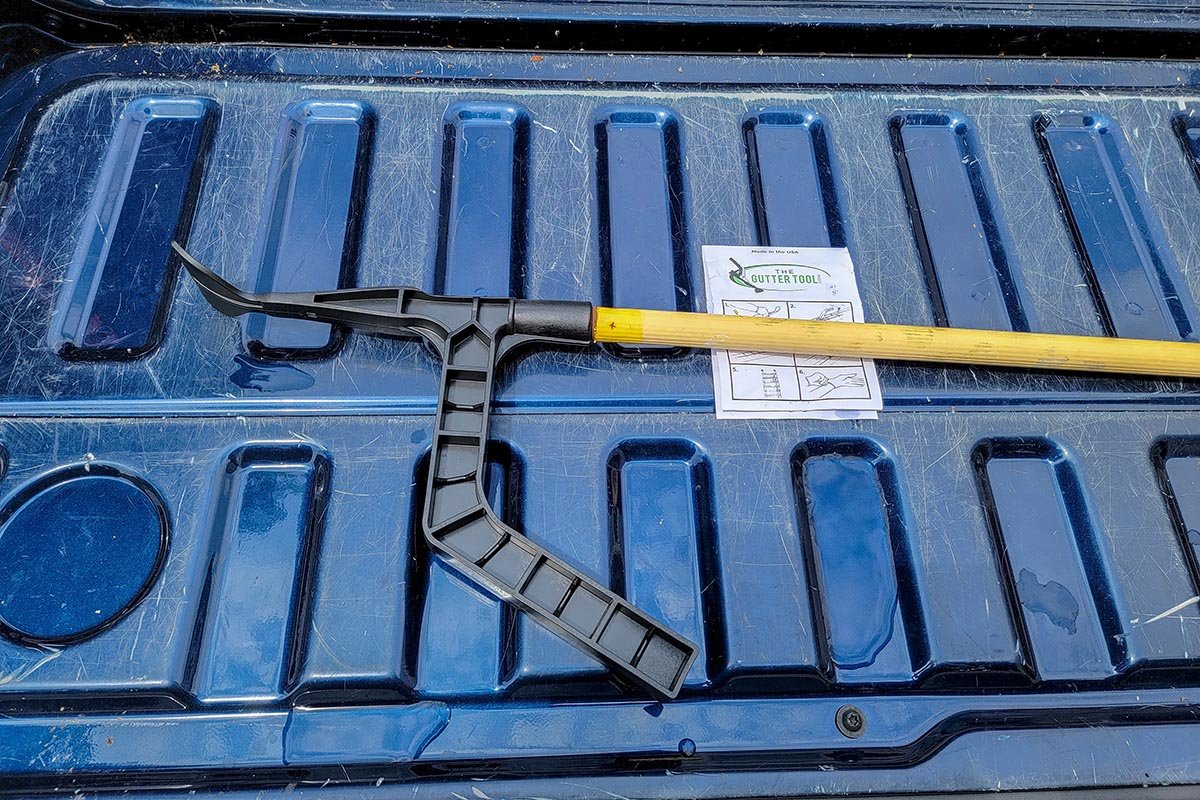
Gutter cleaning can turn a pleasant Saturday into a leafy argument with gravity. The Gutter Toola lightweight spoon-and-hook attachment that threads onto an extension polepromises to make the chore faster by pulling debris toward one collection point. It has no motor, battery, or heroic infomercial soundtrack. It is simply a cleverly shaped manual tool, which may be exactly what routine gutter maintenance needs.
This review synthesizes published hands-on testing, current product information, retailer guidance, ladder-safety recommendations, and reported user experiences. Here is what the tool does well, where it struggles, and who should buy it.
Quick Verdict: Clever, Useful, but Not Completely Hands-Off
The Gutter Tool is a practical choice for homeowners who can safely access low gutters and want to reposition their ladder less often. Its spoon side drags leaves, pine needles, small twigs, roof grit, and light sediment along the channel. When the pile reaches a hanger, the hooked side helps pull it beneath or around the obstruction.
The limitation is simple: the attachment gathers debris but does not lift the final pile into a bucket. You still need a gloved hand or small scoop. Think of it as a rake for a narrow metal canal, not a miniature excavator.
Best for: Accessible one-story rooflines, seasonal cleaning, dry or lightly damp debris, and people who already own a threaded extension pole.
Not ideal for: Multi-story homes, steep roofs, unstable ladder locations, nearby power lines, or heavily blocked downspouts.
What Is the Gutter Cleaning Tool?
The product commonly called The Gutter Tool or Gutter Cleaning Spoon and Scoop is a lightweight plastic attachment with two working ends. One resembles a shallow hoe for pulling debris; the other is a narrow hook for navigating gutter hangers. Its threaded socket fits many painter’s poles, broom handles, and telescoping extension poles.
Unlike blower, vacuum, hose, or pressure-washer attachments, it uses no power and little setup. That also means it does not spray black gutter compost over the siding, shrubs, and unfortunate person holding the pole.
Why Clean Gutters Matter
Gutters direct roof runoff into downspouts and away from the house. When leaves and grit block the route, water can overflow, soak fascia, erode landscaping, back up near roof edges, and collect beside the foundation. Many homes benefit from cleaning in late spring and again after autumn leaf drop, while properties surrounded by pines, maples, or oaks may need more frequent checks.
Gutter guards can reduce large debris, but they do not eliminate inspection. Needles, seed pods, fine grit, and organic sludge may still collect on top of or beneath a guard.
What Published Hands-On Testing Found
Setup Is Almost Comically Easy
Thread the attachment onto a compatible pole, tighten it securely by hand, and check for wobble. The pole is usually sold separately, so include that cost when comparing products. A moderate painter’s pole is often easier to control than an extra-long, heavy model that flexes at full extension.
The Extra Reach Is the Main Benefit
Instead of cleaning only the section directly in front of the ladder, the operator can work several feet in both directions and draw debris toward the center. Published testers consistently found that this reduced ladder repositioning. Fewer moves do not make ladder work risk-free, but they can make the process more efficient and less tempting to overreach.
Dry Leaves and Needles Move Well
The spoon catches loose leaves and drags them smoothly along the gutter bottom. Pine needles also move well unless they have formed a dense mat around a hanger or outlet. Small twigs usually travel with the pile; longer branches may need to be removed separately.
The Hook Handles Hangers Better Than a Wide Scoop
When the spoon reaches a hidden hanger, rotate the pole and use the hook to pull debris beneath or around it. After a few passes, the spoon-hook-spoon motion becomes intuitive. This is the feature that separates the tool from an ordinary hand scoop.
Wet Muck Requires Patience
Light sludge can be scraped and gathered, but thick, waterlogged material creates resistance at the end of the pole. Work in small batches rather than attempting one glorious pull of the entire gutter ecosystem. Excessive force can bend thin aluminum or strain hangers.
Cleanup Stays Relatively Controlled
Because the tool gathers rather than blasts, most debris remains in the gutter until removal. The yard and siding stay cleaner than they might with a blower or high-pressure spray. The trade-off is that the final pile still has to come out manually.
Pros and Cons
Pros
- Lightweight, simple, and quick to set up
- Works around many hidden gutter hangers
- Extends the useful reach from one ladder position
- Keeps debris more controlled than blowers or pressure washers
- Needs no battery, hose, fuel, or special maintenance
Cons
- Extension pole is generally not included
- Collects debris but does not remove the final pile
- Long poles can flex and become tiring
- Not designed to clear deep downspout clogs
- Often still requires safe ladder use
How to Use the Gutter Tool Efficiently
- Choose a dry, calm day. Wet rungs, slick ground, and gusty wind are not useful accessories.
- Inspect the work area. Check for overhead wires, unstable soil, wasps, damaged gutters, and obstacles near the ladder.
- Prepare your gear. Wear sturdy shoes, work gloves, and eye protection. Keep a secured bucket, small scoop, and hose nearby.
- Attach the head securely. Test the threaded connection at ground level before raising the pole.
- Position the ladder correctly. Follow its label and manufacturer instructions, and use a stabilizer when appropriate.
- Pull small sections toward you. Short, controlled strokes provide better accuracy than one giant sweep.
- Rotate at each hanger. Use the hook to move debris through the obstructed area, then switch back to the spoon.
- Remove the collected pile. Place it directly into a bucket instead of dropping it where it can become a slipping hazard.
- Flush toward the downspout. Once solids are gone, use a controlled hose stream from the far end. Avoid spraying water beneath shingles.
- Confirm drainage. If less water exits than enters, the downspout probably needs additional clearing.
Safety: The Tool Reduces Reaching, Not Gravity
Inspect the ladder for damaged rails, rungs, feet, locks, and rope. Place it on firm, level ground, maintain three points of contact while climbing, and keep your torso between the side rails. Use a tool belt, secured bucket, or hand line instead of climbing with loose equipment in your hands.
Keep ladders and extension poles well away from power lines. Do not use a pressure washer while standing on a ladder; recoil and overspray can quickly ruin your balance. Stop when the roofline is too high, the ground is sloped, the gutter is loose, or the setup feels uncertain. A professional cleaning bill is cheaper than an emergency-room bill and comes with fewer paper gowns.
How It Compares with Other Gutter Cleaners
Hand Scoop
A scoop removes material immediately and costs little, but its reach is limited. Pairing one with the Gutter Tool works well: the pole attachment gathers, and the scoop lifts.
Leaf Blower Attachment
A blower can clear dry leaves quickly from the ground, but it struggles with wet muck and may scatter debris across the roof, siding, and landscaping.
Hose Wand
A water wand is excellent for final flushing and checking drainage. Used too early, it may convert dry leaves into soup without removing the blockage.
Pressure Washer
Pressure offers more power than routine leaf removal needs and can damage shingles, finishes, seals, or lightweight gutters when mishandled.
Shop-Vac Kit
A vacuum kit may keep the operator on the ground, but long tubes can be awkward, and performance falls when debris is wet or tightly packed.
Who Should Buy It?
Buy the Gutter Tool when you want manual control, already own a suitable pole, and have safely accessible gutters interrupted by hangers. Choose a ground-operated brush, blower, or vacuum system when avoiding a ladder is the main priority. Hire a professional for tall homes, steep roofs, unstable access, loose gutter sections, severe clogs, or electrical hazards.
Frequently Asked Questions
Can it be used from the ground?
Sometimes on low gutters with a long pole, but control and visibility decrease with distance. Do not assume that more reach automatically means better results.
Does it unclog downspouts?
It clears debris around the opening, not deep inside the pipe. A hose, suitable flexible snake, or professional service may be needed.
Will it fit every gutter?
No. Roof overhang, guard style, hanger placement, gutter width, and installation angle affect access. Compare current product dimensions with your system.
Conclusion: A Simple Tool That Earns Its Space
The Gutter Tool works because it gives a basic hand tool more reach and a smart way to navigate hangers. Published testing supports its low weight, easy setup, controlled operation, and ability to reduce ladder repositioning. It is not a complete systemyou still need a pole, protective gear, safe access, a scoop or gloved hand, and a final rinsebut it makes routine gutter cleaning noticeably less awkward.
Extended Field Experience: What Using This Style of Tool Is Really Like
The first lesson from real-world use is that pole length matters more than shoppers expect. A short painter’s pole feels nimble when the operator is already near the gutter. Add several telescoping sections and the head can reach farther, but it begins to feel disconnected from your hands. The pole flexes, the spoon angle becomes harder to judge, and a small wrist movement produces a wide swing at the roofline. Maximum reach looks impressive on packaging; comfortable reach is what finishes the job.
The second lesson is to avoid building one enormous pile. Dry leaves glide so easily that it is tempting to rake half the gutter toward a single location. Then the mass meets a damp patch, twig, or hanger and becomes a stubborn plug. Smaller batches are easier to steer, lift, and place in a bucket. They also put less sideways force on seams and brackets. Nobody receives a medal for creating the neighborhood’s largest wad of decomposed maple leaves.
Visibility also changes the experience. When the tool head is easy to see, the spoon-and-hook motion is intuitive. Under a deep overhang or behind decorative fascia, the work becomes partly tactile. You feel resistance through the pole and learn to distinguish a leaf clump from a hanger. That feedback helps, but forcing the tool when the obstruction is unclear is a bad habit. Reposition for a better view rather than treating the gutter like a mystery box.
Wet debris shows the value of a two-stage routine. First, use the attachment to break up and gather solids. Second, remove the pile with a scoop or gloved hand. Only then should the gutter be flushed. Starting with water may turn dry material into soup; starting with a blower may launch it onto the siding. Manual collection keeps the process controlled, while the final rinse reveals leaks, low spots, and slow downspouts.
The tool can encourage better ladder discipline because it reaches to both sides and reduces the urge to lean for one last handful. Its hook can rest on a rung while the operator climbs down, leaving both hands free. Still, extra reach can create false confidence. A long pole is not permission to twist, overreach, or work near wires. The safest position remains centered, balanced, and boringand boring is excellent when your feet are above the lawn.
Finally, rinse off leaf residue and grit after each use, inspect the threaded socket, and let the head dry before storage. Check the pole connection during the job because repeated rotation around hangers can loosen some threaded joints. This tiny routine prevents the irritating moment when the attachment unscrews and settles into the gutter just beyond reach.
Overall, the experience develops a steady rhythm: pull, rotate, hook, pull, collect, and move. The tool does not turn gutter cleaning into entertainment, but it removes enough awkwardness to make the chore feel organized instead of improvised.
SEO Tags
Note: Product specifications, pricing, availability, and instructions can change. Confirm current dimensions, compatibility, and safety requirements before purchase or use.