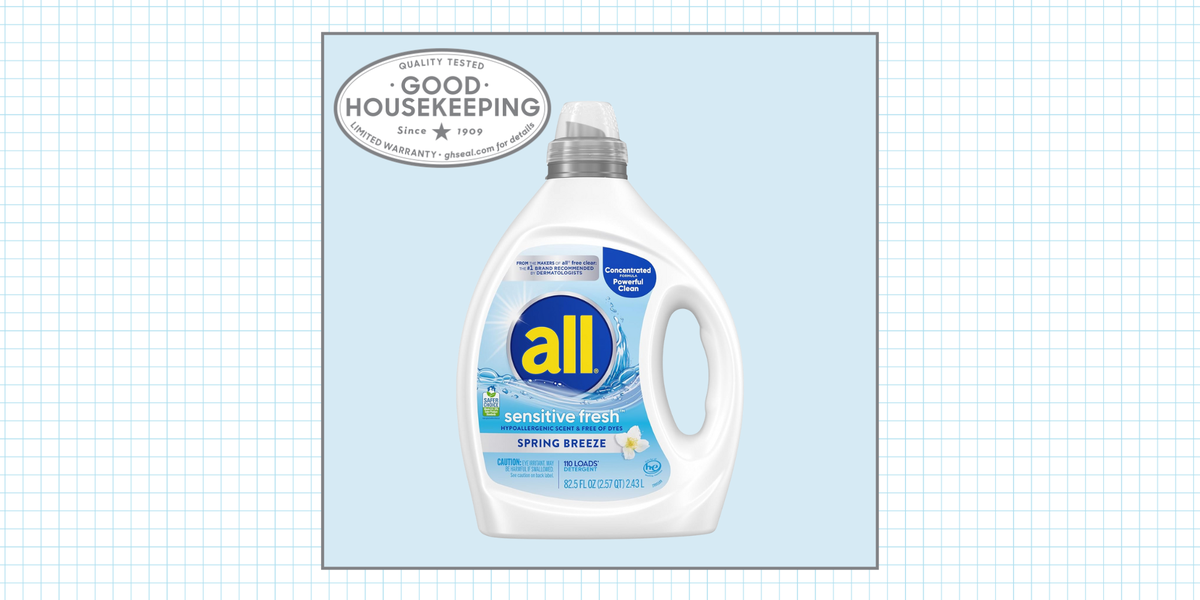
If laundry detergent had a personality test, all Sensitive Fresh Liquid Laundry Detergent would probably score as “responsible adult who still enjoys a nice-smelling hoodie.” It is designed for a very specific household problem: people want clothes that smell fresh, look clean, and feel comfortable on sensitive skin. That sounds simple until you stand in the detergent aisle, surrounded by bottles promising mountain air, ocean breezes, tropical gardens, stain demolition, color protection, odor control, and possibly world peace.
The reason this product deserves a closer look is its balance. Many sensitive-skin detergents remove fragrance entirely, which is often the safest choice for people who react to scented products. But not every shopper wants unscented laundry. Some people want a light, clean scent without stepping into a perfume cloud that follows them through the house like a dramatic movie fog machine. all Sensitive Fresh tries to sit in that middle lane: dye-free, hypoallergenic-scented, stain-fighting, cold-water friendly, and backed by the Good Housekeeping Seal.
This GH Seal Spotlight looks at what makes all Sensitive Fresh Liquid Laundry Detergent stand out, how it compares with typical sensitive-skin laundry formulas, and who may benefit most from using it. We will also talk honestly about the big caveat: “sensitive” does not mean “perfect for every sensitive person.” Skin is picky. Laundry is personal. And sometimes your favorite shirt is innocent while your detergent is the sneaky little villain.
What Is all Sensitive Fresh Liquid Laundry Detergent?
all Sensitive Fresh Liquid Laundry Detergent is a scented detergent made for households that want a gentler laundry option without completely giving up fragrance. It comes from the makers of all free clear, a well-known detergent line often associated with sensitive-skin laundry care. The formula is marketed as free of dyes, made with a hypoallergenic scent, compatible with high-efficiency and standard washing machines, and effective even in cold water.
One of the key claims is that the detergent removes 99% of certain everyday and seasonal allergens from fabrics, including dog and cat dander, dust mite matter, ragweed pollen, and grass or tree pollen. That matters because fabrics are basically tiny gossip collectors. Your clothes, sheets, towels, and pillowcases pick up body oils, dust, pollen, pet hair, food spills, and the mysterious crumbs that appear even when nobody admits eating crackers in bed.
Unlike traditional “free and clear” formulas, all Sensitive Fresh includes a Spring Breeze scent. This is the product’s main personality trait. It is not trying to be completely fragrance-free; it is trying to be a more skin-conscious scented option. That distinction is important for shoppers with eczema, fragrance allergies, or known contact dermatitis. If your skin reacts to fragrance, even a hypoallergenic scent may still be a problem. If your skin is mildly sensitive but you miss the emotional support of fresh-smelling laundry, this detergent may be more appealing.
Why the Good Housekeeping Seal Matters
The Good Housekeeping Seal is not just a decorative badge slapped on a bottle because it looked lonely. Products that earn the Seal are evaluated by the Good Housekeeping Institute to confirm that they perform as promised. The Seal is also tied to a limited warranty, which is part of why many shoppers still view it as a meaningful sign of trust.
For laundry detergent, that kind of testing matters because detergent claims can be hard to judge at home. One person’s “fresh scent” is another person’s “why does my towel smell like a candle store had a nervous breakdown?” One person’s “removes stains” may mean a coffee splash, while another person expects it to erase grass, chocolate, spaghetti sauce, and whatever that sticky thing is on a child’s sleeve.
Good Housekeeping’s testing process for cleaning products looks at performance, ease of use, value, labeling, safety, packaging, and real-world usefulness. For all Sensitive Fresh, Good Housekeeping highlighted its ability to remove tough set-in stains and noted that consumer testers also responded positively. That is important because lab results and home laundry habits are not always twins. A detergent has to work in real machines, with real loads, real water temperatures, and real people who sometimes measure detergent with the confidence of a pirate pouring rum.
Key Features at a Glance
Dye-Free Formula
Dyes do not clean your clothes. They mostly make the liquid look more visually appealing in the bottle. For people with sensitive skin, dyes can be unnecessary extras. A dye-free formula is a practical choice because it removes one common category of potential irritation without sacrificing cleaning power.
Hypoallergenic Scent
The most interesting feature is the hypoallergenic Spring Breeze scent. This gives the detergent a fresh laundry smell while still aiming to be gentler than many strongly perfumed detergents. The scent is likely to be a selling point for people who dislike completely unscented laundry. However, shoppers with confirmed fragrance sensitivity should still proceed carefully.
Removes Common Allergens
The detergent is marketed as removing 99% of top everyday and seasonal allergens from fabrics. This does not mean it treats allergies or prevents allergic reactions. It means the product is designed to help wash away common fabric-clinging allergens such as pet dander and pollen. For homes with pets, open windows, outdoor sports, or children who treat grass like a second wardrobe, this feature is especially useful.
Cold-Water Performance
Modern detergents increasingly need to work in cold water because many households wash in cold cycles to save energy, protect colors, and reduce fabric wear. all Sensitive Fresh is designed to clean effectively even in cold water, which makes it practical for everyday loads such as T-shirts, jeans, school clothes, sheets, and casual wear.
EPA Safer Choice Certification
The product carries EPA Safer Choice certification, meaning its ingredients have been reviewed against the program’s criteria for safer human health and environmental characteristics. This does not mean the EPA endorses the product as the best detergent on the market, but it does give shoppers another point of confidence when comparing formulas.
Performance: Can a Sensitive Detergent Actually Clean?
One old laundry myth says that gentle detergents are only good for clothes that are already basically clean. That is not a very useful standard unless your household is made entirely of mannequins. Real laundry includes sweat, sunscreen, cooking oil, pet smells, makeup, mud, and the occasional chocolate incident that looks like a crime scene but is somehow “not a big deal.”
Good Housekeeping’s review noted that all Sensitive Fresh performed well on set-in stains, including tough examples such as crayon, mascara, ketchup, chocolate syrup, and wine. That is a strong sign because those stains represent different cleaning challenges. Greasy stains need surfactants that can lift oils. Pigmented stains need enough cleaning strength to pull color from fabric. Food stains often combine oils, proteins, sugars, and dyes in one annoying little package.
The detergent’s value also matters. Good Housekeeping listed it as a strong value pick, with a low cost per load compared with other top-tested detergents. For families doing frequent laundry, cost per load is not a tiny detail. A detergent can be wonderful, but if it costs like it was handcrafted by moonlight in a private Swiss laboratory, most households will not use it for every sock, towel, and mystery-stained napkin.
Who Should Consider all Sensitive Fresh?
This detergent is best for people who want a more sensitive-skin-conscious laundry product but still enjoy lightly scented clothes. It may fit well in households where one person likes fragrance and another person says, “Please do not turn my pillowcase into a perfume billboard.” It also makes sense for families with pets, seasonal pollen exposure, or kids whose clothes collect half the outdoors before dinner.
It may also appeal to shoppers who already trust all free clear but want something with a fresher scent. That is a common laundry dilemma. Unscented detergents can be excellent for skin comfort, but some people associate scent with cleanliness. Technically, clean does not need to smell like anything. Emotionally, however, many of us have been trained to believe that laundry is not truly done until it smells like a meadow that pays rent.
Still, this product is not for everyone. If a dermatologist has told you to avoid scented products, a fragrance-free detergent remains the smarter choice. If you have eczema that flares unpredictably, patch testing your laundry routine is wise. Wash a small set of items first, avoid fabric softener, and watch for changes. A detergent can be gentle for many people and still not be right for your skin.
How It Compares With Free-and-Clear Detergents
Free-and-clear detergents are usually free of dyes and perfumes. They are often recommended for sensitive skin because they keep the formula simple and avoid common fragrance-related irritation. all Sensitive Fresh is different because it keeps the dye-free approach but adds scent back into the experience.
That makes it more of a compromise product than a strict dermatologist-style choice. Think of it as the bridge between “I need my laundry routine to be as plain as toast” and “I want my towels to smell like they just returned from a wholesome vacation.” For many households, that bridge is exactly what they want.
The trade-off is simple: fragrance improves the sensory experience but may increase irritation risk for some people. The best way to decide is not by reading the front label alone. Look at your household’s history. Do scented detergents cause itching? Do dryer sheets bother your skin? Do strong fragrances trigger headaches? Do babies or family members with eczema react after sleeping on washed sheets? Your own laundry evidence is more useful than any marketing phrase.
Tips for Getting the Best Results
Use the Correct Dose
More detergent does not mean cleaner clothes. In fact, too much detergent can leave residue, trap odors, and make fabrics feel stiff. Follow the bottle instructions based on load size and soil level. Your washing machine is not a soup pot; “a little extra for luck” is not always your friend.
Do Not Overload the Washer
Clothes need room to move. If the washer is packed tighter than a suitcase before a family vacation, detergent and water cannot circulate properly. Overloading can lead to poor rinsing, leftover soil, and that tragic moment when a shirt comes out with the same stain it went in with, now slightly more confident.
Use Cold Water for Everyday Loads
Cold water is a practical default for many fabrics, especially colors and lightly soiled clothing. It can help reduce fading and energy use. For greasy, heavily soiled, or hygiene-sensitive loads, warm or hot water may be better, depending on the fabric care label.
Pre-Treat Stains
Even a strong detergent benefits from teamwork. For stains like ketchup, makeup, grass, or cooking oil, apply a small amount of liquid detergent directly to the stain, gently rub the fabric together, and let it sit briefly before washing. The goal is to give the formula a head start before the washer begins its spin-cycle gymnastics.
Skip Fabric Softener if Skin Is Sensitive
Fabric softeners and dryer sheets often leave residues that can bother sensitive skin. If you are testing a new sensitive-skin detergent, keep the rest of the routine simple. Otherwise, you may blame the detergent for irritation caused by a scented dryer sheet wearing an innocent little disguise.
Best Uses Around the Home
all Sensitive Fresh is a strong candidate for everyday family laundry: school clothes, office shirts, cotton pajamas, sheets, pillowcases, towels, and pet-adjacent fabrics. It is especially useful when laundry needs to smell fresh but not aggressively perfumed. Guest towels, spare sheets, and couch blankets are good examples. They should smell clean, not like they are trying to sell you a luxury hotel membership.
For baby clothes or eczema-prone skin, fragrance-free detergent may still be the safer first choice. For athletic gear, all Sensitive Fresh can help with ordinary sweat and odors, but deeply embedded performance-fabric odor may require prompt washing, correct dosing, and occasional specialized care. For delicate fabrics, always follow garment labels. Detergent can do many things, but it cannot negotiate with a wool sweater that has decided to become doll-sized.
The Honest Pros and Cons
Pros
The biggest advantages are the dye-free formula, hypoallergenic scent, allergen-removal claim, cold-water performance, Good Housekeeping Seal, and EPA Safer Choice certification. The product also offers a practical value for families that wash often. It gives scent-lovers a more sensitive-skin-minded option without moving all the way to unscented detergent.
Cons
The main drawback is also the main attraction: scent. Some people may find it too strong, and others with fragrance sensitivity may need to avoid it entirely. It is also not a medical product and should not be treated as a solution for eczema, allergies, or skin conditions. If laundry seems to trigger a rash, a dermatologist can help identify whether detergent, fabric softener, fragrance, dyes, preservatives, or something else is responsible.
Experience Section: Living With a Sensitive-Skin Laundry Routine
Using a detergent like all Sensitive Fresh is not just about reading a label; it is about how laundry behaves in real life. Imagine a household where one person wants everything fragrance-free, another wants towels to smell freshly washed, the dog believes every blanket is community property, and someone keeps leaving gym clothes in a backpack until they develop their own weather system. This is where a product like all Sensitive Fresh becomes interesting.
The first experience many people notice is the scent. It is fresher than a traditional free-and-clear detergent but not meant to be as loud as heavily perfumed formulas. On sheets, that can feel pleasant because bedding often benefits from a clean, light smell. On towels, the scent may help create that “just washed” feeling people love. On clothing worn close to the skin all day, the reaction depends on personal sensitivity. Some users may find it comfortable; others may decide fragrance-free is still the better path.
The second experience is how clothes feel after rinsing. A good sensitive-skin routine should leave fabrics clean without a heavy coating. That means dosage matters. If you pour too much detergent, even a gentle formula can leave residue. This is especially noticeable on dark shirts, leggings, towels, and pillowcases. The solution is boring but effective: measure properly, avoid overloading the machine, and use an extra rinse if someone in the home is especially reactive.
The third experience is stain reality. all Sensitive Fresh can handle many ordinary messes, but no detergent is a wizard in a plastic bottle. A dried pasta sauce stain still appreciates pre-treatment. Makeup on a collar needs attention before washing. Grass stains from a weekend soccer game should not be left to age like cheese. The detergent works best when paired with good habits: treat stains early, sort wisely, and choose water temperature based on fabric and stain type.
For pet owners, the allergen-removal claim is one of the most useful parts of the product story. Pet blankets, couch covers, pillow shams, and washable throws collect dander quickly. Washing them regularly with a detergent designed to remove common allergens can make the home feel fresher. It will not replace vacuuming, grooming, air filtration, or allergy treatment, but it can support a cleaner fabric routine. Basically, your dog may still shed like it is training for a championship, but your laundry does not have to surrender.
For families, the convenience factor is also important. A detergent that works in cold water, comes in large sizes, and fits both HE and standard machines is easier to use consistently. People do not want a laundry product that requires a chemistry degree, a stopwatch, and emotional preparation. They want to pour, wash, dry, fold, and move on with life. If the clothes come out clean, the towels smell fresh, and nobody complains about scratchy fabric, that is a domestic victory worthy of applause.
The most practical way to test all Sensitive Fresh is to start with non-critical laundry: a few T-shirts, casual pants, towels, or a spare sheet set. Avoid changing three other products at the same time. Do not add a new scented softener, booster beads, or dryer sheets during the test. That way, if your skin feels fine and your laundry smells good, you know the detergent deserves credit. If irritation appears, you have a clearer suspect list.
In everyday use, all Sensitive Fresh feels like a product made for the “middle household” the one that wants fewer irritants but still enjoys a fresh scent. It is not the strictest option for highly reactive skin, and it is not the strongest fragrance bomb on the shelf. That middle position is exactly why it stands out. It recognizes that laundry is both practical and emotional. We want clean fabric, but we also want the small happiness of pulling a fresh towel from the dryer and thinking, “Yes, I have my life together,” even if there is still a mountain of socks waiting nearby.
Final Verdict
all Sensitive Fresh Liquid Laundry Detergent earns attention because it solves a common laundry compromise: how to get a fresh scent, dependable cleaning, and a more sensitive-skin-conscious formula in one bottle. Its Good Housekeeping Seal, dye-free formula, allergen-removal claim, EPA Safer Choice certification, and cold-water performance make it a strong everyday detergent for many households.
The best buyer is someone who wants a scented detergent but does not want the heavy fragrance or unnecessary dyes found in many traditional formulas. The cautious buyer is someone with eczema, fragrance allergy, or a history of detergent-related rashes. For that person, fragrance-free may still be the better first choice.
Overall, all Sensitive Fresh is a smart option for families, pet owners, scent-lovers with mild sensitivity concerns, and anyone who wants laundry that smells clean without feeling like the detergent is auditioning for a perfume commercial. It is practical, accessible, and backed by meaningful testing. In the crowded detergent aisle, that is enough to make it worth a closer look.
Note: This article is written for general consumer information and does not replace medical advice. Anyone with persistent skin irritation, eczema flare-ups, or suspected detergent allergy should consult a qualified healthcare professional.