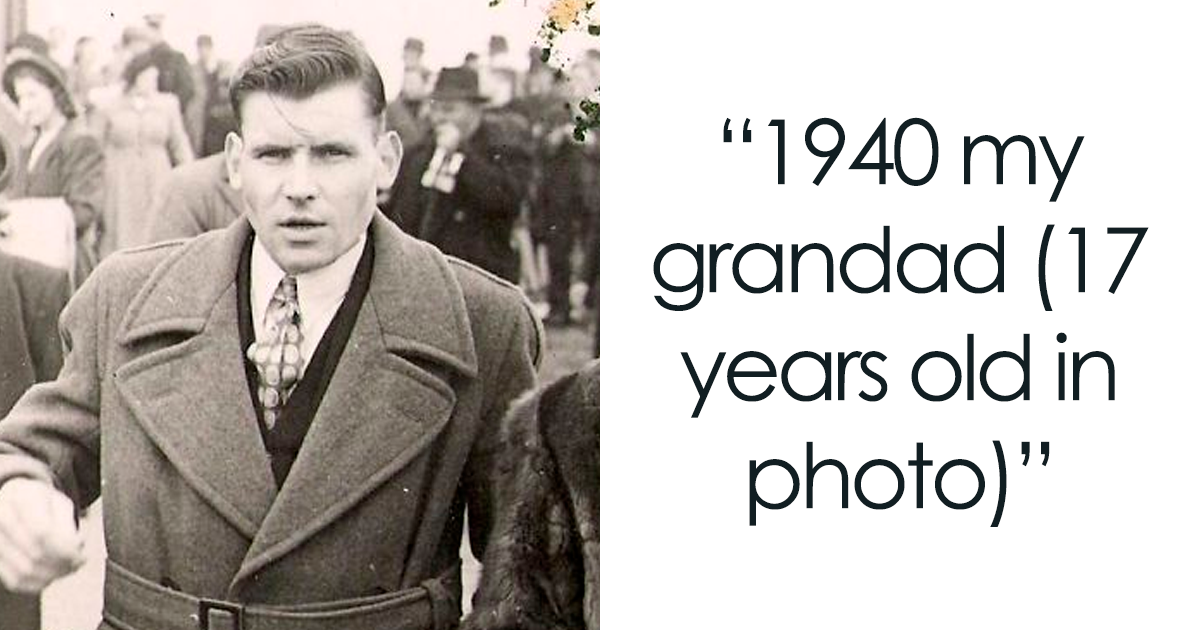
Did people age faster in the past, or did they simply dress like they had already paid off a mortgage, raised four children, and complained about property taxes? That is the deliciously weird question behind a recurring internet obsession: vintage photos of teenagers and twenty-somethings who look, to modern eyes, startlingly mature.
The viral theory is simple. People post old family pictures, school portraits, wedding photos, and snapshots from the 1940s through the 1980s, then announce that the 17-year-old in the picture looks 42, the 28-year-old looks like a bank manager, and the 35-year-old looks ready to host a retirement seminar. The jokes practically write themselves. But behind the memes is a surprisingly interesting mix of science, culture, photography, fashion, health, and plain old internet exaggeration.
So, did humans really “age faster” in the past? The short answer is: sometimes yes, sometimes no, and sometimes it was just the haircut committing a felony.
Why Vintage Photos Make People Look Older Than Their Age
Old photos have a strange superpower. They can make a 14-year-old look like a serious young adult and a 30-year-old look like they have been managing a hardware store since the Truman administration. In many viral examples, the shock comes from the mismatch between the caption and the face. “My grandmother at 15.” “My dad at 21.” “My uncle at 18.” Then we stare at the screen and whisper, “That person has definitely refinanced a house.”
But photos are not neutral little windows into truth. They are shaped by technology, clothing, grooming, social expectations, and the way we read visual cues. A black-and-white portrait with formal posture and serious expression instantly feels older than a casual phone selfie taken in a hoodie under flattering bathroom lighting. The person in the old photo may not be biologically ancient. They may simply be trapped in the visual language of their era.
The Internet Loves Extreme Examples
One reason this theory spreads so quickly is selection bias. People do not usually post boring examples like, “Here is my 22-year-old grandfather looking exactly 22.” That would not earn shares, comments, or the sacred internet currency known as “Wait, WHAT?”
Instead, the photos that go viral are the funniest and most surprising ones. A teenager with a severe side part, a suit, and the expression of someone who has seen crop prices collapse will always outperform a normal-looking college kid from 1977. Social media rewards the unusual, not the average. By the time a collection of 28 photos appears, it already represents the most dramatic evidence, not a balanced historical sample.
That does not make the photos fake. It simply means they are not enough to prove that everyone in the past aged faster. They prove something more entertaining: humans are excellent at cherry-picking images that support a funny theory.
Fashion Is a Time Machine, and It Is Not Always Kind
Fashion may be the biggest culprit. The clothes we associate with older generations often belonged to young people first. Today, a teenager in loose streetwear, sneakers, and messy hair reads as young. In earlier decades, teens often dressed more formally, especially for photos. A 17-year-old boy in a suit, tie, polished shoes, and a stern expression can look like he is about to approve a small business loan.
Women’s fashion worked the same way. Structured dresses, curled sets, pearls, stockings, gloves, and careful makeup could make a young woman appear more mature by modern standards. In many eras, looking grown-up was not a fashion accident; it was the goal. Youth culture as we know it today was not always the default. Many people wanted to look respectable, capable, marriageable, employable, and adult.
Modern style often does the opposite. Skincare, casual clothing, athleisure, sneakers, soft haircuts, and minimal makeup can make adults look younger. A 35-year-old today might dress like a relaxed graduate student. A 35-year-old in 1955 might dress like the principal of that graduate student’s elementary school.
Haircuts Did a Lot of Heavy Lifting
If fashion is guilty, hairstyles are absolutely an accomplice. Some old haircuts carry strong age associations because the people who kept them are now old. When we see a short curled perm, a helmet-like blowout, a stiff side part, or a carefully sprayed wave, our brain may not think, “young person from 1962.” It thinks, “grandparent.”
This is not because the haircut was old at the time. It is because the style aged along with the people who wore it. The same thing will happen to today’s trends. Future teenagers may look at our middle parts, fades, contouring, laminated brows, and oversized hoodies and say, “Wow, people in the 2020s looked ancient.” Somewhere, a future historian will blame our ring lights.
Hair also communicates social identity. Some past hairstyles were designed to signal discipline, seriousness, modesty, or polish. Modern beauty culture often sells bounce, shine, movement, softness, and effortlessness. That difference alone can shave or add years in perception.
Black-and-White Photography Changes Everything
Another reason people in old photos appear older is the photo itself. Black-and-white images often feel serious, distant, and historical. They remove the familiar color information our eyes use every day. Skin tone, eye brightness, lip color, fabric texture, and background warmth all flatten into shadow and contrast.
That contrast can emphasize lines, eye sockets, cheekbones, and facial structure. It can also make a young face look more severe. Add harsh lighting, slow film, formal posing, and limited retouching, and suddenly a teenager looks like they are carrying the emotional weight of an entire dust bowl.
Modern photos are different. We take dozens of shots, pick the best one, apply filters, use front-facing cameras, soften shadows, and delete anything that makes us look like we slept inside a laundry basket. Past generations usually had fewer chances. One picture might have been the picture. If the lighting was brutal, the pose stiff, and the hair lacquered into a civic monument, so be it.
People Smoked More, and Skin Noticed
Now we move from visual tricks to real biological factors. Smoking was far more common in much of the 20th century, and tobacco affects appearance. Cigarette smoke contributes to wrinkles, dullness, changes in skin texture, and premature aging. It also affects blood vessels and collagen, both of which matter for skin that looks firm and healthy.
In older decades, smoking was not just common; it was glamorous, advertised, socially accepted, and available almost everywhere. People smoked in restaurants, offices, cars, living rooms, airplanes, and probably near at least one birthday cake. Even non-smokers were often exposed to secondhand smoke. Modern declines in cigarette smoking have likely helped many people age with fewer visible skin effects.
This does not mean every mature-looking person in an old picture smoked. It means the overall environment was harsher on skin than many people realize.
Sun Exposure Was Treated Very Differently
Today, sunscreen is part of mainstream skincare advice. People know about SPF, UV exposure, photoaging, sun spots, tanning beds, and the dangers of baking like a rotisserie chicken at noon. Earlier generations had much less awareness. In some decades, tanning was marketed as healthy, sporty, and glamorous. People used oils to tan faster. Shade was not always treated like a skincare strategy; sometimes it was just where the mosquitoes lived.
Ultraviolet exposure is one of the major drivers of visible skin aging. It contributes to wrinkles, pigmentation changes, roughness, and loss of elasticity. A person who worked outdoors, played outdoors, drove with sun hitting one side of the face, or intentionally tanned for years could look older earlier than someone today who wears sunscreen, hats, sunglasses, and moisturizers with SPF.
So yes, in this sense, people in the past may have looked older because many had more unprotected sun exposure and fewer tools to protect their skin.
Work Was Often More Physically Demanding
Work also mattered. Many people in the past did physically demanding labor from a younger age. Farming, factory work, mining, domestic labor, construction, military service, and long hours without modern safety standards could leave visible marks. Hard work does not automatically make someone look old, but chronic physical strain, poor sleep, exposure to weather, injuries, stress, and limited healthcare can affect posture, skin, teeth, and facial expression.
Even daily life required more physical effort. Laundry, cooking, heating a home, transportation, childcare, and household chores often demanded more manual labor than they do now. Many conveniences we take for granted were unavailable, expensive, or unevenly distributed.
In other words, some people did not look older because their genes had a fast-forward button. They looked older because life came at them with work boots on.
Healthcare, Dentistry, and Nutrition Improved
Modern people benefit from better medical care, broader vaccination, antibiotics, improved dental care, safer workplaces, public health standards, and more knowledge about nutrition. These changes do not make everyone magically youthful, but they can influence how healthy people look at the same age.
Teeth are a huge part of perceived age. Missing teeth, untreated dental problems, discoloration, and jaw changes can make someone look older. Today, braces, whitening, dental cleanings, fluoride, implants, and cosmetic dentistry are more accessible than they were in many earlier periods. Hair care, dermatology, vision correction, and cosmetic treatments also affect how we read age.
There is also the matter of biological age. Researchers studying health markers have found evidence that more recent generations can appear biologically younger at the same chronological age, especially where improvements in medicine and lifestyle have made a measurable difference. That does not mean aging has been defeated. It means the body at 60 today may, on average, have some health advantages over the body at 60 decades ago.
Social Timelines Made Young People Act Older
Another overlooked factor is responsibility. In many past decades, people often married younger, had children younger, entered full-time work earlier, and took on adult roles sooner. A 22-year-old could be a spouse, parent, homeowner, veteran, or primary breadwinner. That kind of responsibility changes posture, styling, and self-presentation.
Today, many Americans marry later, spend more years in education, delay homeownership, and extend the period socially understood as young adulthood. A 25-year-old might still be exploring identity, career, relationships, and whether dinner can legally be cereal. That does not make modern young adults less mature; it means the cultural schedule has changed.
When we compare a modern 25-year-old in casual clothes with a 1950s 25-year-old holding a baby, wearing formal clothes, and standing beside a car they repaired themselves, we are not just comparing faces. We are comparing life stages.
Facial Cues Are Easy to Misread
Humans are surprisingly confident age detectives, but we are not always accurate. We use clues such as skin texture, hair, posture, clothing, facial expression, weight distribution, makeup, teeth, and even background setting. Change those cues, and our age guess changes.
A young person with a serious expression can look older. A middle-aged person smiling in bright light can look younger. Facial fullness, contrast around the eyes and lips, eyebrow shape, hairstyle, and grooming all affect perception. This is why actors, stylists, and makeup artists can make someone appear older or younger without changing the person’s actual age.
Old photos often stack “older” cues together: formal clothing, stiff posture, monochrome tones, mature hairstyles, serious expressions, and rougher photographic conditions. The result can be comically misleading.
Why the 28 Pics Feel So Convincing
The 28-photo format works because it creates a pattern. One surprising picture is funny. Ten are persuasive. Twenty-eight feel like a courtroom exhibit, even if the evidence was selected for maximum shock value. By the end, readers may feel convinced that everyone in 1948 emerged from childhood already knowing how to discuss interest rates.
But the best way to read these collections is not as scientific proof. They are cultural artifacts. They show how visual identity changes over time. They reveal how clothing, grooming, photography, health, and social roles shape the way we interpret age. They also remind us that every generation looks normal to itself and hilarious to the next.
So, Did People Really Age Faster In The Past?
The fairest answer is: people did not universally age faster, but many factors made them look older earlier. Some were visual illusions. Some were lifestyle realities. Some were social expectations. Some were genuine health differences.
People smoked more. They used sunscreen less. Many worked harder physical jobs. Healthcare and dentistry were less advanced. Fashion encouraged maturity. Photos were more formal. Black-and-white images created distance. And internet users chose the funniest examples possible.
Put all that together, and yes, the theory contains a grain of truth wrapped in a very large blanket of memes.
Experiences: What It Feels Like to Scroll Through These “Aged Faster” Photos
There is a familiar ritual that happens when people discover these old-photo threads. First comes the laugh. Then comes disbelief. Then comes the dangerous sentence: “Wait, how old were they really?” Suddenly, everyone becomes a forensic age analyst, zooming in on collars, jawlines, eyebrows, and wallpaper patterns like they are solving a family-album crime.
The experience is funny because it feels personal. Almost everyone has seen a picture of a parent, grandparent, aunt, uncle, teacher, or celebrity from decades ago and thought, “They look so much older than I expected.” It is not always insulting. Often, it feels like awe. There is a sturdiness in many old portraits. People appear composed, formal, and self-contained. They look like they knew how to change a tire, make soup without a recipe, and write a letter with excellent penmanship. Meanwhile, many of us panic when an app updates its interface.
Scrolling through these pictures can also make the past feel strangely close. A 17-year-old in 1940 was still a teenager. They may have been nervous, funny, insecure, romantic, awkward, or bored, just like teenagers now. But the visual packaging is different. Their clothes, hair, posture, and photo quality make them look like they belong to history, not adolescence. That is the emotional trick: the person was young, but the image is old.
There is also a quiet tenderness in these photos. The captions often come from descendants: “my grandmother,” “my dad,” “my great-uncle.” Behind the joke is admiration. People are not just laughing at old haircuts. They are meeting younger versions of people they knew only as elders. A grandmother who seemed permanently grandmother-shaped was once 16, proud of a homemade dress. A father who gave practical advice was once a young man posing stiffly because cameras were serious business. The photos collapse time in a way that is both hilarious and moving.
These experiences also force an uncomfortable question: how will future people judge us? Will they look at our filtered selfies and say we looked weirdly smooth? Will they laugh at our eyebrows, sneakers, gym mirrors, Stanley cups, ring lights, and obsession with looking casual while trying very hard? Almost certainly. Every generation thinks it has discovered timeless style. Every generation is wrong. Time comes for all of us, and it brings screenshots.
That is why the “aged faster in the past” theory remains so irresistible. It is not only about aging. It is about how culture edits the human face. It is about how photos survive after trends expire. It is about how youth can look ancient when viewed through the wrong decade. And it is about the comforting truth that one day, our most carefully curated pictures may make future teenagers laugh so hard they drop their hologram phones.
Conclusion
People remain convinced that we aged faster in the past because old photos seem to prove it at first glance. But the real explanation is richer and funnier than a simple yes or no. Vintage photos combine outdated fashion, mature hairstyles, formal posing, black-and-white photography, harsher lifestyles, more smoking, less sunscreen, earlier adult responsibilities, and major changes in healthcare and beauty culture.
The people in those 28 pictures were not a separate species of ultra-mature humans born with tax documents in hand. They were young people living in a different visual world. Some may have experienced real environmental and health factors that affected aging. Others simply had the misfortune of being photographed in a suit, under harsh lighting, with a haircut that now screams “retired neighborhood treasurer.”
So the next time an old photo makes a 19-year-old look 45, enjoy the joke. Then look closer. You are not just seeing age. You are seeing history, technology, culture, labor, beauty standards, and one truly powerful side part.