Death Valley sounds like the kind of place a cartoon villain would choose for a summer home. The name is dramatic, the temperatures are legendary, and the landscape looks as if Earth briefly outsourced design work to Mars. But behind the intimidating reputation is one of the most fascinating places in the United States: a national park full of salt flats, moving rocks, rare fish, ancient lakes, rainbow hills, ghost-town history, and night skies so dark they make your phone flashlight feel like a tiny embarrassed candle.
Located mainly in eastern California with a slice reaching into Nevada, Death Valley National Park is famous for being hot, dry, and low. That much most people know. What many visitors do not realize is that the park is also mountainous, biologically diverse, culturally important, and surprisingly full of water stories. It is not just a desert postcard. It is a giant outdoor science museum where geology, climate, wildlife, Indigenous history, and road-trip adventure all show up wearing dusty hiking boots.
Below are 11 things you probably did not know about Death Valley, written for travelers, nature lovers, trivia collectors, and anyone who enjoys learning that the “deadest” place in America is actually very much alive.
1. Death Valley Is the Lowest Point in North America
Badwater Basin sits 282 feet below sea level, making it the lowest point in North America. The strange part is that you can stand on the salt flat, look east at a sign marking sea level high on the cliff, and suddenly feel like the planet is playing a prank on your sense of elevation.
The white crust underfoot is mostly salt left behind after water evaporates. After rare rainstorms, the basin may briefly become a shallow reflective sheet, turning the valley floor into a giant mirror. Most of the time, though, it looks like cracked white tile designed by a very dramatic interior decorator.
2. It Holds the Official Record for the Hottest Air Temperature on Earth
Death Valley’s Furnace Creek recorded 134 degrees Fahrenheit on July 10, 1913, which remains the official world record for the highest air temperature. Scientists have debated the measurement, but the record is still widely cited by major climate authorities.
Even without the record, Death Valley is brutally hot. Summer temperatures often climb above 120 degrees Fahrenheit in the shade. That phrase “in the shade” is important because shade in Death Valley can feel less like relief and more like standing inside an oven with better lighting.
3. It Is the Driest Place in North America
Death Valley averages less than two inches of rain per year. Some years bring almost no measurable rainfall at all. That dryness is one reason the landscape feels so bare, sharp, and otherworldly. Rain clouds often drop moisture on the surrounding mountains before reaching the valley floor, leaving Death Valley with the atmospheric equivalent of “sorry, we’re out.”
Yet when rain does arrive at the right time and in the right amount, the desert can change almost overnight. Dormant seeds wake up, washes flow, and the park reminds everyone that “dry” does not mean “lifeless.” It means “waiting.”
4. Wildflower Superblooms Can Turn the Desert Gold and Purple
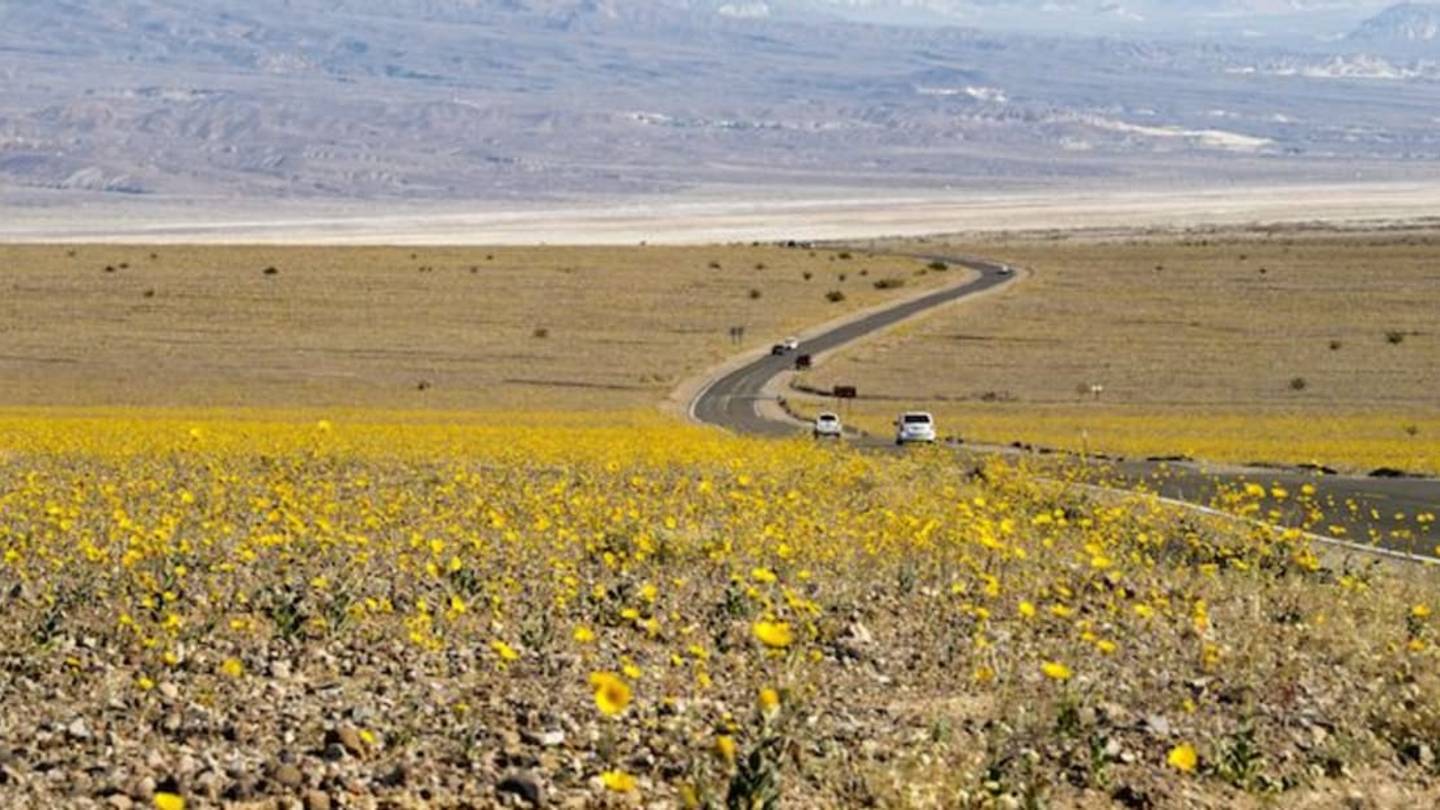
One of Death Valley’s most beautiful surprises is the rare superbloom. After unusually well-spaced rain and mild conditions, wildflowers can blanket parts of the desert in yellow, purple, pink, and white. These events do not happen every year, which is what makes them feel magical when they do.
The flowers are not random decoration. They are a survival strategy. Many desert plants produce seeds that can remain dormant for years, waiting for the perfect combination of moisture and temperature. When conditions finally line up, the valley throws a botanical party. The dress code is “bright petals only.”
5. The Rocks at Racetrack Playa Really Do Move
For decades, visitors noticed long trails behind rocks on Racetrack Playa, as if the stones had decided to go for a slow walk when nobody was looking. The mystery sparked all kinds of theories, from intense wind to supernatural mischief. The real explanation is more elegant.
Researchers found that under rare conditions, shallow water freezes into thin sheets of ice. As the ice breaks and is pushed by light wind, it can nudge rocks across the muddy surface, leaving tracks behind. So yes, the rocks move. No, they are not haunted. Unless you count physics, which can be spooky enough before coffee.
6. Death Valley Has Mountains Taller Than 11,000 Feet
Many people imagine Death Valley as a flat frying pan, but the park has serious vertical drama. Telescope Peak rises to 11,049 feet in the Panamint Range. From Badwater Basin to the summit of Telescope Peak, the elevation difference is more than two miles.
That means snow can dust the high peaks while the valley floor bakes below. In winter and spring, this contrast is stunning: white mountains above, salt flats below, and your brain quietly asking whether it packed for the correct planet.
7. Artist’s Palette Gets Its Colors From Minerals, Not Paint
Artist’s Palette looks like someone spilled a box of pastels across the hills. The reds, pinks, yellows, greens, and purples come from mineral-rich volcanic deposits. Iron compounds help create red and yellow tones, while other minerals contribute greens and purples.
The best time to see the colors is usually late afternoon, when low-angle light makes the hills glow. Midday sun can flatten the scene, but golden-hour light turns it into a natural art exhibit. No museum ticket required, although your camera roll may need emotional support.
8. The Park Protects One of the Rarest Fish on Earth
Death Valley is home to pupfish, tiny survivors from a wetter ancient past. The Devils Hole pupfish, found naturally only in Devils Hole in Nevada, is one of the rarest fish species in the world. Its population has been closely monitored and protected by federal and state agencies for decades.
It seems almost impossible that fish could survive in a region famous for heat and dryness, but that is exactly what makes them remarkable. These small fish are living reminders that Death Valley was once much wetter, and that life can adapt to conditions that look impossible from the outside.
9. Death Valley Was Once Home to a Huge Ancient Lake
Long before Death Valley became a symbol of dryness, a large lake known as Lake Manly filled parts of the basin during wetter periods of the Ice Age. Today, the lake is gone most of the time, but after major storms, shallow water can temporarily return to Badwater Basin.
When that happens, the valley becomes surreal. Visitors may see mountains reflected in water where salt flats usually dominate. It is a rare reminder that Death Valley’s story is not fixed. The landscape is still changing, still reacting, and still capable of surprising everyone who thinks they already understand it.
10. The Name Comes From a Group of Lost Pioneers
The name “Death Valley” comes from the Lost ’49ers, a group of pioneers who became stranded while trying to reach California during the Gold Rush. Although only one member of the larger party reportedly died, the experience was frightening enough that the valley earned its unforgettable name.
It is a powerful name, but it can also be misleading. Indigenous peoples, especially the Timbisha Shoshone, have deep ancestral connections to the region and understood how to live with its seasons and resources long before outsiders saw only danger. The valley’s history is not just about hardship; it is also about knowledge, adaptation, and belonging.
11. Death Valley Has Some of the Best Stargazing in the United States
Because Death Valley is far from major city lights, much of its night sky remains exceptionally dark. The park is recognized for stargazing, and visitors often come for astronomy programs, astrophotography, and the simple joy of looking up without a ceiling of light pollution.
On a clear night, the Milky Way can stretch across the sky like a glittering desert highway. After a day of staring at salt flats and sun-blasted mountains, the night sky feels like a second park opening above the first one.
Why Death Valley Feels So Otherworldly
Death Valley is not strange because of one feature. It is strange because so many extremes overlap in one place. The valley floor is below sea level, but mountains tower above it. It is famous for heat, but snow can appear on nearby peaks. It is one of the driest places in North America, yet it preserves evidence of ancient lakes and rare fish. It looks empty at first glance, but a closer look reveals plants, animals, minerals, fossils, human stories, and weather events that refuse to behave politely.
This mix of opposites is what makes Death Valley National Park unforgettable. It is not just a place to check off a travel list. It is a place that changes how you understand deserts. Instead of lifeless wastelands, deserts become slow, patient, highly specialized ecosystems. They are quieter than forests and less obvious than coastlines, but they are not simple.
Best Places to See These Death Valley Wonders
Badwater Basin
Visit Badwater Basin for the lowest point in North America, salt polygons, and dramatic views toward Telescope Peak. Sunrise and sunset are especially beautiful because the light stretches across the flats and softens the harsh textures.
Zabriskie Point
Zabriskie Point is one of the easiest and most rewarding viewpoints in the park. The golden badlands below look sculpted by wind, water, and time. It is a favorite sunrise location, and for good reason: the first light makes the landscape glow like toasted honey.
Mesquite Flat Sand Dunes
These dunes near Stovepipe Wells are among the most accessible sand dunes in Death Valley. The highest dune is not enormous compared with some dune fields, but the patterns, shadows, and open walking routes make it a classic stop. Go early or late unless you enjoy the sensation of hiking across a skillet.
Artist’s Drive and Artist’s Palette
Artist’s Drive is a scenic loop that leads to Artist’s Palette, where mineral colors decorate the hills. The road itself is part of the fun, winding through narrow cuts and rolling desert terrain.
Racetrack Playa
Racetrack Playa is remote and requires preparation, but it is the famous home of the sailing stones. Visitors should check road conditions, avoid driving on the playa, and never move or disturb the rocks. Nature already gave them a job. They do not need help from tourists.
Travel Tips for Visiting Death Valley Safely
Death Valley is beautiful, but it does not negotiate with poor planning. In warm months, heat can become dangerous quickly. Bring more water than you think you need, keep extra supplies in your vehicle, and avoid long hikes during the hottest part of the day. Cell service can be limited, distances are large, and help may not arrive quickly.
The best visiting season for most travelers is late fall through early spring. Winter days can be mild and pleasant, while spring may bring wildflowers if rainfall has cooperated. Summer visits are possible, but they require serious caution. Many visitors limit summer sightseeing to short stops near paved roads and air-conditioned vehicles.
Also remember that Death Valley is not a theme park. Stay on roads and trails where required, do not take salt crystals or rocks, and respect wildlife, cultural sites, and fragile desert surfaces. The desert may look tough, but many of its features are surprisingly delicate.
Extra Experiences: What It Feels Like to Explore Death Valley
The first experience many visitors have in Death Valley is silence. Not total silence, exactly, but a kind of wide-open quiet that feels bigger than normal quiet. Step out of the car at Badwater Basin early in the morning, and the world seems to stretch in every direction. The salt crunches under your shoes. The mountains rise like walls. The air feels dry enough to turn a sandwich into a historical artifact. And yet, instead of feeling empty, the place feels enormous.
Walking onto the salt flats is one of the most memorable things to do in Death Valley. From the parking area, the view is already impressive, but the farther you walk, the more the patterns appear. Salt polygons form underfoot, creating a cracked geometry that looks almost handmade. It is tempting to stare down the whole time, but then you look up and see Telescope Peak across the basin. That contrastthe lowest point below you and one of the park’s highest summits above youis the kind of moment that makes travel feel worth the dusty shoes.
Zabriskie Point offers a different mood. At sunrise, people gather quietly along the overlook, cameras ready, coffee cups in hand, everyone pretending they are not freezing a little in the desert morning. Then the sun touches the badlands, and the folded ridges turn gold. The scene changes by the minute. Shadows pull back, colors sharpen, and suddenly the landscape looks less like rock and more like a frozen wave. It is one of those viewpoints where you can understand why photographers wake up at unreasonable hours and call it a hobby.
Mesquite Flat Sand Dunes bring out a playful side of the park. There is no single official route to the tallest dune, so visitors wander across rippled sand, choosing their own path. Every step uphill slides half a step back, which is the desert’s way of teaching humility. Early morning and late afternoon are best, not only because the temperatures are kinder, but because the shadows define every ridge and footprint. By midday, the dunes can feel washed out and hot enough to make your water bottle seem nervous.
Artist’s Palette feels like a scenic detour into a painter’s imagination. The colors can be subtle or vivid depending on the light, so patience helps. Arrive when the sun is lower, and the hills begin to show soft greens, pinks, purples, yellows, and reds. The effect is not neon; it is more like nature whispering in color. That quiet beauty is part of the charm. Death Valley rarely shouts in the way tropical beaches do. It waits for you to slow down.
A night in Death Valley may be the most underrated experience of all. Once the sun drops and the heat releases its grip, the park becomes calm and cosmic. Look up from a dark spot, and the stars can seem almost crowded. The Milky Way, when visible, makes the sky feel deep enough to fall into. It is the kind of darkness many people no longer experience at home, where city lights blur the stars into a faint suggestion. In Death Valley, the night sky is not background. It is an attraction.
The biggest lesson from visiting Death Valley is that the park rewards attention. At first, it can look harsh and minimal. Then details begin to appear: tiny flowers after rain, animal tracks in sand, mineral colors on hillsides, old lake beds, salt crystals, volcanic craters, and signs of people who lived, worked, traveled, and survived here. Death Valley is not empty. It is subtle. And once you learn how to look, the place becomes unforgettable.
Conclusion
Death Valley is more than a hot desert with a dramatic name. It is the lowest point in North America, the site of the world’s official hottest air temperature, a refuge for rare wildlife, a land of ancient lakes, a canvas of mineral colors, and one of the best places in the country to see the stars. Its extremes make it famous, but its surprises make it worth remembering.
Whether you visit for the salt flats, the wildflowers, the sailing stones, the dunes, the dark skies, or the strange joy of standing in a place that feels like another planet, Death Valley National Park proves that “dead” landscapes can be full of stories. Just bring water. Lots of water. Death Valley has many talents, but being forgiving to the unprepared is not one of them.