Your mouth is basically a tiny, high-drama ecosystem. One day everything looks normal. The next day your tongue has a map of imaginary countries, your gums are throwing a redness party, or the corners of your lips have cracked like an old sidewalk. Naturally, your first thought may be: “Why does my mouth look weird?”
The good news: many weird mouth disorders are harmless, temporary, or easy to treat. The less-fun news: some changes in your mouth can signal infection, irritation, vitamin deficiency, immune problems, or, rarely, oral cancer. The trick is learning what looks odd-but-usually-okay, what deserves a dental visit, and what should be checked quickly.
This guide breaks down the most common strange mouth changes, from white patches and bumpy lips to black hairy tongue and geographic tongue. No panic, no doom scrolling, no diagnosing yourself with seventeen rare diseases before breakfast. Just clear, practical information to help you understand what your mouth might be trying to say.
First: What Does a Healthy Mouth Usually Look Like?
A healthy mouth is not supposed to look airbrushed. Real mouths have texture, color differences, veins, little bumps, saliva bubbles, and the occasional “what is that?” moment. A healthy tongue is usually pink to reddish-pink with tiny bumps called papillae. Gums should look firm and pink, though natural gum color varies widely depending on skin tone and genetics. The inside of your cheeks may have faint lines, especially if you clench, grind, or bite them.
So, “weird” does not always mean “dangerous.” Your mouth can look different because of coffee, spicy food, dehydration, stress, new toothpaste, braces, dentures, a sharp chip on a tooth, or forgetting to brush your tongue for a few days. Your mouth is sensitive, fast-changing, and occasionally dramatic enough to deserve its own reality show.
Common Reasons Your Mouth Looks Weird
Many mouth changes fall into a few big categories: color changes, sores, bumps, texture changes, swelling, and dryness. These can happen because of infections, irritation, allergies, medications, tobacco use, alcohol use, nutritional deficiencies, autoimmune conditions, or trauma from biting, chewing, or dental appliances.
The timeline matters. A spot that appeared after you burned your mouth on pizza lava may heal in a few days. A white patch that does not wipe off and does not go away should be examined. A sore that lingers longer than two weeks needs professional attention. Your dentist is not just there to scold you about flossing; dentists are trained to spot oral diseases, infections, and suspicious tissue changes.
White Patches in the Mouth
Oral Thrush
Oral thrush is a fungal infection caused by an overgrowth of Candida yeast. It often appears as creamy white patches on the tongue, inner cheeks, gums, roof of the mouth, or throat. The patches may wipe off, sometimes leaving red, tender, or slightly bleeding skin underneath. Thrush can also cause burning, soreness, altered taste, and a cottony feeling in the mouth.
Thrush is more common in babies, older adults, people with dry mouth, people who wear dentures, people with diabetes, and those who use antibiotics or inhaled corticosteroids. It can also show up when the immune system is weakened. Treatment usually involves antifungal medicine, plus correcting the underlying trigger when possible. In other words, do not just angrily scrape your tongue and hope for the best. That is not medicine; that is mouth vandalism.
Leukoplakia
Leukoplakia causes thick white or gray patches inside the mouth that usually cannot be wiped away. It may appear on the tongue, gums, cheeks, or floor of the mouth. Many cases are linked to chronic irritation, especially tobacco use. Rough teeth, ill-fitting dentures, and heavy alcohol use may also contribute.
Leukoplakia is important because some patches can be precancerous. That does not mean every white patch is cancer, but it does mean persistent white patches deserve a dentist or doctor’s eyes. If a patch is mixed red and white, growing, bleeding, painful, or changing shape, book an exam quickly.
Oral Lichen Planus
Oral lichen planus is a chronic inflammatory condition that can create white, lace-like patterns inside the cheeks, on the gums, or on the tongue. Some people have no pain, while others develop burning, redness, swelling, or open sores. Triggers are not always clear, but the condition involves immune system activity.
Because oral lichen planus can resemble other mouth disorders, diagnosis matters. Dentists may monitor it over time or recommend treatment for painful areas. If your mouth looks like someone drew delicate white spiderwebs on your cheeks, do not panicbut do get it checked.
Red, Smooth, or Patchy Tongue Changes
Geographic Tongue
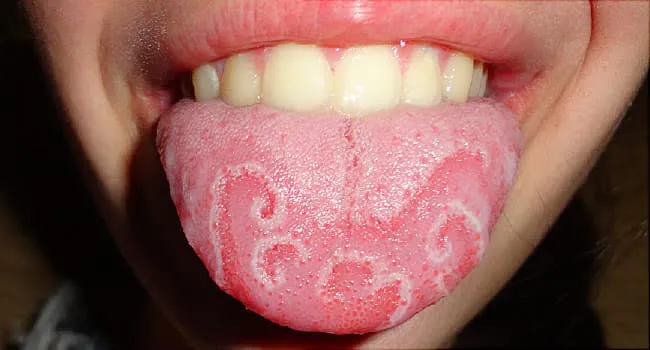
Geographic tongue is one of the weirdest-looking harmless mouth conditions. It creates smooth red patches on the tongue with white or light-colored borders. The patches can move around over days or weeks, making your tongue look like a map designed by a confused cartographer.
This condition is not contagious and is usually not serious. Some people feel burning or sensitivity, especially with spicy, acidic, or salty foods. Others only notice it in the mirror and then spend ten minutes wondering whether their tongue has joined a geography club. Treatment is often unnecessary unless symptoms are uncomfortable.
Fissured Tongue
A fissured tongue has grooves, cracks, or deep lines on the surface. It can look alarming, but it is often harmless. Food and bacteria can collect in the grooves, which may cause bad breath or irritation if the tongue is not cleaned gently.
Fissured tongue may appear alone or alongside geographic tongue. It can also become more noticeable with age. Gentle tongue brushing, hydration, and regular dental care usually help keep it from becoming irritated.
Burning Mouth Syndrome
Burning mouth syndrome can make the mouth feel hot, scalded, dry, metallic, bitter, or painful even when everything looks normal. It commonly affects the tongue, lips, palate, or whole mouth. That is especially frustrating because the mirror says, “Nothing to see here,” while your nerves say, “We are on fire.”
Possible factors include nerve dysfunction, dry mouth, hormonal changes, nutritional deficiencies, acid reflux, medication side effects, anxiety, depression, or oral habits. Since many conditions can mimic burning mouth syndrome, evaluation is important before treatment.
Black, Brown, Yellow, or “Hairy” Tongue
Black Hairy Tongue
Black hairy tongue sounds like a monster from a dental-themed horror movie, but it is usually temporary and harmless. It happens when the tiny papillae on the tongue grow longer than usual and trap bacteria, yeast, food debris, tobacco, or pigments from drinks such as coffee and tea. The result may look black, brown, yellow, green, or even white.
Common triggers include poor oral hygiene, dry mouth, smoking, antibiotics, mouth rinses that irritate the mouth, and a soft diet that does not naturally help clean the tongue. Treatment often starts with better oral hygiene, gentle tongue brushing or scraping, hydration, quitting tobacco, and addressing the cause. The word “hairy” is rude but descriptive; the good news is that it is not actual hair.
Yellow Tongue
A yellow tongue can happen when bacteria, dead cells, or staining substances build up on the tongue. It may be related to dry mouth, smoking, mouth breathing, poor oral hygiene, or certain foods and drinks. Sometimes yellow tongue appears before black hairy tongue develops.
If it improves with brushing, tongue cleaning, and hydration, it is usually not a big deal. If it persists, comes with pain, fever, bad breath that will not quit, or yellowing of the skin or eyes, see a healthcare professional.
Mouth Sores That Look Strange
Canker Sores
Canker sores are small, painful ulcers that form inside the mouth, often on the inner lips, cheeks, soft palate, or tongue. They usually look white, gray, or yellow in the center with a red border. Unlike cold sores, canker sores are not contagious and do not appear on the outside of the lips.
Common triggers include stress, minor injury, acidic foods, dental work, braces, food sensitivities, and possible immune factors. Most heal on their own within one to two weeks. A dentist or doctor should evaluate sores that are unusually large, extremely painful, frequent, accompanied by fever, or slow to heal.
Cold Sores
Cold sores are caused by herpes simplex virus and usually appear as clusters of fluid-filled blisters on or around the lips. Before the blister appears, many people feel tingling, itching, or burning. Cold sores are contagious, especially when blisters are active.
Triggers can include stress, illness, sunlight, fatigue, and hormonal changes. Antiviral medications may shorten outbreaks, especially when started early. Avoid kissing, sharing lip balm, or sharing utensils during an outbreak. Your cold sore does not need a social life.
Traumatic Ulcers
A traumatic ulcer can form after you bite your cheek, scrape your gum with a chip, burn your mouth, or irritate tissue with braces, dentures, or a sharp tooth edge. These sores often appear suddenly and match the area of irritation.
They usually heal once the irritant is removed. If a sharp tooth or dental appliance keeps rubbing the same place, see a dentist. The mouth heals quickly, but it cannot win a daily boxing match against a jagged filling.
Bumps, Lumps, and Odd Growths
Mucoceles
A mucocele is a mucus-filled cyst that often appears on the lower lip, inside the cheek, or under the tongue. It may look like a soft, clear, bluish, or flesh-colored bubble. Mucoceles commonly happen after lip biting or trauma blocks or damages a small salivary gland duct.
Some mucoceles disappear on their own, but others come back or get in the way of chewing and speaking. Do not pop one at home. That can invite infection and make the area angrier than it already is. A dentist or oral surgeon can treat persistent mucoceles safely.
Fordyce Spots
Fordyce spots are tiny pale, white, or yellowish bumps that may appear on the lips or inside the cheeks. They are enlarged oil glands and are generally harmless, painless, and not contagious. Many people have them; they just may not notice until one dramatic bathroom mirror inspection under harsh lighting.
Fordyce spots do not usually need treatment. However, any new bump that bleeds, grows, hurts, changes color, or looks unlike your usual skin should be checked to make sure it is not something else.
Torus Palatinus and Torus Mandibularis
A torus is a benign bony growth. Torus palatinus appears on the roof of the mouth, while torus mandibularis appears along the inner lower jaw. These growths are usually hard, smooth, and slow-growing. They are not cancer and often require no treatment.
People usually discover a torus by accident while eating, brushing, or doing that classic “what is this bump?” tongue investigation. Treatment is only needed if it interferes with dentures, speech, eating, or becomes repeatedly injured.
Cracked Corners of the Mouth
Angular Cheilitis
Angular cheilitis causes redness, cracking, soreness, or crusting at one or both corners of the mouth. It is often confused with cold sores, but it is different. Angular cheilitis is commonly linked to moisture buildup, saliva irritation, yeast or bacterial overgrowth, dry mouth, dentures, braces, mouth breathing, or nutritional deficiencies such as low iron or B vitamins.
Lip balm alone may not fix it if yeast or bacteria are involved. Treatment depends on the cause and may include barrier ointments, antifungal creams, antibacterial treatment, denture adjustments, or nutritional support. If the corners of your mouth keep splitting every time you smile, your face is not being rude; it may be asking for help.
Swollen, Bleeding, or Odd-Looking Gums
Gums can look weird for many reasons. Gingivitis, the early stage of gum disease, can make gums red, swollen, tender, and likely to bleed when brushing or flossing. Plaque buildup is a common cause. Pregnancy, medications, vitamin deficiencies, smoking, diabetes, and immune conditions may also affect gum appearance.
Bleeding gums are common, but they are not “normal” in the sense of something to ignore forever. Improving brushing and flossing often helps mild gingivitis, but persistent bleeding, gum recession, loose teeth, pus, or bad breath that does not improve should be evaluated by a dentist.
Dry Mouth and Sticky Mouth
Dry mouth, also called xerostomia, can make the mouth feel sticky, rough, burning, or unusually coated. Saliva protects teeth and soft tissues, helps control bacteria, and makes eating and speaking easier. When saliva drops, the mouth can look red, cracked, shiny, or irritated.
Common causes include dehydration, mouth breathing, stress, medications, tobacco, alcohol, radiation therapy, and conditions such as Sjögren’s disease or diabetes. Sipping water, chewing sugar-free gum, avoiding tobacco, limiting alcohol, and using saliva substitutes may help, but persistent dry mouth should be discussed with a dentist or physician.
When a Weird Mouth Change Could Be Serious
Most strange mouth changes are not emergencies. Still, some symptoms should not be ignored. See a dentist, physician, or oral medicine specialist if you notice:
- A mouth sore that lasts longer than two weeks
- A white or red patch that does not go away
- A lump, thickened area, or swelling in the mouth or neck
- Unexplained bleeding, numbness, or pain
- Difficulty chewing, swallowing, speaking, or moving the tongue or jaw
- A denture that suddenly fits poorly because of swelling
- Persistent hoarseness or a feeling that something is stuck in the throat
- Rapidly changing spots, ulcers, or growths
These signs do not automatically mean cancer, but they do deserve professional evaluation. Oral cancer is much easier to treat when caught early. A quick exam is far better than months of mirror-based detective work.
How Dentists Figure Out What Is Going On
Diagnosis usually starts with a visual exam and questions about symptoms, habits, medications, medical conditions, dental appliances, tobacco use, alcohol use, and recent changes. Your dentist may gently touch the area, check for tenderness, look at your tongue and throat, and feel your neck for swollen lymph nodes.
Depending on what they see, they may recommend a culture, blood tests, medication changes, denture adjustments, antifungal treatment, biopsy, or referral to an oral surgeon, oral medicine specialist, dermatologist, or physician. A biopsy may sound scary, but it is often the best way to identify persistent or suspicious tissue changes accurately.
What You Can Do at Home Without Making Things Worse
For mild mouth weirdness, start with the basics: brush twice daily with a soft-bristled toothbrush, floss daily, clean your tongue gently, drink enough water, and avoid tobacco. Replace harsh mouthwash with an alcohol-free option if your mouth feels dry or irritated. If spicy, acidic, crunchy, or salty foods make symptoms worse, give your mouth a temporary vacation from them.
Do not scrape aggressively, pop bumps, burn off spots, apply random internet remedies, or use peroxide repeatedly without professional guidance. Your mouth is not a kitchen sink and should not be treated like one. If symptoms persist or worsen, get checked.
Prevention: How to Keep Your Mouth From Getting Too Weird
You cannot prevent every mouth disorder, but you can reduce your risk. Keep up with dental cleanings, manage dry mouth, control diabetes if you have it, use inhalers correctly and rinse afterward, clean dentures daily, avoid smoking and chewing tobacco, limit alcohol, protect lips from sun exposure, and eat a balanced diet with enough iron, folate, zinc, and B vitamins.
Also, pay attention to patterns. Does your mouth flare after cinnamon toothpaste? Does your tongue burn after pineapple? Do your lip corners crack when you sleep with your mouth open? Your mouth may be weird, but it often leaves clues.
Real-Life Experiences: When Your Mouth Suddenly Looks Strange
Many people first notice a weird mouth disorder in the most ordinary way possible: while brushing their teeth half-awake, squinting into the mirror, and wondering whether the tongue looked like that yesterday. One common experience is the “mystery white patch” scare. A person may wake up with a coated tongue after a week of antibiotics, stress, dry mouth, and too much coffee. They brush harder, panic slightly, then realize the coating keeps coming back. A dental visit may reveal oral thrush or simple buildup from dry mouth. The lesson? White patches are not all the same. Some wipe away, some do not, and that difference matters.
Another familiar story is the geographic tongue surprise. Someone eats salsa, feels a sting, and notices red islands on the tongue with pale borders. The patches look dramatic, almost artistic, but they shift around over time. Once a dentist confirms geographic tongue, the person may learn to avoid trigger foods during flares. The condition may still look strange, but it becomes less frightening when it has a name. Naming the monster is half the battle; the other half is not eating flaming-hot chips during a flare.
Then there is the cracked-corner saga. A person keeps applying lip balm, but the corners of the mouth split again and again. Smiling hurts. Yawning feels like a dangerous sport. They assume it is just dry lips, but the problem may be angular cheilitis, especially if moisture, drooling, dentures, braces, or yeast is involved. Once treated properly, the skin can heal. This is a good reminder that not every lip problem is solved by buying the fanciest balm in the checkout aisle.
Some people discover a soft bubble on the lower lip after accidentally biting it. It may shrink, return, and become an annoying little speed bump during meals. That can be a mucocele. It is usually benign, but trying to pop it can make things worse. Professional care is the smarter move, even if the bubble seems personally committed to ruining lunch.
Others notice a dark or hairy-looking tongue and immediately assume the worst. In many cases, black hairy tongue is related to buildup, dry mouth, smoking, antibiotics, or staining drinks. With gentle tongue cleaning, hydration, and addressing triggers, it may improve. Still, sudden color changes should be watched, especially if they come with pain, sores, bleeding, or swelling.
The biggest takeaway from these experiences is simple: weird mouth disorders are common, and embarrassment should never stop you from getting care. Dentists have seen everything. Your odd tongue, cracked lip corner, or suspicious cheek bump will not shock them. In fact, early evaluation can save time, discomfort, and anxiety. Your mouth may be a tiny theater of strange events, but you do not have to sit through the show alone.
Conclusion
If your mouth looks weird, take a breath before assuming the worst. Many weird mouth disorderssuch as geographic tongue, fissured tongue, Fordyce spots, mucoceles, canker sores, and black hairy tongueare often harmless or manageable. Others, including oral thrush, leukoplakia, oral lichen planus, persistent ulcers, and unexplained red or white patches, need professional evaluation.
The best rule is this: if a mouth change is painful, spreading, bleeding, growing, recurring, or still there after two weeks, schedule a dental or medical visit. Your mouth is excellent at healing, but it is also excellent at sending warning signs. Listen early, brush gently, skip the DIY experiments, and let a professional help you figure out what is actually going on.
Note: This article is for general educational purposes only and should not replace advice, diagnosis, or treatment from a dentist, physician, or qualified healthcare professional.