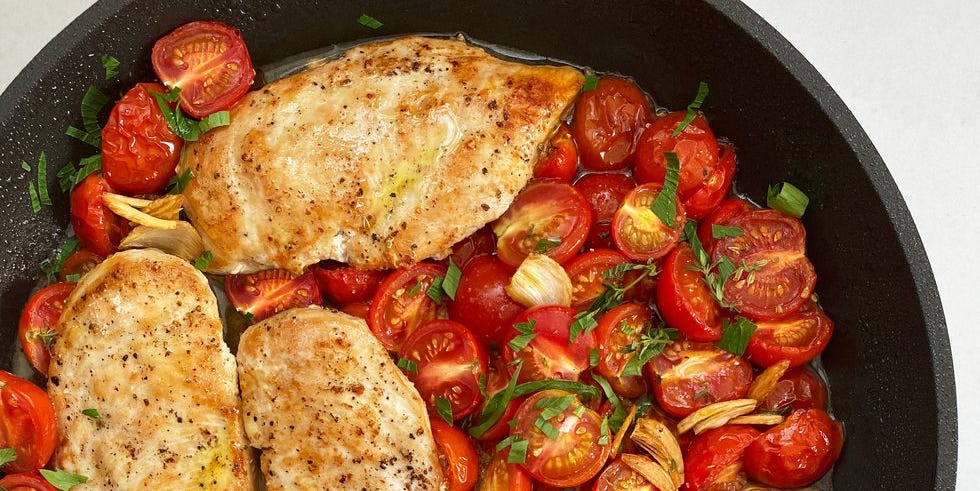
If dinner had a “low effort, high applause” category, skillet roasted chicken and tomatoes would walk in wearing sunglasses. It is golden, juicy chicken nestled into sweet, blistered tomatoes, with garlicky pan juices that practically beg for crusty bread. Even better, it all happens in one oven-safe skillet, which means fewer dishes, more flavor, and no mysterious tower of pans judging you from the sink.
This recipe is inspired by classic American weeknight cooking: sear the chicken for color, let the oven finish the work, and use tomatoes as a built-in sauce. Cherry or grape tomatoes collapse as they roast, releasing their juices into the skillet. Those juices mingle with garlic, herbs, olive oil, chicken drippings, and a bright splash of vinegar or lemon. The result tastes like something you planned all afternoon, even if you started dinner at 6:12 with a hungry household circling the kitchen like polite raccoons.
The best skillet roasted chicken and tomatoes recipe should be simple, but not boring. It should have crispy edges, tender meat, jammy tomatoes, and enough savory sauce to spoon over rice, polenta, mashed potatoes, or toasted sourdough. Below, you will learn exactly how to make skillet roasted chicken and tomatoes, what ingredients matter most, how to avoid dry chicken, and how to customize the dish for busy weeknights or casual entertaining.
Why This Skillet Roasted Chicken and Tomatoes Recipe Works
The magic comes from two cooking methods working together. First, the chicken is browned on the stovetop. This creates flavor through caramelization and gives the skin or exterior a beautiful golden finish. Then the skillet moves to a hot oven, where steady heat cooks the chicken evenly while the tomatoes soften, burst, and turn into a rustic sauce.
A skillet is ideal because it keeps all the flavor in one place. The browned bits at the bottom of the pan, sometimes called fond, dissolve into the tomato juices. That is where the “restaurant taste” hides. Not in complicated steps. Not in a secret spice cabinet guarded by a tiny chef dragon. Just in browned chicken, ripe tomatoes, garlic, herbs, salt, pepper, and heat.
This method also solves a common chicken problem: blandness. Chicken needs seasoning, fat, acidity, and aromatics. Tomatoes bring sweetness and acidity. Garlic adds depth. Herbs lift everything. Olive oil helps browning. A small splash of red wine vinegar, balsamic vinegar, or lemon juice at the end makes the dish taste awake, like it had a good nap and an espresso.
Ingredients for the Best Skillet Roasted Chicken and Tomatoes
Chicken
Bone-in, skin-on chicken thighs are the top choice for skillet roasted chicken and tomatoes because they stay juicy and develop crispy skin. Chicken drumsticks also work well. Bone-in chicken breasts can be used, but they cook faster and can dry out if left too long. If you prefer boneless chicken thighs, reduce the roasting time and check early.
Tomatoes
Cherry tomatoes or grape tomatoes are perfect because they roast quickly and become sweet, saucy, and slightly wrinkled. Larger tomatoes can work if cut into wedges, but small tomatoes give the best texture. Use red, yellow, or mixed-color tomatoes if you want the skillet to look like it got dressed for summer vacation.
Garlic and Shallots
Garlic is essential. Slice it thinly or smash whole cloves so they perfume the pan without burning too quickly. Shallots or a small red onion add sweetness and help build the sauce. If you are short on time, skip the shallot, but do not skip the garlic unless you enjoy disappointing your future self.
Herbs
Rosemary, thyme, oregano, basil, or parsley all pair beautifully with roasted chicken and tomatoes. Rosemary and thyme are excellent during cooking because they tolerate heat. Basil and parsley are best added at the end for freshness.
Acid
A teaspoon or two of red wine vinegar, balsamic vinegar, or fresh lemon juice balances the richness of the chicken. This tiny finishing step makes the tomatoes taste brighter and the pan sauce more complete.
Recipe: Skillet Roasted Chicken and Tomatoes
Prep Time, Cook Time, and Servings
Prep time: 15 minutes
Cook time: 30 to 35 minutes
Total time: About 45 to 50 minutes
Servings: 4
Ingredients
- 4 bone-in, skin-on chicken thighs, about 2 to 2 1/2 pounds
- 1 1/2 teaspoons kosher salt, divided
- 3/4 teaspoon freshly ground black pepper, divided
- 1 tablespoon olive oil
- 1 pint cherry or grape tomatoes
- 1 small shallot, thinly sliced
- 4 garlic cloves, smashed or thinly sliced
- 1 teaspoon chopped fresh rosemary or thyme
- 1/2 teaspoon dried oregano
- 1/4 teaspoon crushed red pepper flakes, optional
- 1 tablespoon red wine vinegar or lemon juice
- 2 tablespoons chopped fresh basil or parsley
- Crusty bread, rice, polenta, pasta, or potatoes, for serving
Instructions
- Preheat the oven. Heat the oven to 425°F. Place a rack in the center of the oven so the chicken cooks evenly.
- Dry and season the chicken. Pat the chicken very dry with paper towels. Season all over with 1 teaspoon kosher salt and 1/2 teaspoon black pepper. Dry chicken browns better, while damp chicken steams and looks emotionally confused.
- Sear the chicken. Heat olive oil in a large oven-safe skillet over medium-high heat. Add the chicken skin-side down. Cook without moving it for 6 to 8 minutes, until the skin is deeply golden and releases easily from the pan.
- Flip and add flavor. Turn the chicken over. Add the tomatoes, shallot, garlic, rosemary or thyme, oregano, red pepper flakes, remaining salt, and remaining pepper around the chicken. Stir the tomatoes gently so they get coated in the oil and drippings.
- Roast. Transfer the skillet to the oven. Roast for 22 to 28 minutes, or until the thickest part of the chicken reaches 165°F on an instant-read thermometer. Avoid touching the bone when checking the temperature.
- Finish the sauce. Remove the skillet from the oven. Stir the vinegar or lemon juice into the tomatoes and pan juices. Let the chicken rest for 5 minutes so the juices settle.
- Serve. Sprinkle with basil or parsley. Spoon the roasted tomatoes and sauce over the chicken. Serve with bread, rice, polenta, pasta, or potatoes.
How to Get Crispy Chicken Without Overcooking It
The first rule is simple: moisture is the enemy of browning. Pat the chicken dry before seasoning it. If you have extra time, season the chicken and let it rest uncovered in the refrigerator for a few hours or overnight. This lightly dries the surface and helps the skin crisp.
The second rule is patience. Once the chicken goes into the skillet, do not poke it every 12 seconds. Chicken skin needs steady contact with the pan to brown. If it sticks, it is usually not ready to flip. Give it another minute and try again. When the skin is properly browned, it releases more easily.
The third rule is temperature. Use a thermometer, not guesswork. Chicken is safe when it reaches 165°F in the thickest part. A thermometer keeps the meat juicy because you can stop cooking at the right time instead of waiting until the chicken looks “done,” which often means “dry enough to file paperwork with.”
Best Skillet to Use
A cast iron skillet is excellent for skillet roasted chicken and tomatoes because it holds heat well and creates strong browning. Stainless steel also works beautifully and is a smart choice if your tomatoes will cook for a longer time, since acidic ingredients can be hard on poorly seasoned cast iron. Enameled cast iron is another great option because it gives you heat retention without the same concern about acidic tomato sauce affecting the pan.
Whatever skillet you choose, make sure it is oven-safe. Avoid pans with plastic handles unless the manufacturer confirms they can handle 425°F. A 10- to 12-inch skillet is usually perfect for four chicken thighs and a pint of tomatoes. The ingredients should fit snugly but not be piled into a tiny pan like commuters on a Monday train.
Flavor Variations
Mediterranean Skillet Roasted Chicken
Add pitted Kalamata olives, a pinch of oregano, and a sprinkle of feta after roasting. Finish with lemon juice and parsley. Serve with couscous or warm pita.
Italian-Style Chicken and Tomatoes
Add fresh basil, a little balsamic vinegar, and torn mozzarella during the last 5 minutes of roasting. The cheese melts into the tomatoes and turns the skillet into a pizza-adjacent miracle.
Spicy Harissa Chicken
Rub the chicken with 1 tablespoon harissa paste before searing. Add chickpeas with the tomatoes for a heartier one-pan dinner. Finish with yogurt or feta to cool the heat.
Lemon-Garlic Chicken
Add thin lemon slices to the skillet before roasting. Finish with extra lemon juice and chopped parsley. This version is bright, simple, and excellent with roasted potatoes.
What to Serve With Skillet Roasted Chicken and Tomatoes
This dish makes its own sauce, so serve it with something that can catch every drop. Crusty bread is the easiest choice. Creamy polenta makes the meal feel cozy and elegant. Rice is practical and family-friendly. Pasta turns the tomato juices into a light sauce. Mashed potatoes are never a bad idea, because mashed potatoes have rarely made a poor life decision.
For a lighter meal, add a green salad with a sharp vinaigrette. Roasted green beans, sautéed spinach, grilled zucchini, or steamed broccoli also work well. If you want a full Sunday-style dinner, serve the chicken with garlic bread and a simple cucumber salad.
Storage and Reheating Tips
Store leftover skillet roasted chicken and tomatoes in an airtight container in the refrigerator for up to 3 to 4 days. Keep the tomatoes and juices with the chicken so the meat stays moist. Reheat gently in a covered skillet over medium-low heat with a splash of water or broth. You can also reheat it in the microwave, but cover it loosely to avoid tomato splatter art on the walls.
For the best texture, remove the chicken skin before microwaving if it has softened. If you want to revive crispiness, reheat the chicken in a 375°F oven until warmed through, then spoon the tomato sauce over it before serving.
Common Mistakes to Avoid
Using Wet Chicken
Wet chicken will not brown properly. Always pat it dry. This is a small step with a big payoff.
Crowding the Pan
If the skillet is too crowded, the chicken and tomatoes steam instead of roast. Use a large enough pan or cook in batches if needed.
Skipping the Thermometer
A thermometer is the easiest way to cook chicken safely while keeping it juicy. Check the thickest part and make sure it reaches 165°F.
Forgetting the Acid
Tomatoes are naturally acidic, but a finishing splash of vinegar or lemon makes the pan sauce more lively. It is the difference between “good” and “why is everyone suddenly quiet at the table?”
Frequently Asked Questions
Can I use boneless chicken breasts?
Yes, but reduce the cooking time. Sear the breasts for 3 to 4 minutes per side, then roast until they reach 165°F. Because chicken breasts are lean, avoid overcooking them.
Can I make this recipe ahead?
You can season the chicken up to 24 hours ahead and keep it uncovered in the refrigerator. You can also slice the shallot and prep the herbs in advance. For best texture, cook the dish just before serving.
Can I add potatoes?
Yes. Use small baby potatoes cut in half. Parboil them for 8 to 10 minutes first, or they may not become tender by the time the chicken is done.
Can I make it dairy-free or gluten-free?
The basic recipe is naturally dairy-free and gluten-free. Just choose gluten-free sides, such as rice, potatoes, quinoa, or gluten-free pasta.
Personal Cooking Experience: What I Learned Making Skillet Roasted Chicken and Tomatoes
The first time I made skillet roasted chicken and tomatoes, I underestimated the tomatoes. I thought they were just there for color, like parsley on a diner plate. Then the skillet came out of the oven, and the tomatoes had collapsed into a glossy, garlicky sauce that tasted far more impressive than the effort I had put in. That is when I realized this recipe is not really about adding a side vegetable. It is about using tomatoes as the sauce, the mood, and the tiny red heroes of dinner.
One of the biggest lessons is that browning the chicken properly changes everything. If I rush the sear, the final dish is fine, but not memorable. When I let the skin sit undisturbed until it turns deep golden, the whole skillet tastes richer. The tomatoes pick up that roasted chicken flavor, and the pan juices become savory instead of watery. It feels like the difference between hearing a song through phone speakers and hearing it live with a full band.
I have also learned that garlic needs a little respect. Thin slices taste wonderful, but they can burn if they sit directly on the hottest part of the pan too long. Smashed cloves are more forgiving. They soften during roasting and become sweet, mellow, and spreadable. If you love garlic, add extra cloves. Nobody at the table has ever complained about roasted garlic unless they were a vampire, and vampires rarely help with dishes anyway.
Another helpful experience is choosing the right tomato. Grape tomatoes hold their shape a little longer, while cherry tomatoes burst faster and create more sauce. In summer, when tomatoes are sweet, the dish tastes bright and fresh. In colder months, roasting helps supermarket tomatoes become more flavorful. A pinch of sugar is usually unnecessary, but if your tomatoes taste flat, a tiny pinch can help balance the sauce.
I like serving this chicken with toasted bread most of all. Rice is excellent, and polenta is lovely, but bread makes the meal feel casual and joyful. You drag a torn piece through the tomato juices, catch a bit of roasted garlic, and suddenly the skillet is cleaner than expected. This is not a coincidence. This is bread fulfilling its destiny.
The recipe is also forgiving. I have made it with thyme when I had no rosemary, parsley when I had no basil, lemon when I had no vinegar, and onions when I had no shallots. Each version worked because the foundation is strong: seasoned chicken, hot skillet, juicy tomatoes, and a bright finish. Once you understand that structure, you can adjust the recipe without fear.
My final advice is to let the chicken rest before serving. It is tempting to dive in immediately, especially when the kitchen smells like garlic, herbs, and roasted tomatoes. But five minutes of resting keeps the chicken juicier and gives the sauce a moment to settle. Use that time to set the table, slice bread, pour drinks, or stand proudly over the skillet like you just solved dinner. Because honestly, you did.
Conclusion
Skillet roasted chicken and tomatoes is the kind of recipe every home cook should keep close. It is simple enough for a weeknight, flavorful enough for guests, and flexible enough to handle whatever herbs, sides, or tomato varieties you have on hand. With one skillet, a hot oven, properly seasoned chicken, and a pile of juicy tomatoes, you can create a dinner that tastes rich, fresh, and deeply comforting.
The key is technique, not complication. Dry the chicken, brown it well, roast it with tomatoes and aromatics, check the internal temperature, and finish with a splash of acidity. Do that, and you will have juicy chicken, jammy tomatoes, and a pan sauce worth chasing with bread. It is practical, beautiful, and just fancy enough to make Tuesday feel like it got a promotion.
Note: This article is written as original, publish-ready HTML content based on widely accepted cooking techniques and food-safety best practices. Always cook chicken to a safe internal temperature of 165°F.