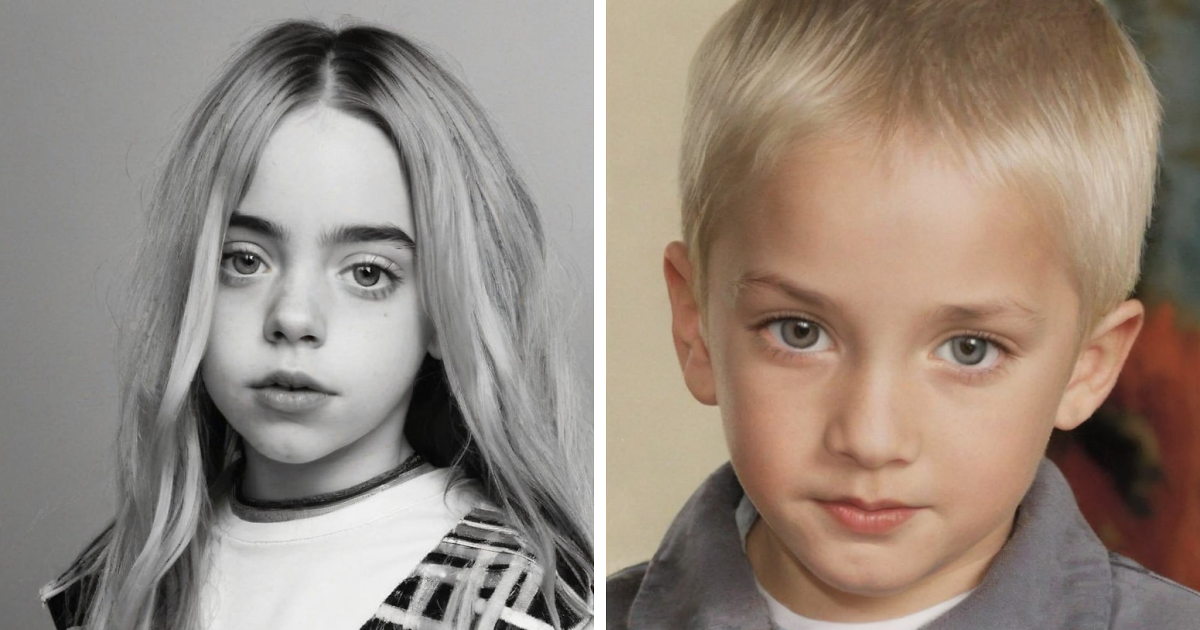
Imagine walking into a school hallway where the class photos include Frida Kahlo with a perfectly centered unibrow, Vincent van Gogh trying very hard not to look like he has seen the cafeteria menu, Salvador Dalí smirking as if he already knows the final exam is melting, and Andy Warhol looking like he somehow invented the yearbook committee. That is the strange, funny, and slightly chaotic idea behind this AI art experiment: creating school photos of various famous artists as if they had all attended the same fictional academy.
The concept is simple, but the results are deliciously weird. Instead of imagining artists only as museum legends, textbook names, or people who wore suspiciously dramatic coats, AI-generated images can reframe them as students: awkward, ambitious, stylish, rebellious, sleepy, overconfident, or quietly plotting a revolution in the art room. The project blends digital creativity, art history, parody, portraiture, and the internet’s endless love for “what if?” scenarios.
AI-generated school photos have become a playful visual format because they combine nostalgia with surprise. Almost everyone understands the language of school portraits: the stiff pose, the forced smile, the questionable hair, the background that looks like a weather forecast from 1987. When that familiar format is applied to famous artists, the joke lands quickly. These are cultural giants, but in this imagined universe, they still had to sit still, face the camera, and pretend they remembered picture day.
Why AI School Photos Of Artists Are So Addictive
The appeal of “AI school photos of artists” comes from contrast. Famous artists are usually presented as finished legends. We meet them through masterpieces, museum walls, auction records, biographies, and dramatic quotes. But a school photo suggests the opposite: an unfinished person. It captures someone before the legend forms, before the critics arrive, before the bad reviews, the breakthroughs, the heartbreaks, and the questionable mustaches.
That contrast makes the images feel instantly shareable. A teenage Claude Monet might look like the quiet kid sketching clouds during math class. A young Pablo Picasso could appear like the student who submits a portrait from five angles and insists it is extra credit. Georgia O’Keeffe might look calm, focused, and already completely uninterested in anyone’s small talk. Basquiat could have the energy of someone who doodled on every notebook, desk, and possibly the principal’s door.
AI makes this possible by translating prompts into visuals. Modern image generators can combine details such as “1970s school portrait,” “soft studio lighting,” “teenage student,” “oil painter aesthetic,” “yearbook photo,” and “inspired by a famous artist’s visual identity.” The result is not a real historical document, of course. It is a fictional image built from patterns, references, and creative direction. Think of it as a visual costume party where the dress code is “art history, but make it awkward.”
The Creative Idea Behind The 21 Pics
For this project, the goal was not to create perfect lookalikes or fake archival photographs. The goal was to imagine the personality of each artist through the visual grammar of a school portrait. A good AI-generated image in this format does more than show a face. It hints at attitude, era, mood, and artistic identity.
For example, Frida Kahlo’s imagined school photo might include bold eyebrows, floral accents, and an intense gaze that makes the photographer reconsider his life choices. Van Gogh’s portrait could lean into restless expression, warm tones, and slightly unruly hair. Dalí’s version practically requires theatrical eyebrows, a sharp stare, and the feeling that he brought a lobster to homeroom for “educational purposes.”
Meanwhile, pop artists and modern painters invite a different approach. A Warhol-inspired school photo might have a polished, detached coolness, like he already knows everyone will one day be famous for fifteen minutes, including the substitute teacher. Yayoi Kusama could be imagined with dots, pattern play, and a hypnotic visual rhythm. Keith Haring might appear energetic and graphic, as if the yearbook margins are not safe from dancing figures.
How AI Turns Art History Into A Yearbook
The best results usually come from careful prompting, not from typing “make artist school photo” and hoping the machine reads your mind. AI image creation rewards specificity. A strong prompt may describe age, pose, lighting, camera style, clothing, background, expression, time period, and visual references. Instead of simply asking for “a young artist,” the prompt might say: “a fictional 1980s American high school yearbook portrait of a teenage painter, studio lighting, neutral blue backdrop, awkward smile, subtle hints of post-impressionist color, realistic photography style.”
That level of detail helps the image generator understand the scene. It also gives the creator more control. The “school photo” format depends on small cues: centered composition, shoulders angled slightly, soft flash, tidy framing, and the faint emotional discomfort of being told to smile by an adult holding a camera. Without those cues, the image might become a fashion portrait, a fantasy illustration, or a celebrity headshot. With them, it becomes a yearbook page from an alternate universe.
The process usually involves several rounds of refinement. One image may look too modern. Another may exaggerate facial features. A third may create hands for no reason, because AI sometimes behaves like it has a side quest. The creator has to keep adjusting: reduce caricature, add natural skin texture, change the background, soften the lighting, correct the clothing, or make the expression less “haunted Renaissance ghost.”
What Makes These AI Portraits Funny?
The humor comes from familiarity. We know school photos are supposed to be serious, official, and slightly embarrassing. We also know famous artists are often treated with solemn respect. Put those two things together and the result is comedy wearing a button-up shirt.
There is something wonderfully human about imagining great artists as students. Michelangelo might look like he skipped gym class to carve something out of the bleachers. Leonardo da Vinci would probably be the kid who joins robotics, anatomy club, theater design, and lunch committee, then invents a better tray. Edvard Munch’s school photo would almost certainly look like he heard the bell ring and mistook it for existential doom.
This playful format also makes art history less intimidating. Some people hear “post-impressionism” and immediately want to lie down. But show them a funny AI-generated school portrait of Van Gogh with nervous teenage energy, and suddenly they are curious. Humor can act like a side door into culture. It lowers the pressure and invites people to explore the real artists behind the joke.
AI Art, Human Direction, And The Question Of Originality
AI-generated art often sparks debate, and it should. These tools can produce impressive images quickly, but the human role still matters. A creator chooses the concept, writes prompts, curates results, edits outputs, rejects weak images, and decides what the final collection means. In a project like this, the humor, framing, sequence, and art-historical awareness come from human direction.
At the same time, it is important to be honest about the tool. These are not real school photos. They are not lost archives. They are fictional AI-assisted portraits inspired by public cultural memory and artistic identity. Clear labeling protects viewers from confusion and respects the difference between historical documentation and creative remix.
There are also ethical questions. Many artists worry about how AI models are trained, whether copyrighted works were used without permission, and how generated images affect working illustrators, photographers, and designers. Those concerns are not background noise; they are part of the conversation. A responsible AI art project should avoid copying living artists’ exact styles for commercial gain, avoid deceptive claims, and make the creative process transparent.
Why Portraiture Is The Perfect Format For This Experiment
Portraits have always been more than faces. A portrait can communicate power, vulnerability, identity, performance, mood, and myth. Traditional portraits often tell us how people wanted to be seen. School photos tell us how institutions wanted us to sit still for twelve seconds.
That tension makes the project fun. Famous artists spent their lives shaping how people see the world, but in these imagined school portraits, the camera shapes them. The frame is ordinary. The pose is standardized. The lighting is practical. Yet personality still leaks through. A rebellious stare, unusual clothing, dramatic hair, or symbolic accessory can transform a basic yearbook image into a tiny biography.
This is why AI school photos of artists can feel surprisingly expressive. They compress an entire artistic reputation into one fictional teenage snapshot. The viewer gets a quick visual riddle: Who is this supposed to be? What clues give it away? Would this person pass algebra? Did they bring paint to class again?
Examples Of Artists Who Fit The School Photo Treatment
Frida Kahlo
A school portrait inspired by Frida Kahlo practically demands confidence. Her visual identity is so recognizable that even small cues can suggest her presence: floral details, direct eye contact, strong brows, and a sense of emotional intensity. In a yearbook setting, she might look like the student voted “Most Likely To Turn Personal Pain Into An Internationally Recognized Symbolic Language.”
Vincent van Gogh
Van Gogh’s imagined student photo could be warm, nervous, and deeply expressive. The trick is not to overdo it. A good version might use tousled hair, a thoughtful stare, and colors that echo his paintings without turning the image into a swirling parody. He is the student who writes beautifully in the margins and forgets to turn in the assignment.
Salvador Dalí
Dalí is built for this format because he already feels like a man who arrived from a dream with perfect posture. As a student, he might look theatrical, mischievous, and suspiciously formal. If the portrait background appears to bend slightly, that is not a mistake. That is just Dalí making the school photographer question reality.
Andy Warhol
Warhol’s school portrait could be cool, pale, composed, and oddly commercial, like it belongs on a lunchbox before lunchboxes knew what branding was. The image might include a simple pose, clean styling, and a blank expression that somehow says, “I am observing you observing me.”
Yayoi Kusama
Kusama’s imagined portrait would shine through pattern. Dots, repetition, and bold visual rhythm could appear subtly in clothing or background. The challenge is balancing the school-photo realism with her unmistakable artistic universe. Too many dots, and it becomes wallpaper day. Just enough, and the image sings.
Creating A Consistent 21-Picture Series
A single AI portrait can be entertaining, but a 21-picture collection needs consistency. The images should feel like they came from the same fictional school, not from twenty-one different planets where yearbook photography developed independently. That means using a shared visual system: similar framing, similar lighting, similar background style, and a consistent level of realism.
Consistency also helps the jokes land. If one image looks like a 1950s yearbook portrait, another like a fashion magazine cover, and another like a fantasy trading card, the collection feels scattered. But when all 21 images share the same school-photo logic, the viewer can focus on the differences between the artists. The format becomes the stage, and each artist becomes a character entering the scene.
For SEO and web publishing, this format also works well because it invites scrolling. Readers want to compare images, recognize references, and mentally rank their favorites. A strong headline promises a clear visual payoff: “I Created School Photos Of Various Artists With The Help Of AI (21 Pics).” The title tells readers exactly what they will get, while still leaving room for surprise.
The Role Of AI Prompts In The Final Look
Prompts are the invisible script behind AI images. For this kind of project, a useful prompt might include four layers: the subject concept, the school photo style, the artist-specific clues, and the technical finish. For instance, the prompt may specify “fictional teenage version,” “classic yearbook portrait,” “subtle references to surrealism,” and “realistic studio photography with soft flash.”
Negative prompts can also help. These tell the model what to avoid: extra fingers, distorted eyes, celebrity lookalike exaggeration, painterly smears, modern influencer lighting, plastic skin, or text artifacts. AI has improved dramatically, but it still occasionally invents earrings that defy physics or collars that appear to have been designed by a confused accordion.
After generating options, the creator becomes an editor. The funniest image is not always the most technically perfect one. Sometimes the best portrait has a slightly awkward smile or a deadpan stare that captures the school-photo spirit. The final selection is about taste, timing, and storytelling.
Why Transparency Matters When Publishing AI Images
When publishing AI-generated portraits online, clarity is essential. The headline should say the images were created with AI. Captions should avoid implying the portraits are real. If the article discusses historical artists, it should distinguish between factual biography and fictional interpretation. This protects trust with readers and keeps the project playful rather than misleading.
Transparency also matters because AI images can look increasingly realistic. Provenance tools, content credentials, and watermarking systems are becoming more important as audiences try to understand how digital media was made. For a humorous art project, the stakes may feel low, but the habit of labeling AI content clearly is still a good one. It tells readers, “Come enjoy the joke, but do not cite this as evidence that Picasso attended Jefferson High.”
What This Project Says About Internet Creativity
The internet loves remix culture. It loves taking one familiar thing and combining it with another familiar thing until the result becomes new enough to make people stop scrolling. AI school photos of artists sit perfectly in that tradition. They are part art history game, part nostalgia trip, part visual comedy, and part technology experiment.
They also show that audiences are not only interested in polished perfection. People enjoy concepts. They enjoy collections. They enjoy seeing a creative idea repeated with variations. A 21-picture series works because it becomes a mini-gallery with a punchline built into every frame.
Most importantly, projects like this remind us that AI is not automatically interesting by itself. The tool can generate images, but the concept gives them life. “Famous artists as school photos” works because it has a clear hook, cultural references, humor, and visual rules. Without that human idea, the images would just be more faces in the endless digital hallway.
My Experience Creating AI School Photos Of Artists
Working on this kind of AI portrait series feels a little like directing a school picture day in a museum after hours. You start with a list of artists, but very quickly each one becomes a character with specific needs. Some artists are easy to translate into a school-photo format because their visual identity is iconic. Others require more subtle choices, especially when their real-life appearance is less instantly recognizable than their artwork.
The first challenge is deciding how much exaggeration is enough. If the image is too realistic and plain, readers may not recognize the artist. If it is too exaggerated, it becomes a caricature instead of a clever alternate portrait. The sweet spot is somewhere between “believable yearbook photo” and “obvious enough that art lovers smile within two seconds.” That balance takes experimentation.
I found that clothing and background details were often more useful than facial exaggeration. A small floral accent can suggest Kahlo. A graphic shirt can hint at Haring. A dotted pattern can suggest Kusama. A slightly surreal prop or expression can point toward Dalí without turning the portrait into a circus poster. The best images feel like they belong to real students who just happen to be carrying the entire history of modern art in their cheekbones.
The second challenge is consistency. AI tools love variety, sometimes too much. One prompt may produce a perfect school portrait, while the next creates a cinematic album cover, a Renaissance painting, or a person who appears to be graduating from a haunted private academy for emotionally complicated vampires. To keep the series coherent, I had to repeat certain style instructions: same portrait framing, same lighting, similar background, realistic photography, yearbook atmosphere, and no dramatic fantasy effects.
The third challenge is restraint. AI can make everything shiny, dramatic, and overdesigned. But school photos are funny because they are ordinary. The background should be a little boring. The pose should be a little stiff. The smile should look like someone said “cheese” after three hours of standardized testing. If the image becomes too glamorous, it loses the yearbook joke.
There were also plenty of strange failures. Some portraits looked too old, as if the student had already survived three art movements and a mortgage. Some looked too modern, like they were applying to an influencer academy. Others had backgrounds with unreadable text, random badges, or clothing details that made no historical or visual sense. AI image-making is fast, but choosing the right output is still slow work. The machine gives you options; your taste does the cleanup.
The most enjoyable part was seeing how each artist’s personality could survive the school-photo filter. Even when reduced to a simple portrait, certain creative identities are powerful. Van Gogh still feels emotionally charged. Warhol still feels cool and distant. Dalí still looks like he knows something you do not. Kahlo still commands the frame. That is what made the experiment worthwhile: the format was silly, but the artists remained vivid.
This project also changed how I think about AI as a creative assistant. It is not a magic button that replaces imagination. It is more like a very fast intern who has seen every yearbook, every museum catalog, and every awkward haircut, but still occasionally puts an ear where a collar should be. You have to guide it, question it, correct it, and know when to say, “Absolutely not, robot, nobody’s eyebrow does that.”
In the end, creating 21 AI school photos of various artists became more than a visual joke. It became a playful way to revisit art history, think about identity, and explore how new tools can remix old cultural icons. The best images invite viewers to laugh first, then look closer. And if they make someone curious enough to learn about the real artist behind the fictional school portrait, then the project has done its homework.
Conclusion
“I Created School Photos Of Various Artists With The Help Of AI (21 Pics)” is the kind of project that proves digital creativity can be funny, thoughtful, and oddly educational at the same time. By placing famous artists inside the familiar world of school portraits, the series turns art history into something approachable and scroll-stopping. It does not replace real biography, real artwork, or real human creativity. Instead, it creates a playful doorway into them.
AI-generated portraits work best when they are guided by a strong concept, careful editing, and transparent presentation. The humor comes from the clash between legendary creative personalities and the wonderfully awkward format of school photography. The deeper value comes from reminding us that even the greatest artists were once young, unfinished, experimental, and probably not thrilled about picture day.