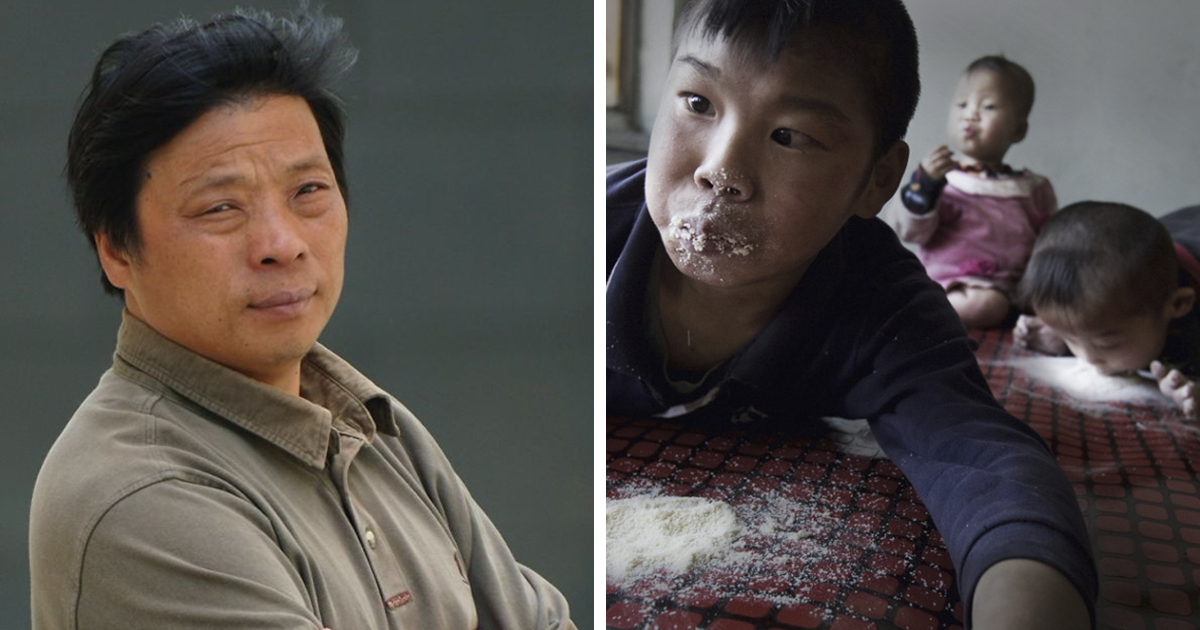
Editorial note: This article is based on publicly reported information about Chinese documentary photographer Lu Guang, his disappearance in Xinjiang in 2018, his later reported release, and the long-running photo projects that made his work internationally recognized.
The Photographer Who Pointed His Camera Where Officials Preferred Curtains
Some photographers chase sunsets. Lu Guang chased smoke stacks, poisoned rivers, sick villagers, exhausted workers, and the kind of truth that does not politely wait for permission. That is exactly why his disappearance in China in late 2018 felt less like a strange accident and more like a warning flare.
Lu Guang, an award-winning Chinese photojournalist and documentary photographer, built his career by documenting the human cost of China’s rapid industrial growth. His images did not simply say, “Look, pollution exists.” They said, “Look at the child living beside it. Look at the worker breathing it. Look at the family paying for it.” That is the difference between a statistic and a photograph that ruins your lunch in the most necessary way possible.
In November 2018, Lu’s wife, Xu Xiaoli, said she lost contact with him while he was traveling in Xinjiang. He had reportedly gone there after being invited to photography-related events and was later said to have been taken away by security authorities. For weeks, his family did not receive clear public answers. The story drew concern from press-freedom organizations, journalists, artists, and readers around the world. Eventually, reports indicated that Lu had been released in 2019, though details around his detention and restrictions remained murky.
But Lu’s disappearance was only one part of a larger story. The reason people cared so deeply was his body of work: decades of photographs exposing environmental pollution, unsafe labor conditions, HIV/AIDS villages, coal mining damage, industrial waste, and rural communities left to swallow the bill for economic “progress.” In other words, he photographed the receipt after the party was over.
Who Is Lu Guang?
Lu Guang was born in Zhejiang Province in 1961. Before becoming one of China’s most respected independent documentary photographers, he worked in a factory and later operated a photo studio. His early life gave him a close view of ordinary labor, and that perspective never left his camera.
Over the years, Lu earned major international honors, including multiple World Press Photo awards. His best-known projects focused on AIDS villages in Henan Province, drug addiction, industrial pollution, coal mining, water contamination, and the consequences of development in communities that rarely make it into glossy economic brochures. If official propaganda prefers polished highways and sparkling skylines, Lu aimed his lens at the ditch beside the highway and the family living under the smoke cloud.
His photographs are not loud in the way social media is loud. They do not scream with neon arrows or dramatic filters. They are quiet, direct, and stubborn. A sick child. A blackened worker. A river turned into a chemical drain. A temple surrounded by industrial filth. His style proves that truth does not need confetti; it just needs enough light.
The Disappearance In Xinjiang
Lu traveled to Xinjiang in October 2018. According to reports at the time, his wife last heard from him on November 3. He was expected to travel onward to Sichuan, but he never arrived. Later, Xu said she learned that Lu and another photographer had been taken away by security officers.
The timing and location were significant. Xinjiang had already become the focus of intense international scrutiny over surveillance, mass detentions, and restrictions affecting Uyghurs and other Muslim minorities. That context made Lu’s disappearance especially alarming. Even if the precise reason for his detention was not made fully public, many observers feared it was connected to his independent work and his reputation for documenting uncomfortable realities.
For press-freedom advocates, the case illustrated a familiar problem: when independent journalists and artists investigate sensitive subjects, the danger is not always a dramatic courtroom scene. Sometimes it is silence. A missed flight. A phone that stops ringing. A family left asking questions into a wall.
Why His Photos Matter
Lu Guang’s photographs matter because they refuse to separate national success from human cost. China’s industrial growth lifted millions economically, built cities at breathtaking speed, and transformed global manufacturing. But Lu’s work asks a hard question: who paid the hidden price?
His images show that pollution is not just gray air above a skyline. It is a child diagnosed with cancer. It is a farmer whose land no longer grows safely. It is a worker whose lungs become a factory filter. It is a family selling belongings to pay medical bills. It is a village grieving quietly while the rest of the country celebrates growth charts and export numbers.
That is why the phrase “China don’t want you to see” became attached to his work online. It is sensational, yes, and grammatically wobbly enough to make an English teacher reach for herbal tea. But the emotional meaning is clear: these are images that challenge official comfort. They are not anti-Chinese people; they are pro-human reality. Lu’s photographs are about Chinese citizens suffering from systems that would rather be admired than questioned.
21 Photos And The Stories Behind Them
The following descriptions are original summaries inspired by documented themes in Lu Guang’s public photojournalism. They are not a replacement for viewing the photographs themselves, but they help explain why his work hit so hard.
1. The Coal Truck That Turns A Road Into A Dust Storm
One of Lu’s most striking pollution images shows industrial transport as a moving disaster. A heavy truck loaded with coal or lime leaves behind a cloud that drifts into nearby homes. It is not a movie explosion. It is daily life, which somehow makes it worse.
2. The Child With Bone Cancer
Lu photographed children whose illnesses were linked in public discussion to polluted environments. In one heartbreaking image, an eleven-year-old child is shown after being diagnosed with bone cancer. The photograph makes environmental damage personal, small, and impossible to file away under “policy issue.”
3. Children Living In Industrial Districts
Factories are often described as engines of growth. Lu showed children living beside those engines, breathing what they release. The result is a brutal contrast: national development on one side, childhood vulnerability on the other.
4. The Dalian Oil Spill
In 2010, Lu documented the Dalian oil spill, where dark slicks spread across the water after a pipeline explosion. The images show cleanup efforts that look almost medieval: people fighting modern industrial disaster with boats, buckets, and bare human endurance.
5. Fishing Boats In A Sea Of Oil
Oil spill photographs often show ruined water. Lu’s version also shows labor. Boats are pulled into cleanup work, and the people in them appear tiny against the scale of contamination. It is a visual reminder that disasters do not clean themselves.
6. The AIDS Villages Of Henan
Lu’s award-winning work on AIDS villages in Henan Province documented people affected after unsafe blood-selling practices spread HIV. These images helped bring wider attention to communities that had been stigmatized, neglected, and left to mourn in poverty.
7. A Woman Holding Her Sick Grandchild
In one devastating scene, an older woman carries a severely ill child and looks upward as if pleading with the sky. There is no grand political slogan in the frame. There is only a family begging pain to stop.
8. Disabled Orphans Cared For By Farmers
Lu photographed disabled orphans adopted by charitable rural families. The picture carries both sorrow and dignity. It shows hardship, yes, but also the ordinary kindness that survives where institutions fail.
9. Children With Cerebral Palsy Struggling For Food
Some of Lu’s images are almost too painful to describe. One shows children with cerebral palsy trying to feed themselves in conditions that speak of poverty, neglect, and limited care. The photograph is a moral alarm bell.
10. Laseng Temple Surrounded By Pollution
Lu documented a historic temple polluted by nearby factories. The image works because it shows more than environmental damage. It shows cultural damage too: a sacred place made almost unvisitable by industrial smoke and waste.
11. Workers Covered In Dust
Many of Lu’s factory images focus on workers surrounded by airborne dust. These pictures do not romanticize labor. They ask whether a paycheck should come with lungs full of industrial powder. Spoiler: it should not.
12. Baotou Steel And The Tailings Dam
Lu photographed mineral-processing waste from the Baotou Steel area being dumped into a tailings dam. It is the kind of image that turns “supply chain” from a business buzzword into a physical landscape of sludge.
13. Chemical Sewage Reaching The Sea
In Lianyungang, Lu documented industrial waste entering coastal waters. The photograph captures a simple but terrifying idea: pollution does not stay where it is poured. It travels, spreads, and eventually knocks on everyone’s door.
14. Denim Production In Xintang
In the jeans-producing village of Xintang, Lu photographed workers and materials tied to denim manufacturing. The image asks readers to think about cheap fashion differently. That bargain pair of jeans may have a backstory darker than the dye.
15. A Wife Caring For Her Dying Husband
Lu’s AIDS village work includes intimate scenes of spouses caring for each other through illness. These are not abstract images of public health failure. They are love stories under unbearable pressure.
16. A Woman Shortly Before Death
One of the most haunting reported captions connected to Lu’s work describes a woman held by her husband shortly before she died. The emotional force comes from its closeness. The camera does not intrude; it witnesses.
17. Families Selling Belongings For Medical Bills
Lu photographed families who had sold nearly everything valuable to pay for treatment. The picture exposes a second illness spreading through poor households: debt. Disease harms the body; medical poverty empties the home.
18. A Girl Warming Her Hands In Winter
A young girl warming her hands becomes, in Lu’s frame, a portrait of inherited hardship. Her father is ill, the household is strained, and childhood becomes a waiting room for adult burdens.
19. Girls Preparing A Funeral
In another AIDS village image, two girls prepare for the funeral of a young brother. Children should be experts in games, snacks, and avoiding homework. Lu shows children forced to learn grief instead.
20. Coal Mining And Vanishing Grasslands
Lu’s long-term environmental work documented how mining damaged farmland, grasslands, and rural settlements. These images show development not as a clean upward line, but as a trade: minerals extracted, homes disrupted, air dirtied.
21. A Factory Worker In Inner Mongolia
Lu photographed workers in industrial zones such as Inner Mongolia, where pollution and labor risks often overlap. The human face in these images matters. Without it, pollution becomes scenery. With it, pollution becomes accountability.
The Power Of Photojournalism In A Censored Space
Photojournalism is dangerous because it is hard to argue with a picture. Officials can massage numbers, decorate press releases, and invent phrases so boring they could sedate a squirrel. But a photograph of a sick child beside a polluted river cuts through language. It does not explain everything, but it makes denial more difficult.
In countries with tight media control, independent photographers often operate in gray zones. There may not be a clear written rule saying, “Do not photograph this factory, this village, this grieving family.” Instead, there is a fog of risk. The boundaries move. What is tolerated one month may become dangerous the next. Lu once described the uncertainty of working in China as a place where trouble can appear without written rules. That uncertainty is part of the pressure.
His case also shows why international recognition can protect and endanger at the same time. Awards bring visibility, which can make it harder for a person to vanish quietly. But visibility can also irritate authorities who prefer local suffering to remain local. Lu’s camera turned domestic problems into global evidence.
Not Anti-China, But Anti-Erasure
It is important to say this clearly: Lu Guang’s photographs are not an attack on ordinary Chinese people. They are, in many ways, a defense of them. His subjects are workers, farmers, children, patients, spouses, and families trying to survive conditions they did not create.
The lazy version of this story would be, “China bad, photos shocking, click here.” The more honest version is harder. China’s rise was powered not only by government policy but also by global demand, foreign brands, cheap consumer expectations, and a worldwide appetite for low prices. The smoke in Lu’s images belongs to a global economy too. If a product is magically cheap, somewhere along the line someone may be paying the difference in health, wages, land, or water.
That is why Lu’s work remains relevant far beyond China. Pollution, censorship, labor exploitation, and public-health denial are not limited to one country. His photographs are Chinese in location, but global in meaning. They ask whether progress deserves applause if it requires people at the bottom to cough quietly offstage.
What Happened After Lu Guang Reappeared?
Reports in 2019 indicated that Lu Guang had been released and was back home in China, though not necessarily free in the ordinary sense of the word. Details remained limited, and his family reportedly kept quiet for a time to avoid further trouble. That silence is understandable. When someone has disappeared once, caution becomes a household habit.
His case did not end with a tidy movie scene. There was no dramatic press conference, no villain admitting wrongdoing, no triumphant soundtrack swelling in the background. Real life is rude like that. Instead, the story left behind unresolved questions about artistic freedom, state power, and the risks faced by independent journalists.
Still, the photographs remain. That is the strange strength of documentary work. A photographer can be detained, silenced, or pressured, but the images already seen by the world continue to circulate. They become memory with evidence attached.
Experience Section: What Lu Guang’s Story Teaches Anyone Who Looks Closely
Spending time with Lu Guang’s work is not a casual scroll. It is more like being invited to dinner and realizing the table is actually a courtroom. At first, you may look at the images as distant tragedy: polluted rivers, sick villagers, workers in dust. Then the uncomfortable recognition begins. The phone in your hand, the jeans in your closet, the plastic packaging in your trash, the endless hunger for cheaper goodsnone of us lives outside the system that produces these scenes.
One experience connected to this topic is the strange guilt of convenience. Modern consumers are trained to celebrate fast delivery, low prices, and endless choice. We click a button, a box arrives, and everyone claps for capitalism doing a backflip. But Lu’s photographs slow that magic trick down. They show the hidden factory floor, the contaminated river, the community near the mine, and the families who absorb costs that never appear on a receipt.
Another experience is the shock of realizing that censorship is not always a locked door. Sometimes censorship is exhaustion. A journalist is questioned until they stop traveling. A family is frightened into silence. A local community learns not to speak to outsiders. A photographer disappears long enough for others to understand the message. It is not always dramatic, but it is effective. Fear does not need to shout if everyone already knows the tune.
For writers, photographers, bloggers, and readers, Lu’s story is a reminder that attention has value. Looking carefully is a civic act. Sharing responsibly is a civic act. Refusing to reduce suffering to cheap outrage is also a civic act. The internet often turns serious topics into snackable sadness, something to consume between a recipe video and a celebrity haircut. Lu’s work deserves better than that. It asks for attention with a spine.
There is also a lesson in courage, though not the superhero kind. Lu’s courage was patient and repetitive. He returned to polluted towns. He photographed sick families. He documented workers whose lives were treated as disposable. He did not need explosions or theatrical danger to prove bravery. He practiced the quieter courage of showing up again and again with a camera, a conscience, and probably a very tired pair of shoes.
Finally, Lu Guang’s story teaches that the most powerful images do not simply expose suffering; they restore visibility. The people in his photographs are not background characters in someone else’s economic miracle. They are the story. They are the citizens, workers, parents, children, and patients whose lives deserve to be counted. His camera gave them a place in the public record. That is why his disappearance mattered, and why his photographs still matter now.
Conclusion: The Camera That Refused To Blink
Lu Guang’s disappearance in China shocked the world because it seemed to confirm what his photographs had been saying for years: truth can be dangerous when it embarrasses power. His images of pollution, illness, unsafe labor, and rural suffering remain some of the most important visual records of the human cost behind rapid industrial development.
The 21 photo themes above show why his work continues to circulate. They are not comfortable. They are not cute. They will not match your living room decor unless your design style is “existential accountability.” But they are necessary. Lu’s camera looked where many people preferred not to look, and in doing so, it gave dignity to people whose pain might otherwise have been buried under official silence.
In the end, the story is bigger than one photographer and one country. It is about the right to document reality. It is about the cost of censorship. It is about the moral responsibility of seeing. Lu Guang’s photographs remind us that progress without transparency is just a shiny building with a locked basement.