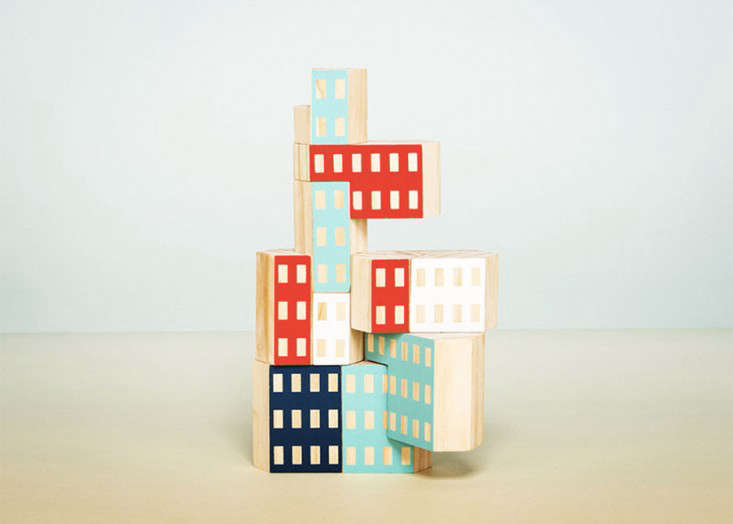
Blockitecture Series 1: Brutalism is the rare building toy that looks like it could sit comfortably on a museum shop shelf, a designer’s desk, or a living room coffee table pretending it is “just decor.” Designed by James Paulius for Areaware, this architectural block set turns the heavy drama of Brutalist architecture into something small, tactile, clever, and surprisingly playful. Think raw concrete energy, but without needing a zoning permit.
The set is built around nesting, hexagonal wooden forms that can be stacked, balanced, cantilevered, and arranged into miniature towers, skyways, platforms, and city fragments. Instead of asking children and adults to copy a picture on a box, Blockitecture invites them to experiment. The fun begins when a piece appears to float, lean, or push past another piece in a way that makes your brain whisper, “That should not work,” right before it does.
Inspired by Brutalism’s bold geometry, massive forms, and honest material language, Blockitecture Series 1: Brutalism is more than a toy. It is a pocket-sized architecture lesson, a design object, a physics puzzle, and a stylish excuse to say the word “cantilever” at least three times during family game night.
What Is Blockitecture Series 1: Brutalism?
Blockitecture is a series of architectural building blocks created by designer James Paulius. The concept began as a student design project connected to Rochester Institute of Technology’s Metaproject program and later moved into production with Areaware, a design brand known for playful, artful objects with a wink. The idea is simple at first glance: wooden blocks that nest together. The magic is in the geometry.
The Brutalism set typically includes 6 towers, 2 skyways, and 2 platforms. These pieces are designed to interlock and counterbalance, letting users create compact towers, bridge-like forms, stacked dwellings, and dramatic cityscapes. The blocks are made from pine wood and finished with water-based paint, giving them a clean, modern look while keeping the tactile warmth of wood.
Recommended for ages 6 and up, the set appeals to a surprisingly wide audience. Kids get open-ended construction play. Adults get a sculptural desk toy. Architecture students get a tiny laboratory for form, mass, and balance. Parents get a toy that does not sing, flash, beep, or announce that it needs batteries at 7:03 a.m. A small miracle, really.
Why Brutalism Makes a Great Building Toy Theme
Brutalism is one of the most misunderstood architectural styles of the modern era. It emerged in the mid-20th century and is often associated with raw concrete, bold geometric shapes, exposed structure, and a no-nonsense approach to design. Brutalist buildings can look massive, monumental, and even severe. They are the architectural equivalent of a person who owns one black coat and somehow makes it look philosophical.
But Brutalism is not just about being heavy, gray, or dramatic. At its best, it is about honesty. Materials are not hidden. Structure is not disguised. A column looks like a column. A wall looks like it could survive a weather event, a policy debate, and possibly a small dinosaur. The style often appeared in universities, civic buildings, libraries, housing complexes, and cultural institutions because it promised durability, efficiency, and a powerful public presence.
That makes it a perfect inspiration for Blockitecture. Brutalist architecture already looks as if it were made from giant blocks. Its forms are stacked, repeated, pushed outward, and connected through bridges, terraces, and deep shadows. Shrinking that language into hand-held wooden pieces feels natural. The result is a toy that captures the spirit of Brutalism without requiring anyone to pour concrete in the kitchen.
Design Details: Small Blocks, Big Architectural Attitude
Hexagonal Forms That Nest Together
The defining feature of Blockitecture is its hexagonal geometry. Unlike ordinary rectangular blocks, these pieces do not simply stack upward like a polite little wall. They nest, interlock, and create opportunities for overhangs. This means users can build structures that feel dynamic instead of static.
The hexagonal shape also creates a more architectural rhythm. Buildings made with Blockitecture can resemble modular housing, clustered towers, megastructures, or futuristic civic centers. One arrangement might look like a compact hillside neighborhood; another might look like the headquarters of a very serious space agency that still appreciates good toy design.
Cantilevering and Counterbalance
One of the most satisfying parts of Blockitecture Series 1: Brutalism is the way it introduces cantilevering. A cantilever is a structure that projects outward while being supported from one side. In real architecture, cantilevers are dramatic because they challenge our expectations of gravity. In Blockitecture, they are dramatic because your tower either stands proudly or performs a tiny wooden landslide.
This makes the set valuable as a learning tool. Users discover balance through play rather than lecture. They learn that mass matters, support matters, and ambition should occasionally be checked by physics. A child may not say, “I am exploring structural load distribution,” but that is exactly what is happening while they try to make a skyway hover between two towers.
A Brutalist Color and Material Palette
The Brutalism edition uses a restrained palette inspired by concrete, shadow, and the visual weight of modernist architecture. While the pieces are made of wood, their painted surfaces reference the cool, grounded feeling of concrete structures. This gives the set a more mature design presence than many brightly colored block toys.
That does not make it boring. In fact, the subtle palette helps the shapes stand out. The eye focuses on form, silhouette, and composition. The set looks good even when it is not being played with, which is helpful for adults who buy it “for the kids” and then keep it suspiciously close to their own desk.
How Blockitecture Encourages Creativity
The best open-ended toys do not tell users exactly what to do. They offer a system and let imagination take over. Blockitecture Series 1: Brutalism works because it gives just enough structure to guide play, but not so much that there is only one correct outcome.
There is no single “finished” building. The set can become a tower, a bridge, a compact apartment block, a museum, a sci-fi city, or a mysterious government building where everyone wears excellent glasses. Because the pieces can be rearranged endlessly, the toy stays fresh. Each build becomes a small design problem: How high can it go? How far can a platform extend? Can two skyways connect without collapsing? Can this city look less like a parking garage and more like architectural genius?
This kind of play supports spatial reasoning, problem-solving, fine motor skills, and visual planning. It also teaches patience. Brutalist mini-cities do not always cooperate on the first try. Sometimes the most educational sound in the room is the soft clatter of a failed tower followed by the determined silence of someone rebuilding it better.
Who Is Blockitecture Series 1: Brutalism For?
For Kids Who Like Building
Children who enjoy construction toys, puzzles, and imaginative play will find a lot to explore here. The pieces are simple enough to understand quickly, but the balancing possibilities add challenge. Unlike kits that rely on instructions, Blockitecture rewards experimentation. A child can build something different every time, which keeps the play experience flexible and personal.
For Design Lovers and Architecture Fans
This set is especially appealing to people who love architecture, urban design, modernism, and clever product design. It is the kind of object that can sit on a shelf and start conversations. Someone will ask, “What is that?” and suddenly everyone is discussing Brutalism, raw concrete, modular housing, and whether Boston City Hall is misunderstood or simply having a very long bad hair day.
For Teachers and Creative Classrooms
Blockitecture can also work well in educational settings. Teachers can use it to introduce geometry, symmetry, balance, force, structure, and architectural thinking. It is hands-on, visual, and easy to reset. Students can compete to build the tallest structure, the widest cantilever, or the most stable miniature neighborhood. No hard hats required.
Brutalism in Miniature: Why the Concept Works
Miniaturizing Brutalism is funny in the best way. Brutalist buildings are famous for being big, heavy, and unapologetic. Blockitecture takes that monumental language and turns it into something that fits in your hands. The contrast is part of the charm. A style often accused of being cold becomes warm because the material is wood. A style known for permanence becomes temporary because every build can be knocked down and remade.
That transformation makes the set feel smart. It does not parody Brutalism; it translates it. The towers, skyways, and platforms echo real architectural ideas: density, connection, verticality, modular repetition, and public space. A child may see a fortress or futuristic city. An architect may see echoes of megastructures, housing experiments, or mid-century civic ambition. A cat may see ten objects that need to be pushed off a table. Everyone brings something different to the skyline.
How to Play With Blockitecture Series 1: Brutalism
Start With a Stable Base
Begin by placing the largest or broadest pieces low in the structure. This gives your build a stronger foundation and helps prevent early collapse. Brutalist architecture may look fearless, but even tiny Brutalist towers appreciate basic support.
Add Height Gradually
Build upward piece by piece, checking balance as you go. Because the blocks can nest and counterbalance, height is not only about stacking. Sometimes the strongest structure comes from shifting weight across multiple points.
Experiment With Skyways
The skyway pieces are excellent for creating drama. Use them to connect towers, create bridges, or extend a form outward. This is where the set starts to feel architectural rather than merely block-like. A good skyway makes a small build feel like a city.
Combine Sets for Larger Cityscapes
One Brutalism set is enough for compact experiments, but multiple Blockitecture sets can be combined to create larger urban environments. This is where the play becomes more ambitious. You can design districts, campuses, plazas, elevated neighborhoods, or a tiny concrete utopia where every resident has excellent natural light and very strong opinions about furniture.
Blockitecture as Decor: Yes, It Looks That Good
Some toys vanish into bins. Blockitecture earns display space. Its clean lines and muted palette make it attractive on a desk, bookshelf, coffee table, or studio shelf. It has the visual confidence of a design object but still invites touch. That balance is not easy to achieve.
For adults, it can function as a creative break tool. Instead of scrolling through a phone, you can spend five minutes building a small tower. That tiny act of making something physical can reset the brain. It is quiet, tactile, and satisfying. Also, unlike email, it does not begin with “Just following up.”
As a gift, Blockitecture Series 1: Brutalism fits architects, designers, artists, students, puzzle lovers, parents, and anyone who has ever admired a concrete building while their friends asked, “Are you okay?” It is stylish without being fragile, playful without being childish, and educational without wearing a tiny academic robe.
Why It Still Feels Fresh
Blockitecture Series 1: Brutalism remains appealing because it connects several lasting interests: open-ended play, architectural design, tactile learning, and beautiful objects for the home. It also arrives at a time when Brutalism is being re-evaluated. Once dismissed by many as harsh or gloomy, the style has gained renewed appreciation among designers, photographers, preservationists, and younger audiences drawn to its honesty and visual power.
The set captures that renewed affection in a friendly format. You do not need to defend a city hall renovation budget to enjoy it. You can simply stack, balance, and admire. It makes Brutalism approachable, which is not a sentence anyone expected to say about raw concrete, but here we are.
Things to Consider Before Buying
Blockitecture Series 1: Brutalism is best for people who enjoy open-ended construction rather than instruction-based kits. If someone wants a toy that produces one recognizable final model, this may feel too abstract. The joy comes from experimenting, not completing a prescribed build.
The set is also relatively compact. That is part of its charm, but builders who want sprawling cities may want more than one set or may want to combine it with other Blockitecture editions. Used alone, Series 1: Brutalism is excellent for small compositions, desk builds, and focused balancing challenges.
Finally, because the pieces rely on balance, some younger children may need a little encouragement at first. The learning curve is gentle, but the toy rewards patience. A collapsed tower is not failure; it is simply Brutalism giving feedback.
Experiences With Blockitecture Series 1: Brutalism
The first experience with Blockitecture Series 1: Brutalism is usually visual. Before anyone touches the blocks, they look at them. The pieces do not scream for attention with neon colors or cartoon faces. Instead, they sit there like a tiny architectural model that escaped from a design studio. The shapes are calm, geometric, and serious in a charmingly unserious way. You want to pick them up because they look precise, but not precious.
Once the pieces are in your hands, the experience changes from looking to testing. The blocks feel like invitations to make decisions. Which tower goes first? Should the platform sit low or high? Can a skyway connect two forms without dragging everything into a very small urban disaster? The set does not rush you. It encourages slow experimentation, and that is part of its appeal. In a world full of fast taps and instant animations, Blockitecture asks for a different kind of attention.
Building with the set can feel almost meditative. You place one piece, adjust another, pause, and look. Then you try something slightly riskier. A tower leans. A platform holds. A skyway suddenly makes the whole structure feel intentional. There is a little thrill when an overhang works, especially if it looked impossible two seconds earlier. It is the quiet satisfaction of beating gravity in a polite, tabletop-sized argument.
For kids, the experience is often more story-driven. A cluster of blocks becomes a city, a castle, a space station, a mountain base, or an apartment building for imaginary citizens with excellent taste in exposed concrete. The abstract nature of the pieces is helpful because they do not dictate the story. A block can be a tower today and a bridge support tomorrow. That flexibility keeps the toy from becoming stale.
For adults, the experience can be unexpectedly playful. Many grown-ups forget how enjoyable it is to build without a goal. Blockitecture gives permission to fiddle, arrange, test, and rebuild. It works beautifully as a desk object because it offers a short creative reset. During a break, you can build a tiny civic center instead of checking notifications. The civic center will not solve your inbox, but it will look much better than panic-refreshing your email.
There is also a social experience. Put the set on a table and people tend to interact with it. Someone adds a piece. Someone else improves the balance. A third person claims the whole thing resembles a university library from 1974. Suddenly, a simple block set becomes a conversation about cities, buildings, childhood toys, design, and why some people love concrete so much. That is the hidden strength of Blockitecture Series 1: Brutalism: it makes design accessible without flattening it.
The most memorable part is how the set rewards rebuilding. The best structure is rarely the first one. You learn the pieces gradually. You discover which shapes support daring moves and which arrangements are secretly doomed. Over time, your builds become more confident. They stretch farther, stand taller, and look more intentional. The toy teaches through repetition, but it never feels like homework. It feels like play wearing a very stylish black turtleneck.
Conclusion: A Tiny Concrete Utopia, Made of Wood
Blockitecture Series 1: Brutalism is a clever, handsome, and genuinely engaging building set that brings architectural thinking into everyday play. It takes the visual language of Brutalismmass, geometry, repetition, structure, and bold silhouettesand transforms it into a warm, hands-on object made for experimentation.
Its appeal comes from the balance between simplicity and depth. The pieces are easy to understand, but the possibilities keep expanding. Children can build imaginative cities. Adults can explore form and balance. Design lovers can appreciate the reference to modern architecture. Everyone can enjoy the small victory of making a cantilever work without calling an engineer.
As a toy, it encourages creativity and problem-solving. As a design object, it looks refined and display-worthy. As a gift, it is thoughtful, unusual, and just nerdy enough to be memorable. Blockitecture Series 1: Brutalism proves that good design does not need to shout. Sometimes it just stacks, leans, balances, and quietly makes your coffee table look smarter.
SEO Tags
Note: This article is written for web publication in standard American English and synthesizes real product, design, architecture, and educational information without adding visible source links inside the article body.