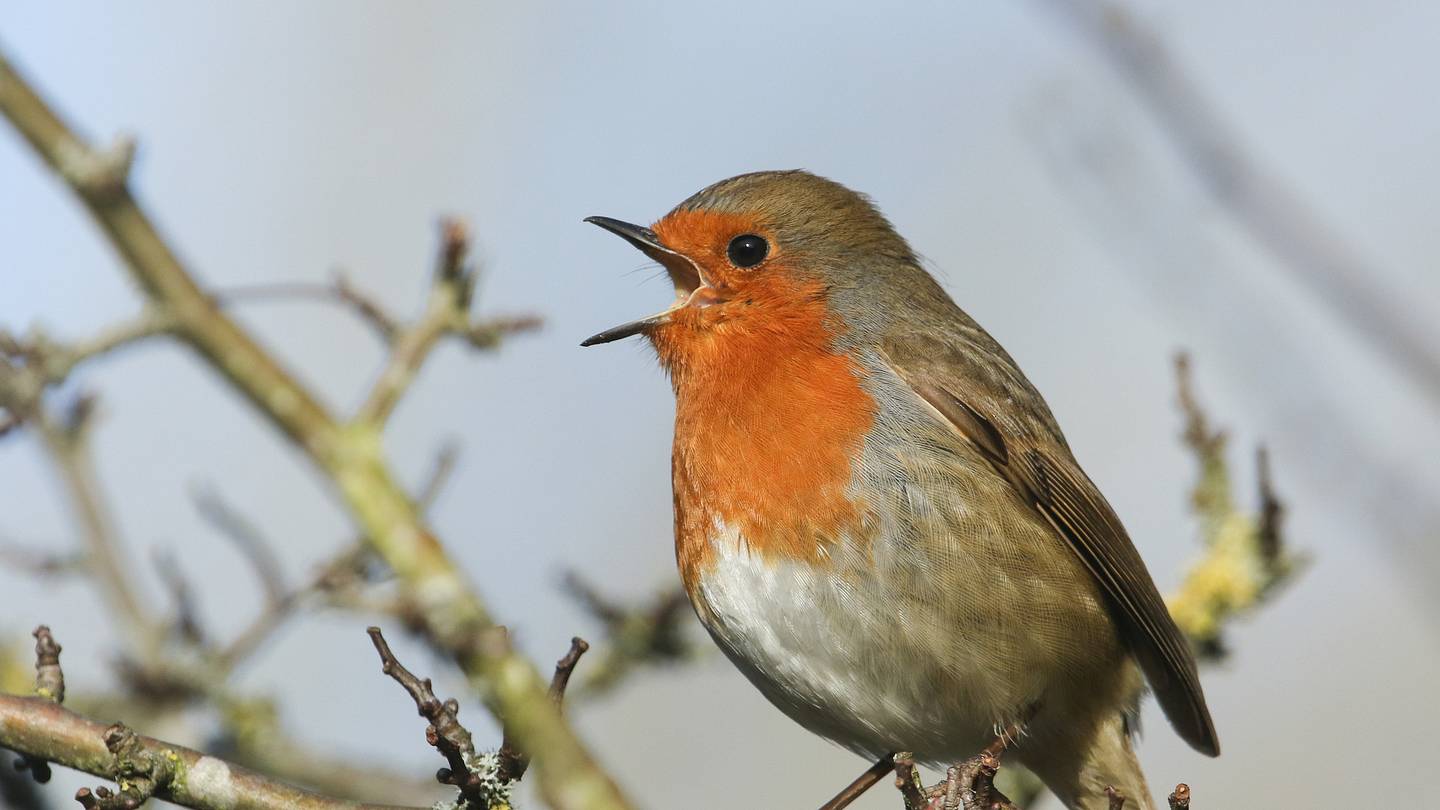
Step outside on a spring morning and nature sounds like it hired a full orchestra without checking the budget. Robins pour out bright, rolling phrases. Cardinals whistle like they are calling a very polite dog. Warblers zip through tiny musical acrobatics from somewhere inside the leaves. Then a crow lands on a telephone pole and announces, with the subtlety of a car alarm wearing feathers, “Caw! Caw!”
So why do some birds sing, while others caw? The short answer is that bird vocalizations are shaped by anatomy, evolution, behavior, habitat, and purpose. A bird’s sound is not random background noise. It is communication. Some birds use complex songs to attract mates and defend territory. Others rely on shorter calls to warn, gather, beg, locate family members, or announce that a hawk has entered the neighborhood and should be treated like an unpaid parking ticket.
The difference between birdsong and cawing is not simply “pretty versus harsh.” In ornithology, the distinction depends more on function than beauty. A robin’s song, a sparrow’s trill, a crow’s caw, a chickadee’s alarm call, and a woodpecker’s drumming all belong to the same grand category: birds communicating in the way that best fits their lives.
Bird Song vs. Bird Call: What Is the Real Difference?
In everyday language, people often call any pleasant bird sound a song and any rough sound a call. Science is a little pickier. A bird song is usually longer, more structured, and closely tied to breeding behavior. Birds sing to attract mates, defend territories, show fitness, and sometimes strengthen pair bonds. A bird call is usually shorter and more direct. Calls can mean “Where are you?” “Danger!” “Food here!” “Feed me!” or “Everyone please panic in an organized fashion.”
A male song sparrow singing from a fence post in spring is not giving a casual performance. He is broadcasting two major messages: “This territory is taken” and “Potential partners, kindly notice my excellent lungs.” Meanwhile, a crow’s caw may signal alarm, contact, food, family movement, or social coordination. Crows also make softer rattles, coos, clicks, and other sounds that many people never notice because the famous caw steals the spotlight like a feathered celebrity.
The Syrinx: The Bird Voice Box With Superpowers
Birds do not sing with a voice box like humans do. They have a specialized vocal organ called the syrinx, located low in the airway where the trachea branches toward the lungs. This position gives birds impressive sound-producing efficiency. In many songbirds, the syrinx is especially well developed, allowing rapid pitch changes, rich tones, and even the ability to control two sides independently.
That two-sided control is one reason certain birds sound almost impossibly musical. Some songbirds can produce two notes at once or switch between pitches so quickly that the result sounds like a tiny flute player who drank three espressos. The Northern Cardinal, for example, can sweep through dramatic pitch changes with remarkable speed. Wood Thrushes can create haunting, layered tones that feel too large to come from one small brown bird hiding in the trees.
Crows also have a syrinx, but their vocal style is built for a different job. Their calls are powerful, flexible, and socially meaningful. The harshness of a caw is not a design flaw. It is a feature. A loud caw carries well across open spaces, tree lines, fields, and city blocks. It can alert relatives, summon allies, or tell a predator that the crow neighborhood watch has officially clocked in.
Why Songbirds Sing So Beautifully
Many of the birds we think of as “singers” belong to a group known as oscine passerines, or true songbirds. This group includes warblers, sparrows, thrushes, finches, wrens, orioles, and many backyard favorites. These birds are not born with a perfect adult song already loaded like factory software. Young songbirds must learn their songs by listening to adults, practicing, making awkward baby-bird attempts, and gradually refining their sound.
In that sense, a young songbird learning to sing has something in common with a toddler learning to talk. There is listening, copying, babbling, correcting, and eventually producing a recognizable adult vocal pattern. A baby zebra finch, for example, practices until its song becomes stable. A young sparrow listens during a sensitive learning period and later develops a song that matches its species and local dialect.
Birdsong is also shaped by sexual selection. A strong, accurate, energetic song can advertise health, experience, territory quality, and stamina. To another male, it may sound like a warning: “Do not build your nest here, buddy.” To a potential mate, it may sound like a résumé, love letter, and home listing all rolled into one.
Why Crows Caw Instead of Warbling Like Robins
Crows are not failed songbirds. They are corvids, a highly intelligent family that includes ravens, jays, magpies, and nutcrackers. Their communication style reflects their social lives. Crows often live in family groups, recognize individuals, cooperate, mob predators, remember threats, and use a variety of calls for different contexts. Their classic caw is only one part of a much larger vocal toolkit.
An American Crow may caw in different lengths, rhythms, and intensities. A few sharp caws may function differently from a long series of excited calls. Juvenile crows can sound nasal and begging. Adults may use alarm calls to rally others against owls, hawks, or other threats. They may also produce softer vocalizations during close social interactions. To human ears, “caw” may sound like one word. To crows, it is closer to a flexible communication system with context, tone, and urgency.
Crows do not need to impress mates with sweet, flute-like melodies in the same way many territorial songbirds do. Their success depends heavily on intelligence, social learning, group defense, flexible feeding, and long-term memory. A crow’s voice is built for practical communication. It is less opera house, more emergency radio with attitude.
Anatomy Matters: Size, Beaks, and Sound
The sound a bird makes is influenced by its body size, syrinx structure, breathing control, beak shape, and vocal tract. Smaller birds often produce higher-pitched sounds, while larger birds tend to produce lower-pitched or harsher sounds. This is not a strict rule, but it is a useful pattern. A chickadee and a raven are not working with the same acoustic equipment.
Beak size can also influence song. Studies of tanagers and related birds show that larger bills are associated with slower, lower-pitched songs and longer notes, while thinner bills may allow more rapid or repetitive sounds. Think of it like musical instruments: a piccolo and a tuba both make music, but nobody expects the tuba to perform hummingbird solos.
Habitat matters too. Birds that live in dense forests, shrubs, or tall grasses often rely heavily on sound because visibility is limited. A hidden wren can sing loudly from a thicket and still advertise its presence. Birds in open habitats, wetlands, beaches, and rocky coasts may rely more on calls, displays, posture, or movement. A heron does not need a complicated love ballad when a dramatic neck, long legs, and prehistoric stare already do half the marketing.
The Dawn Chorus: Why Birds Sing in the Morning
One of the most famous bird vocal events is the dawn chorus. In spring, many birds sing intensely just before and after sunrise. This timing is connected to breeding season, territorial defense, mate attraction, and environmental conditions. Cool, calm, humid morning air may help sound travel clearly. Also, early morning is a prime time for males to announce that they survived the night and still own the same patch of shrubs.
The dawn chorus is not one chaotic bird meeting where everyone forgot the agenda. Many species begin singing at specific times relative to sunrise. Some start very early; others join later. The result is layered, timed, and surprisingly organized. To humans, it sounds like a cheerful mess. To birds, it is a competitive acoustic marketplace.
Are Songs Learned and Calls Instinctive?
A common rule says songs are learned and calls are instinctive. That is partly true, but nature enjoys making rules and then immediately doodling in the margins. True songbirds usually learn their songs. Parrots and hummingbirds are also famous vocal learners, even though they are not true songbirds. Many calls are more instinctive, but some birds can modify or learn aspects of their vocal behavior.
Corvids complicate the picture further. Research suggests vocal learning and social adaptation occur in several corvid species. Crows, ravens, and jays use calls in complex social settings. Their vocal behavior can involve predator information, group cohesion, coordination, and individual recognition. So while crows may not sound like robins, they are not vocally simple. They are communicating with a different style, not a smaller brain.
Why “Pretty” Is a Human Bias
Humans are quick to rank bird sounds by our own musical taste. A thrush sounds beautiful. A crow sounds rude. A gull sounds like it wants fries and legal representation. But birds are not performing for human reviews. Their sounds are shaped by survival and reproduction.
A sound that seems harsh to us may be perfect for its purpose. A caw cuts through city noise. A jay’s scream alerts the forest. A goose’s honk keeps a flock together. A chickadee’s alarm call can encode information about danger. A woodpecker’s drumming carries through trees without requiring a melodic voice at all. Beauty, in bird communication, is not always the point. Effectiveness is.
Specific Examples: Singers, Cawers, Honkers, and Drummers
American Robin
The American Robin is famous for its cheerful, caroling song. Robins use song during breeding season to claim space and attract mates. They also give sharp calls when alarmed. One bird, two sound strategies.
Northern Cardinal
Cardinals produce clear whistles that can sound like “cheer, cheer, cheer” or “birdie, birdie, birdie.” Both males and females sing, which is more common than many people realize. Their songs help with territory and pair communication.
American Crow
The American Crow is best known for its caw, but it has more than one vocal setting. Crows use harsh calls, alert calls, rattles, coos, and bill clacks. Their voice supports family life, defense, food discovery, and social coordination.
Black-capped Chickadee
Chickadees use songs and calls. Their clear “fee-bee” song differs from the famous “chick-a-dee-dee-dee” call. The number and intensity of “dee” notes can increase when a threat is more serious.
Woodpeckers
Woodpeckers often communicate by drumming. That rapid hammering on wood, metal gutters, or unfortunately resonant chimney caps can advertise territory and attract mates. It is percussion with property claims.
How to Listen Like a Birder
If you want to understand why some birds sing and others caw, start by listening for context. Is the bird perched and repeating a structured phrase? It may be singing. Is it moving with a flock, warning others, begging, or reacting to a predator? It may be calling. Listen for pitch, rhythm, repetition, tone, and timing. A sound at dawn in spring may have a different meaning from the same sound at noon in winter.
You do not need to memorize every bird immediately. Begin with common neighborhood voices: robin, cardinal, crow, blue jay, mourning dove, chickadee, house sparrow, and red-winged blackbird. Once your ears learn a few patterns, the outdoors becomes less like “generic bird noise” and more like a living radio show with many tiny hosts.
Experience Section: What Bird Sounds Teach Us When We Actually Stop and Listen
The first time you truly listen to birds, rather than merely hear them, the world changes. A morning walk that once felt quiet suddenly becomes full of messages. The robin on the lawn is not just decorating the grass. He is pausing, tilting his head, hunting worms, and then flying to a branch to pour out a song that claims the morning. A cardinal hidden in a maple tree whistles with such confidence that you may look around expecting to see a tiny referee. Then, from a rooftop, a crow cuts through everything with a blunt caw that seems to say, “Nice music, everyone, but I have an announcement.”
That contrast is the magic of the topic. Birdsong can feel emotional to humans because it arrives with sunrise, spring, fresh air, and the promise that the day has not yet been ruined by email. But cawing has its own personality. Spend time watching crows and the sound becomes less harsh. You notice that one caw may bring another crow closer. A louder burst may follow the arrival of a hawk. A group may gather and scold an owl with the seriousness of a neighborhood committee discovering a suspicious van.
In a park, different birds divide the soundscape. Sparrows chatter from low shrubs. A mockingbird may run through borrowed phrases like a playlist with no skip button. Mourning doves coo from wires. Blue jays scream from the canopy, and somehow every squirrel looks guilty. Each sound fits a behavior. The longer you listen, the more you realize that birds are not making noise to fill silence. They are negotiating space, safety, romance, hunger, family, and status.
The experience is even richer at dawn. Before traffic builds, the air belongs to birds. Some songs are close and bright; others are distant and thin. A wren may sound impossibly loud for its size, as if someone installed concert speakers inside a feathered walnut. A crow may fly over with three slow caws, and the entire mood shifts from delicate symphony to street-level news report. Neither sound is better. They are different answers to different evolutionary questions.
Listening this way also makes ordinary places feel wild again. A backyard, school campus, apartment courtyard, parking lot, or roadside tree can become a small acoustic map. You begin to know who is present without seeing them. You hear alarm before you see the cat. You notice that spring has intensified because the songs are more frequent. You recognize that a crow’s voice, once dismissed as rough, carries intelligence and social meaning. In the end, birds teach us that communication does not need to sound beautiful to be brilliant. Sometimes it whistles. Sometimes it trills. Sometimes it caws from a telephone pole like it owns the zip code.
Conclusion
Some birds sing while others caw because evolution gave different species different bodies, habitats, social systems, and communication needs. Songbirds often use learned, complex songs to attract mates and defend territories. Crows and other corvids use flexible calls to coordinate family groups, warn of danger, and navigate social life. A melody, a caw, a honk, a screech, and a drumroll are all tools in the same survival kit.
The next time you hear a robin singing and a crow cawing, do not think of one as music and the other as noise. Think of them as two languages. One is a polished love song from the shrubs. The other is a bold public announcement from the treetops. Both are meaningful. Both are successful. And both remind us that the bird world is never as quiet, simple, or random as it first appears.