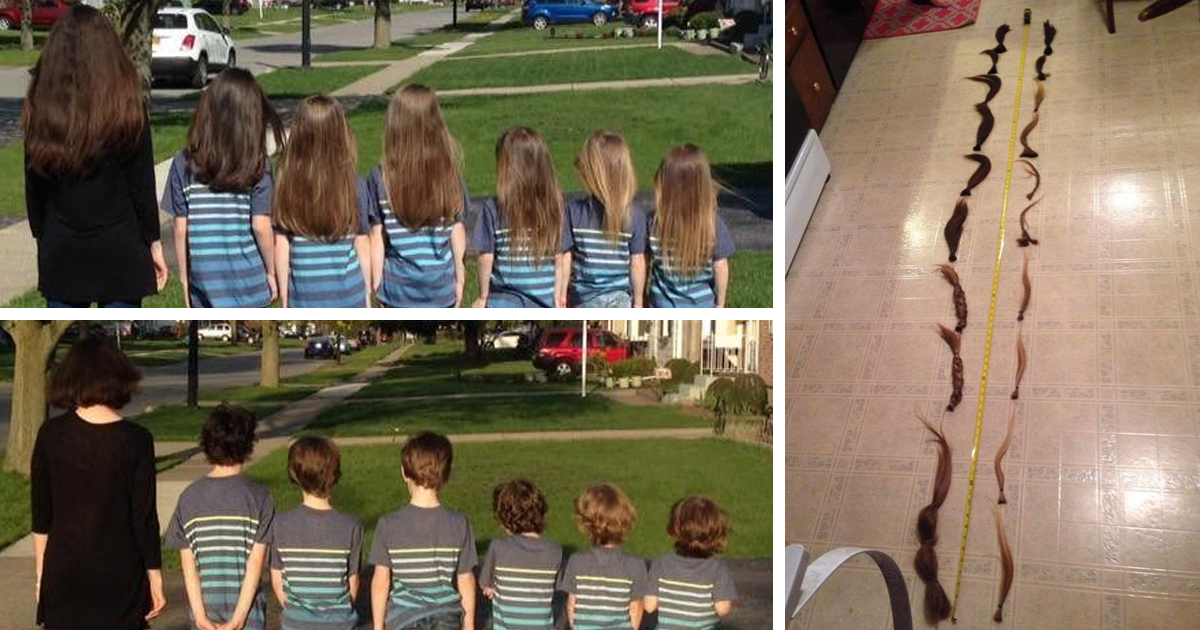
Some families collect baseball cards. Some collect vacation magnets. The Kannisto family of Cheektowaga, New York, collected something much more unusual: feet and feet of hair, grown with patience, purpose, and the occasional eye roll from strangers who apparently had never seen boys with long hair before.
Phoebe Kannisto and her six sonsAndre, twins Silas and Emerson, and triplets Herbie, Reed, and Dextermade headlines after cutting off more than 17 feet of hair to donate to Children With Hair Loss, a nonprofit that provides hair replacements for young people dealing with medically related hair loss. The family’s youngest child, Marah Taylor, was still too little to donate at the time, but she watched the dramatic haircut day like a tiny VIP spectator at the world’s kindest salon event.
The title of the story sounds almost too perfect for the internet: six brothers were bullied for years while growing their hair long to make wigs for kids with cancer. But behind the viral sweetness is a deeper lesson about childhood compassion, family values, anti-bullying courage, and the surprising power of a ponytail.
A Family Hair Donation Story That Started With Loss
The Kannisto boys did not grow their hair because it was trendy, rebellious, or because they were secretly trying to start a junior rock bandalthough, frankly, with twins and triplets, they already had the lineup. Their decision was rooted in something personal and painful.
Phoebe Kannisto had donated her own hair since she was a teenager, but the family’s group effort began after a friend lost her son to cancer. The child was a twin and close in age to Kannisto’s twins, which made the loss feel especially close to home. On the first anniversary of his passing, the three oldest boys donated their hair in his memory. Later, as cancer continued touching people around them, all six sons joined the mission.
That detail matters. This was not a one-day “let’s do something nice” project. Hair donation requires time, awkward growing-out stages, patience through tangles, and the emotional endurance to answer the same questions again and again. For some of the boys, the process lasted from about one year to as long as five years. That is a long time for any child to stick with a goalespecially when classmates and even adults make comments.
The Big Chop: 17 Feet Of Hair And One Very Generous Salon
When the big haircut day finally came, the family went to Hizair Hair Salon. The salon reportedly worked after hours and refused payment, saying the family was donating hair, so the stylists wanted to donate their time. That is the kind of community response that makes you believe humanity deserves at least a solid five-star review.
In total, Phoebe and her sons donated approximately 17 feet of hair. To put that into perspective, that is taller than a giraffe, longer than many small bedrooms, and probably enough to make every shampoo bottle in the house file for early retirement. But the real value was not measured in inches. It was measured in what the hair could become: wigs and hair replacements for children facing medical hair loss.
The donation went to Children With Hair Loss, which provides human hair replacements at no cost to children and young adults dealing with hair loss from cancer treatments, alopecia, burns, trichotillomania, and other medical conditions. The organization currently lists 8 inches as its minimum donation length and says its wig packages are provided free to recipients.
Why Hair Loss Can Be So Emotional For Kids With Cancer
For many children undergoing cancer treatment, hair loss is not “just cosmetic.” Hair is tied to identity, confidence, privacy, and the simple desire to look like yourself in the mirror. Cancer already asks too much from a child. It can bring hospital visits, treatments, fatigue, uncertainty, and fear. Losing hair can make the illness visible to the entire world before a child is ready to talk about it.
Chemotherapy can cause hair loss because it targets rapidly dividing cells, including cells in hair follicles. Mayo Clinic notes that hair often begins falling out two to four weeks after treatment starts, either gradually or in clumps. For a child, that can be frightening, even when doctors and parents explain what is happening.
That is why wig donation programs matter. A wig will not erase cancer, but it can give a child a little control back. It can help a young patient go to school, attend a family event, pose for photos, or simply feel more like themselves on a difficult day. CancerCare lists organizations such as Children With Hair Loss, Locks of Love, and Wigs for Kids as helpful wig resources for children and teenagers affected by hair loss from cancer.
The Bullying Side Of The Story
Here is where the story becomes more complicated. The Kannisto brothers were not just growing hair; they were growing it while being teased. Some people assumed boys should not have long hair. Some kids at school made comments. According to reporting on the family, one son had a particularly hard time and had tearful conversations with his mother after trying to explain hair donation to peers who did not understand.
That part deserves attention because bullying is not harmless background noise. The CDC describes bullying as a form of youth violence that can lead to physical injury, social and emotional distress, anxiety, depression, sleep problems, lower academic achievement, and other serious outcomes. StopBullying.gov also emphasizes that kids who are bullied can experience negative physical, social, emotional, academic, and mental health effects that may last into adulthood.
Yet the boys kept going. They developed what their mother described as a “thick skin,” not because bullying is acceptable, but because their purpose was stronger than the teasing. That is a powerful lesson for adults, too. Sometimes doing the right thing looks strange to people who have not asked the right questions.
Why This Story Went Viral
Stories like this spread quickly because they combine three things the internet loves: kids being unexpectedly wise, a visible before-and-after transformation, and a wholesome ending that does not involve anyone yelling in an airport. But the story resonated for a bigger reason: it challenged assumptions.
The brothers’ long hair became a test. People saw the outside and judged it. But the meaning was hidden inside the decision. Once the hair was cut and donated, the same thing that invited teasing became an act of generosity. That shift is why the story still circulates years later. It reminds readers that kindness is not always dressed in the outfit we expect.
It also makes hair donation feel achievable. Not everyone can write a large check, fund a hospital wing, or invent a medical breakthrough before breakfast. But many people can grow hair, follow donation guidelines, and give something deeply personal to someone who needs it more.
How Hair Donation Works
Hair donation sounds simplegrow, cut, mail, feel like a superherobut each organization has its own rules. Children With Hair Loss accepts clean, dry hair of at least 8 inches. Wigs for Kids requires a minimum of 12 inches and strongly prefers 14 inches or more. Locks of Love uses donated ponytails to provide hair prosthetics to financially disadvantaged children dealing with medical hair loss.
The most important step is to check the organization’s current guidelines before cutting. Hair generally needs to be clean, dry, secured in ponytails or braids, and placed in a sealed bag before mailing. Hair swept off the floor usually cannot be used because it is not properly bundled. In other words, do not let your generous ponytail become a sad little tumbleweed at the salon.
St. Baldrick’s, a respected childhood cancer charity, also advises donors to research nonprofits carefully and look for organizations that provide wigs to children with medical hair loss at no cost. That is smart advice. A hair donation is an act of trust, so donors should feel confident about where their hair is going and how it will help.
What Parents Can Learn From The Kannisto Brothers
The Kannisto family story is not only about hair. It is about raising children who understand service, patience, and empathy. Kids often hear adults say, “Be kind,” but kindness becomes more real when it has a calendar, a goal, and a few difficult moments along the way.
Phoebe Kannisto did something many parents try to do: she connected compassion to action. Her boys did not just feel bad for kids with cancer. They did something specific. They grew their hair. They answered questions. They endured teasing. They showed up for the haircut. Then they donated the result.
That process teaches a lesson far beyond charity. It shows children that helping others may require discomfort. It may require explaining yourself. It may require ignoring people who do not understand yet. And sometimes, the reward comes later, when a child somewhere receives a wig and gets to feel a little more comfortable in their own skin.
Specific Examples Of Everyday Courage
1. Explaining The Mission Again And Again
One of the hardest parts of being different is repeating your reason to people who are not really listening. The Kannisto boys reportedly explained that they were growing their hair for donation, but some peers still teased them. That kind of persistence is courage in kid-sized sneakers.
2. Letting Go Of Something Personal
Hair takes time to grow. By the time it is long enough to donate, it has become part of your look and routine. Cutting it off can feel exciting, strange, and emotional all at once. Donating hair means letting go of something that belongs to you so it can comfort someone else.
3. Turning Family Values Into A Family Project
The story worked because it was shared. A mother, six sons, and eventually a little sister all became part of the same mission. Family projects like this can create memories that last longer than the haircut itself.
Experience Section: What This Story Teaches Us About Compassion, Bullying, And Growing Into A Purpose
There is something beautifully ordinary about the Kannisto brothers’ act of kindness. They did not need a stage, a trophy, or a dramatic movie soundtrack swelling in the background. They needed time, encouragement, and enough patience to survive the “awkward hair phase,” which, as anyone who has ever grown out a haircut knows, is basically a character-building program sponsored by cowlicks.
One experience many families can relate to is the challenge of helping children stay committed to a long-term goal. Kids are often asked to think about immediate results: finish homework, clean your room, brush your teeth, stop using the sofa cushions as medieval shields. Hair donation is different. It asks a child to wait months or years for the result. That waiting period can become a powerful lesson. Every inch of hair becomes a reminder that good things often grow slowly.
The story also reflects the experience of standing out. Many children are bullied for things that are visible: hair, clothes, body shape, interests, disabilities, accents, or family differences. The Kannisto brothers’ long hair made them noticeable, and being noticeable can be uncomfortable. But their experience shows that difference does not need to be explained away or hidden. Sometimes difference is evidence of purpose. Sometimes the thing people mock is the very thing that will help someone else.
Another important experience is the role of parents and caregivers. A child who is teased needs more than a quick “ignore them.” Ignoring cruelty is easier to recommend than to practice. What helped in this story was support: conversations, reassurance, and a clear reminder of why the boys were doing what they were doing. When children have a meaningful reason behind a difficult choice, adults can help them hold onto that reason when confidence gets wobbly.
The salon experience is also worth remembering. Hizair Hair Salon’s reported decision to work after hours and refuse payment turned one family’s private act of giving into a community moment. That is how kindness multiplies. One person donates hair. Another donates time. Someone else shares the story. A reader decides to grow their own hair. A child eventually receives a wig. Compassion rarely travels in a straight line; it bounces from person to person like a very determined pinball.
For children with cancer or other medical hair loss, the experience on the receiving end can be deeply emotional. A donated wig is not simply an accessory. It can help a child walk into a classroom without feeling like every head turns. It can make family photos feel less medical. It can offer comfort during a time when so many choices are controlled by illness, treatment schedules, and hospital routines.
Finally, this story teaches that kindness does not require perfection. The boys may have had hard days. They may have wanted haircuts sooner. They may have been tired of comments. That makes the donation more meaningful, not less. Real compassion is not always effortless. Sometimes it looks like six brothers choosing, day after day, not to cut their hair because somewhere out there, another child might need it.
Conclusion
The story of six brothers who were bullied for years while growing their hair long to make wigs for kids with cancer is more than a feel-good viral headline. It is a reminder that children are capable of extraordinary empathy when adults give them the language, support, and opportunity to act on it.
Phoebe Kannisto and her sons turned grief into generosity. They turned teasing into perseverance. They turned 17 feet of hair into hope for children facing medical hair loss. And perhaps most importantly, they showed that kindness does not always look the way people expect. Sometimes it looks like boys with long hair walking into a salon, ready to make someone else’s hard day a little softer.
Editorial note: This article is an original SEO rewrite based on verified public reporting and reputable health, bullying prevention, and hair donation resources, including ABC News, Children With Hair Loss, Wigs for Kids, Locks of Love, Mayo Clinic, CancerCare, CDC, and StopBullying.gov.