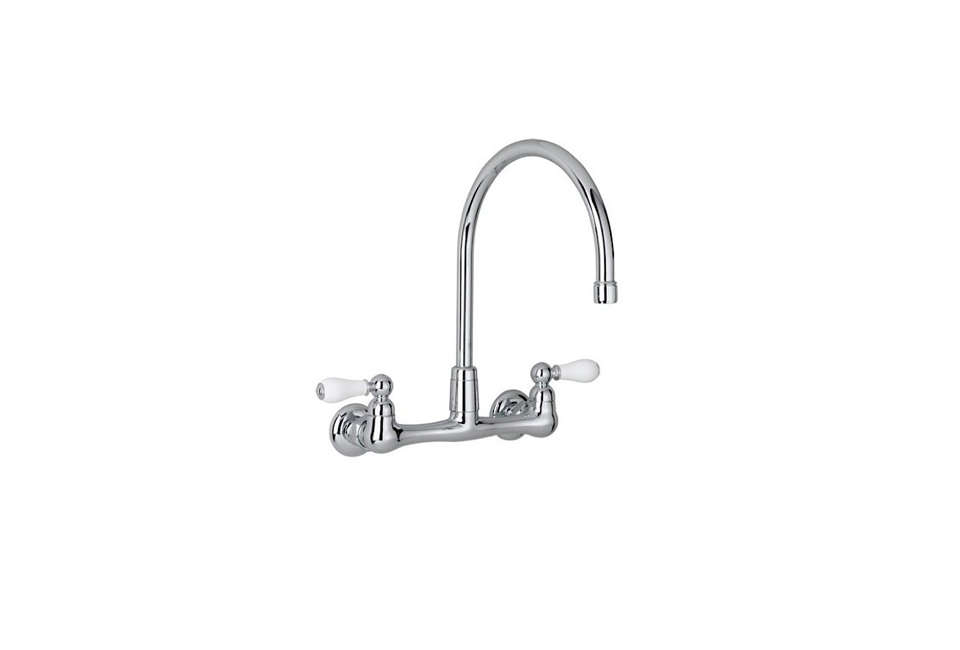
A faucet may seem like a small detail until you live with the wrong one. Then suddenly, every dish rinse feels like a tiny plumbing drama. The Heritage Two Handle Wall-Mount Gooseneck Sink Faucet is the kind of fixture that tries to solve several kitchen and utility sink problems at once: it clears counter space, adds vintage character, offers separate hot and cold control, and gives the sink area that “yes, someone thought this through” look.
With its wall-mounted body, high gooseneck spout, two-handle layout, and classic styling, this faucet belongs in kitchens, laundry rooms, bar sinks, mudrooms, prep areas, and traditional-style renovations where a standard deck-mounted faucet would feel a little too ordinary. It is practical, but it also has personality. Think old-school charm with modern expectationslike wearing a waistcoat while remembering where you left your phone.
This guide explains what makes a heritage-style two-handle wall-mount gooseneck faucet appealing, how it works, where it fits best, what to check before buying, and how to maintain it so it stays handsome instead of becoming “that leaky thing over the sink.”
What Is a Heritage Two Handle Wall-Mount Gooseneck Sink Faucet?
A Heritage Two Handle Wall-Mount Gooseneck Sink Faucet is a traditional-style faucet installed on the wall or backsplash rather than directly on the sink deck or countertop. It typically includes two separate handlesone for hot water and one for cold waterand a curved, high-arc gooseneck spout that extends over the sink basin.
The word “heritage” usually refers to a classic design language: polished chrome, porcelain or metal lever handles, visible escutcheons, graceful curves, and proportions inspired by older kitchens and commercial utility sinks. It is not trying to look futuristic. It is not asking your Wi-Fi for permission to pour water. It is simply a durable, elegant faucet design that has remained useful because good ideas do not retire early.
Why Wall-Mount Faucets Are Making a Comeback
Wall-mount faucets were once common in older homes, commercial kitchens, laundry spaces, and utility rooms. Today, they are enjoying renewed attention because homeowners want fixtures that look custom, save counter space, and feel more architectural.
Because the faucet body sits on the wall, the sink deck stays cleaner and less cluttered. There is no faucet base collecting water spots, crumbs, soap film, or mysterious kitchen gunk that nobody wants to identify before coffee. For smaller sinks, narrow counters, or vintage-inspired rooms, that space-saving advantage can be a major win.
Wall-mounted faucets also create a tailored look. They visually frame the sink and often pair beautifully with farmhouse sinks, cast iron sinks, porcelain utility sinks, stainless steel prep sinks, and laundry basins. The result feels intentional rather than simply installed.
Key Features That Make This Faucet Stand Out
Two-Handle Water Control
The two-handle design gives separate control over hot and cold water. Many people like this because it allows more precise temperature adjustment, especially when washing delicate dishes, rinsing produce, cleaning paintbrushes, or filling a bucket with warm water that is warmnot “why is my hand soup now?” hot.
Two-handle faucets also reinforce the traditional look. They work especially well in classic kitchens, cottage spaces, vintage bathrooms, mudrooms, and period-style remodels where a single modern lever might look out of place.
Gooseneck Spout Clearance
The gooseneck spout is one of the faucet’s biggest functional advantages. Its tall curved shape creates room under the spout, making it easier to rinse large pots, wash tall pitchers, clean oversized bowls, or fill a vase without performing countertop gymnastics.
For deep sinks, the high-arc design feels natural. For shallow sinks, however, buyers should be careful. A tall spout can cause more splash if the water drops too far into a shallow basin. The best match is usually a sink with enough depth and width to handle the flow comfortably.
Wall-Mount Installation
Unlike deck-mounted faucets, a wall-mount faucet connects through plumbing lines inside the wall. This creates a cleaner sink surface and a more built-in appearance. However, it also means measurements matter. A lot.
Before choosing a heritage wall-mount faucet, confirm the distance between the hot and cold water supplies, commonly called the center-to-center measurement. Many traditional wall-mount kitchen faucets are designed around an 8-inch center spread, but the exact requirement depends on the model. You should also check inlet size, wall thickness, spout reach, sink depth, and whether the faucet will land the water stream near the center of the basin.
Classic Finish Options
Polished chrome is a common heritage faucet finish because it is bright, timeless, and easy to match with many sink styles. Other finishes may include polished brass, brushed nickel, oil-rubbed bronze, matte black, or antique brass, depending on the manufacturer and collection.
Chrome leans clean and traditional. Brass feels warm and historic. Matte black adds contrast and a more updated farmhouse look. Nickel is softer and less mirror-like. The right finish depends on the room, but the rule is simple: match the faucet to the mood, not just the cabinet knobs.
Best Places to Use a Heritage Wall-Mount Gooseneck Faucet
Traditional Kitchens
In a traditional kitchen, this faucet can become a quiet centerpiece. It pairs well with shaker cabinets, marble or butcher block counters, apron-front sinks, bridge-style hardware, and warm wood tones. It gives the kitchen a sense of age without making it feel outdated.
Farmhouse and Cottage Kitchens
Few fixtures suit a farmhouse sink better than a wall-mounted gooseneck faucet. The curved spout and separate handles support the cozy, hardworking character of the space. Add white tile, open shelving, and a few mixing bowls you pretend are always neatly stacked, and the look is complete.
Laundry Rooms
Laundry sinks need faucets that can handle real messes: muddy shoes, soaked towels, hand-wash garments, pet bowls, mop buckets, and the occasional mystery stain that has entered witness protection. A wall-mount gooseneck faucet gives extra clearance and keeps the sink deck easier to clean.
Utility and Mudroom Sinks
For mudrooms and utility rooms, the wall-mount format is practical because it leaves more usable sink space. The gooseneck shape helps when filling buckets or rinsing awkward items. A heritage design also prevents the room from looking purely industrial, which is nice unless your design goal is “garage with a faucet.”
Bar and Prep Sinks
In smaller prep areas, a wall-mounted faucet can look polished and save valuable counter room. Just make sure the spout reach is proportional to the sink. A faucet that is too large for a bar sink may splash like it is auditioning for a water park.
Important Measurements Before Buying
Buying a wall-mount faucet is not the time to guess. A deck faucet may forgive minor layout differences. A wall-mount faucet is less forgiving because the plumbing is fixed inside the wall.
Center Spread
Measure the distance between the hot and cold water supply connections from center to center. Many wall-mount two-handle faucets use 8-inch centers, but do not assume. Check the product specifications carefully.
Spout Reach
Spout reach tells you how far the faucet extends from the wall into the sink. The stream should land comfortably inside the basin, ideally near the drain or center area. Too short, and water hits the back wall of the sink. Too long, and water may splash toward the front edge.
Spout Height
Gooseneck faucets provide generous clearance, but cabinet shelves, windowsills, backsplashes, and wall-mounted accessories can interfere. Measure the vertical space above the sink before ordering.
Sink Depth
A deep basin works best with a high spout because it controls splash. If the sink is shallow, consider a lower-flow aerator or a faucet with a shorter rise.
Wall Access
Wall-mount installation may require opening the wall, adjusting plumbing, or reinforcing the mounting area. This is often straightforward during a remodel but more complicated in a finished kitchen. In other words, this is not always a “Saturday afternoon and one brave screwdriver” project.
Performance: What to Expect Day to Day
A well-made two handle wall-mount gooseneck sink faucet should feel steady, easy to operate, and smooth when adjusting water temperature. Ceramic disc valves are especially valued because they help reduce dripping and provide reliable handle control over time.
Flow rate matters, too. Kitchen faucets commonly offer higher flow than bathroom lavatory faucets because they need to rinse dishes, fill pots, and handle food-prep tasks. A faucet with a pressure-compensating aerator can help maintain usable performance while reducing unnecessary water waste.
The swivel function is another major convenience. A spout that rotates allows you to move water between double basins or shift the stream out of the way when washing large items. For multi-basin sinks, this is not a luxury; it is the difference between graceful cleaning and wrestling cookware like a contestant on a very damp game show.
Design Benefits for SEO-Savvy Homeowners and Remodelers
From a home design perspective, the Heritage Two Handle Wall-Mount Gooseneck Sink Faucet checks several boxes that matter to modern buyers: vintage appeal, functional clearance, durable materials, and strong visual identity. It photographs well, which is no small thing in an era where kitchens must perform both in real life and on listing pages.
For homeowners planning resale, classic fixtures often age better than trend-heavy designs. A heritage faucet can complement many styles: traditional, farmhouse, transitional, cottage, rustic, industrial, and even modern kitchens that need one warm vintage detail. It is distinctive without being bizarre. That is the sweet spot.
Pros and Cons of a Heritage Two Handle Wall-Mount Gooseneck Sink Faucet
Pros
- Saves counter space: The faucet mounts to the wall, leaving the sink deck cleaner and more open.
- Classic appearance: Heritage styling adds charm and architectural interest.
- Precise temperature control: Separate hot and cold handles allow careful mixing.
- Great clearance: The gooseneck spout makes it easier to wash large items.
- Good for deep sinks: High-arc design pairs well with farmhouse, utility, and laundry sinks.
Cons
- Installation can be more complex: Plumbing must align inside the wall.
- Measurements are critical: Center spread and spout reach must match the sink setup.
- Not ideal for every shallow sink: A tall spout can increase splashing.
- Repairs may require wall access: Depending on installation, maintenance can be less simple than with deck-mounted faucets.
Installation Considerations
If you are replacing an existing wall-mount faucet with the same center spread and connection style, installation may be manageable for an experienced DIYer. However, if you are converting from a deck-mounted faucet to a wall-mounted faucet, professional installation is usually the smarter route.
The installer may need to open the wall, adjust water lines, add blocking or support, ensure proper height, and seal connections correctly. The finished wall surfacetile, plaster, drywall, or backsplash materialalso matters. A beautiful faucet mounted slightly crooked will bother you every morning until the end of time, or at least until your next remodel.
After installation, supply lines should be flushed before the aerator is replaced. This helps clear debris from the lines and protects the faucet from clogs. Once the faucet is connected, all joints should be checked carefully for leaks. Even a tiny leak inside a wall can become an expensive surprise, and not the fun birthday kind.
Maintenance and Cleaning Tips
A heritage faucet looks best when it is cleaned gently and regularly. Harsh cleaners, abrasive pads, acidic solutions, and gritty cloths can damage the finish. The safest routine is simple: rinse with clean water, wipe with a soft cloth, and dry the surface to reduce water spots.
If mineral deposits build up around the aerator, remove the aerator according to the manufacturer’s instructions and soak it in a mild cleaning solution if approved for the finish. Avoid scraping chrome, brass, or nickel surfaces with metal tools.
For two-handle faucets, pay attention to handle feel. If a handle becomes stiff, loose, or squeaky, address it early. Small maintenance tasks are much easier than waiting until the faucet develops a full personality and starts making decisions without you.
How to Style It With the Rest of the Room
The best faucet choice should look connected to the entire sink area. A polished chrome Heritage faucet looks crisp with white subway tile, porcelain sinks, stainless steel basins, and classic cabinet hardware. Brass adds warmth to green, navy, cream, and wood-heavy kitchens. Matte black works well with modern farmhouse interiors and high-contrast backsplashes.
For a cohesive look, coordinate the faucet finish with at least one or two other details in the room, such as cabinet pulls, lighting, towel bars, shelf brackets, or soap dispensers. Everything does not need to match perfectly. In fact, a little mixing can make the space feel collected rather than copied from aisle seven.
Who Should Choose This Faucet?
The Heritage Two Handle Wall-Mount Gooseneck Sink Faucet is a strong choice for homeowners who want a traditional look, practical sink clearance, and a cleaner countertop. It is especially suitable for renovation projects where the plumbing can be planned correctly from the beginning.
It is also a smart fit for people who prefer mechanical simplicity over smart-faucet features. There are no sensors to confuse, no batteries to replace, and no app that asks for an update when all you wanted was to rinse lettuce.
However, it may not be ideal for renters, quick cosmetic updates, or remodels where opening the wall is not possible. In those cases, a deck-mounted bridge faucet or high-arc two-handle faucet may deliver a similar look with easier installation.
500-Word Experience Section: Living With a Heritage Two Handle Wall-Mount Gooseneck Sink Faucet
Living with a Heritage Two Handle Wall-Mount Gooseneck Sink Faucet feels different from using a standard builder-grade faucet. The first thing most people notice is the open space around the sink. Without a faucet base sitting on the deck, wiping the area becomes faster. There are fewer tight corners for water spots and soap residue to collect, which makes the sink area feel cleaner with less effort. Anyone who has ever tried to clean around the base of a faucet with a toothbrush will understand the emotional victory here.
The second noticeable experience is the height of the gooseneck spout. Washing a stockpot, rinsing a roasting pan, or filling a tall pitcher becomes easier because there is more room to move. In a deep farmhouse sink, the faucet feels especially natural. The water drops into the basin with enough clearance for big items, and the sink becomes more versatile for daily chores. In a laundry room, that same clearance helps with soaking garments, rinsing muddy shoes, and filling cleaning buckets.
The two-handle setup also changes the rhythm of use. A single-handle faucet is quick, but two handles offer a more deliberate level of control. You can add a little hot, reduce the cold, and fine-tune the temperature. This is helpful when hand-washing delicate fabrics, cleaning greasy pans, or rinsing produce in cool water. It feels more traditional, but not inconvenient once you get used to it.
One practical lesson is that sink depth matters. In a deep sink, the faucet is a pleasure. In a shallow sink, the same high spout may create splash if the water pressure is strong. The solution may be as simple as adjusting the flow or using an aerator, but it is worth thinking about before installation. A beautiful faucet should not turn dishwashing into a splash-zone attraction.
Another real-life detail is finish care. Polished chrome looks bright and clean, but it shows water spots if left wet. A quick wipe with a soft cloth keeps it looking sharp. Brass and darker finishes may hide some marks better, but they still need gentle cleaning. Abrasive cleaners are not your friend; they are the villain in this fixture’s origin story.
Installation is where experience can vary the most. If the plumbing is already in the wall and matches the faucet, the process can be smooth. If not, the project may involve opening the wall, aligning supply lines, and planning the exact mounting height. That is why many homeowners choose this faucet during a larger renovation rather than as a last-minute swap. Done correctly, it feels custom. Done casually, it can become a measuring mistake with handles.
Overall, the daily experience is a blend of beauty and utility. The faucet makes the sink feel more intentional, more spacious, and more enjoyable to use. It is not the flashiest fixture in the house, but it is one of those details people notice because it looks solid, classic, and quietly expensiveeven when it is simply doing its job.
Conclusion
The Heritage Two Handle Wall-Mount Gooseneck Sink Faucet is more than a decorative plumbing fixture. It is a smart choice for homeowners who want vintage character, practical clearance, precise two-handle control, and a cleaner sink deck. Its wall-mounted design works beautifully in traditional kitchens, farmhouse spaces, laundry rooms, mudrooms, and prep sinks where both style and function matter.
Like any wall-mounted faucet, it rewards careful planning. Measure the center spread, confirm spout reach, consider sink depth, and make sure the wall plumbing is ready. When those details line up, this faucet can become one of the most satisfying features in the room: useful every day, handsome from every angle, and far less dramatic than your average kitchen remodel.