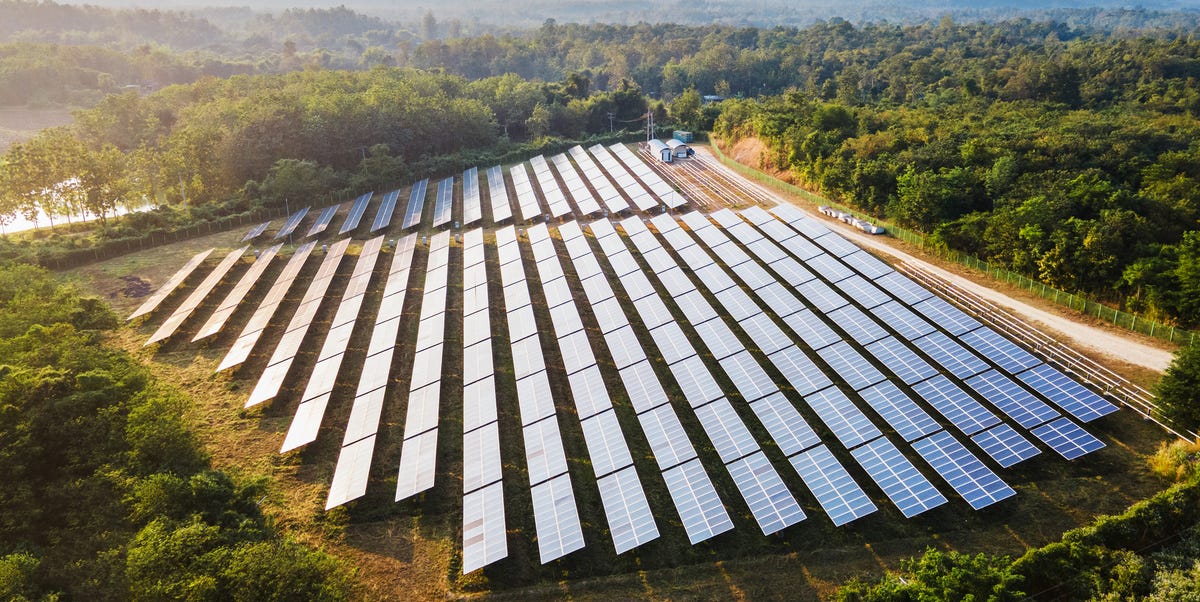
America’s power grid is having a very sunny moment. Not a polite “nice weather today” kind of sunny moment, either. We are talking about a full-blown solar power explosionone that is changing how electricity is produced, where investment flows, how utilities plan for the future, and what ordinary homeowners see on rooftops from Arizona to New Jersey.
For decades, solar energy in the United States was treated like the promising cousin who kept saying they were “about to make it big.” Panels were expensive, utility-scale projects were limited, and many people still pictured solar as something for off-grid cabins, calculators, and highly committed environmentalists with excellent compost systems. That era is over. Solar power has moved from the margins to the middle of America’s energy story.
Today, solar is one of the fastest-growing sources of electricity in the country. Massive solar farms are spreading across Texas, California, Florida, Arizona, Nevada, Georgia, Virginia, and the Midwest. Rooftop solar continues to reshape neighborhoods. Battery storage is turning sunshine into evening power. And the American grid, long dominated by fossil fuels and large centralized plants, is learning to live with a resource that shows up every morning and sends no fuel bill.
Why America’s Solar Boom Is Different This Time
The United States has seen energy booms before. Coal built the industrial age. Oil powered the highway era. Natural gas reshaped electricity markets in the 2000s and 2010s. But the current solar power boom is unusual because it is not based on digging up a fuel and burning it. It is based on manufacturing equipment, installing it at scale, connecting it to the grid, and letting sunlight do the work.
That changes the economics. A solar project has upfront costs, but once panels are installed, the “fuel” is free. No railroad cars of coal. No gas pipeline contracts. No price spike because a storm, war, supply crunch, or geopolitical argument made fuel markets nervous. The sun does not send invoices, although someone probably would have tried by now if it could.
This is one reason solar power has become so attractive to utilities, corporations, local governments, and homeowners. It offers a way to add new electricity generation quickly, reduce exposure to fuel volatility, and meet rising power demand from electric vehicles, air conditioning, manufacturing, data centers, and the modern household’s growing collection of devices that all somehow need charging at the same time.
The Numbers Behind the Solar Power Explosion
The scale of the change is remarkable. In 2024, solar and energy storage accounted for the overwhelming majority of new U.S. power capacity additions. The country installed roughly 50 gigawatts of new solar capacity in that year, making it one of the largest single-year expansions for any energy technology in modern U.S. history.
The momentum continued into 2025. Solar remained the leading source of new electricity-generating capacity for the fifth year in a row, with tens of gigawatts added across the country. Even when some quarterly installation volumes slowed because of policy uncertainty, supply chain pressures, and project timing, solar still held the top spot. That is the kind of performance that says, “I had a tough quarter and still beat everyone.”
Looking ahead, the pipeline is even more dramatic. U.S. energy officials expect solar to represent the largest share of planned utility-scale electric generating capacity additions in 2026. Developers are planning tens of gigawatts of new solar projects, with Texas alone expected to account for a huge portion of new utility-scale additions. If those projects are completed as planned, solar will continue to dominate America’s new power buildout.
Texas, California, and the New Geography of Solar
California was the early superstar of American solar, and it still plays a major role. The state has enormous solar generation, a mature rooftop market, and one of the most advanced battery storage systems in the country. But the solar boom is no longer a California-only story. Texas has become a solar heavyweight, and in some ways, it represents the new face of American solar power.
Texas has wide-open land, strong sunlight, large electricity demand, a fast-growing population, and a competitive power market that rewards cheap generation. Add those ingredients together and you get a solar market that behaves like it drank three cups of coffee and found a discounted warehouse full of panels.
Florida is also rising quickly, driven by strong sun, population growth, and utility-scale development. Arizona and Nevada have obvious solar advantages thanks to desert sunlight. Georgia, Virginia, North Carolina, Colorado, New Mexico, and parts of the Midwest are also adding meaningful capacity. The result is a solar map that looks less like a boutique coastal trend and more like a national infrastructure shift.
Battery Storage Is the Solar Boom’s Best Friend
Solar power has one famous limitation: it produces electricity when the sun is shining. That is not exactly shocking. Nobody looks at a solar panel at midnight and says, “Why are you being lazy?” Still, the timing matters. Electricity demand often peaks in the evening, when people come home, cook dinner, run air conditioning, watch TV, charge devices, and generally act like a modern civilization.
That is where battery storage changes the game. Batteries allow grid operators and utilities to store extra solar power during the day and use it later when demand rises. This makes solar more valuable, more reliable, and easier to integrate into the grid.
The United States is now adding battery storage at record speed. Utility-scale storage projects are being built alongside solar farms and as standalone grid resources. In states such as California, Texas, and Arizona, batteries are already helping shift solar energy into evening hours, reduce stress on the grid, and lower the need for expensive peaker plants that run only during high-demand periods.
In plain English, batteries help solar stay useful after the sun clocks out. That is a big deal.
Why Solar Costs Changed Everything
The solar explosion did not happen because Americans suddenly developed a national hobby of staring lovingly at photovoltaic modules. It happened because costs fell, technology improved, supply chains matured, and developers learned how to build projects faster and larger.
Utility-scale solar costs have dropped dramatically since 2010. Panels became more efficient. Installation methods improved. Inverters became smarter. Tracking systems allowed panels to follow the sun and produce more electricity. Financing became more familiar to investors. Large buyers, including utilities and corporations, became more comfortable signing long-term power purchase agreements.
When a technology gets cheaper, faster, cleaner, and easier to finance, it stops being a science project and starts becoming infrastructure. That is exactly what happened with solar energy in the United States.
Solar Power and America’s Rising Electricity Demand
America needs more electricity. After years of relatively flat demand, load growth is back. Data centers are expanding rapidly. Artificial intelligence requires enormous computing power. Electric vehicles are adding new demand. Domestic manufacturing is growing in key sectors. Heat waves are pushing air conditioning use higher. Homes are packed with electronics, smart devices, and appliances that expect electricity to be available instantly, always, and preferably without drama.
This demand growth is one reason solar has become so important. New gas plants can take years to permit, finance, and connect. Large transmission projects can be slow and politically complicated. Nuclear power has long development timelines. Solar and battery projects can often be built more quickly, especially when developers already have land, interconnection agreements, and financing in place.
Solar is not the only answer to America’s power needs, but it is one of the fastest answers available at scale. In an era when the grid needs new capacity urgently, speed matters.
The Role of Policy, Tax Credits, and Manufacturing
Federal and state policies have played a major role in accelerating solar power growth. Tax credits, clean energy incentives, state renewable standards, utility procurement programs, and corporate clean energy goals all helped create demand. The Inflation Reduction Act gave the industry a major boost by expanding and extending clean energy incentives, encouraging domestic manufacturing, and making long-term planning easier for developers.
At the same time, policy uncertainty remains a real challenge. Changes to tax credits, tariffs on imported components, permitting delays, and interconnection backlogs can slow projects or increase costs. Solar developers may love sunshine, but they are less fond of regulatory fog.
Domestic manufacturing is another key part of the story. The United States has been expanding solar module manufacturing capacity, including thin-film production and new factory investments. Building more of the solar supply chain at home could reduce import dependence, create jobs, and make the industry more resilient. However, manufacturing growth takes time, and the market still depends on global supply chains for many components.
Rooftop Solar Still Matters
Utility-scale solar gets most of the attention because the projects are enormous. Some solar farms stretch across thousands of acres and generate enough electricity to power entire communities. But rooftop solar remains an important part of the American solar boom.
Residential solar gives households more control over electricity costs, especially in states with high retail power prices. It can also reduce strain on the grid when paired with batteries, smart inverters, and demand management. Community solar adds another option for renters, condo owners, and households that cannot install panels on their own roofs.
The rooftop market faces challenges, including changing net metering rules, high financing costs, installer competition, and consumer confusion. Still, small-scale solar continues to contribute meaningful electricity. It also keeps the solar story personal. A utility-scale solar farm may be impressive, but rooftop panels are the version people see on the house down the street.
Solar Farms, Rural America, and Land Use Debates
As solar expands, land use has become a hot topic. Large solar farms need space, and that can create debate in rural communities. Some residents welcome the tax revenue, lease payments, construction jobs, and economic diversification. Others worry about farmland conversion, views, local control, and long-term land management.
The best projects tend to involve early community engagement, fair lease terms, strong decommissioning plans, pollinator-friendly ground cover, and careful siting. Agrivoltaicsusing land for both agriculture and solarmay also become more common. In some places, sheep graze under panels, which is both practical vegetation management and possibly the most photogenic job in renewable energy.
The land use debate is real, but it should be placed in context. Solar uses land, but so do highways, suburbs, mines, pipelines, power plants, and transmission corridors. The question is not whether energy infrastructure has impacts. It always does. The question is how to build it responsibly, fairly, and intelligently.
Grid Challenges: The Not-So-Glamorous Part
The solar boom is exciting, but the grid is not a magic extension cord. America needs more transmission, faster interconnection, better planning, and modern grid operations to handle large amounts of renewable energy.
Many solar projects are stuck in interconnection queues, waiting for permission to connect to the grid. Transmission bottlenecks can prevent low-cost solar power from reaching high-demand areas. Local permitting rules vary widely. Equipment shortages and transformer delays can slow construction. In some regions, too much solar at the wrong time can reduce wholesale prices during midday, making storage and flexible demand more valuable.
These challenges do not mean the solar boom is failing. They mean the grid must evolve. The United States built its power system around large dispatchable plants, fuel supply chains, and one-way electricity flows. A solar-heavy grid requires more flexibility, more storage, better forecasting, and smarter coordination between utilities, regional grid operators, regulators, and customers.
What the Solar Explosion Means for Consumers
For consumers, the solar boom could mean cleaner electricity, more local energy options, and protection from fuel price swings. But it does not automatically guarantee lower bills everywhere, immediately. Electricity bills are shaped by many factors: fuel costs, grid upgrades, storm recovery, utility spending, state regulations, demand growth, and market design.
Still, solar has one major advantage: it can produce electricity without buying fuel. Over time, a grid with more solar and storage can reduce exposure to volatile fossil fuel prices. In regions with strong planning, solar can help meet peak demand, delay expensive infrastructure, and create competition in power markets.
For homeowners considering rooftop solar, the economics depend on location, roof condition, electricity rates, incentives, financing terms, net metering rules, and household usage patterns. Solar can be a strong investment for some homes and a questionable one for others. The smartest approach is not hype; it is math. Preferably math done before signing a 25-year contract with someone who knocked on the door during dinner.
Why This Moment Is Historically Unmatched
America’s solar power explosion is unmatched because of its speed, scale, and timing. Solar is growing while electricity demand is rising, while battery storage is scaling, while domestic manufacturing is expanding, and while utilities are rethinking long-term resource plans. It is not one trend. It is several trends colliding in the same decade.
The country is adding solar faster than many experts expected years ago. Solar is now central to new capacity planning. Battery storage is solving some of the timing problems that once limited solar’s value. Major corporations are buying clean power to support operations. Rural landowners are leasing land for projects. Homeowners are putting panels on roofs. States that disagree on almost everything politically are still building solar because cheap electricity has a way of making strange friends.
That is perhaps the most important part of the story. Solar is no longer just an environmental choice. It is an economic choice, a reliability choice, an investment choice, and a competitiveness choice.
Experience-Based Reflections: What the Solar Boom Feels Like on the Ground
One of the most interesting things about America’s solar expansion is how quickly it has become visible in everyday life. A decade ago, seeing rooftop solar in many neighborhoods felt unusual. Today, in some suburbs, it is almost as common as a basketball hoop in the driveway. You notice panels on schools, warehouses, churches, parking structures, and homes with perfectly normal lawns and perfectly intense debates about electricity bills.
For homeowners, the experience often begins with curiosity. A neighbor installs panels. The monthly bill drops. Someone mentions a tax credit. Then suddenly everyone at the barbecue becomes an amateur energy analyst. People compare roof angles, battery options, payback periods, and whether their utility’s net metering policy is generous or about as friendly as a parking ticket.
For rural communities, the experience is different. Solar development can bring lease income to landowners and tax revenue to counties, but it can also create tension. A farmer may see a solar lease as a stable income source that helps keep family land financially viable. A neighbor may see the same project as a change to the landscape they love. Both perspectives matter. The most successful projects are not just engineered well; they are communicated well. Developers who treat communities like partners tend to have a much easier time than developers who arrive with maps, lawyers, and the warmth of a broken printer.
For businesses, solar is increasingly practical. Warehouses with big flat roofs, retailers with large parking lots, factories with daytime electricity demand, and school districts with tight budgets all have reasons to explore solar. In many cases, the appeal is not just sustainability branding. It is cost control. Electricity is a major operating expense, and solar can provide a hedge against future price increases.
Utilities are experiencing the boom in a more complicated way. On one hand, solar is a fast and increasingly affordable way to add capacity. On the other hand, it forces changes in grid management. Midday generation can surge. Evening demand still needs support. Transmission lines need upgrades. Batteries become more important. Forecasting improves from a helpful tool to a daily necessity. The grid operator’s job becomes less like managing a few big power plants and more like conducting an orchestra where half the instruments are controlled by weather.
For ordinary Americans, the most meaningful experience may be psychological. Solar power makes energy feel less distant. Instead of electricity being something that mysteriously arrives from faraway plants, people can see generation happening on a roof, a school, a field, or a parking canopy. That visibility matters. It turns energy from an abstract bill into a physical system people can understand, question, and improve.
The solar boom is not perfect. There are bad sales practices, project delays, permitting frustrations, land use disputes, and grid constraints. But every major energy transition has messy edges. The important thing is that solar is no longer waiting for permission to become important. It is already important. America is not merely testing solar power anymore; it is building an energy future around it, one panel, battery, substation, and sunny afternoon at a time.
Conclusion
America’s solar power explosion is not a passing trend. It is one of the most important energy shifts in U.S. history. Solar has become the leading source of new power capacity because it is scalable, increasingly affordable, fast to deploy, and well matched with battery storage. From Texas solar farms to California batteries, from Florida utility projects to neighborhood rooftops, the United States is building a cleaner and more flexible electricity system in real time.
The road ahead will not be perfectly smooth. The country still needs better transmission, faster interconnection, smarter permitting, stronger domestic supply chains, and fair policies that balance growth with reliability and consumer protection. But the direction is clear. Solar power has moved from alternative energy to essential infrastructure.
For a nation facing rising electricity demand, climate pressure, fuel price volatility, and industrial competition, that matters. The sun has always been there. The difference now is that America has finally learned how to turn it into one of the most powerful engines of the modern grid.
Note: This HTML includes only the body content for convenient web publishi:ng and copying.