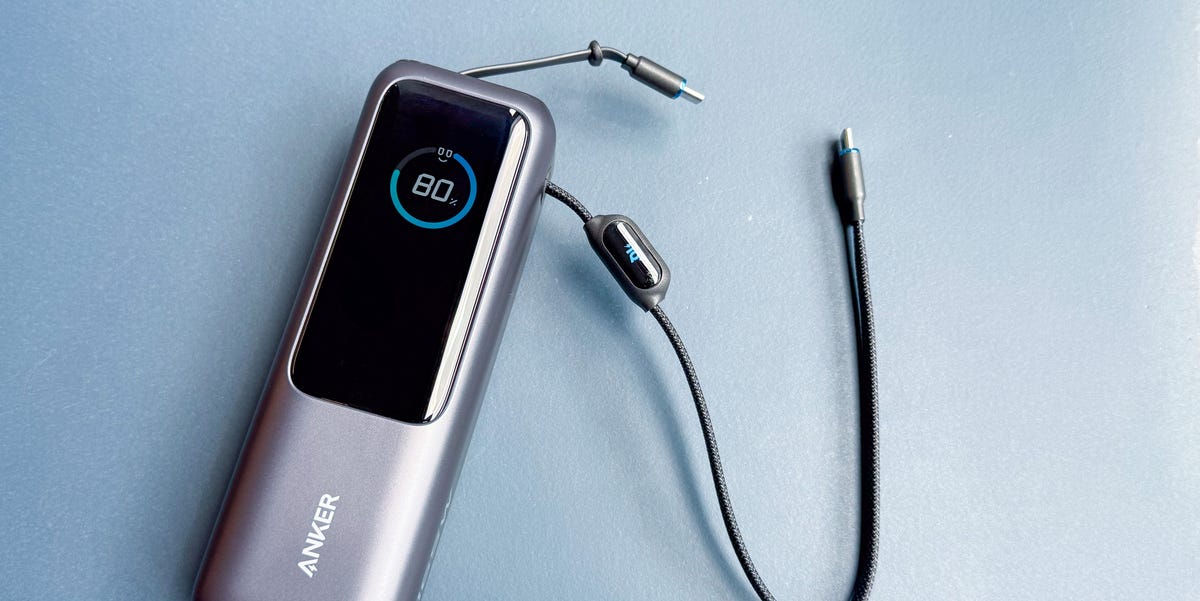
There are two kinds of people in this world: people who leave home with 83% battery, and people who leave with 14%, one brave eyebrow raise, and a dream. For everyone in the second group, a portable power bank is not just an accessory. It is emotional support with a USB-C port.
Whether you are commuting to work, navigating airports, taking photos at an all-day event, using your phone as a GPS on a road trip, or trying to survive a school day with Bluetooth earbuds, a good portable charger can save the day. It keeps your devices alive when outlets are nowhere to be found, and in 2026, it does a lot more than simply top off a phone. The best models now support fast USB-C charging, laptop-friendly power output, magnetic wireless charging, built-in cables, and travel-ready sizes that fit into a jacket pocket without making you walk like a robot.
This guide breaks down what a portable power bank is, why it matters, what features to look for, how to choose the right capacity, and how to use one without turning your bag into a tangle of wires and regret.
What Is a Portable Power Bank, Exactly?
A portable power bank is a rechargeable external battery designed to charge devices when you are away from a wall outlet. You charge the power bank itself in advance, then use it later to recharge your phone, tablet, earbuds, smartwatch, e-reader, handheld gaming device, or even a laptop, depending on the model.
Think of it as a backup gas tank for your gadgets. Only quieter. And less likely to smell like a highway rest stop.
Modern power banks usually include one or more USB-C ports, sometimes a USB-A port for older cables, and in some cases a wireless charging pad. Some are tiny enough to disappear into a pocket. Others are powerful enough to recharge a laptop and a phone at the same time while still leaving enough battery for your earbuds. That range is exactly why shopping for one can feel oddly complicated.
Why Portable Power Banks Matter More Than Ever
We ask a lot from our devices now. Phones are cameras, boarding passes, wallets, game consoles, navigation tools, note-taking machines, and miniature movie theaters. Tablets have become portable workstations. Laptops are lighter and more travel-friendly, but they still run out of battery at the worst possible moment, usually when your presentation is loading or your gate changes with no warning.
A portable power bank solves a very modern problem: our dependence on battery-powered devices and our complete inability to be near an outlet when we need one most. It also adds peace of mind. During long flights, storms, blackouts, busy convention days, road trips, and outdoor events, having backup power means you can stay reachable, keep directions open, and avoid the dreaded 1% battery panic spiral.
How to Choose the Right Power Bank Capacity
Capacity is usually measured in mAh, or milliamp-hours. In plain English, higher capacity usually means more charge available, but also more size and weight. The trick is choosing enough battery for your real life, not your fantasy life where you spend weekends scaling cliffs while editing video on a mountaintop.
5,000mAh: Best for quick backup
A 5,000mAh power bank is small, light, and ideal for short outings. It is great for emergency use, quick top-offs, or people who hate carrying anything bulky. This size works well for slipping into a pocket, clutch, or small crossbody bag.
10,000mAh: Best for everyday carry
This is the sweet spot for many users. A 10,000mAh model is usually compact enough for daily travel but large enough to recharge a smartphone at least once, often more, depending on the phone and charging efficiency. If you want one dependable charger for work, commuting, school, or weekend outings, this category is hard to beat.
20,000mAh: Best for travel and multi-device use
A 20,000mAh power bank is ideal for longer days, heavy phone use, tablets, and sharing power with another device. This size is popular with travelers because it offers strong capacity without becoming ridiculous to carry. If your backpack already contains a laptop, snacks, random receipts, and possibly three pens that do not work, this is usually the biggest size that still feels practical.
25,000mAh and above: Best for laptops and power users
If you want to charge a laptop, run multiple devices, or rely on one charger for long workdays, larger-capacity models make sense. Many of these also offer higher wattage output, which is crucial for power-hungry devices. Just remember that bigger capacity means more weight, and not all large power banks are equally portable.
The Features That Actually Matter
Marketing copy loves to throw around buzzwords, but a few features truly matter when choosing a portable power bank.
USB-C Power Delivery
USB-C Power Delivery, often called USB-C PD, is one of the biggest upgrades in modern charging. It allows faster and smarter charging for phones, tablets, and many laptops. If your devices use USB-C, this feature should be near the top of your list. It means less waiting and fewer excuses to hover near an outlet like a suspicious plant.
Wattage output
Capacity tells you how much charge a power bank stores. Wattage tells you how quickly it can deliver that power. A lower-watt power bank is fine for phones and earbuds. A higher-watt model is better for tablets, handheld gaming devices, and laptops. If you plan to charge more than a phone, check the output carefully. A big battery with weak output is like owning a giant water tank with a tiny straw.
Multiple ports
If you routinely charge two devices at once, such as a phone and earbuds or a tablet and a phone, make sure the power bank has enough ports. Some also split power intelligently, while others slow down noticeably when several devices are plugged in at once.
Built-in cables
Built-in cables are becoming more common for a reason: people forget cables. Constantly. A power bank with an integrated USB-C cable can be incredibly convenient, especially for travel or daily commuting. It cuts down on clutter and makes charging feel almost frictionless.
Wireless or magnetic charging
If you use an iPhone or another phone compatible with magnetic wireless charging, a wireless power bank can be very handy. These attach neatly to the back of the phone and reduce cable chaos. The tradeoff is that wireless charging is usually less efficient than wired charging, so it is best for convenience rather than maximum speed.
Battery level display
Four tiny blinking dots are fine, but a digital display is better. Knowing whether you have 78% left or 14% left changes how boldly you use your charger. A screen that shows remaining battery and charging speed is a small luxury that becomes weirdly hard to live without once you have it.
Portable Power Bank vs. Portable Power Station
These are not the same thing. A power bank is for personal electronics. A portable power station is much larger and designed for camping, backup power, or running small appliances. If you only need to charge phones, tablets, or a laptop, a portable power bank is the right tool. If you are trying to run a mini fridge in the woods, you have wandered into a different category entirely.
How to Pick the Best One for Your Lifestyle
For commuters
Choose a slim 5,000mAh or 10,000mAh model with USB-C and maybe a built-in cable. You want something light, reliable, and easy to toss in a bag without thinking about it.
For travelers
A 10,000mAh or 20,000mAh model is often the sweet spot. Look for fast recharging, multiple ports, and a shape that slips easily into a backpack or carry-on. A digital display can be especially useful when you are moving through airports and train stations.
For students
Look for durability, good value, and enough capacity to get through long class days. A 10,000mAh model with USB-C fast charging is usually a smart choice.
For remote workers
If your laptop, phone, and earbuds all need backup power, go bigger. A 20,000mAh or 25,000mAh model with higher wattage output makes more sense than buying a cheaper charger that can barely handle one device at a time.
For outdoor adventures
Prioritize rugged construction, weather resistance if available, and enough capacity for long periods away from outlets. Some models are specifically designed for camping and active use, though they are often bulkier.
Flying With a Portable Power Bank
If you travel often, this matters: power banks generally belong in carry-on luggage, not checked baggage. Airline rules focus on lithium battery size, which is often discussed in watt-hours rather than mAh. Most everyday power banks are small enough to fly with, but it is still smart to check the label and your airline’s current policy before a trip.
In practical terms, standard travel-friendly power banks are usually fine for everyday flights, especially common 10,000mAh and 20,000mAh models. If you move into large laptop-charging territory, pay closer attention. A power bank that is perfect for your desk setup may not be the one you want to explain at a check-in counter while your coffee gets cold.
How to Make Your Power Bank Last Longer
A good power bank can last years if you treat it well. That does not mean you need to cradle it like a Victorian heirloom. Just follow a few sensible habits.
- Use quality cables and chargers that match the power bank’s input and output capabilities.
- Do not leave it in extreme heat, such as a parked car in summer.
- Recharge it every so often, even if you are not using it regularly.
- Store it in a cool, dry place for long periods.
- Check for swelling, damaged ports, or frayed cables, and replace unsafe gear promptly.
Also, do not buy the cheapest mystery-brand charger you can find just because it claims supernatural specs. A power bank should be boringly reliable. That is a compliment.
Common Mistakes People Make
Buying based on capacity alone
A huge battery is not automatically better. Output speed, port selection, and portability matter just as much.
Ignoring recharge speed
Some power banks take forever to recharge themselves. If you use yours often, input speed matters. Fast output means little if the power bank itself needs half a century to refill.
Forgetting cable compatibility
A USB-C power bank is great, but not if your bag still contains only an ancient cable from the drawer of forgotten technology. Make sure your cables support the speed and connector type your devices need.
Overestimating real-world charging
Power banks lose some energy through conversion and heat, so the actual number of device recharges is usually lower than the raw capacity might suggest. That is normal, not a betrayal.
Why a Portable Power Bank Is Worth It
A portable power bank is one of those gadgets that feels optional until the moment it becomes essential. Then it suddenly feels genius. It gives you flexibility, peace of mind, and freedom from hunting for outlets in airports, coffee shops, stadiums, and hotel lobbies already occupied by six other desperate people.
The best portable power bank is the one that matches your routine. If you mostly need emergency backup, go compact. If you travel often, aim for a mid-size fast-charging model. If you carry a laptop, pick a higher-watt option that can keep up with real work. Buy for your actual habits, not just for the thrill of a giant battery and a futuristic display.
Because in the end, portable charging is not really about watts, ports, or battery chemistry. It is about being able to text, work, navigate, listen, watch, and connect without your device giving up before you do.
Real-World Experiences: What Living With a Portable Power Bank Actually Feels Like
A portable power bank sounds like a practical gadget on paper, but in daily life it often becomes one of those small things that quietly improves everything. The first time many people truly appreciate one is not during a carefully planned trip. It is during some mildly chaotic moment: your phone is dying, your ride-share app is still open, your battery icon is red, and the nearest outlet appears to be protected by a person who has clearly claimed it for the next four hours. That is when a power bank stops being “tech gear” and starts feeling like good life planning.
For commuters, the experience is usually about convenience. You head out with wireless earbuds, a phone, maybe a smartwatch, and by late afternoon one of them is always waving a tiny digital white flag. A slim charger in a bag or coat pocket removes that background stress. You stop checking battery percentage every twenty minutes like it is the stock market. You just plug in and keep moving.
Travelers tend to feel the value even more. Airports are basically obstacle courses where every useful outlet is either hidden, broken, or already occupied. On long travel days, a power bank helps with maps, boarding passes, translation apps, hotel check-ins, and all the other things your phone now handles. It is especially useful on trip days that start early, end late, and involve enough photos to make your battery question your choices.
Students often end up treating a portable power bank like school supplies. When class schedules are packed and outlets are limited, it becomes part of the daily kit alongside notebooks and snacks. For remote workers and freelancers, a larger model can feel like insurance. It keeps a phone alive during meetings, rescues earbuds before calls, and can even buy extra laptop time when you are working from a cafe, train, or anywhere with vibes but no available sockets.
Then there are the unexpectedly memorable uses: concerts, festivals, road trips, power outages, delayed flights, theme parks, camping weekends, or long days out with kids. In those moments, a power bank is less about convenience and more about staying connected and keeping plans on track. It will not solve every problem in life, but it can absolutely prevent a very specific kind of modern disaster: being stranded with a dead phone and only 3% hope.
That is why so many people buy one for travel and end up using it everywhere. Once you get used to having backup power on hand, it is hard to go back. A good portable power bank does not scream for attention. It just quietly saves the day over and over again.