Having a twin is often explained to outsiders with the usual phrases: “built-in best friend,” “double trouble,” or the classic grocery-store comment, “Are you two twins?” But people who actually grew up with a twin know the experience is much stranger, funnier, deeper, and more useful than the clichés suggest.
Online, twins often share tiny advantages that non-twins rarely consider: always having someone who remembers the same childhood details, getting instant feedback from someone your exact age, borrowing emergency clothes without a full fashion negotiation, or enjoying the strange social superpower of confusing people without even trying. Of course, being a twin is not all synchronized outfits and movie-style pranks. Twins are compared, mixed up, grouped together, and sometimes treated like a two-person subscription package. Still, the hidden perks are realand many of them are surprisingly practical.
This article explores 30 underrated benefits of having a twin, inspired by real conversations people share online and supported by what experts know about sibling bonds, identity, social development, and family life. Think of it as a love letter to the twin experiencewith a little mischief in the margins.
Why Having a Twin Feels Different From Having a Regular Sibling
Siblings can be close at any age, but twins begin life side by side. They often share the same birthday, the same school year, the same family stage, and many of the same daily milestones. That creates a relationship that can feel less like “older sibling versus younger sibling” and more like “teammate in the same video game level.”
Researchers and pediatric experts also emphasize that twins should still be treated as individuals. They may share timing, genes, family routines, and inside jokes, but each twin has a separate personality, emotional life, and path. That balancedeep connection plus separate identityis exactly where many hidden perks come from.
30 Hidden Perks of Having a Twin
1. You Have a Witness to Your Entire Childhood
A twin remembers the weird neighbor, the embarrassing school assembly, the family vacation disaster, and the snack you both secretly hated. When your memory gets fuzzy, your twin can confirm, deny, or dramatically improve the story.
2. You Always Have Someone Your Exact Age to Compare Notes With
Growing up can be confusing. Having a twin means there is someone beside you navigating the same grade, trends, family rules, and awkward phases. It is like having a live commentary track for your own life.
3. You Get a Built-In Social Buffer
Walking into a new classroom, party, club, or family gathering is easier when your twin is there. Even if neither of you knows what to say, at least you can exchange the universal twin look that means, “We are surviving this together.”
4. You Can Share Clothes, Shoes, and Accessories
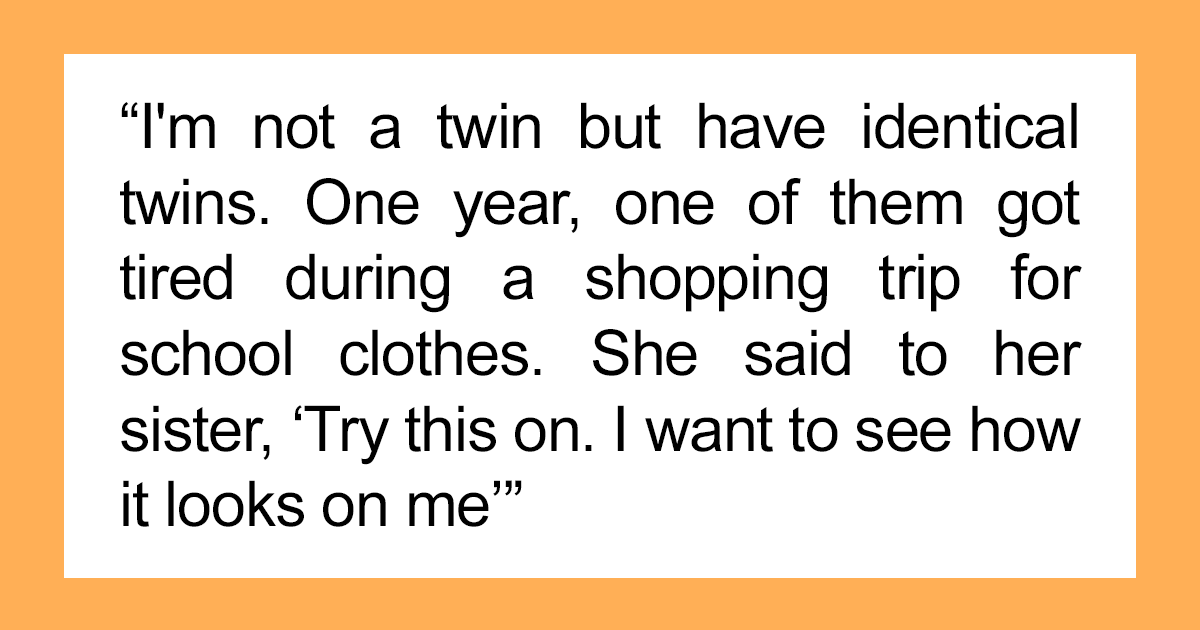
For twins who are similar in size, the closet can become a shared emergency department. Need a shirt, hoodie, tie, dress, jacket, or pair of shoes at the last minute? Your twin may already own the solution. The downside: they may also be wearing it.
5. Your Inside Jokes Have Olympic-Level History
Most friends build jokes over months or years. Twins may build them from toddlerhood. A single word, face, or cough can trigger laughter that makes everyone else in the room feel like they missed a full season of the show.
6. You Learn Cooperation Early
Twins often learn negotiation before they can spell it. Sharing toys, rooms, birthdays, attention, and sometimes even friend groups teaches teamwork fast. It is not always peaceful, but it is practical training for school, work, and relationships.
7. You Get Honest Feedback Fast
A twin can tell you when your outfit is not working, your speech sounds dramatic, or your new hobby has become your entire personality. The review may be blunt, but it is usually free.
8. You Are Rarely Truly Alone
Many twins online describe the comfort of having someone who is simply there. Not necessarily talking. Not necessarily solving anything. Just present. That steady companionship can make hard days feel less isolating.
9. You Have a Natural Study Partner
If twins are in the same grade or taking similar subjects, schoolwork can become a two-person operation. One remembers the homework. The other understands the math. Together, they may form one reasonably functional student.
10. You Can Split Social Duties
At family events, one twin can talk to relatives while the other finds snacks. At school, one can ask the awkward question while the other pretends to be deeply interested in the wall. Strategic teamwork is an art.
11. You Get Double the Birthday Energy
Sharing a birthday can be annoying when the cake says both names in tiny frosting letters. But it also means the celebration feels bigger. More people remember. More jokes happen. More candles appear. More chaos, yesbut festive chaos.
12. You Understand Comparison Better Than Most People
Twins are often compared in grades, personality, looks, sports, humor, confidence, and everything else. That can be frustrating, but it can also make twins more aware of how unfair comparisons can be. Many grow up better at seeing people as individuals.
13. You Can Practice Conversations Before They Happen
Need to ask for a raise, apologize to a friend, or explain why you forgot a deadline? A twin can role-play the situation. They may also roast your first attempt into dust, which is painful but useful.
14. You Share Family Responsibilities
Whether it is helping parents, planning gatherings, remembering birthdays, or handling awkward group texts, twins can divide the emotional labor. One twin may be the organizer; the other may be the emergency comedian.
15. You Have Someone Who Understands Your Parents Like You Do
No one understands family dynamics quite like a sibling, and a twin often understands them with extra precision. When a parent says, “We need to talk,” your twin may already know the topic, tone, and approximate lecture length.
16. You Develop a Strong Sense of Nonverbal Communication
Many twins joke about “twin telepathy.” Science may not support magical mind-reading, but years of shared context can make twins very good at reading each other’s expressions, timing, moods, and tiny signals.
17. You Get a Permanent Reality Check
A twin can keep your ego from floating into the atmosphere. Win an award? Great. Your twin still remembers when you cried because your sandwich was cut wrong. Humility: delivered.
18. You May Become More Adaptable
Twins often have to adjust to being seen as a pair while also wanting personal space. That can build flexibility. They learn when to lean into the twin thing, when to set boundaries, and when to say, “Actually, I am the other one.”
19. You Have a Partner for Childhood Adventures
Backyard missions, blanket forts, bike rides, imaginary businesses, dramatic talent showshaving a twin means childhood adventures can start instantly. No scheduling required. The co-founder already lives in the house.
20. You Can Share the Burden of Awkward Attention
Twins attract questions. “Can you feel each other’s pain?” “Who is older?” “Have you ever switched places?” The perk is that you do not have to answer alone. One twin can be polite while the other quietly loses patience.
21. You Learn Boundaries Earlier
Because twins are often grouped together, many become skilled at saying what belongs to them: their name, space, clothes, friends, interests, and decisions. That lesson can be surprisingly valuable in adulthood.
22. You Have a Built-In Competitor
A little competition can be motivating. Twins may push each other in school, sports, music, games, or career goals. The healthiest version is not “I must beat you,” but “If you can do it, maybe I can too.”
23. You Also Have a Built-In Cheerleader
The flip side of competition is pride. When one twin succeeds, the other often understands exactly how much work went into it. That makes the celebration feel personal, not performative.
24. You Can Decode Each Other’s Bad Moods
Some friends need a long explanation. A twin may only need one glance and a snack. When someone has known you from the beginning, emotional translation gets much faster.
25. You Get Better at Sharing Attention
Sharing attention is not always fun, especially during childhood. But it can teach patience, generosity, and the ability to celebrate someone else without feeling erased. That is a grown-up skill many people learn much later.
26. You Have a Backup Memory Bank
Forgot the name of your third-grade teacher? Your twin may know. Forgot which cousin started the Thanksgiving argument? Your twin may have the full timeline. Twins can function like two hard drives storing the same family documentary.
27. You Can Turn Ordinary Errands Into Comedy
Two similar faces in a store, gym, office, or restaurant can create harmless confusion. For twins with a sense of humor, everyday life comes with bonus material.
28. You Learn That Similar Does Not Mean Same
One of the most powerful perks is philosophical: twins prove that people can share a great deal and still become different. Same birthday does not mean same dreams. Same face does not mean same mind.
29. You Have Someone Who Knows the “Original Version” of You
Friends may know your adult self. Partners may know your private self. But a twin often knows the earliest versionthe child, the weird phase, the unfinished draft. That kind of history can be grounding.
30. You Get a Lifelong Story No One Else Can Fully Copy
Having a twin gives you a relationship category that is hard to explain from the outside. It can be funny, complicated, tender, competitive, and deeply loyalsometimes all before breakfast. That uniqueness is the ultimate hidden perk.
The Funny Side of Twin Perks People Love Sharing Online
Online twin stories often lean into the comedy because, frankly, twins are excellent material. People share tales of teachers calling on the wrong sibling, friends texting the wrong twin, relatives buying identical gifts, and strangers acting as if twins personally invented genetics in the cereal aisle.
One popular theme is the “mistaken identity discount.” A twin gets greeted by someone they have never met, plays along for three seconds, then realizes the person knows their sibling. Another theme is accidental synchronization: twins showing up to an event in nearly identical outfits without planning it. Is it supernatural? Probably not. Is it hilarious when two grown adults arrive wearing the same jacket and both blame “taste”? Absolutely.
Then there are the school stories. Some twins admit they enjoyed confusing classmates or swapping seats for harmless fun. Others say the real perk was less dramatic: always having someone to sit with at lunch, walk with between classes, or complain to after a rough test. The best twin stories are not always about pranks. Sometimes they are about survival with better timing.
The Emotional Perks Are Bigger Than the Pranks
The public often focuses on identical looks, twin jokes, and switcheroo fantasies, but many twins say the emotional benefits matter more. Having someone who grows at the same pace can reduce the loneliness of major transitions. First day of school, first job, first heartbreak, first move away from homethese moments can feel less overwhelming when someone else understands the exact family and life context.
That does not mean twins never fight. Many do. Some compete intensely. Some need distance to form their own identities. Some spend years untangling themselves from the “package deal” label. But even when the relationship is complicated, the shared history can remain powerful.
Healthy twin relationships often work best when both people are allowed to be close and separate. They can love the twin bond without being trapped inside it. They can share jokes without sharing every friend. They can support each other without becoming identical copies. In other words, the best perk of having a twin is not samenessit is being deeply known while still being free to become yourself.
What Non-Twins Often Misunderstand
Non-twins sometimes assume that twins must want everything the same: same clothes, same classes, same hobbies, same birthday cake, same life. Some twins do enjoy matching or sharing interests, but many want recognition as individuals. A twin might love their sibling fiercely and still dislike being called “the twins” instead of their own name.
Another misunderstanding is that twin closeness replaces other relationships. In reality, a strong twin bond can be a foundation, not a wall. Many twins build rich friendships, romances, careers, and communities while still keeping a special connection with each other. The twin relationship is not necessarily a social limitation. When healthy, it can be a source of confidence.
500 More Words: Real-Life Experiences Connected to Having a Twin
Imagine growing up with someone who is always in the same family photo, always next to you in birthday pictures, and always somehow involved in your personal legends. That is the twin experience many people describe online: not perfect, not magical, but constantly memorable.
One common experience is the first moment twins realize the rest of the world sees them differently. At home, they may just be siblings arguing over cereal. Outside, people stare, smile, ask questions, or treat them like a walking science exhibit. Some twins find the attention fun. Others get tired of answering the same questions. But over time, many develop a sharp sense of humor about it. They learn quick replies. They learn how to correct people kindly. They learn when to play along and when to say, “Nope, wrong twin.”
School can be one of the biggest chapters in twin life. If twins are in the same class, they may become a mini support system. If they are separated, they may get space to grow independently. Both paths can work. Some twins remember passing notes, helping each other study, or giving each other a look across the room when something ridiculous happened. Others remember needing teachers to stop comparing them. The experience teaches a lesson that follows them into adulthood: closeness is wonderful, but individuality matters.
Family life also creates unique memories. Twins may share birthdays, chores, rooms, relatives, and milestones. A shared birthday can feel like a festival and a negotiation at the same time. One wants chocolate cake; the other wants vanilla. One wants a quiet dinner; the other wants a party loud enough to alert local wildlife. The compromise becomes part of the tradition.
As adults, twin perks change shape. Instead of sharing toys, twins may share advice about jobs, relationships, parenting, money, health, or caring for aging parents. The twin becomes less of a daily playmate and more of a long-term witness. That can be comforting in a world where people move, friendships shift, and life gets busy. A twin may not always be physically nearby, but the shared foundation remains.
The funniest adult twin experiences often involve mistaken identity in professional settings. Someone waves across a parking lot. A coworker insists they saw you at a restaurant you never visited. A neighbor starts a conversation halfway through because they were actually talking to your twin last week. These moments can be mildly confusing, but they also become storiessmall reminders that your life has a built-in plot twist.
The deeper experience is harder to describe. It is having someone who knows where you came from without needing the introduction. It is sharing a childhood language of jokes, glances, memories, and emotional shortcuts. It is being able to say, “Do you remember?” and almost always hearing, “Yes.” That is the hidden perk people come back to again and again: not just having a twin, but having a living archive of your life who can laugh, argue, remember, and grow alongside you.
Conclusion
Having a twin is more than a fun fact. It is a lifelong relationship filled with shared memories, social shortcuts, emotional backup, comedy, competition, and personal growth. The hidden perks are not limited to pranks or matching outfits; they include learning cooperation, building resilience, understanding identity, and having someone who remembers the same tiny moments that shaped you.
The best twin stories shared online remind us that being a twin is both ordinary and extraordinary. Twins still argue over snacks, forget birthdays, steal hoodies, and annoy each other like everyone else. But beneath the everyday chaos is something rare: a person who entered the world with you, grew beside you, and can say, “I was there,” for chapters no one else can fully understand.
Note: This article is written as original, publish-ready content based on publicly available information, expert guidance, and online community experiences. No source links or citation placeholders are included in the article body.