There are shops you enter because you need a bowl, and then there are shops you enter because the room itself seems to lower your speaking voice. B-Raku Ceramics in Brittany belongs to the second category. Set in Saint-Malo, a walled coastal city where granite, salt air, and old maritime drama do most of the decorating before anyone lifts a paintbrush, B-Raku feels like a quietly brilliant conversation between Japan and France. It is not a loud conversation. No one is shouting “Zen!” from across the room. Instead, the dialogue happens through clay, paper, wood, shadow, rough textures, and objects that look as though they have already lived several elegant lives.
The phrase “Japonesque by way of France” may sound like a design editor’s daydream after too much espresso, but in this case it is surprisingly precise. B-Raku is rooted in the Japanese tradition of raku ceramics, filtered through the French eye for material, proportion, and place. In Brittany, that means the pieces do not float in some abstract minimalist showroom. They sit against a landscape of stone streets, stormy skies, crepes, cider, oysters, and granite architecture. The result is a design experience that feels both ancient and fresh, like finding a tea bowl in a fisherman’s sweater pocket.
What Is B-Raku Ceramics?
B-Raku is closely associated with the creative universe of Breizh Café, the well-known Breton-Japanese hospitality brand founded by Bertrand Larcher. Breizh Café built its reputation on the idea that Brittany and Japan, despite being separated by a heroic amount of geography, share a natural affinity: respect for ingredients, restraint in presentation, love of craft, and a deep appreciation for texture. Where the café expresses that connection through buckwheat galettes, butter, seafood, and Japanese precision, B-Raku explores it through ceramics and interiors.
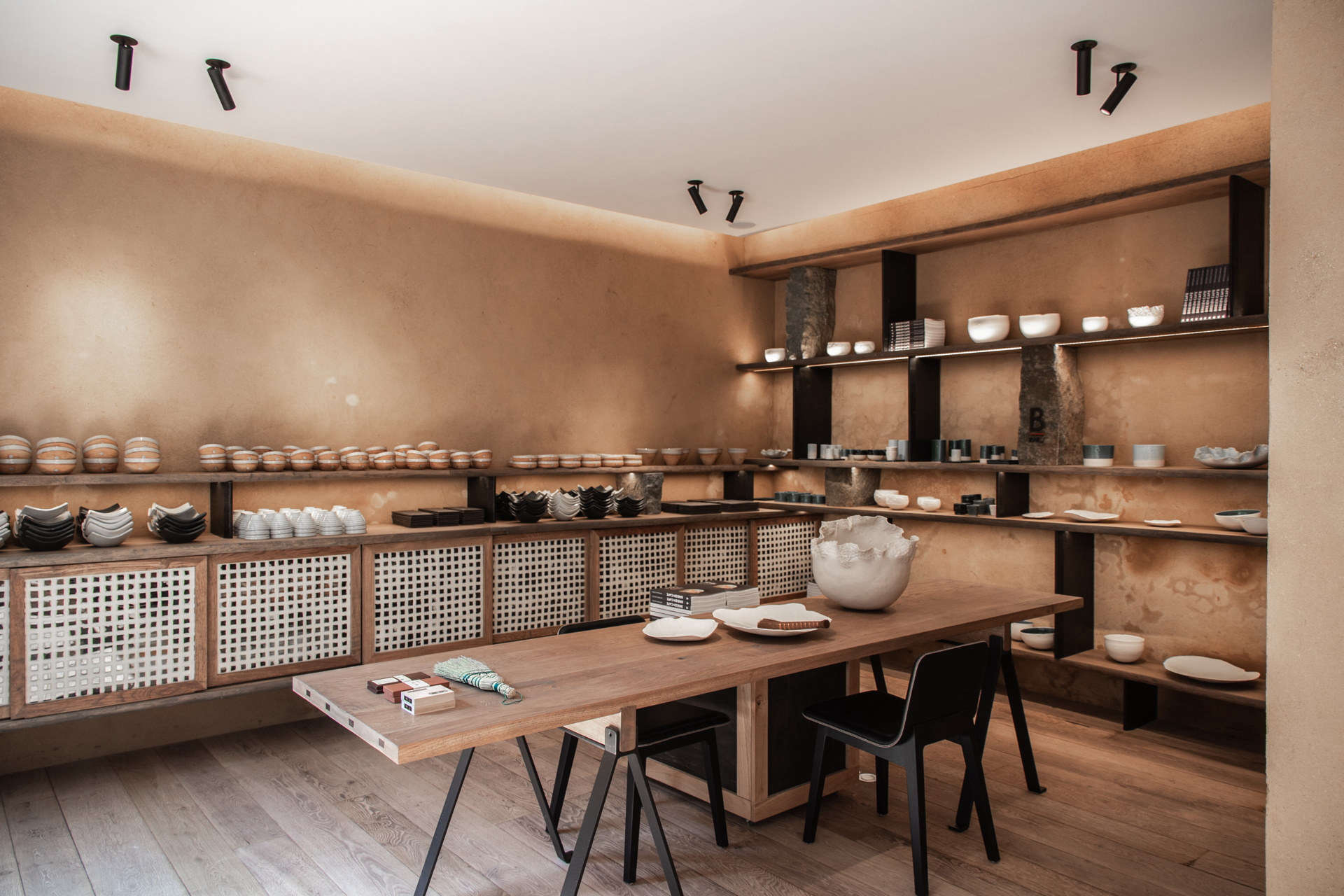
Located in Saint-Malo’s historic center, the gallery and ceramic space creates a bridge between Japanese and Breton aesthetics. The shop has been noted for its clay-toned walls, solid wood shelving, granite sink, hand-hewn copper detail, and custom sliding doors inspired by Japanese design. Instead of treating ceramics as isolated products, the space presents them as part of a complete atmosphere. The bowls, plates, cups, and vessels are not just “for sale.” They are staged like characters in a very calm play where the plot is: “What if your breakfast bowl had more emotional intelligence than most people?”
The name itself nods to raku, the Japanese ceramic tradition most famously associated with tea bowls and the tea ceremony. Yet B-Raku is not a museum reproduction project. It is more like a contemporary craft translation: Japanese spirit, Breton setting, French spatial elegance, and a strong sense that handmade objects should still be allowed to look handmade.
The Japanese Roots: Raku, Wabi, and the Beauty of Imperfection
To understand why B-Raku feels so distinctive, it helps to understand raku. Traditional Raku ware began in Kyoto in the late 16th century and is closely connected to the Japanese tea ceremony. The first Raku tea bowls are associated with the potter Chōjirō and the tea master Sen no Rikyū, whose wabi tea ideals valued humility, simplicity, intimacy, and a certain dignified roughness. In other words: less “look at my shiny palace cup,” more “this bowl has weather, soul, and excellent posture.”
Classic Raku tea bowls were shaped by hand rather than thrown on a wheel, giving them a direct tactile relationship to the maker’s palm. They often emphasized monochrome surfaces, irregular profiles, and a sense of quiet presence. In the tea ceremony, the bowl is not a passive container. It is handled, turned, admired, and experienced. Its weight, warmth, rim, glaze, and asymmetry matter. A tea bowl is almost architecture at the scale of two hands.
Western raku later developed its own dramatic firing methods, often involving rapid heating, removing pieces while hot, and placing them into combustible material to create smoky surfaces, metallic flashes, crackle patterns, and unpredictable effects. This Western approach differs from traditional Japanese Raku practice, but it helped make raku popular among studio potters because every firing contains a small theatrical event. Fire enters the chat. Smoke adds commentary. The final surface may look like a storm, a shell, or a moon that had a difficult weekend.
Why Brittany Makes Sense for Raku-Inspired Ceramics
Brittany is not a random backdrop for Japanese-inspired ceramics. The region has a strong material personality. Its coastline is rugged, its towns are built in stone, its weather can switch moods with impressive speed, and its food culture is famously tied to local land and sea. Saint-Malo, in particular, brings together maritime history, granite walls, narrow streets, and a sense of being both protected from and exposed to the ocean. It is exactly the kind of place where imperfect, smoky, tactile ceramics feel at home.
The best raku-inspired pieces often appear as though they have been shaped by natural forces: heat, ash, chance, gravity, and touch. Brittany offers similar visual language in everyday life. Think of wet stone after rain, oyster shells stacked near Cancale, driftwood, rough linen, iron fixtures, and the dark sheen of seaweed at low tide. These textures do not ask for perfection. They ask for attention.
This is where B-Raku’s appeal becomes more than decorative. The ceramics are not simply “Japanese style” dropped into France like a souvenir. They make sense because Brittany already has a culture of restraint, craft, and elemental material. The region’s palettegray, cream, black, brown, copper, sea green, and cloudy whitepairs naturally with raku’s smoky surfaces and earthy forms.
Japonisme, but Make It Coastal
The French fascination with Japanese art is not new. Japonisme, the 19th-century European enthusiasm for Japanese aesthetics, transformed French art, ceramics, printmaking, interiors, and fashion. After Japan reopened to wider trade in the 1850s, Japanese prints, ceramics, lacquerware, textiles, and everyday objects flowed into Europe. French artists and designers absorbed Japanese ideas about asymmetry, flattened perspective, negative space, natural motifs, and the beauty of ordinary things.
In painting and printmaking, this influence shaped the work of artists such as Toulouse-Lautrec, Bonnard, Vuillard, and many others. In ceramics, French makers experimented with forms, glazes, and surface decoration inspired by Japanese objects. The important point is that Japonisme was not only about copying motifs like fans, cranes, or cherry blossoms. At its best, it changed how Western designers thought about composition, emptiness, rhythm, and the emotional power of restraint.
B-Raku sits in the long shadow of that history but updates it in a quieter, more contemporary way. There is no need for theatrical exoticism. The Japonesque quality comes through material decisions: washi-like paper, sliding panels, low display shelves, warm timber, shadowy corners, and handmade ceramics that invite touch. It is less about decoration and more about atmosphere. If old-school Japonisme sometimes behaved like a collector showing off a cabinet of wonders, B-Raku feels like a thoughtful host who simply hands you tea in the perfect cup and lets you figure it out.
Inside the B-Raku Atmosphere
The interior associated with B-Raku has become part of its identity. A shop selling handmade ceramics can easily become visually crowded. Shelves fill up. Bowls multiply. Suddenly the room looks less like an atelier and more like a very tasteful avalanche. B-Raku avoids that trap by making the space itself an edited object.
Clay walls create warmth without demanding attention. Oak and sapwood shelving give the ceramics a natural stage. A granite sink becomes more than a practical feature; it behaves almost like sculpture, grounding the room in Breton stone. Copper details introduce a small flash of handworked metal, while Japanese-inspired sliding doors soften the architecture. Every element supports the same idea: handmade objects deserve a room that understands them.
This approach is useful for anyone interested in interior design, not just collectors. B-Raku demonstrates that display is not only about arranging products. It is about pacing. A good shelf needs air. A bowl looks more beautiful when it is not elbowing 47 other bowls for attention. Negative space is not wasted space; it is the visual equivalent of letting the music breathe between notes.
The Ceramics: Earthy, Evolving, and Quietly Dramatic
B-Raku ceramics tend to appeal to people who like objects with visible process. These are not glossy, identical dishes stamped out with the emotional range of office ceiling tiles. The pieces often celebrate irregularity: softened rims, nuanced glazes, smoky tones, mineral surfaces, and shapes that suggest the maker’s hand. Their beauty comes from variation.
That makes them especially compelling for table settings. A raku-inspired plate can make a simple meal feel composed without making it feel fussy. Buckwheat galette? Perfect. Fresh oysters? Absolutely. Roasted vegetables? Suddenly more poetic. Even toast looks as though it has a backstory when placed on the right ceramic plate. This is the quiet power of handmade tableware: it turns ordinary rituals into small ceremonies.
There is also a practical design lesson here. Handmade ceramics are often most effective when used, not worshipped from a distance. A cup gains meaning through morning coffee. A bowl becomes familiar through soup, rice, fruit, or whatever snack you pretend is dinner after a long day. The Japanese tea tradition understood this deeply: objects reveal themselves through handling. B-Raku’s world extends that idea into contemporary living.
Brittany Meets Japan at the Table
The connection between Brittany and Japan is not limited to ceramics. Breizh Café helped popularize a culinary bridge between the two cultures by pairing Breton ingredients with Japanese technique and sensibility. Buckwheat, butter, cider, seafood, and salted caramel meet precision, delicacy, and a respect for balance. This food culture makes B-Raku feel even more natural, because ceramics and cuisine have always been close companions.
In Japanese dining, the vessel is part of the meal’s composition. Shape, season, color, and texture all matter. A dish is chosen not only for size but for mood. Brittany’s food traditions may be heartier and more rustic, but they share a similar respect for locality. A galette is not merely a pancake with better public relations. It is a regional object, tied to grain, griddle, butter, and place. Serve it on a handmade ceramic plate and the connection becomes almost obvious.
That is why B-Raku works so well as a concept. It does not force Japan and Brittany into an awkward theme. It finds the overlap: craft, locality, simplicity, texture, and respect for everyday rituals. The result feels refined but not precious. Elegant, yes. Fragile in spirit, no. These are objects made for real rooms and real tables.
How to Bring the B-Raku Look Home
Start With Fewer, Better Pieces
The B-Raku look is not about buying a mountain of ceramics and calling it a personality. Begin with one or two pieces you will actually use: a tea bowl, a small serving dish, a rice bowl, or a low plate. Let each object earn its place. Handmade ceramics reward slow collecting because variation is part of the pleasure.
Choose Earthy, Coastal Colors
Look for colors that echo stone, smoke, sand, clay, charcoal, cream, and stormy water. Avoid overly polished matching sets if you want the B-Raku feeling. A table looks more alive when the pieces relate without being identical. Think cousins, not clones.
Use Natural Materials Around Them
Raku-inspired ceramics pair beautifully with linen napkins, oak shelves, stone counters, copper, iron, handmade paper, and simple glass. Keep the surrounding materials honest. Plastic shine and fake rustic finishes can flatten the mood. Real texture is the point.
Leave Room for Silence
Whether styling shelves or setting a table, resist the urge to fill every inch. B-Raku’s power comes partly from restraint. A single bowl on a wooden shelf can be more memorable than ten objects fighting for visual dominance. Minimalism, when done well, is not emptiness. It is confidence with excellent editing skills.
Why B-Raku Matters in Contemporary Design
In a world full of algorithm-friendly interiors, B-Raku offers something slower and more grounded. Its appeal is not based on novelty alone. It belongs to a broader return to craft, tactile materials, and objects that carry evidence of human making. People are increasingly drawn to interiors that feel personal rather than showroom-perfect. A handmade ceramic bowl offers exactly that: small scale, daily usefulness, and visible individuality.
B-Raku also shows how cross-cultural design can be thoughtful rather than superficial. The best French-Japanese interiors do not simply borrow symbols. They study habits: how light enters a room, how objects are handled, how meals are served, how materials age. That is the difference between a theme and a philosophy. Themes get tired quickly. Philosophy keeps pouring tea.
For designers, stylists, collectors, and travelers, B-Raku is a case study in place-based fusion. It proves that global inspiration works best when it listens carefully to the local setting. Japanese raku may have begun in Kyoto, but in Brittany its spirit finds a new shoreline. The clay changes accent, but it does not lose its voice.
Experiences Inspired by B-Raku Ceramics in Brittany
The most memorable way to understand B-Raku is not to treat it like a quick shopping stop. It is better experienced as part of a slower Saint-Malo day. Begin with a walk through the old town, where the stone buildings and narrow lanes prepare your eyes for texture. Saint-Malo does not do flimsy. Its walls, streets, and harbor views remind you that materials matter. By the time you step into a ceramic space like B-Raku, your senses are already tuned to granite, salt, shadow, and weather.
Inside, give yourself permission to move slowly. Pick up a cup if allowed. Notice the rim first. Handmade ceramics often reveal their personality at the edge, where the lip may be slightly uneven, softened, or darkened by glaze. Then look at the foot of the piece. A good bowl has a relationship with the table. It sits with confidence. It does not wobble nervously like it has just remembered an unpaid parking ticket.
The next experience is comparison. Place two similar pieces side by side and study the differences. One may have a smoky blush, another a crackled surface, another a shape that leans gently inward. This is where handmade ceramics become addictive. You are not choosing between identical products. You are choosing between temperaments. One bowl feels quiet. Another feels dramatic. A third looks like it writes poetry but refuses to show anyone.
After visiting the ceramics, connect the experience to food. Have a Breton meal nearby if possible: a buckwheat galette, oysters from the region, salted butter, cider, or a simple dessert crepe. Pay attention to how the plate changes the feeling of the food. This is not design snobbery; it is design awareness. A handmade vessel slows the meal down. It asks you to notice color, contrast, and portion. Even a casual lunch can feel more intentional when the dish has presence.
If you bring a piece home, resist saving it only for “special occasions,” that mysterious category where beautiful objects go to nap forever. Use it. Let it hold tea, coffee, rice, fruit, soup, or snacks. The best souvenir from a place like B-Raku is not merely an object but a habit: the habit of making ordinary moments a little more considered. A raku-inspired cup on a weekday morning can carry the memory of Brittany’s stone streets and Japan’s tea aesthetics without saying a word.
For travelers, B-Raku also offers a valuable lesson about cultural fusion. The most convincing cross-cultural design does not feel pasted together. It feels discovered. In Saint-Malo, Japanese restraint and Breton materiality meet naturally because both care about craft, season, and the dignity of simple things. That is why the experience lingers. You may arrive looking for ceramics, but you leave thinking about rooms, meals, travel, and how objects shape the way we move through daily life.
Conclusion: A Quiet Masterclass in Clay, Place, and Restraint
“Japonesque by Way of France: B-Raku Ceramics in Brittany” is more than a stylish phrase. It describes a rare kind of design harmony: Japanese ceramic philosophy interpreted through French craft sensibility and grounded in the rugged beauty of Brittany. B-Raku succeeds because it does not over-explain itself. It lets clay, wood, stone, paper, and shadow do the talking.
For anyone interested in raku pottery, Japanese-inspired interiors, French ceramics, or design travel in Brittany, B-Raku offers a rich example of how tradition can evolve without turning into costume. Its objects feel handmade, useful, imperfect, and alive. Its setting gives them context. Its restraint gives them power. And its best lesson may be the simplest one: beauty does not always need more decoration. Sometimes it needs a bowl, a shelf, a little space, and the good sense to stop there.
Note: This original article is written for web publication in standard American English and is based on synthesized research from reputable design, museum, travel, and ceramics references without embedding source links in the body copy.