Note: This original article is written in standard American English for web publishing, based on publicly available real information about Rosie Jon, disability inclusion, arts education, bullying prevention, and limb-difference awareness.
A Paintbrush, Two Feet, and a Room Full of Kids Who Suddenly Believe More Is Possible
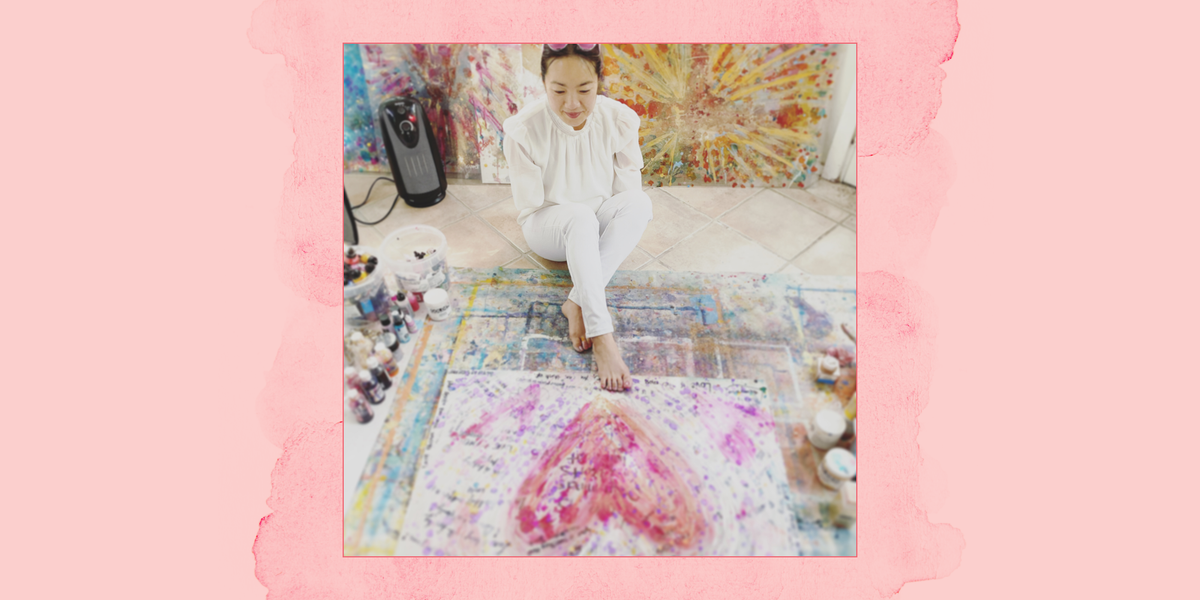
When children first meet disabled artist Rosie Jon, they may notice what is missing. Within minutes, however, they are usually paying attention to what is overflowing: courage, humor, imagination, and a paintbrush moving with surprising grace between her toes. Jon, who was born without forearms, paints with her feet and uses her story to help kids understand that difference is not a defect. It is often the doorway to purpose.
That message sounds simple, but in a classroom, it can land like a tiny lightning bolt. A child who has been bullied for being different may sit a little taller. A student who worries they are not “good enough” may decide to try anyway. Another may realize that staring is less useful than asking a kind question. And a teacher watching from the back of the room may silently think, “Well, that was better than my entire character education unit.”
Rosie Jon’s work matters because it turns disability inclusion from an abstract lesson into a living, breathing, paint-splattered experience. She does not merely tell children to be brave. She demonstrates bravery in real time. She does not give a lecture about empathy. She creates a moment where empathy becomes visible.
Who Is Rosie Jon?
Rosie Jon is an artist, illustrator, writer, inspirational speaker, mother of three, and advocate for children with visible and invisible differences. Born without forearms, she learned early that the world often makes assumptions about disabled people before it bothers to learn their abilities. Rather than shrinking to fit those assumptions, Jon built a life around challenging them.
Her creative journey began in childhood. As a young girl, she filled sketchbooks with drawings and learned to hold crayons and pencils with her feet. She later became known for painting and drawing with her toes, transforming what many people might see as a limitation into a signature creative language. Her art is colorful, expressive, and deeply connected to storytelling. It is also delightfully disarming: one minute, children are wondering how she paints without hands; the next, they are cheering as she creates something beautiful in front of them.
Jon grew up with parents who encouraged possibility. That support helped her develop confidence in a world that was not always designed with her body in mind. She used prosthetic arms as a child, especially for school and sports, but eventually stopped relying on them when she discovered she could write and work more effectively without them. Her decision was not about rejecting assistance; it was about choosing what worked best for her. That distinction is important for kids to hear. Disability is not one-size-fits-all, and independence can look wonderfully different from person to person.
From Assumptions to Achievement
Rosie Jon’s story includes difficult moments, including experiences where others questioned whether her disability would hold her back. One widely shared part of her journey involves applying to study mathematics and computer science. She faced doubt from people who worried her disability would become a problem in higher education. Instead of letting that rejection become the final chapter, she continued forward and studied at Imperial College London, later working in animation production.
That detail gives her message extra weight. Jon is not offering children a sugary slogan like “dream big” and calling it a day. She knows what it means to meet a closed door, sit with the sting, and then find another way in. For young people, especially those navigating bullying, anxiety, disability, family challenges, or self-doubt, that lesson is gold.
Her life also shows that creativity is not limited to traditional art careers. She studied technical subjects, worked in animation, became a mother, and eventually found a public calling through live painting, school demonstrations, writing, and advocacy. In other words, she did not follow a neat little line. Most meaningful lives do not. They zigzag, detour, trip over a Lego, and keep going.
How Rosie Jon Inspires Kids Through Art
Rosie Jon’s school presentations are powerful because they invite children to participate instead of simply observe. In many demonstrations, she asks students to think about their own gifts, differences, and inner strengths. Some children even try drawing or writing with their toes, which usually teaches two things very quickly: first, Rosie makes something extremely difficult look smooth; second, perseverance is not a decorative word on a classroom poster. It is a muscle.
Her approach works because it blends surprise with safety. Children are naturally curious. They may wonder how she brushes her hair, paints, parents, cooks, writes, or plays games. Instead of treating curiosity as rude, Jon uses it as a bridge. Honest questions, when guided with kindness, can reduce fear. The child who once stared may learn to speak respectfully. The child with a difference may learn that visibility does not have to mean shame.
During one early school visit, Jon painted with her son’s kindergarten class. What could have been an awkward moment became a shared creative experience. The children joined her on the canvas, and she transformed their marks into a collaborative artwork. That is a beautiful metaphor for inclusion: nobody has to erase anyone else to make something meaningful together.
The Magic of Seeing Ability First
One reason Jon’s demonstrations stay with students is that they shift the frame. Kids may begin by seeing a woman without arms. They leave having seen an artist, a mother, a speaker, a problem-solver, and a person with a wicked amount of determination. The difference does not disappear, and it should not have to. Instead, it becomes part of a fuller human picture.
This is exactly the kind of representation children need. When students see disabled adults leading, creating, laughing, and teaching, disability becomes less mysterious and less frightening. It becomes part of human diversity. For children with limb differences or other disabilities, that visibility can be especially meaningful. It tells them, “You are not a mistake. You belong in the story.”
Why Her Message Matters in Today’s Classrooms
Disability inclusion is not a niche issue. In the United States, disability touches millions of families. Public health data shows that up to one in four U.S. adults has a disability, and education data shows that millions of students receive special education or related services in public schools. Limb differences are less common, but they are very real: limb reduction defects occur when part or all of an arm or leg does not form completely before birth, and U.S. researchers estimate that about one in every 1,852 babies is born with a limb reduction defect.
Those numbers are not just statistics. They represent classmates, siblings, neighbors, teachers, artists, athletes, parents, and future leaders. When children learn early that bodies and minds vary, they are better prepared to build communities where fewer people are pushed to the margins.
Bullying prevention is another reason Jon’s work is so timely. Children with disabilities can be at increased risk of bullying, especially when peers misunderstand visible differences or when school environments fail to promote empathy. Jon’s presentations tackle this problem from the inside out. Instead of simply saying, “Do not bully,” she helps kids feel why kindness matters.
Art Education as Character Education
Art is often treated like a “nice extra,” somewhere between recess and the glitter that refuses to leave the carpet. But arts education can support emotional growth, communication, confidence, and empathy. When students participate in creative activities, they practice noticing details, listening to different perspectives, and expressing feelings they may not yet have words for.
Rosie Jon’s work sits at the intersection of art education and social-emotional learning. A painting demonstration becomes a lesson in resilience. A canvas becomes a conversation about identity. A brush held by toes becomes a challenge to every narrow idea about what ability must look like.
Rosie Jon and Limb-Difference Advocacy
Jon has also used her public voice to advocate for more thoughtful representation of limb differences. In 2020, she spoke out after concerns emerged over the portrayal of limb differences in the film adaptation of The Witches. Her message was compassionate but firm: disability should not be used as a shortcut for fear, ugliness, or evil.
That point matters more than some people realize. Children absorb visual messages quickly. If the only characters with physical differences are villains, monsters, or symbols of tragedy, kids may internalize harmful ideas. Disabled children may feel embarrassed by their own bodies. Non-disabled children may learn to associate difference with danger. Neither outcome is acceptable.
Jon’s advocacy turns the conversation in a healthier direction. She encourages families, educators, artists, and media creators to celebrate children with limb differences as whole people with talent, humor, dreams, and purpose. That does not mean every story has to be cheerful all the time. It means disability should be represented with humanity, depth, and respect.
What Kids Learn From Rosie Jon
Rosie Jon’s message to children can be summarized in one sentence: your circumstances do not get the final vote on your future. That idea is easy to print on a mug and much harder to live. Jon lives it in front of students, and that is why it sticks.
1. Difference Is Not Defeat
Children often fear standing out. They worry about the wrong shoes, the wrong lunch, the wrong accent, the wrong answer, the wrong everything. Jon shows them that standing out can become a source of strength. She does not pretend difference is always easy. Instead, she shows that it can be meaningful.
2. Courage Can Be Practiced
Courage is not a personality trait reserved for superheroes and unusually confident kindergarteners. It is something children can practice. Asking a question kindly, including someone at lunch, trying a hard project, telling an adult about bullying, or sharing a personal gift can all be acts of courage.
3. Everyone Has Something to Offer
Jon often encourages kids to think about their gifts. That matters because children are constantly ranked, tested, compared, and sorted. Her message reminds them that value is not limited to grades, trophies, popularity, or being able to run the fastest mile without looking like a distressed penguin. Every child has something to contribute.
4. Empathy Requires Action
Feeling sorry for someone is not the same as respecting them. Rosie Jon’s work teaches children to move beyond pity. Empathy means listening, including, defending, learning, and sometimes changing the way we speak. It is not passive. It is love with sneakers on.
How Parents and Teachers Can Extend Rosie Jon’s Message
Parents and educators can use Rosie Jon’s story as a springboard for deeper conversations about disability, kindness, and purpose. The key is to avoid turning disabled people into “inspiration machines.” Jon’s story is inspiring, yes, but she is not inspiring simply because she exists without arms. She is inspiring because of what she creates, how she advocates, and how she invites others to see themselves differently.
Adults can start by teaching respectful curiosity. Children should know it is okay to notice differences, but not okay to mock, grab, point, or demand personal information. A helpful script might be: “People’s bodies work in different ways. If someone wants to share, they can. Our job is to be kind.” Simple? Yes. Surprisingly effective? Also yes.
Teachers can build inclusive classroom activities around collaborative art. For example, students can create a “difference makes us stronger” mural where each child adds a symbol of their strength. They can write short reflections on a time they felt different or a time someone helped them feel included. They can also study artists with disabilities, adaptive technology, and inclusive design.
Parents can continue the conversation at home by reading books that feature disabled characters, discussing media representation, and modeling respectful language. Children learn from what adults say, but they learn even more from what adults normalize. If a parent reacts to disability with discomfort, a child notices. If a parent reacts with respect, a child notices that too.
Real-World Experiences Connected to Rosie Jon’s Message
Experiences related to Rosie Jon’s work often begin with a moment of surprise. Imagine a school auditorium full of restless students. Someone drops a water bottle. Two kids whisper. A teacher gives the universal “please do not embarrass me in front of the guest speaker” look. Then Rosie Jon begins painting with her feet, and the room changes. The noise softens. Students lean forward. The ordinary school day has been interrupted by something they cannot immediately categorize.
That interruption is valuable. Many children spend their days moving through routines: worksheet, bell, hallway, lunch, repeat. A live art demonstration by a disabled artist breaks the pattern and gives them a memory with emotional texture. Later, when they see a classmate being excluded, that memory may return. They may remember how quickly assumptions can be wrong. They may choose to speak up.
Another common experience is the child who sees themselves in the message, even if they do not share Jon’s disability. A student with anxiety may understand what she means when she talks about courage. A child with dyslexia may recognize the frustration of being underestimated. A student who feels awkward, shy, too loud, too quiet, too different, or not enough may hear, “You have a gift,” and believe it for the first time in a while.
For children with visible disabilities, the experience can be even more powerful. Representation is not a luxury for these kids; it is a mirror. Seeing Rosie Jon lead the room can help them imagine adulthood with more color and less fear. It can show them that they do not have to spend their lives apologizing for their bodies. They can create, teach, parent, advocate, and take up space.
Teachers may also leave changed. Many educators care deeply about inclusion but feel overwhelmed by curriculum demands, behavior challenges, testing schedules, and the daily mystery of disappearing pencils. Jon’s approach offers a reminder that inclusion is not only a policy. It is a culture built through repeated moments of recognition. A classroom becomes more inclusive when students learn each other’s stories, when differences are discussed without shame, and when creativity gives every child a role.
Parents can relate to Jon’s story as well. She has spoken about the fears that came with motherhood, including concern about how others might judge her children because their mother has no arms. Many parents understand that protective instinct. Whether a child has a disability, a learning difference, a family hardship, or simply a tender heart, parents want the world to be gentle with them. Jon’s response was not to hide. It was to connect. She entered classrooms, answered questions, painted, and helped children see her family through a lens of love rather than fear.
Community groups can learn from this model. A church, library, Girl Scout troop, youth center, or art camp can create spaces where children meet people whose lives expand their understanding. These events do not have to be grand productions. Sometimes a single honest conversation and a shared creative project can do more than a dozen posters about kindness. Posters are fine, of course, but they rarely make a child gasp, clap, and rethink the meaning of ability.
Rosie Jon’s story also connects to the broader experience of turning pain into service. Many people carry something difficult: a diagnosis, a rejection, grief, bullying, insecurity, or a family struggle. Jon does not suggest that hardship is fun. No one needs to put glitter on pain and call it a craft project. But she does show that hard experiences can become material for compassion. The very thing that once made someone feel exposed can become the reason they help others feel less alone.
That is the deeper lesson kids can carry with them. Making a difference does not always begin with a big platform. It may begin with using your voice when a joke goes too far. It may begin with inviting the lonely student into the group. It may begin with painting, writing, coding, singing, building, or simply refusing to believe that someone’s body, background, or struggle makes them less worthy. Rosie Jon’s art says what every child needs to hear: you are here for a reason, and the world needs what only you can bring.
Conclusion: The Canvas Is Bigger Than We Think
Disabled artist Rosie Jon inspires kids because she makes courage visible. Her paintings are beautiful, but the deeper masterpiece is the shift that happens in the room. Children arrive with assumptions and leave with a wider imagination. They learn that disability is not a symbol of weakness, that differences can be celebrated, and that making a difference does not require waiting until adulthood. It can start now, in the classroom, at the lunch table, on the playground, and inside the brave decision to be kind.
Jon’s story is especially powerful because it refuses the tired script that disabled people must either be pitied or placed on impossible pedestals. She is an artist doing meaningful work. She is a mother, speaker, advocate, and creator. She uses her feet to paint, yes, but more importantly, she uses her life to open doors in the minds of children.
In a world where kids are often pressured to fit in, Rosie Jon offers a better invitation: be extraordinary rather than ordinary. Not louder. Not perfect. Not polished within an inch of your lunchbox. Just brave enough to bring your real gifts into the world. That is how children learn to make a difference, one honest question, one kind action, and one fearless brushstroke at a time.