There are two kinds of SaaS growth stories. The first sounds like a polished investor memo: perfect timing, perfect market, perfect slide deck, everyone claps. The second is messier, more useful, and usually involves a founder staring at a spreadsheet while quietly wondering whether the company’s “growth engine” is actually a toaster with a gym membership.
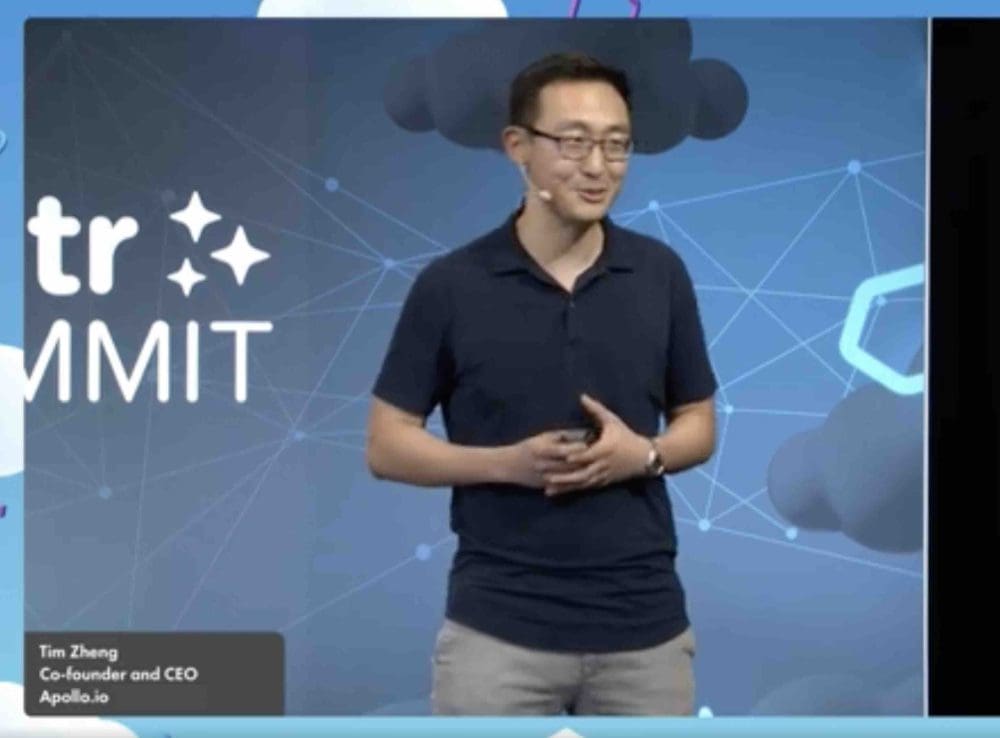
Apollo.io belongs to the second category. Under co-founder and CEO Tim Zheng, Apollo’s journey from a sales-led motion to product-led growth became one of the more instructive SaaS case studies of the last decade. The company did not simply add a free trial, sprinkle “PLG” on the homepage, and wait for the revenue fairy. It reworked pricing, packaging, activation, retention, acquisition, team structure, and the very definition of what good go-to-market execution looked like.
The result was dramatic: Apollo evolved from a struggling sales-led organization into an all-in-one go-to-market platform used by millions of sales and marketing professionals. It raised major funding rounds, reached unicorn status, and crossed the symbolic $100M ARR threshold that SaaS founders whisper about the way hikers talk about Everest.
What Apollo.io Actually Does
Apollo.io is a data intelligence and sales engagement platform for revenue teams. In plain English, it helps companies find the right prospects, enrich contact and company data, automate outreach, manage sales workflows, and turn pipeline dreams into meetings that are not just “circling back next quarter.”
The platform sits at the intersection of sales intelligence, engagement automation, lead generation, data enrichment, and AI-assisted go-to-market execution. That combination matters because many sales teams historically relied on a messy stack of disconnected tools: one for contact data, one for email sequencing, one for CRM sync, one for enrichment, one for reporting, and one mysterious spreadsheet named “Final_Final_REAL_pipeline_v7.”
Apollo’s core promise is consolidation. Instead of making sales reps jump through seven tabs before sending one good email, it gives teams a unified workspace for finding, prioritizing, contacting, and converting buyers.
The Sales-Led Growth Problem Apollo Had to Solve
In its early days, Apollo followed a more traditional sales-led growth model. Sales-led growth is not bad. In fact, it is often the right choice for complex enterprise products, high average contract values, long buying committees, and heavily customized implementations. The issue is that a sales-led motion must match the product, buyer, price point, and customer acquisition economics.
Apollo’s early motion was caught in an awkward middle. The company was reportedly selling contracts around a $10,000 average contract value. That price was high enough to require real sales effort, onboarding, customer success, and support. But it was not high enough to comfortably support a heavy enterprise-style acquisition model. The math was grumpy. When a company spends too much sales and support effort to win accounts that are too small to repay the cost quickly, growth starts to look impressive on a dashboard and painful in the bank account.
According to the Apollo case frequently discussed in SaaS circles, the company had reached early revenue traction but struggled with capital efficiency. The business had product-market fit, but not yet what Zheng described conceptually as the broader fit between product, market, model, and channel. That distinction is important. A product can solve a real problem and still be sold in the wrong way.
Product-Led Growth: More Than a Free Button
Product-led growth, or PLG, is a go-to-market strategy where the product itself drives acquisition, activation, retention, and expansion. Users can discover the product, try it, experience value, invite teammates, and often upgrade without needing to talk to sales first.
That does not mean sales disappears. This is where people sometimes get confused and start treating PLG like a cage match between product managers and account executives. In strong PLG companies, sales often becomes more precise, not less important. Instead of chasing every cold lead equally, sales teams can focus on product-qualified leads: users or accounts already showing buying intent through real product behavior.
For Apollo, product-led growth meant lowering friction. It meant making the platform accessible to small and mid-sized businesses, individual reps, founders, and growth teams who wanted to start prospecting immediately. The product had to deliver value before a salesperson entered the story. The “aha moment” could not hide behind a demo form wearing sunglasses.
The Strategic Reset: From $10K ACV to a Self-Serve Engine
Apollo’s transformation required a bold pricing and packaging reset. The company moved away from a heavier sales-led structure and toward a more accessible self-serve model. One of the most striking lessons from the story is the reported reduction in average contract value from around $10,000 to roughly $1,000. On the surface, that sounds terrifying. Telling a SaaS board that you want to reduce ACV by 90% is a great way to make someone drop a coffee mug.
But the point was not to make less money. The point was to unlock a much larger market with a much more scalable acquisition model. Lower pricing reduced buyer hesitation. Self-serve access reduced the need for expensive human intervention. A freemium or low-friction entry point allowed users to test the product, find value, and upgrade naturally.
The key is that Apollo did not guess blindly. The company tested. It evaluated conversion rates, activation, retention, and monetization. The new model reportedly converted dramatically better than the old one because it matched how the target market wanted to buy. Small teams did not want a long procurement parade. They wanted usable data, better outreach, and pipeline now.
Organizational Pain: The Part LinkedIn Posts Usually Skip
The Apollo story is inspiring, but it was not painless. During its reset, the company reportedly reduced headcount significantly and focused the remaining team on survival, product improvement, and measurable growth. Founders and leaders had to make hard calls, including cutting costs and narrowing priorities.
This part matters because product-led growth is often romanticized. People talk about viral loops, free users, and elegant onboarding flows as if they are decorating cupcakes. In reality, moving from sales-led to product-led growth can require restructuring the entire company. Marketing changes. Sales changes. Customer success changes. Product analytics becomes central. Pricing becomes a growth lever. Support and onboarding must scale without becoming a human bottleneck.
Apollo’s reset showed that PLG is not just a go-to-market tactic. It is an operating system. If the product is going to sell, activate, and retain users, the whole company must behave as if product experience is revenue infrastructure.
Why Apollo’s Product Was Suited for PLG
Not every product can become product-led overnight. A highly customized enterprise security implementation with six months of configuration is not the same as a sales prospecting tool that users can try quickly. Apollo had several characteristics that made PLG possible.
1. The Value Was Easy to Understand
Sales teams always need more relevant prospects, cleaner data, better outreach, and more meetings. Apollo did not need to educate the market from zero. The pain was obvious. The question was whether the product could deliver value faster and more affordably than alternatives.
2. Users Could Experience Value Quickly
A great PLG product has a short path to first value. For Apollo, a user could search for contacts, build a list, enrich data, or start an outreach workflow without waiting for a long implementation cycle. That immediacy is powerful. In PLG, speed is not a nice-to-have; it is the front door.
3. Usage Created Expansion Signals
As users built lists, exported contacts, ran sequences, invited teammates, or hit usage limits, Apollo could identify intent. These signals helped connect self-serve activity with sales-assisted expansion. That is where product-led sales becomes valuable: sales talks to users who have already raised their hands through behavior.
The Metrics That Mattered
Apollo’s shift was not powered by vibes, motivational posters, or someone saying “let’s growth hack this” in a conference room. It was metric-driven. The company focused on the core PLG funnel: acquisition, activation, retention, monetization, and expansion.
Acquisition asked: How do users find Apollo, and can organic demand scale? Activation asked: How quickly do new users experience meaningful value? Retention asked: Do users come back because the product is useful, or because they forgot to cancel? Monetization asked: Can free or low-cost users become paying customers without destroying unit economics? Expansion asked: Can teams grow from one user to many seats, higher usage, and broader workflows?
Reported improvements from Apollo’s transformation included stronger activation, a major increase in user satisfaction, and a much higher share of organic signups. Those are not vanity metrics. In PLG, activation and retention are the difference between a growth engine and a leaky bucket wearing a nice hat.
SEO and Organic Growth: Apollo’s Underrated Weapon
One of the smartest parts of Apollo’s strategy was organic acquisition. For a PLG company, organic search can become a compounding advantage because users are actively looking for solutions, templates, data, and workflows. Apollo’s database and product category gave it an opportunity to create search-friendly pages and resources that captured high-intent demand.
This matters for SaaS founders because paid acquisition can become expensive quickly. If every new user requires a paid ad, a sales call, and a customer success handoff, scaling becomes brutally capital-intensive. Organic growth, by contrast, can compound over time. It is slower at first, but once it works, it behaves like a very polite salesperson who works weekends and never asks for commission.
Apollo’s PLG motion benefited from this dynamic. More organic discovery led to more signups. More signups created more product usage. More product usage produced more behavioral data. More behavioral data improved segmentation, conversion, and expansion. That is the kind of loop SaaS companies dream about.
Scaling to $100M ARR: Why the Milestone Matters
Annual recurring revenue, or ARR, is one of the most important metrics in SaaS because it reflects predictable subscription revenue. Crossing $100M ARR is often called reaching “centaur” status. It signals that a company has moved beyond early product-market fit and into serious scale.
Apollo’s path to $100M ARR was not simply about selling more subscriptions. It was about redesigning the business model so growth could become repeatable. The company’s later funding rounds reflected that momentum. Apollo raised a major Series C round in 2022 and later secured a $100 million Series D round in 2023 at a $1.6 billion valuation. By that point, the story was no longer just “interesting PLG experiment.” It was a full-blown SaaS scaling case study.
The company also benefited from a larger market shift. B2B buyers increasingly prefer digital research, self-service evaluation, remote buying, and hybrid sales experiences. Apollo’s model aligned with that trend. Buyers wanted to try before talking. Teams wanted tools that worked quickly. Revenue leaders wanted consolidation, automation, and better data. Apollo’s PLG engine met the market where it was going, not where old sales playbooks wished it would stay.
What Sales-Led Companies Can Learn From Apollo
The lesson is not that every SaaS company should fire its sales team and add a “Start Free” button by Friday. Please do not do that. Your CFO has enough cardio in their life.
The real lesson is that go-to-market motion must fit the product, buyer, price, and adoption path. If customers can experience value without a human-led process, forcing them through sales may create unnecessary friction. If product usage reveals intent, sales should use that data instead of treating every lead like a mystery novel.
Apollo also shows the importance of willingness to rethink sacred assumptions. The company challenged its ACV, its sales process, its team structure, and its acquisition channels. It chose volume, accessibility, and product experience over a narrower high-touch model. That took courage because the short-term optics could look scary. Lower ACV? Smaller team? More self-serve? Less control over the buying process? It sounds risky until the model starts working.
Product-Led Does Not Mean Product-Only
One of the most useful takeaways from Apollo’s growth is that mature PLG companies often become hybrid companies. Product drives discovery and adoption. Sales helps larger teams standardize, expand, and solve complex use cases. Customer success supports retention and strategic growth. Marketing educates the market and captures demand. The best version is not product versus sales. It is product plus sales, with the product doing more of the early heavy lifting.
This hybrid model is especially relevant as PLG companies move upmarket. A small team may buy with a credit card. A larger company may need procurement, security reviews, admin controls, onboarding, and executive alignment. Sales still matters. But by the time sales joins, the buyer may already understand the product, trust the value, and have internal usage data to support the purchase.
Common Mistakes When Moving From Sales-Led to Product-Led Growth
Many companies try to copy PLG without understanding the system behind it. The first mistake is treating PLG as pricing only. A cheap plan does not create product-led growth if users cannot activate quickly. The second mistake is launching a free tier without clear upgrade paths. Free users are wonderful, but free users who never convert are basically a very large fan club with hosting costs.
The third mistake is ignoring retention. Product-led growth amplifies both good and bad product experiences. If onboarding is confusing, data is weak, or the product does not solve the promised problem, users leave quietly. In sales-led models, human teams can sometimes patch over product gaps. In PLG, the product has fewer places to hide.
The fourth mistake is separating product and revenue teams. PLG requires shared ownership. Product must understand revenue. Sales must understand usage data. Marketing must understand activation. Customer success must understand expansion signals. Everyone has to stop throwing metrics over the wall like office dodgeball.
Experience-Based Lessons for Founders, GTM Leaders, and SaaS Teams
From practical experience with product-led growth strategy, the hardest part of transitioning from sales-led to PLG is not creating a free plan. It is changing the company’s instincts. Sales-led organizations are trained to control the journey: qualify the lead, book the call, run discovery, present the demo, negotiate, close, onboard. Product-led organizations must become comfortable letting users move independently. That can feel strange at first, like handing your car keys to a teenager and saying, “Please discover value responsibly.”
The first useful experience is to map the user’s first 15 minutes. Not the first month. Not the “ideal customer lifecycle.” The first 15 minutes. What does a new user see? What do they click? What do they need to understand? What blocks them? What action proves they have experienced value? If the first value moment is buried under setup steps, empty states, confusing menus, or jargon, PLG will struggle before it starts.
The second experience is to define activation with uncomfortable specificity. “User signed up” is not activation. “User logged in twice” is usually not activation either. Activation should represent a meaningful action that correlates with future retention or conversion. For Apollo-like products, that might involve building a prospect list, enriching records, launching a sequence, connecting a CRM, or inviting teammates. The exact metric depends on the product, but the principle is universal: activation must measure value received, not merely activity performed.
The third experience is to build sales into the PLG motion carefully. Sales should not pounce on every free user after three clicks. That feels less like helpful consultation and more like being chased through a mall kiosk. Instead, sales should respond to strong signals: repeated usage, team invites, high-value firmographics, integration attempts, usage limits, or buying-role behavior. This is where product-qualified leads become more useful than traditional marketing-qualified leads.
The fourth experience is to make pricing easy to understand. Confusing pricing kills momentum. Users should know what is free, what is limited, what unlocks value, and why upgrading makes sense. Apollo’s shift toward accessible packaging worked because it reduced the psychological and financial barrier to entry. Good PLG pricing does not trick users. It lets them grow into payment as their success grows.
The fifth experience is to protect product quality as growth accelerates. PLG can generate a flood of users, support tickets, edge cases, and feature requests. Without discipline, the roadmap becomes a buffet where every customer adds one questionable casserole. Teams need a strong product strategy, clear segmentation, and ruthless prioritization. The goal is not to satisfy every user equally. The goal is to help the right users reach repeatable value faster.
The sixth experience is to remember that PLG is a long game. Paid campaigns can create quick spikes. Sales pushes can close quarterly deals. But product-led growth compounds through better onboarding, better retention, better expansion, better content, better referrals, and better data. Each improvement may look small alone. Together, they create a machine that can scale far beyond what a purely human-led funnel can efficiently support.
Apollo’s story is powerful because it shows that growth is not always about adding more people, more budget, or more tools. Sometimes it is about removing friction, narrowing focus, lowering barriers, and letting the product do the work it was always meant to do. That is the real magic of transitioning from sales-led to product-led growth. Not magic like a rabbit in a hat. Magic like a spreadsheet finally making sense.
Conclusion
Transitioning from sales-led to product-led growth is not a cosmetic change. It is a strategic rebuild. Apollo.io’s journey with Tim Zheng shows how a SaaS company can move from inefficient acquisition to scalable growth by aligning product, pricing, market, and channel. The company’s shift toward self-serve access, lower-friction pricing, organic acquisition, data-driven activation, and product-qualified expansion helped it scale into a major go-to-market platform and cross the $100M ARR milestone.
The biggest lesson is simple but not easy: growth follows value. When users can experience value quickly, trust the product, invite teammates, and expand naturally, the business model becomes stronger. Sales still matters, especially at larger account sizes, but the product becomes the engine that creates demand, proves value, and gives revenue teams better signals. For SaaS companies stuck between expensive sales motions and slow growth, Apollo’s story is a reminder that the right model can change everything.