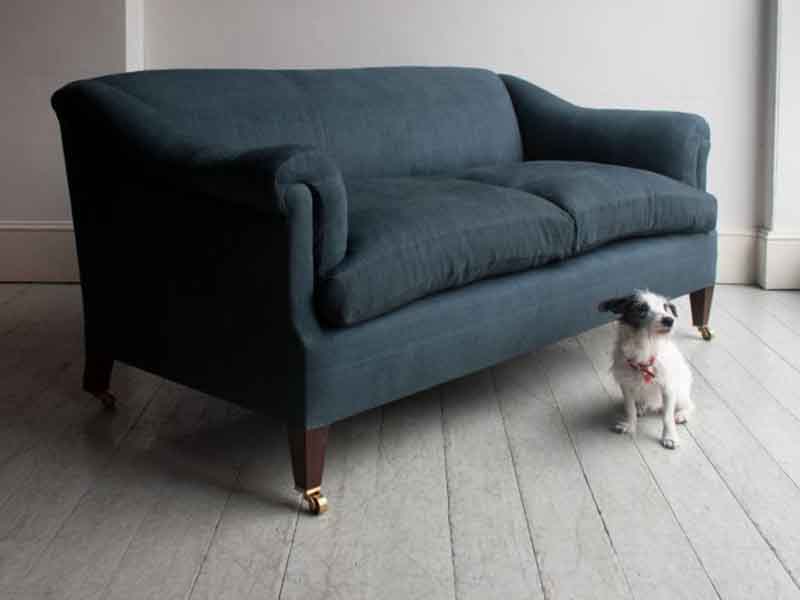
The Christopher Howe ‘Den’ Sofa is the kind of sofa that looks like it has already hosted three fascinating dinner parties, one sleepy dog, and a novelist who refuses to leave until the tea is strong enough. It belongs to the Made by Howe universe: furniture shaped by antiques, British craft, traditional upholstery, and a very unfashionable but deeply sensible belief that comfort should not be sacrificed at the altar of “looking interesting.” In a market crowded with sharp-edged modular blocks and sofas that appear designed mainly for real estate staging, the Den Sofa feels different. It is soft without being sloppy, tailored without being stiff, and luxurious without shouting across the room in gold loafers.
Designed under the eye of Christopher Howe, antiques dealer, furniture designer, and founder of Howe London, the Den Sofa reflects a design philosophy built on age, patina, proportion, and honest materials. Howe is known for mixing antiques with new pieces that feel as if they could become antiques themselves. That matters because the Den Sofa is not simply “a couch.” It is a long-term seating companion, a room anchor, and possibly the most polite argument for turning off the laptop and sitting properly for once.
What Is the Christopher Howe ‘Den’ Sofa?
The Christopher Howe ‘Den’ Sofa is one of Howe London’s archetypal sofa designs, described as among the coziest in the brand’s sofa range. It is available in several standard sizes, commonly including Cosy, Standard, and Great, with custom lengths also possible. That alone tells us something important: the Den is not designed as a one-size-fits-all product shoved into a shipping carton and sent off with crossed fingers. It is closer to a made-to-order piece, intended to suit a particular room, family, fabric, and way of living.
The sofa’s appeal begins with its name. “Den” suggests retreat, privacy, warmth, and permission to become delightfully horizontal. It is not called the “Executive Rectilinear Seating Platform,” thank goodness. The word points toward the emotional purpose of the piece: a sofa made for reading, fireside talking, weekend lounging, and the kind of Sunday afternoon nap that begins with “I’ll just close my eyes for five minutes” and ends in another time zone.
Christopher Howe’s Design Philosophy: Comfort First, Character Always
Christopher Howe’s broader work is rooted in antiques, craft, and a respect for furniture that improves with time. His career began in London in the 1980s, and Howe London became known for antique furniture, lighting, objects, and later the Made by Howe collection of new furniture. What makes the brand interesting is that its new pieces do not feel like disposable reproductions. They feel informed by old furniture: the strange good stuff, the awkwardly charming stuff, the pieces with stories in their joints.
Howe’s decorating advice often emphasizes visual balance over rigid symmetry, function over mere appearance, and the value of furniture that sits comfortably in real rooms. That thinking comes through clearly in the Den Sofa. It is not a sofa trying to win a sculpture competition. It is a sofa trying to make a living room feel lived in, not laminated. Its beauty lies in proportion, materials, touch, and the quiet confidence of traditional upholstery.
Construction: Why the Den Sofa Feels Different
The Den Sofa’s most important qualities are inside, which is annoyingly inconvenient for anyone trying to judge furniture from a single online photo. Its comfort is associated with traditional upholstery techniques: webbing, hand-lashed springs, horsehair stuffing, and pure down-filled pads beneath a tailored cover. This is the vocabulary of old-school sofa making, where comfort is layered rather than injected, wrapped in foam, and asked to perform miracles.
Traditional Webbing
Webbing forms part of the support foundation of a traditionally upholstered sofa. Think of it as the sturdy underlayer that helps distribute weight and supports the spring system above it. In lower-quality seating, weak support can create sagging, wobbling, or that tragic “why am I sitting in a pothole?” feeling. In a sofa like the Den, the structure is intended to support the sitter evenly and age gracefully.
Hand-Lashed Springs
Springs are one of the reasons high-quality sofas feel alive rather than flat. Hand-lashed or traditionally tied spring systems require skill and time, but the result is responsive support. The sofa gives, but it does not surrender. It has bounce, but not the trampoline energy of a children’s party gone wrong. This kind of suspension helps create comfort that develops character over years of use.
Horsehair Stuffing
Horsehair has a long history in fine upholstery because it is resilient, breathable, and capable of holding shape. It is not the cheapest route, which is exactly the point. Horsehair gives structure to upholstery while allowing softness to sit on top of it. In the Den Sofa, it contributes to that traditional, slightly yielding comfort associated with well-made British seating.
Pure Down-Filled Pads
Down adds the dreamy part. It softens the experience, creates that relaxed visual fullness, and invites the body to settle. Down-filled cushions and pads do require occasional plumping, which is either a charming ritual or a minor household negotiation depending on your personality. But the reward is a sofa that feels less like equipment and more like a place.
The Look: Tailored, Relaxed, and Not Trying Too Hard
The Christopher Howe Den Sofa has a tailored but informal look. It is not aggressively minimal, but it also avoids fussy over-decoration. The proportions feel rooted in classic English country-house comfort, with enough restraint to work in contemporary interiors. This is a useful combination. A sofa that is too trendy can date faster than a viral dance move. A sofa that is too formal can make guests perch nervously as if being interviewed by a headmaster. The Den lands in the more useful middle: elegant, deep, and welcoming.
Its silhouette works especially well with natural fabrics, vintage-inspired textiles, stripes, checks, washed linens, and earthy tones. Because Howe’s world often celebrates old fabrics, patina, and natural variation, the Den Sofa looks most convincing when it is allowed to have texture. It does not need a sterile showroom fabric. It wants something with character: a linen that wrinkles honestly, a wool with depth, a cotton print with personality, or a neutral fabric that lets the shape and upholstery do the talking.
Why Interior Designers Notice Sofas Like the Den
Interior designers often care about things that casual buyers may miss at first: seat depth, pitch, cushion fill, arm height, skirt style, seam details, and how the piece relates to the rest of the room. The Den Sofa gives designers something valuable: flexibility without blandness. It can sit in a formal drawing room, a relaxed family room, a library, or a layered apartment where antiques, books, lamps, and art are allowed to mingle like old friends.
The sofa’s traditional construction also supports a long-term design approach. Instead of replacing a cheap sofa every few years, a well-made sofa can be repaired, re-covered, and adapted as tastes change. That is increasingly relevant for homeowners who care about sustainability. Longevity is not only about moral virtue; it is also extremely practical. Buying one excellent sofa and keeping it for decades is often smarter than buying three forgettable ones and watching them slowly become regret with armrests.
How to Style the Christopher Howe Den Sofa
The best way to style the Den Sofa is to respect its personality. This is not a sofa that needs to be surrounded by matching furniture sets. In fact, it probably improves when the room has a bit of tension: an antique table, a modern lamp, a woven rug, a framed textile, a worn leather chair, or a surprising piece of art. The Den works beautifully in layered interiors because it already feels like it belongs to a story.
Use Texture Instead of Noise
Pair the Den Sofa with materials that invite touch: wool rugs, linen curtains, ceramic lamps, aged wood, brass, rattan, books, and soft throws. The goal is not to make everything match; the goal is to make the room feel collected. Texture gives the space depth without needing loud colors everywhere.
Choose Pillows Carefully
Because the sofa already has a relaxed, cushioned presence, avoid burying it in too many decorative pillows. A few generous cushions in complementary fabrics will usually look better than a pillow avalanche. Pillows should support the mood, not create a small mountain range between you and your coffee.
Let the Coffee Table Have Character
A Den Sofa pairs well with a coffee table that has substance. Old wood, stone, metal, or a simple antique trunk can work. The sofa has enough softness that a more grounded table helps balance the room. This is where Christopher Howe’s love of old things becomes useful: one imperfect antique piece can make the entire setup feel more personal.
Who Is the Den Sofa Best For?
The Christopher Howe Den Sofa is best for buyers who value craftsmanship, traditional comfort, and furniture with a sense of permanence. It is not the best choice for someone who wants the cheapest possible seating solution by next Tuesday. It is also not the ideal sofa for people who want a razor-straight, ultra-modern piece with no visible softness. The Den is for people who want comfort with heritage and elegance with a pulse.
It suits homeowners who read in the living room, entertain casually, collect antiques, enjoy British interiors, or want a sofa that can handle both style and slouching. It also suits design lovers who understand that the most meaningful rooms are rarely built in one weekend. They are assembled over time, one good decision at a time.
How It Compares With Mass-Market Sofas
Mass-market sofas can be perfectly useful, especially for first apartments, tight budgets, or temporary spaces. But the Den Sofa lives in another category. Its value is not only in appearance; it is in construction, materials, customization, and the likelihood that it can age into the room rather than age out of it. Many fast-furniture sofas rely heavily on foam, simplified frames, and standardized production. They may look fine at first, but comfort can fade quickly if the internal structure is weak.
The Den’s traditional materials point toward a slower furniture culture. The upfront cost is higher, but the logic is different. You are not simply buying somewhere to sit; you are commissioning a piece designed to become part of the room’s architecture. That kind of sofa can be reupholstered, restyled, and passed along. It can absorb family history. It may even survive teenagers, pets, and that one friend who insists on sitting down with a full plate of pasta.
Buying Considerations Before Ordering
Before considering a Christopher Howe Den Sofa, measure carefully. This sounds obvious, but sofas have ruined more delivery days than anyone wants to admit. Measure the room, doorways, stair turns, elevator openings, and the path from truck to final position. A “Great” sofa may be great in every sense, but not if it becomes a permanent installation in the hallway.
Next, think about how the sofa will actually be used. A formal sitting room can handle more delicate fabric. A family room needs durability. If children, pets, snacks, or red wine are involved, choose upholstery with both beauty and stamina. Natural fibers can be wonderful, but they behave differently from performance fabrics. Ask for swatches, test them in your light, and do not choose fabric from a tiny screen at midnight while feeling optimistic.
Finally, consider the room’s long-term palette. The Den Sofa can wear color beautifully, but because it is a major piece, many buyers may prefer a versatile base fabric and add bolder accents through cushions, throws, rugs, and art. That allows the sofa to remain timeless while the room evolves.
Why the Den Sofa Feels So Current
Although the Den Sofa is rooted in traditional craft, it feels surprisingly current because many homeowners are moving away from sterile interiors. After years of rooms that looked like nobody had ever opened a book or dropped a cracker, there is renewed interest in warmth, personality, and furniture that feels human. The Den fits that shift beautifully. It offers comfort, tactility, and authenticity without looking theatrical.
It also reflects the growing desire for fewer, better things. A sofa is one of the hardest-working pieces in a home. It hosts conversations, naps, guests, movie nights, difficult emails, and occasionally laundry that is “about to be folded.” Choosing one with real craft behind it can change the daily experience of a room. That is the quiet power of the Den Sofa: it improves ordinary moments.
of Experience: Living With a Sofa Like the Christopher Howe ‘Den’ Sofa
Living with a sofa like the Christopher Howe Den Sofa is different from living with a piece that simply fills a blank wall. A truly comfortable, traditionally made sofa changes the rhythm of a room. You notice it first in small ways. People stop perching and start settling. Conversations stretch longer. Guests lean back instead of sitting at attention. Someone reaches for a book. Someone else claims a corner and pretends it was accidental. The room becomes less of a display and more of a habitat.
The first practical experience is the importance of placement. A sofa with the visual weight and softness of the Den should not be pushed into a room as an afterthought. It deserves a proper relationship with the fireplace, windows, coffee table, and chairs. In a long living room, it can help divide space. In a smaller den or library, it can create the main emotional center. The trick is to leave enough breathing room around it so the tailoring can be appreciated. Even a cozy sofa needs personal space.
The second experience is fabric education. A sofa like this teaches you that upholstery is not just color. It is texture, hand feel, durability, drape, and mood. A flat gray fabric may look safe but feel lifeless. A linen blend may wrinkle but bring charm. A patterned textile may seem risky on a sample but become magical across a large sofa. The best approach is to live with swatches for several days. Move them from morning light to evening lamplight. Put them near the rug. Place them beside wood, stone, and paint colors. Good fabric decisions are rarely made in panic mode.
The third experience is cushion maintenance. Down-filled comfort has a personality. It needs fluffing, turning, and a little affection. This is not a flaw; it is part of the bargain. A foam slab may hold a sharper shape, but it rarely has the same invitation. The Den Sofa’s style of comfort is more like a good feather pillow: best when refreshed, better with use, and happiest when someone cares enough to straighten it after a long evening.
The fourth experience is how well a characterful sofa handles imperfect rooms. Many homes are not blank architectural masterpieces. They have odd corners, inherited furniture, mixed wood tones, strange windows, and objects collected over time. A sofa inspired by traditional interiors can make those imperfections feel intentional. The Den does not demand a perfectly curated showroom. It welcomes lamps with history, tables with scars, and art that does not match the cushions.
The final experience is emotional. A sofa like the Christopher Howe Den Sofa becomes part of memory. It is where holiday guests sit, where sleepy mornings happen, where design books pile up, where pets negotiate ownership, and where the best conversations often occur after everyone has stopped trying to be impressive. That is why the Den Sofa matters. It is not just about upholstery. It is about creating the kind of room people actually want to stay in.
Conclusion
The Christopher Howe ‘Den’ Sofa stands out because it combines traditional craftsmanship, deep comfort, and understated beauty. It reflects Christopher Howe’s world: antiques, patina, proportion, natural materials, and furniture made with enough integrity to age well. For homeowners and designers who want a sofa with soul, the Den offers more than a place to sit. It offers an atmosphere. It is cozy, elegant, customizable, and refreshingly uninterested in disposable trends.
If your idea of luxury is not a shiny logo but a sofa that gets better with time, the Den deserves attention. It is the sort of piece that makes a room feel finished without making it feel frozen. And in the end, that may be the highest compliment a sofa can earn: people want to sit on it, stay on it, and return to it.
Note: This article is an original, publication-ready synthesis based on current public product information, designer interviews, showroom descriptions, and general upholstery guidance. Buyers should verify final dimensions, fabric options, pricing, availability, delivery requirements, and lead times directly with the seller before ordering.