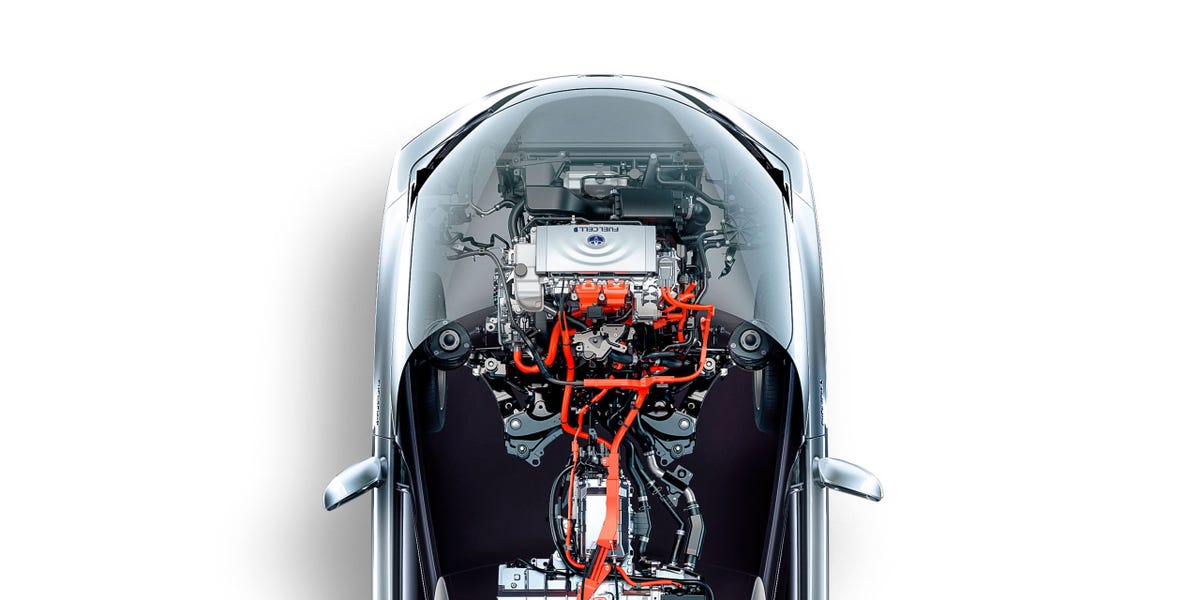
Note: The requested title says “Toyota Murai,” but the official name of Toyota’s hydrogen fuel-cell sedan is Toyota Mirai. Since many readers may search for “Toyota Murai” by mistake, this article keeps the title while using the correct model name throughout the content. Even Google has seen worse spelling crimes and survived.
The Year Hydrogen Cars Tried to Become Normal
In 2017, hydrogen cars were not exactly parked on every suburban driveway between the minivan and the neighbor’s suspiciously loud leaf blower. They were rare, futuristic, California-focused machines that promised something exciting: the smooth, quiet driving feel of an electric car, the quick refueling habit of a gasoline car, and tailpipe emissions that were basically water vapor. For drivers tired of waiting at chargers but curious about zero-emission vehicles, the idea sounded almost too good to be true.
The two most talked-about hydrogen cars of 2017 were the Toyota Mirai and the Honda Clarity Fuel Cell. Both were real production vehicles, not science-fair trophies wearing license plates. They represented years of engineering, billions of dollars in research, and the hope that fuel-cell electric vehicles could become a meaningful part of the clean transportation future.
Yet the story was complicated. The cars themselves were surprisingly usable. The infrastructure around them? That was the dramatic roommate who forgot to pay rent. Hydrogen stations were limited, mostly clustered in California, and early adopters had to plan their lives around availability. So, were the 2017 Toyota Mirai and Honda Clarity brilliant pioneers or expensive experiments? The honest answer is: yes.
How Hydrogen Fuel-Cell Cars Work
A hydrogen fuel-cell vehicle is an electric car that makes its own electricity onboard. Instead of storing all its energy in a large battery pack, it carries compressed hydrogen in reinforced tanks. The hydrogen flows into a fuel-cell stack, where it reacts with oxygen from the air. That chemical reaction produces electricity, which powers an electric motor. The main tailpipe byproduct is water.
That means a hydrogen car drives a lot like a battery-electric vehicle. Acceleration is smooth, the cabin is quiet, and there is no traditional gasoline engine shifting through gears. The difference comes at refueling time. While a battery EV may need a long charging session depending on charger speed and battery size, a fuel-cell vehicle can refill in roughly three to five minutes when the station is working properly. That last phrase matters. In 2017, station availability was the fine print written in invisible ink.
The technology had a strong appeal for automakers. Hydrogen promised long driving range, fast refueling, and potential usefulness for larger vehicles, fleets, and long-distance travel. But producing, transporting, storing, and dispensing hydrogen at consumer scale was, and still is, a major challenge. The 2017 Mirai and Clarity showed that automakers could build convincing fuel-cell cars. The harder question was whether society could build the refueling network around them.
Toyota Mirai: The Hydrogen Car With a Sci-Fi Name
The Toyota Mirai arrived in the United States before the 2017 model year, but the 2017 version continued as one of the most visible hydrogen cars on the road. “Mirai” means “future” in Japanese, which is a bold name. Naming a car “Future” is like naming your dog “Einstein.” Expectations immediately become higher.
For 2017, the Mirai used an electric motor producing about 151 horsepower and 247 pound-feet of torque. Those numbers did not make it a sports sedan, but instant electric torque made it feel responsive around town. The Mirai’s EPA-estimated driving range was 312 miles, and Toyota said refueling took about five minutes under proper conditions. That range was competitive with many gasoline cars and stronger than many battery EVs available at the time.
The Mirai’s design was polarizing. Some people saw a bold expression of future mobility. Others saw a sedan that had lost an argument with origami. The front end was dramatic, the body lines were sharp, and the entire car seemed determined to announce, “I am not a Camry, thank you very much.” Toyota clearly wanted the Mirai to look different because it was different.
Mirai Interior and Driving Feel
Inside, the Mirai offered a quiet ride, comfortable front seats, and a technology-forward dashboard. It was not luxurious in the full Lexus sense, even though its price entered luxury-car territory. The cabin felt more like a high-tech Toyota with premium touches than a leather-wrapped executive lounge. Rear seating was limited to four passengers total because the layout did not include a middle rear seat.
On the road, the Mirai’s personality was calm rather than thrilling. It was best suited for commuting, errands, and smooth highway cruising. The steering was light, body motion was noticeable in corners, and nobody was buying one to set lap records. But as a daily driver, it had an appealing smoothness. It felt like an EV that could be refueled quickly, which was exactly the point.
Mirai Price and Ownership Pitch
The 2017 Toyota Mirai carried an MSRP of $57,500 before destination fees. Toyota also offered lease options and included hydrogen fuel support for early customers. At the time, federal and California incentives could reduce the effective cost for qualifying buyers, and California HOV lane access sweetened the deal. In traffic-heavy California, carpool-lane access is not a perk; it is practically emotional therapy.
Toyota’s biggest advantage was commitment. The company treated hydrogen as a serious long-term strategy, not a weekend hobby. The Mirai was part of a broader belief that fuel-cell vehicles could complement hybrids, plug-in hybrids, and battery EVs. Toyota had already changed the car market with the Prius. With the Mirai, it wanted to prove it could do the same thing again, only this time with compressed hydrogen and a much smaller audience.
Honda Clarity Fuel Cell: The More Polished Rival
The 2017 Honda Clarity Fuel Cell was Honda’s third-generation fuel-cell vehicle, and it felt like a major packaging breakthrough. Earlier hydrogen vehicles often had bulky fuel-cell systems that intruded into passenger space. Honda worked to shrink the fuel-cell stack and fit the entire fuel-cell powertrain under the hood. That allowed the Clarity to seat five people, which gave it a practical advantage over the four-seat Mirai.
The Clarity Fuel Cell used a 174-horsepower electric motor producing 221 pound-feet of torque. Its EPA-estimated range was 366 miles, and its combined fuel economy rating was 68 MPGe. In 2017, that gave it one of the strongest zero-emission driving range ratings available in the United States. Honda also claimed refueling could take about three to five minutes at 70 MPa hydrogen stations.
Unlike the Mirai, the Clarity Fuel Cell was lease-only in the U.S. market. Honda’s introductory lease program was designed to reduce anxiety for early adopters. It included up to $15,000 worth of hydrogen fuel, roadside assistance, generous mileage allowance, and even luxury rental-car days. That rental benefit was not just a cute bonus. It was practical insurance for road trips or times when hydrogen infrastructure made life complicated.
Clarity Design and Comfort
The Clarity had a more conventional sedan shape than the Mirai, though it still looked futuristic. Its covered rear-wheel openings, sculpted body sides, and aerodynamic details gave it a distinctive profile. Honda’s approach was less “look at me, I’m from tomorrow” and more “I’m a clean sedan with a really advanced science project under the hood.”
Inside, the Clarity felt roomy, refined, and mature. Reviewers often praised its quiet cabin, comfortable ride, and upscale materials. The car came well equipped, with modern safety and driver-assistance features, smartphone integration, and a cabin that felt closer to a premium Honda or Acura than an experimental prototype. The Clarity made hydrogen feel less weird, which may have been its greatest achievement.
Toyota Mirai vs. Honda Clarity: Which One Made More Sense?
Comparing the 2017 Toyota Mirai and Honda Clarity Fuel Cell is not as simple as picking the one with the longer range. The Clarity had the stronger EPA range rating, more power, seating for five, and a more polished interior. The Mirai had Toyota’s visible long-term commitment, purchase availability, and a slightly more established identity as a dedicated hydrogen model.
For comfort and cabin space, the Honda Clarity was the easier recommendation. It felt more like a normal midsize sedan, and its five-seat layout made it better for families. For technology symbolism and ownership flexibility, the Toyota Mirai had an edge. Buyers could purchase the Mirai, while Honda kept the Clarity Fuel Cell on a lease-only path.
Both cars shared the same biggest limitation: geography. In 2017, these vehicles made sense only for people who lived or worked near hydrogen stations, mostly in select California markets. A buyer in Los Angeles, Orange County, San Francisco, or parts of the Bay Area could at least consider one. A buyer in Kansas City or Atlanta would have had better luck fueling a spaceship.
The Hydrogen Station Problem
The 2017 hydrogen car experience depended heavily on the refueling network. This was not like buying a gasoline car, where stations appear every few blocks like coffee shops with pumps. Hydrogen stations were scarce, expensive to build, and technically complex. Even in California, drivers had to check station status, pressure availability, and location before making plans.
By early 2018, the U.S. had only a few dozen publicly available hydrogen stations, with most of them in California. That small network was enough to support early adopters, but not enough to create mainstream confidence. The cars could be excellent, but a great car with nowhere to refuel becomes driveway sculpture with a monthly payment.
This was the central contradiction of hydrogen cars in 2017. Automakers had solved many vehicle-level problems: range, cold starts, refinement, safety, and drivability. But the public fueling system lagged behind. Battery EVs had their own limitations, but home charging gave them a major advantage. A hydrogen driver could not install a hydrogen pump in the garage next to the recycling bin and the mysterious box of old cables.
Environmental Promise and Real-World Questions
Hydrogen fuel-cell vehicles are zero-emission at the tailpipe, which is valuable in cities fighting smog and greenhouse gas emissions. But the full environmental story depends on how the hydrogen is produced. Hydrogen can be made from natural gas, which lowers some vehicle emissions but still involves fossil fuels. It can also be produced through electrolysis using renewable electricity, which offers a cleaner pathway.
In 2017, the green promise of hydrogen was real but conditional. The cars themselves were clean at the point of use. The broader system needed cleaner hydrogen production, more reliable distribution, and lower costs. That made the Mirai and Clarity both exciting and unfinished. They were not just cars; they were rolling arguments for an energy ecosystem that had not fully arrived.
Why 2017 Still Matters
The 2017 Toyota Mirai and Honda Clarity Fuel Cell matter because they proved hydrogen cars could feel normal. Not normal as in boring, but normal as in usable. You could sit in traffic, run errands, listen to music, use navigation, enjoy air conditioning, and forget for a moment that your sedan was powered by one of the most ambitious propulsion systems in the auto industry.
They also revealed a key lesson: clean-car success is not only about the vehicle. It is about the ecosystem. Gasoline cars became dominant because fuel was everywhere. Battery EVs grew stronger as public charging expanded and home charging became a lifestyle advantage. Hydrogen cars needed the same network effect, but with more expensive infrastructure and fewer early users.
That is why the 2017 Mirai and Clarity are best understood as pioneering vehicles rather than mainstream breakthroughs. They were impressive, but they were early. They showed what was possible and also showed what was missing.
Experience Notes: What It Felt Like to Live With a 2017 Hydrogen Car
Imagine living with a 2017 hydrogen car in Southern California. On Monday morning, the experience might feel magical. You step into a quiet sedan, press the start button, and glide away with the smoothness of an electric vehicle. There is no engine vibration, no exhaust smell, and no dramatic mechanical soundtrack. The car simply moves. Around town, the instant torque makes stop-and-go driving easy. The Mirai feels calm and deliberate; the Clarity feels roomier and more polished. Either way, you feel like you joined a secret club where the membership card is a hydrogen nozzle.
Then comes refueling day. This is where the romance meets the spreadsheet. Before leaving home, you check station status. Is the station open? Does it have fuel? Is it dispensing at full pressure? Is there a line? Suddenly, fueling a car feels less like a routine errand and more like checking weather radar before launching a boat. When everything works, the experience is excellent. You pull up, connect the nozzle, wait a few minutes, and leave with hundreds of miles of range. It feels like the future has finally stopped being dramatic and learned how to run errands.
But early hydrogen ownership required patience. A station outage could turn a simple commute into a planning exercise. Drivers learned to refuel before the tank got too low, especially if their nearest station had a history of downtime. Many owners treated half a tank as the new empty, not because the car demanded it, but because the infrastructure encouraged caution. In a gasoline car, range anxiety is rare. In a 2017 hydrogen car, it was not always about the range of the car; it was about the reliability of the next pump.
The social experience was also unusual. People asked questions at parking lots. “Is that electric?” “Where do you fill it?” “Does it run on water?” Owners became unofficial ambassadors, explaining fuel cells while trying to buy groceries. The Mirai attracted attention because of its styling. The Clarity attracted attention because people expected it to be a regular Honda sedan until they noticed the badges and the covered rear wheels. Both cars turned ordinary drivers into part-time science communicators.
On longer trips, the limitations became clearer. A battery EV driver could often plan around a growing charging network, but hydrogen routes were far more restricted. Many Clarity lease perks, such as rental-car days, made sense because Honda understood the car was not ideal for every journey. That did not make the Clarity bad; it made it honest. The best hydrogen experience in 2017 belonged to people whose daily lives matched the network: home near one station, work near another, and patience stored in the glovebox.
Still, there was something genuinely charming about these cars. They felt like prototypes that had grown up, put on real interiors, and learned customer service. The 2017 Toyota Mirai and Honda Clarity Fuel Cell were not perfect answers, but they were brave questions on wheels. They asked whether drivers would accept a new fuel if the car felt familiar. They asked whether fast refueling could compete with home charging. Most importantly, they asked whether the future of clean transportation would be one technology or a mix of many. The answer is still developing, but in 2017, these two sedans made the debate feel real.
Conclusion
The hydrogen cars of 2017 were fascinating because they were both advanced and limited. The Toyota Mirai showed Toyota’s confidence in fuel-cell technology and delivered a quiet, practical, zero-emission sedan with quick refueling. The Honda Clarity Fuel Cell raised the comfort level, expanded seating to five, and offered impressive range with a polished driving experience.
Yet neither car could escape the same reality: hydrogen infrastructure was the gatekeeper. For the right California driver, these cars were usable, interesting, and even enjoyable. For almost everyone else, they were proof that the future sometimes arrives before the supporting cast has finished rehearsing.
Looking back, the 2017 Mirai and Clarity were not failures. They were early chapters. They showed that hydrogen fuel-cell cars could be quiet, clean, comfortable, and quick to refuel. They also showed that great engineering needs great infrastructure. Without both, even the future has to pull over and check the station map.