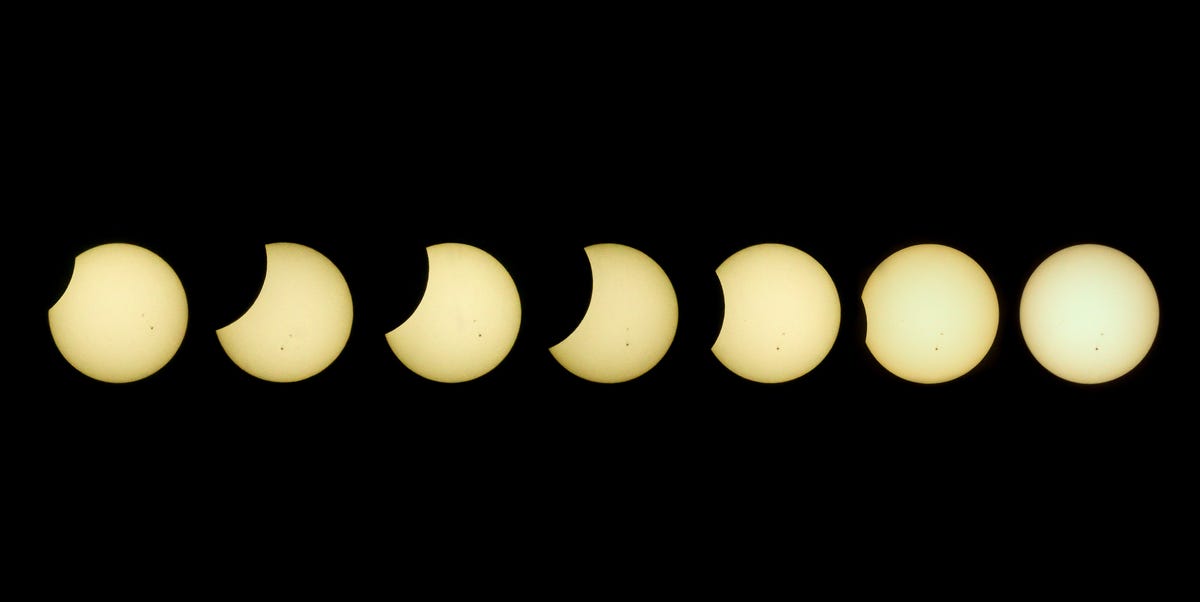
An annular solar eclipse is one of those sky events that makes people suddenly interested in astronomy, weather apps, road trips, camera gear, and whether the cardboard box in the pantry can become a scientific instrument. The October 14 annular solar eclipse, often called a “ring of fire” eclipse, gave millions of people across the Americas a chance to see the Moon slide in front of the Sun while leaving a brilliant outer ring visible. It was dramatic, beautiful, and absolutely not something to stare at casually like a sunset, a campfire, or your neighbor’s questionable Halloween decorations.
The most important rule is simple: during an annular eclipse, you must protect your eyes every time you look directly at the Sun. Unlike a total solar eclipse, an annular eclipse never fully covers the Sun. That means there is no safe moment to remove eclipse glasses and look with the naked eye. The glowing ring may look delicate, but it is still direct sunlight, and direct sunlight is not known for being gentle with retinas.
This guide explains how to safely view the October 14 annular solar eclipse, how to choose proper eclipse glasses, what not to use, how to watch indirectly, how to photograph the event without risking your eyes or equipment, and how to make the experience fun for families, schools, travelers, and backyard sky-watchers.
What Was Special About the October 14 Annular Solar Eclipse?
The October 14 annular solar eclipse crossed parts of North, Central, and South America. In the United States, the path of annularity passed through areas from Oregon to Texas, while much of the rest of the country saw a partial solar eclipse. People in the central path saw the famous “ring of fire,” where the Moon covered the center of the Sun but appeared too small in the sky to block the Sun completely.
That “too small” appearance happens because the Moon’s orbit around Earth is not a perfect circle. Sometimes the Moon is closer to Earth and appears slightly larger; sometimes it is farther away and appears slightly smaller. During an annular eclipse, the Moon is too far from Earth, visually speaking, to cover the full solar disk. Instead of darkness at midday, viewers see a bright ring around the Moon’s silhouette.
It is tempting to think, “Well, most of the Sun is covered, so it must be mostly safe.” Unfortunately, eyeballs do not grade on a curve. Even a tiny exposed portion of the Sun can damage vision if viewed without proper protection. That is why safe solar viewing is not optional; it is the price of admission to the cosmic show.
The Golden Rule: Never Look Directly Without Proper Solar Protection
The main keyword here is safe solar viewing, and the main behavior is even simpler: use certified solar eclipse glasses or a safe handheld solar viewer whenever you look directly at the Sun. This applies before annularity, during annularity, and after annularity. For the October 14 annular solar eclipse, there was no totality phase and no moment when the Sun was completely blocked.
Regular sunglasses are not enough. Dark sunglasses, polarized sunglasses, ski goggles, smoked glass, exposed film, tinted plastic, and “I found these in a drawer and they seem pretty dark” glasses are not safe. Eclipse glasses are thousands of times darker than ordinary sunglasses and are designed to reduce intense visible light, ultraviolet radiation, and infrared radiation to safe levels.
Look for solar viewers that comply with the ISO 12312-2 international safety standard. This standard is designed for products used for direct viewing of the Sun. A legitimate pair of eclipse glasses should be undamaged, properly labeled, and purchased from a reliable source. If the lenses are scratched, torn, punctured, wrinkled, separating from the frame, or suspiciously flimsy, do not use them. Your eyes are not the place to test bargain-bin optimism.
How to Use Eclipse Glasses Correctly
Having safe eclipse glasses is step one. Using them correctly is step two, and step two matters. Before you look up, place the eclipse glasses over your eyes while facing away from the Sun or while looking down. Once the glasses are securely in place, then look at the Sun. When you are finished, turn away from the Sun before removing the glasses.
If you wear prescription glasses, keep them on and place the eclipse glasses over them. Do not try to stack sunglasses under eclipse glasses for “extra safety.” Proper solar viewers already do the job. Stacking random eyewear can make the fit worse and create gaps that let sunlight enter from the sides.
Children should be supervised closely. Kids are naturally curious, and during an eclipse, curiosity tends to point upward. Make sure children understand that the glasses stay on whenever they look at the Sun. For younger children, handheld viewers may be easier for adults to control than paper-frame glasses. A family eclipse plan should include one rule everyone can remember: glasses on before looking up, turn away before taking them off.
What Not to Use During an Annular Solar Eclipse
Some unsafe viewing methods sound old-school, creative, or suspiciously like something a cousin learned on the internet. Avoid them all. Do not look at the Sun through regular sunglasses, binoculars, telescopes, camera lenses, phones, smoked glass, CDs, DVDs, mylar balloons, dark plastic, unverified filters, or homemade filters.
The most dangerous mistake involves optical devices. Binoculars, telescopes, camera lenses, and spotting scopes concentrate sunlight. Looking through them without a proper solar filter mounted securely on the front of the device can cause severe eye injury quickly. Even wearing eclipse glasses while looking through binoculars is unsafe unless the binoculars themselves have a proper front-mounted solar filter. The concentrated sunlight can damage the viewer and your eyes.
The filter must go on the Sun-facing front end of the optics, not at the eyepiece. If you are not experienced with solar filters for telescopes or cameras, keep the setup simple: use eclipse glasses for direct viewing and indirect methods for group viewing. The Sun will still be there if you choose safety over complicated gear. It has been showing up daily for billions of years; it can handle your low-tech approach.
Safe Indirect Viewing: Pinhole Projectors and Shadow Magic
If you do not have eclipse glasses, you can still enjoy the eclipse safely through indirect viewing. The easiest method is a pinhole projector. Take a piece of cardboard or an index card, make a small clean hole, stand with your back to the Sun, and let sunlight pass through the hole onto a white surface such as another card, a sidewalk, or a wall. You will see a tiny projected image of the Sun showing the eclipse shape.
Here is the key safety point: do not look through the pinhole at the Sun. The pinhole is not a filter. It is a projector. The Sun should be behind you, and your eyes should be looking at the projected image, not through the hole. Think of it as watching the Sun’s tiny movie on a screen.
You can also use household objects as natural projectors. A colander, straw hat, pegboard, loosely crossed fingers, or even tree leaves can create dozens of small crescent-shaped Sun images on the ground during partial phases. This is one of the most delightful parts of eclipse watching. Suddenly, your backyard tree becomes an astronomy instrument, which is impressive considering it was already busy being a tree.
How to Check Whether Eclipse Glasses Are Safe
Safe eclipse glasses should block almost everything except the Sun or similarly bright light. When you put them on indoors, you should not be able to see ordinary household lights clearly. Outdoors, the Sun should appear as a comfortable, sharply defined disk. If the Sun looks painfully bright, blurry, hazy, or distorted, stop using the glasses.
Check the product labeling for ISO 12312-2 compliance. However, printing the standard on the frame is not enough by itself, because counterfeit or misleading products can exist. Buy from reputable sellers, planetariums, science museums, astronomy organizations, schools, libraries, or vendors recommended by recognized astronomy groups. Avoid last-minute mystery listings that make big promises but provide little information about the manufacturer.
Inspect the lenses before the event. Hold them up to a lamp, not the Sun, and look for scratches, pinholes, cracks, or peeling. If the viewer is damaged, discard it. The safest pair of eclipse glasses is not the pair with the coolest design; it is the pair that protects your vision reliably.
Can You Photograph the Annular Eclipse?
Yes, you can photograph an annular solar eclipse, but camera safety and eye safety must both be taken seriously. A camera pointed at the Sun needs a proper solar filter attached to the front of the lens. This protects the camera sensor and helps produce a usable image. Never look through an optical viewfinder at the Sun without a certified solar filter properly installed on the lens.
Smartphones can capture eclipse scenes, especially people watching, crescent shadows, landscape changes, and the atmosphere of the day. But do not use a phone screen as an excuse to stare toward the Sun without eye protection. If you aim a phone at the Sun, wear eclipse glasses while setting up the shot, and consider using a solar filter over the phone camera lens if you are trying to capture the solar disk directly.
For most people, the best eclipse photos are not close-ups of the Sun. They are the human moments: kids pointing at crescent shadows, friends comparing viewers, a line of people in a park all wearing matching cardboard glasses, or the eerie softening of daylight. The sky is the headliner, but the audience is part of the story.
Plan Your Viewing Location Before Eclipse Day
For the October 14 annular solar eclipse, the most dramatic view came from the path of annularity. Outside that path, viewers saw a partial eclipse. Location mattered, but safety mattered everywhere. Whether someone watched from a national park, a schoolyard, a city sidewalk, or a driveway, direct solar viewing required proper eye protection.
If you are planning for a future annular eclipse or using this guide as a safety checklist, choose a viewing site with open sky, safe parking, access to restrooms, water, shade, and a backup plan for clouds. Public parks, observatories, museums, libraries, and science centers often host eclipse events with trained staff and safe viewing equipment. These events are great for beginners because someone else has already worried about the details. That is the kind of science support everyone deserves.
Avoid stopping suddenly on highways or pulling onto narrow shoulders to watch. Eclipses are exciting, but traffic laws do not temporarily enter annularity. If traveling, arrive early, expect crowds, and keep fuel, snacks, water, and patience in generous supply.
Health and Comfort Tips for Eclipse Day
Eye safety is the headline, but general comfort matters too. Bring sunscreen, a hat, water, and weather-appropriate clothing. Many annular eclipse paths cross sunny, dry, or high-elevation areas where dehydration and sunburn can sneak up faster than expected. A chair or blanket can make the wait more comfortable, especially for families or older viewers.
Do not rely on clouds as protection. Clouds may dim the Sun, but they do not make direct viewing safe. If the Sun is visible enough to look at, it is visible enough to harm unprotected eyes. Keep eclipse glasses on for direct viewing even when clouds pass through.
Pets do not usually stare at the Sun during eclipses, because pets are often wiser than humans in very specific ways. Still, keep animals comfortable, hydrated, and away from crowds if they are easily stressed. The bigger concern is children and adults getting caught up in the excitement and forgetting the rules.
What Eye Damage From Unsafe Viewing Can Look Like
Looking directly at the Sun without proper protection can cause solar retinopathy, a type of retinal injury. The retina is the light-sensitive tissue at the back of the eye, and it does not have pain sensors that warn you in the moment. That means damage can occur without immediate pain. Symptoms may appear hours later and can include blurry vision, a central dark or gray spot, distorted vision, headache, light sensitivity, or trouble reading.
If you or someone else accidentally looked at the eclipse without protection and later notices vision changes, contact an eye care professional promptly. Do not panic, but do not ignore symptoms either. Eye injuries are not a “sleep it off and see” situation. Vision is too valuable to treat casually.
Simple Checklist for Safe Annular Eclipse Viewing
Before the Eclipse
- Buy ISO 12312-2 compliant eclipse glasses or handheld solar viewers from a reputable source.
- Inspect viewers for scratches, punctures, tears, or loose lenses.
- Practice putting glasses on before looking up and turning away before removing them.
- Prepare a pinhole projector or colander for indirect viewing.
- Choose a safe viewing location away from traffic hazards.
During the Eclipse
- Wear eclipse glasses every time you look directly at the Sun.
- Supervise children closely.
- Do not use cameras, binoculars, or telescopes without proper front-mounted solar filters.
- Use indirect viewing methods if glasses are unavailable.
- Stay hydrated, protect your skin, and enjoy the strange daylight.
After the Eclipse
- Store undamaged eclipse glasses in a protective envelope for future use.
- Discard damaged or questionable viewers.
- Check your photos, share your experience, and resist pretending your blurry orange dot is a NASA image.
- Seek professional eye care if you notice vision changes after unsafe exposure.
Experiences: What It Feels Like to Safely Watch the October 14 Annular Solar Eclipse
The safest eclipse experience begins before the Moon touches the Sun. People gather in parking lots, parks, school fields, rooftops, and desert overlooks with the same nervous excitement usually reserved for concerts and rocket launches. Everyone checks their eclipse glasses. Someone asks if regular sunglasses are okay, and five people answer “No!” with the intensity of a fire drill. A parent tapes a paper viewer back together. A science teacher becomes the most popular person in the area. The mood is half picnic, half countdown.
At first, the Sun looks normal. Then, through proper eclipse glasses, a tiny bite appears at the edge. Without the glasses, the day may still seem ordinary, which is one of the sneaky things about solar eclipses. Your surroundings do not immediately scream, “A celestial alignment is underway!” But through the viewer, the Sun slowly becomes a glowing crescent. People who planned to glance once suddenly become dedicated sky-watchers, checking every few minutes and announcing updates like sports commentators.
The indirect viewing is often just as memorable as the direct view. Under trees, the ground fills with little crescent Suns. A colander projects dozens of tiny eclipse shapes onto a sheet of white paper. Kids wave their hands and discover that crossed fingers can create tiny solar images. This is the part where science stops feeling like a textbook and starts feeling like a magic trick with better footnotes.
As annularity approaches, the light changes. It may not become night, but it becomes strange. Shadows sharpen. Colors flatten slightly. The air can feel cooler. Birds and insects may behave differently, though not always dramatically. People lower their voices without being told, as if the sky has entered a library. Then the ring appears through solar viewers: a thin, bright circle surrounding the Moon’s dark center. It is elegant, eerie, and surprisingly emotional.
The best part of safe viewing is that you can relax into the experience. You are not squinting, guessing, or risking your eyesight for a second of curiosity. You are prepared. You can look, turn away, talk, laugh, compare what you see, and look again. The eclipse becomes a shared event rather than a risky dare. Someone inevitably says, “Wow,” and for once the word is perfectly adequate.
After the ring breaks and the Sun returns to a crescent, the crowd slowly shifts from wonder to storytelling. People compare photos, trade extra glasses, and ask when the next eclipse will happen. Children who were restless an hour earlier suddenly explain orbital mechanics with snack crumbs on their shirts. Adults who arrived as casual observers leave with a new respect for the sky. The October 14 annular solar eclipse was not just about seeing the Moon cross the Sun. It was about learning how to witness something powerful with care, patience, and the right equipment.
That is the real lesson: safe eclipse viewing does not reduce the wonder. It protects the wonder. The ring of fire is unforgettable, but so is the simple fact that a few inexpensive tools, a little planning, and a healthy respect for sunlight can turn a dangerous glance into a lifelong memory.
Conclusion
The October 14 annular solar eclipse was a spectacular reminder that the universe can put on a show without asking for a ticket. But it also reminded viewers of an essential safety rule: during an annular eclipse, the Sun is never fully covered, so direct viewing always requires proper solar protection. Use ISO 12312-2 compliant eclipse glasses or handheld viewers, avoid ordinary sunglasses and homemade filters, keep optical devices properly filtered, and use pinhole projection when direct viewing gear is unavailable.
Whether you watched from the path of annularity or experienced a partial eclipse elsewhere, the safest approach was also the smartest. Protect your eyes, plan your location, supervise children, and enjoy the event with curiosity rather than risk. The ring of fire may last only minutes, but healthy vision should last much longer.