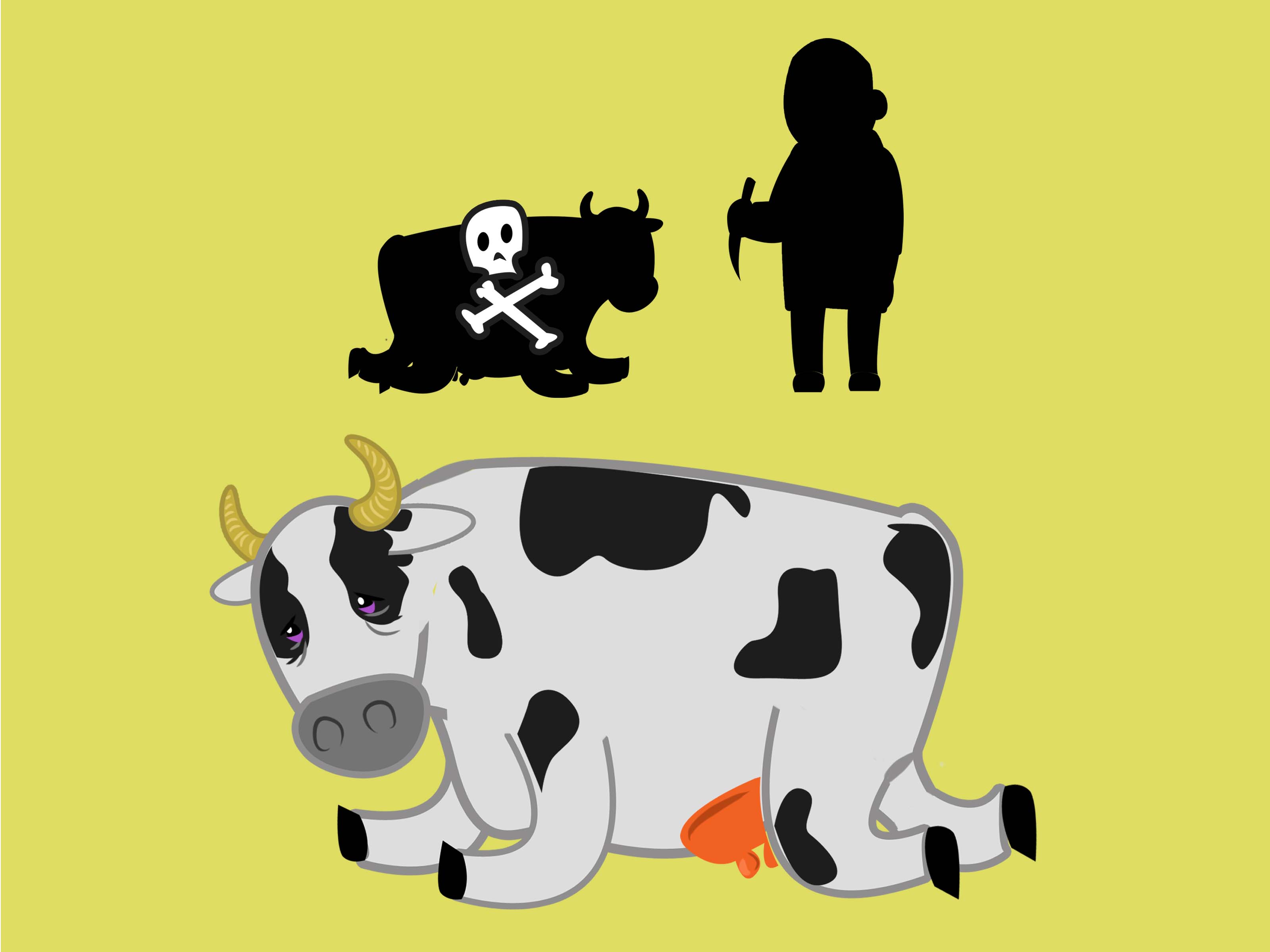
Important note: A cow that cannot stand after a long birth, hard pull, or difficult calving needs prompt veterinary attention. This guide explains practical supportive care, but it is not a substitute for a large-animal veterinarian. A “down cow” is not a farm puzzle to solve with guesswork, rope, hope, and a heroic-looking tractor. She needs diagnosis, traction, pain control, nursing care, and patience.
When a cow goes down after a hard calving, the first thought is often nerve damage in the hind legs. That can be true. Long pressure from a large calf, a tight pelvic canal, or a hard mechanical pull may injure the sciatic, obturator, tibial, or peroneal nerves. The result can be knuckling of the fetlock, legs sliding apart, weak hind-end control, or a cow that tries to rise but simply cannot get her back legs under her.
The good news: some cows with calving-related nerve injury recover with fast, careful support. The not-so-fun news: every hour on the ground raises the risk of muscle damage, pressure sores, bloat, hip injury, and permanent downer cow syndrome. Your goal is not to “make her stand” at any cost. Your goal is to give her the safest possible chance to stand without creating a second disaster.
What Happens During Calving-Related Nerve Damage?
During a difficult delivery, the calf may press hard against nerves inside the cow’s pelvis. A long birth, fetopelvic disproportion, hip lock, or excessive pulling can compress the nerves that help control the hind limbs. Think of it as a power cord being pinched behind a heavy gate. The muscles may still be there, the cow may still want to stand, but the signal is weak, delayed, or temporarily offline.
Common Signs of Hind-Leg Nerve Injury
- The cow is bright, alert, eating, and interested in her calf but cannot rise.
- One or both hind fetlocks knuckle under when she tries to stand.
- The hind legs slide outward, creating a “splits” position.
- She can sit upright on her chest but cannot push up with the rear legs.
- She may crawl or “creep” using her front legs.
- She may stand briefly if lifted but collapses when her hind legs spread.
These signs often point toward calving paralysis, obturator nerve injury, sciatic nerve injury, or secondary pressure damage. However, similar signs can occur with milk fever, pelvic fracture, hip dislocation, spinal trauma, toxic mastitis, metritis, grass tetany, severe weakness, or a combination of problems. That is why a veterinarian should examine her early, not after three days of “maybe she’ll pop up tomorrow.” Cows are tough, but they are not magical furniture.
Step 1: Call the Veterinarian Early
If a cow cannot stand after calving, call your veterinarian as soon as possible. Early treatment can separate a recoverable nerve injury from a downhill spiral. The vet may check calcium, magnesium, phosphorus, hydration, body temperature, uterine health, udder health, limb reflexes, pain response, hip stability, and signs of fracture or infection.
Do not assume all post-calving down cows have nerve damage. A cow with milk fever may need immediate calcium therapy. A cow with toxic metritis or mastitis may need systemic treatment. A cow with a fractured pelvis or dislocated hip may need a humane decision instead of repeated lifting attempts. Correct diagnosis saves time, money, and suffering.
Step 2: Get Her Into Sternal Position
A down cow should be positioned upright on her chest, also called sternal recumbency. This helps reduce the risk of bloat and keeps her lungs working better. If she is flat on her side, roll her gently onto her chest and tuck her legs into a natural resting position.
Use hay bales, straw bales, or firm padding to keep her from rolling back onto her side. Make sure her head and neck are comfortable. A cow that keeps tipping over is not “being dramatic.” She may be weak, painful, exhausted, or neurologically compromised.
Step 3: Move Her to Safe Footing
Footing matters more than many people realize. A cow with obturator nerve injury often cannot pull her hind legs together. If she tries to stand on slick concrete, ice, wet clay, or a thin layer of straw over a hard floor, her legs may shoot outward. That can tear inner-thigh muscles, damage the hip, or turn a temporary nerve injury into a permanent wreck.
Best Surfaces for a Down Cow
- Deep, dry straw over a firm base
- Sand bedding with good drainage
- Rubber mats covered with bedding
- A small, quiet pen with no steep slope
- A sheltered area protected from wind, rain, heat, and mud
Avoid slick alleys, steep ramps, deep mud, icy lanes, and crowded pens. If she must be moved, use a sled, large mat, rescue glide, or loader bucket only with careful padding and slow handling. Do not drag her by the neck, tail, or legs. That is not treatment; that is how you create new injuries and a very bad day for everyone involved.
Step 4: Prevent the Hind Legs From Splitting
For a cow whose hind legs slide apart, soft hobbles can be helpful. They should be placed low on the hind legs, usually below the fetlocks, and adjusted so the legs cannot spread too far. The purpose is not to tie her tightly like a poorly wrapped package. The purpose is to keep her hind legs in a safe, natural width when she tries to rise.
Use soft straps, wide webbing, or padded hobbles. Avoid wire, baling twine, thin rope, or anything that cuts into the skin. Check circulation often. If the hobbles rub, pinch, or swell the lower limbs, adjust them immediately. A cow with nerve damage already has enough problems; she does not need a DIY tourniquet as a bonus feature.
Step 5: Treat Pain, Swelling, and Metabolic Problems
Your veterinarian may recommend anti-inflammatory medication to reduce nerve swelling and pain. In some cases, treatment may include calcium, magnesium, phosphorus, fluids, antibiotics, or other medications depending on the diagnosis. Do not guess on drug choice or dosage, especially in lactating cows. Withdrawal times for milk and meat matter, and incorrect medication use can harm both the cow and your operation.
If the cow is alert and can swallow, provide clean water and high-quality feed within easy reach. If she cannot reach feed and water, she will weaken quickly. Offer palatable hay, fresh water, and a balanced ration appropriate for her stage of lactation. Keep the calf safe and fed, too. A difficult birth is a family event, and unfortunately the family did not bring snacks.
Step 6: Roll Her Regularly to Protect Muscles and Nerves
Pressure damage is one of the biggest enemies of a down cow. Even if the original problem was mild nerve bruising, prolonged pressure on the same leg can crush muscle tissue and damage more nerves. Roll her from one side to the other several times a day, while keeping her upright on her chest between turns.
Many farms aim to change sides every six to eight hours when possible. At minimum, she should be checked frequently and repositioned before the lower limb becomes swollen, cold, stiff, or painful. Add fresh bedding every time it becomes wet or packed down. Clean bedding is not a luxury spa treatment; it is basic survival equipment.
Step 7: Use Lifting Equipment Carefully
Lifting can help determine whether the cow can bear weight, but lifting is not the same as healing. Done correctly, it gives her a chance to stand, improves circulation, and reduces pressure on muscles. Done badly, it causes hip injury, nerve trauma, rib pressure, panic, and more slipping.
Hip Lifters
Hip lifters, or hip clamps, should be used with caution. They may help briefly lift the rear of the cow for assessment, but they should not be used to suspend her for long periods. They put pressure on the hip bones and can cause pain or tissue damage. If used, they should usually be combined with front-end support, a belly band, or a full-body sling so the cow is not hanging from her pelvis like a farm chandelier.
Full-Body Slings
A full-body sling spreads weight more evenly and is often safer for longer support. The sling should be wide, padded, and positioned so it does not compress the udder, abdomen, or chest. Lift slowly. Let her feet touch the ground. The goal is to help her bear some weight, not to dangle her in midair while everyone debates whether she “looks better.”
Flotation Tanks
Where available, warm-water flotation can be one of the best options for selected down cows. Water supports the body evenly, reduces pressure points, and allows the cow to attempt standing without full body weight on damaged nerves and muscles. It requires the right setup, careful monitoring, and a cow that is alert enough to tolerate the process.
Flotation is not for cows with severe systemic illness, fractures, uncontrolled pain, or poor mentation. It is a tool for carefully chosen cases, especially cows that are bright, eating, and trying to rise but need time for nerve recovery.
Step 8: Help Her Stand the Smart Way
Before any standing attempt, prepare the area. Put down deep bedding or sand. Remove obstacles. Have enough people present. Keep dogs, loud machinery, and unnecessary spectators away. A nervous cow with weak hind legs does not need an audience. She needs calm handling and traction.
A Safe Standing Attempt
- Make sure the cow is bright, breathing normally, and positioned upright on her chest.
- Check that the hind legs are not trapped underneath her body.
- Apply soft hobbles if the legs tend to spread.
- Use a sling, hip lifter with support, or flotation system if advised by your veterinarian.
- Lift gradually until she can place her feet underneath herself.
- Let her bear weight, but do not force her to stay up if she is collapsing.
- Lower her gently if she cannot support herself.
Short, controlled attempts are better than long, exhausting battles. If she knuckles badly, protect the fetlocks with bandaging or ask your veterinarian whether a splint is appropriate. If she panics, struggles violently, or repeatedly falls, stop and reassess. A cow that crashes down hard can dislocate a hip or tear muscles, and then the recovery clock starts looking very unfriendly.
Step 9: Monitor Recovery Signs
Good signs include a cow that stays bright, eats and drinks, chews cud, passes manure, urinates normally, responds to her calf, moves both hind legs, tries to rise, and gradually bears more weight when assisted. Improvement may be slow. Nerves heal like old tractors start in winter: sometimes reluctantly, but not always hopelessly.
Warning Signs of a Poor Prognosis
- No improvement after several days of proper treatment and nursing
- Severe swelling, coldness, or rigidity in the down-side hind limb
- Repeated inability to remain upright on the chest
- Loss of appetite, depression, fever, or signs of toxic illness
- Pressure sores, skin breakdown, or foul-smelling wounds
- Severe pain, grinding teeth, or groaning
- Evidence of hip dislocation, fracture, or spinal injury
If these signs appear, talk honestly with your veterinarian about prognosis and welfare. A humane outcome is sometimes the kindest option. Good stockmanship includes trying hard, but it also includes knowing when trying harder only extends suffering.
Common Mistakes That Make a Down Cow Worse
The most common mistake is waiting too long. The second is trying to force the cow up without first correcting footing, leg position, pain, and diagnosis. A hard pull may have caused the original injury; more force rarely fixes the sequel.
- Do not use electric prods to make a nerve-injured cow stand.
- Do not drag her by the tail, neck, or legs.
- Do not leave her flat on her side for hours.
- Do not attempt repeated lifting on slick concrete.
- Do not hang her for long periods by hip clamps alone.
- Do not forget water, feed, bedding, shade, and nursing care.
- Do not assume nerve damage when milk fever or infection may be present.
Prevention: Avoiding the Next Case
The best way to treat calving paralysis is to prevent the kind of difficult birth that causes it. Choose calving-ease genetics, especially for heifers. Manage body condition so cows are neither too thin nor over-conditioned. Keep calving areas clean, dry, and easy to observe. Prepare a calving kit with OB sleeves, lubricant, clean chains, handles, towels, iodine, and your veterinarian’s phone number.
Know when to intervene. If labor is prolonged, progress stops, feet appear without progress, or presentation looks abnormal, call for help early. Use plenty of lubricant. Use a calf jack only if trained. If the calf cannot be pulled with reasonable force, do not turn the calving pen into a tug-of-war championship. A timely C-section may save the cow, the calf, and your future sleep schedule.
Practical Field Experiences: What Often Helps in Real Life
On farms, the cows that recover best from calving-related hind-leg nerve damage usually have three things in their favor: they are found early, they are still bright and eating, and somebody takes nursing care seriously. The difference between “she made it” and “we lost her” is often not one magic injection. It is the boring stuff done well, again and again.
One common experience is the bright cow that calves after a long pull, licks her calf, eats hay, but cannot get her hind legs under her. She may look almost normal from the shoulders forward. Then she tries to rise and her back legs slide like a newborn deer on a frozen pond. In these cases, producers often see better results when they immediately move her to deep bedding, hobble the hind legs to prevent the splits, call the vet, and assist her with a sling rather than letting her repeatedly crash down.
Another practical lesson: a cow that is “almost standing” can still be in danger. If she knuckles over on one hind fetlock, the skin on the front of that joint can abrade quickly. Once the skin opens, infection and pain add another obstacle. Wrapping or protecting the fetlock, under veterinary guidance, can buy time while the nerve recovers. Small details like that may not look dramatic, but they matter.
Many experienced cattle people also learn that lifting should be calm and short. A cow that stands for five quiet minutes with her feet placed correctly may gain confidence and circulation. A cow forced to hang, struggle, and collapse may lose both. The best handlers watch her expression, breathing, leg placement, and willingness to bear weight. They stop before she is exhausted. This is not giving up; it is avoiding a wreck.
Water and feed placement sounds simple, but it is another real-world difference maker. Down cows often fail because they slowly dehydrate or quit eating. Keeping fresh water at nose level, offering excellent hay, clearing manure away, and milking or managing the udder when needed can support recovery. If she has a calf, make sure the calf gets colostrum and does not get stepped on, chilled, or forgotten in the chaos.
Weather also changes outcomes. A cow down in cold rain or summer heat loses ground quickly. Shade, wind protection, dry bedding, and fly control are not cosmetic. They reduce stress and help the cow conserve energy for healing. A cow recovering from nerve trauma has enough on her to-do list without fighting mud, flies, and a thunderstorm.
The final experience worth remembering is emotional but important: set checkpoints. Ask your veterinarian what improvement should look like in 24 hours, 48 hours, and five days. Is she brighter? Trying harder? Bearing more weight? Moving both legs? Eating well? Or is she developing sores, losing interest, and declining? A written plan helps prevent both premature giving up and prolonged suffering. Good care is hopeful, but it is also honest.
Conclusion
Getting a cow with hind-leg nerve damage from a long birth or hard pull to stand is not about brute strength. It is about fast veterinary diagnosis, safe footing, soft hobbles, correct positioning, pressure relief, pain control, careful lifting, and patient nursing. Some cows recover well when the nerve injury is temporary and complications are prevented. Others do not, especially when fractures, hip injuries, severe pressure damage, or systemic illness are involved.
Act early. Keep her upright. Prevent the splits. Protect the limbs. Feed, water, bed, roll, and reassess. Above all, work with your veterinarian and put the cow’s welfare first. A down cow can test every ounce of patience on a farm, but with a calm plan, you give her the best possible chance to get back on her feet.