There are family decisions that feel practical to adults and life-altering to children. Sending kids to boarding school after the death of their mother may have looked like a temporary solution to a grieving widowed dad. But for the children, it became something far bigger: survival, routine, safety, friendships, and eventually, home.
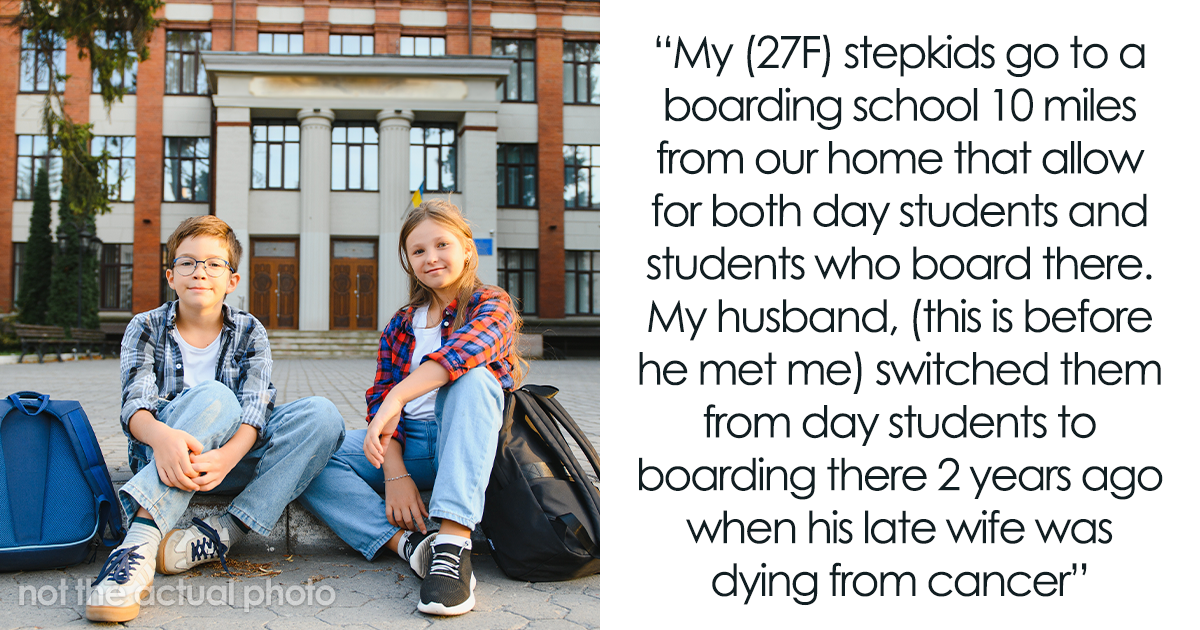
That is why one online family conflict has stirred such a strong reaction. A widowed father enrolled his son and daughter in a boarding school while their mother was dying from cancer. The school was only about 10 miles from the family home, but emotionally, it might as well have been another planet. At first, the children were angry. Later, they adapted. They built friendships. They bonded with dorm staff. They stopped complaining. And then, after their father remarried and his new wife became pregnant, the stepmom suggested pulling them out to save money and bring the family “together.”
The children were furious. In their eyes, they had already been pushed out once. Now that they had finally made the boarding school their home, the adults wanted to uproot them again. If family drama had a smoke alarm, this one would be screaming.
The Story: A Widowed Dad, Two Grieving Kids, And A Boarding School That Became Home
The central conflict is painful because no one starts from an easy place. The father lost his wife to cancer. The children lost their mother. The household lost its emotional center. During the worst period of illness and grief, the father moved the children from day students to boarding students at the same school. The decision may have been framed as temporary, but childhood does not pause while adults figure out their grief.
The children, reportedly 15 and 11, were old enough to understand loss, rejection, and sudden change. They were also young enough to need consistent care, emotional reassurance, and a sense that at least one part of their world would not collapse. Boarding school, despite being an institution, gave them structure. They had classmates, dorm routines, adults nearby, and predictable days. Over time, what once felt like exile began to feel like belonging.
Then came a new marriage, a new baby on the way, and a stepmom who believed the children should return home. Her reasons included family unity, saving money, and encouraging the children to bond with their new sibling. On paper, that may sound responsible. In real life, it sounded to the children like, “We sent you away when life got hard, but now that you are useful to our new family picture, come back and smile for the brochure.”
Why The Kids’ Anger Makes Emotional Sense
Children do not experience family decisions the same way adults explain them. Adults often say, “We did what we had to do.” Kids often hear, “You were too much.” Adults may call boarding school a temporary arrangement. Children may remember who tucked them in, who showed up on bad days, and who did not.
After losing their mother, these children were moved out of their daily home life. Even if the father was drowning in grief, the emotional message may have landed as abandonment. That word is heavy, but it fits the way children often process sudden separation from a surviving parent. They may understand the explanation years later, but the feeling arrives immediately: Dad could not keep us close when we needed him most.
Once they found comfort at school, the boarding environment became more than a campus. It became a replacement village. Their classmates became “quasi siblings.” Their dorm parent became a trusted adult. Their daily rhythm became predictable. When children survive chaos by attaching to a new safe place, taking that place away can feel like a second loss.
Boarding School: Punishment, Privilege, Or Safe Harbor?
Boarding school is not automatically good or bad. For some students, it offers academic opportunity, independence, mentorship, and a strong sense of community. For others, especially when the move happens during family crisis, it can feel like rejection wrapped in tuition.
In this story, the boarding school appears to have become a safe harbor. The children were not asking to escape home because they hated their family. They were defending the place where they finally felt steady. That distinction matters. A school can become “home” when home becomes unpredictable, emotionally unavailable, or centered around adults’ pain.
The stepmom saw the school as an expense and an obstacle to bonding. The kids saw it as the first stable ground they had found after losing their mother. Those are two completely different maps of the same territory. No wonder everyone got lost.
The Stepmom’s Mistake: Treating Family Bonding Like A Scheduling Problem
The stepmom’s desire for a united family is not automatically villainous. Many stepparents want closeness, respect, and shared routines. But closeness cannot be ordered like pizza. You cannot say, “One large family bond, extra obedience, hold the trauma.”
Her biggest mistake was assuming proximity would create trust. Moving the kids back into the house might put everyone under one roof, but it would not erase their grief, resentment, or sense of betrayal. In fact, forcing the move could deepen all three.
Children in blended families often need time to adjust to a new parental figure. They may be polite but distant. They may test boundaries. They may compare the stepparent to the deceased parent, not because they are cruel, but because loyalty and grief are tangled together. A stepparent who pushes too quickly can become the symbol of everything the child lost.
“Helping With The Baby” Is Not A Bonding Plan
One detail that bothered many readers was the stepmom’s suggestion that sibling bonding could come through helping care for the new baby. That may have been normal in her own upbringing, but it is risky logic here.
Older children can love a new sibling deeply. They can help occasionally, hold the baby, read stories, and become wonderful big siblings. But when children are already grieving and resentful, presenting baby care as a bonding tool can sound like unpaid labor with a greeting card attached.
The children did not ask for a new family structure. They did not choose their father’s remarriage. They did not choose the pregnancy. Asking them to sacrifice their school home so they can “bond” by helping with childcare may feel less like family unity and more like recruitment.
The Father’s Role: Grief Explains, But It Does Not Erase Harm
The father is not a cardboard villain. Watching a spouse die from cancer can break a person in ways outsiders cannot fully measure. He may have believed boarding school was the safest option while he was emotionally depleted. He may have trusted the school to provide what he could not provide at the time.
But here is the hard truth: a parent’s pain does not cancel a child’s pain. The father may have been grieving, but his children were grieving too. If they felt abandoned, that feeling deserves to be heard rather than corrected.
His second mistake was deferring “family matters” to his new wife in a situation that required him to lead with accountability. These are his children. Their mother died. He made the original boarding decision. He should be the one rebuilding trust, apologizing where needed, and asking what stability looks like for them now.
Instead, the children experienced a familiar pattern: adults deciding, children absorbing. First they were sent away. Then they were told to come back. Their feelings were treated as disrespect. That is not parenting; that is emotional furniture-moving.
Why The Children Called It Overstepping
From the children’s perspective, the stepmom entered the family after the deepest wound had already happened. She did not live through their mother’s illness as their mother. She did not carry the memory of their home before grief rearranged it. She may be married to their father, but she has not automatically earned authority over the most sensitive parts of their lives.
That is why they called her decision overstepping. They likely did not object only to the move. They objected to the source of the move. A decision that already hurt became worse because it appeared to come from someone they did not fully trust.
In blended families, authority without relationship often backfires. A stepparent can help set household expectations, but emotional trust must be earned slowly. When a stepparent starts with major life decisions before building connection, children may feel controlled rather than cared for.
What The Adults Should Have Done Instead
1. Start With Listening, Not Logistics
Before contacting school administration, the father and stepmom should have asked the children what the boarding school means to them. Not as a fake consultation before an already-made decision, but as a real conversation. Questions like “What feels safe there?” and “What scares you about coming home?” would have revealed far more than a tuition spreadsheet.
2. Separate Money From Emotional Repair
If the family can afford the school, money should not be the headline issue while the children are still processing grief and abandonment. Financial responsibility matters, but using frugality to justify emotional upheaval makes the children feel like budget cuts with backpacks.
3. Build A Gradual Transition
If returning home truly becomes necessary, it should be gradual. Weekends at home, family therapy, school counseling, shared meals, and private time with Dad could help. A sudden removal from boarding school would likely confirm the children’s fear that adults can yank stability away whenever convenient.
4. Let The Father Repair His Relationship First
The father needs one-on-one time with each child. No stepmom managing the conversation. No baby-related agenda. No lecture about respect. Just honesty: “I know my decision hurt you. I was grieving, but I should have talked to you more. I want to understand what you need now.” That kind of sentence can do more than a dozen forced family dinners.
5. Redefine The Stepmom’s Role
The stepmom should not try to replace their mother or compete with the school community. Her best move is humility. She can say, “I want a relationship with you, but I understand I have not earned your trust yet.” That is not weakness. That is emotional intelligence wearing sensible shoes.
The Bigger Issue: Children Need Stability After Loss
After a parent dies, children need more than food, school, and a roof. They need emotional continuity. They need adults who tell the truth in age-appropriate ways. They need rituals, memories, reassurance, and permission to miss the parent who died. Most of all, they need to know they are not being replaced by a new spouse, a new baby, or a new family plan.
When a surviving parent remarries, children may feel pressured to move on faster than they are ready. Adults may say, “Your mom would want us to be happy.” That may be true, but it does not give children a shortcut through grief. A new baby can bring joy, but also fear: Will Dad love the new child more? Will the stepmom only care about her own baby? Will our mother’s memory become inconvenient?
In this case, the children’s refusal is not simple teenage rebellion. It is a protest against being moved around emotionally and physically without consent. They are saying, in the loudest way they know: “You do not get to call a place temporary after we made it our shelter.”
Specific Examples Of What Healthy Repair Could Look Like
Imagine a better version of the conversation. The father visits the school and takes both children to lunch. He says, “I thought boarding would help while your mom was sick and after she died. I now understand it may have felt like I sent you away. I am sorry.” Then he stops talking. No defense. No “but I was grieving.” No “you should understand.” Just space.
The children might be angry. They might cry. They might say the school feels more like home than his house. That would hurt, but it would also be honest. Repair starts when adults can survive hearing the truth.
Then the stepmom could have her own separate conversation later. She might say, “I was wrong to push for a big decision before understanding what this school means to you. I want us to know each other, but I do not want to take away a place where you feel safe.” That would not magically fix everything, but it would stop the bleeding.
Finally, the family could create a plan that respects both belonging and connection. The children remain boarding students for the school year. They spend selected weekends at home, with no babysitting expectations. The father attends counseling with them. The stepmom joins only when the children are ready. The new baby is introduced as a sibling, not as a family assignment.
Why Readers Reacted So Strongly
Many people saw the stepmom’s request as selfish because the timing looked suspicious. The children had been away for two years, but the urgency to bring them home appeared after pregnancy. That made readers wonder whether “family bonding” really meant “extra help.” Even if that was not her intention, optics matter. In family conflict, timing can speak louder than explanations.
Readers also reacted strongly because the children’s pain was easy to understand. Losing a mother, being sent away, adjusting to a school community, and then being pulled out again is a lot for any child. Adults sometimes underestimate how hard it is for kids to start over socially. New hallways, new routines, new expectations, new family dynamicseach change takes energy.
The internet may be dramatic, but in this case, the outrage points to a real principle: children are not accessories in adult reinvention stories. They are people with attachments, histories, and emotional claims to the places that helped them survive.
Experience-Based Reflections: When Children Make A New Home After Being Pushed Away
Many people who have experienced family disruption understand why the boarding school became home. A “home” is not only a building where your legal guardian lives. It is the place where your nervous system finally exhales. It is where someone notices you skipped breakfast, where your friends save you a seat, where an adult knocks gently instead of barging into your pain with a plan.
Children who feel emotionally displaced often become experts at reading rooms. They notice who is annoyed by their sadness. They notice who talks about them instead of to them. They notice when adults make decisions in the kitchen and announce them in the living room like royal decrees. Over time, they stop arguing because arguing has not worked. Adults may mistake that silence for acceptance, but often it is self-protection.
That is why the children’s delayed attachment to boarding school matters so much. At first, they hated it. That makes sense. They had lost their mother and then lost their normal home life. But later, the school gave them a rhythm. Wake up, class, lunch, homework, sports or clubs, dorm check-in, lights out. Routine can be medicine when grief makes everything feel wild. Friends become witnesses. Dorm parents become steady adults. Teachers become people who ask, “Are you okay?” and actually wait for the answer.
For a child, building that kind of safety takes courage. It means risking connection after a major loss. It means deciding, slowly, that not everyone leaves and not every place disappears. So when a stepmom says, “Come home now,” she may think she is offering family. The children may hear, “The life you rebuilt does not count.”
In real blended families, the healthiest stepparents often begin as supportive adults, not instant parents. They show up. They remember small details. They do not demand affection as proof of respect. They understand that a child can love a deceased mother and still eventually care for a stepmother, but not if the stepmother treats the mother’s memory like an obstacle.
One practical experience many families discover is that shared time works best when it is low-pressure. A teenager who refuses a “family bonding night” may happily accept a ride to buy school supplies. An 11-year-old who rolls her eyes at emotional talks may open up while baking cookies or walking the dog. Trust often enters through side doors.
Another lesson: children should not be made responsible for adult healing. The widowed father may want a united household because it comforts him. The pregnant stepmom may want the older kids nearby because it reassures her that the family is real. But the children are not emotional glue. They are not proof that the remarriage is successful. They are not built-in babysitters, grief therapists, or symbols of closure.
If this family wants a real future, the adults must stop treating stability as something they can remove and reinstall. The children need their father to say, “I see why this school matters.” They need the stepmom to say, “I moved too fast.” They need the new baby to arrive without becoming the reason their lives are rearranged again.
The most powerful repair may be simple: let the boarding school remain their safe base while the home becomes safer. Let them visit without pressure. Let them leave without guilt. Let them decide, over time, whether home can be home again. Because once children have been ditched, even unintentionally, they do not trust promises quickly. They trust patterns. And the pattern must change before the address does.
Conclusion: Home Is Earned Through Safety, Not Demanded Through Authority
This story is not just about boarding school, stepmothers, or tuition. It is about what happens when adults make survival decisions during grief and then expect children to rearrange their hearts on command. The father may have made the original choice out of despair. The stepmom may believe she is trying to create unity. But the children are the ones who had to live with the consequences.
Their anger is not disrespect for the sake of drama. It is a boundary. It is grief with a backbone. They found a place that held them when their family could not. Before anyone tries to take that away, the adults owe them patience, honesty, apology, and choice.
A house becomes a home when children feel wanted, protected, and heard. Until then, the boarding school is not the problem. It may be the only place that got the assignment right.