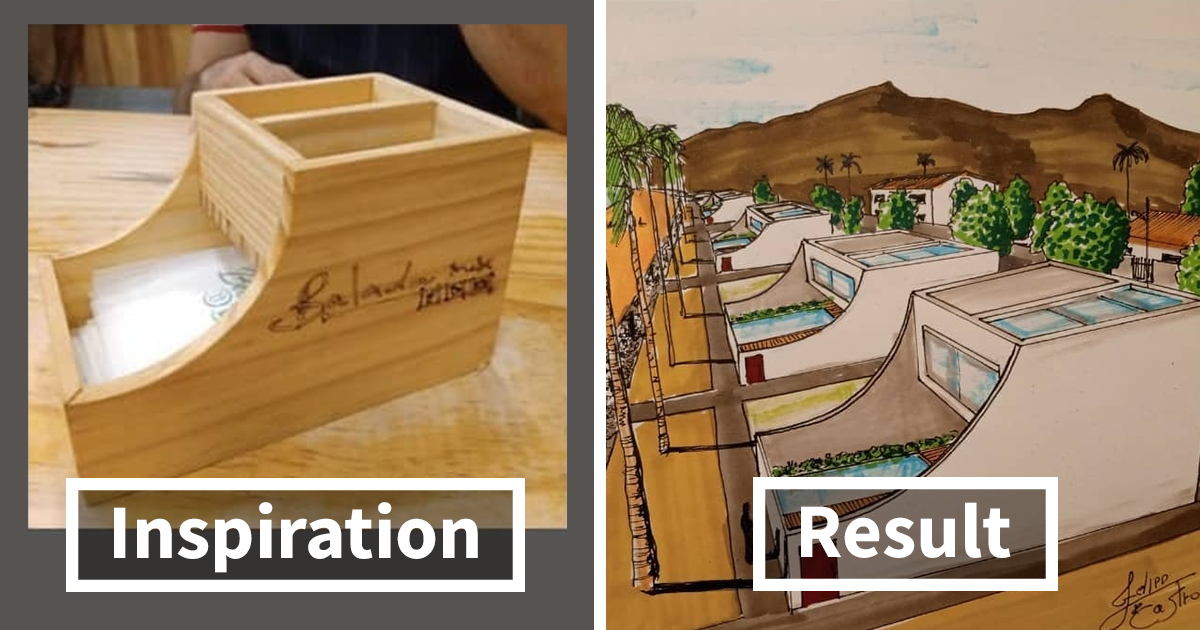
Great architecture does not always begin with a sacred geometry diagram, a graduate-school manifesto, or a dramatic sketch made beside an espresso machine at 2 a.m. Sometimes it begins with a basket, a shoe, a book spine, a sail, a flower, a fish, or even a USB drive sitting on a desk and quietly minding its own business.
That is the charm of architectural ideas inspired by simple everyday objects: they remind us that design is not locked inside museums or elite studios. It is hiding in kitchens, closets, garages, classrooms, garden sheds, and junk drawers. The ordinary object becomes extraordinary when an architect studies its shape, structure, symbolism, and emotional pull. A building does not need to literally look like a giant toaster to be memorablealthough, let’s be honest, someone somewhere has probably tried.
From real-world landmarks such as Ohio’s basket-shaped Longaberger Building and Missouri’s giant Community Bookshelf to imaginative concepts by artists who transform common items into futuristic towers, object-inspired architecture shows how playful thinking can lead to serious design. Below are 30 impressive architectural ideas drawn from everyday objects, with practical analysis of why each concept works, what it communicates, and how it could influence real buildings.
Why Everyday Objects Make Powerful Architectural Inspiration
Everyday objects are familiar. That familiarity gives architects a shortcut into human memory. A person may forget a generic glass office tower five minutes after passing it, but a building shaped like a picnic basket, a shoe, or a row of giant books tends to stick in the brain like a catchy chorus. This is why mimetic architecture, novelty architecture, and object-inspired design continue to attract attention in cities around the world.
The best examples do more than copy an object at a larger scale. They translate function into form. A library that looks like books makes instant sense. A fisheries office shaped like a fish may be humorous, but the branding is impossible to miss. A museum with moving wings suggests motion, lightness, and spectacle. The everyday object becomes a visual metaphor, a marketing tool, and sometimes a technical challenge all at once.
30 Impressive Architectural Ideas Inspired By Everyday Objects
1. The Basket Building Concept
A basket-inspired building works because the form already suggests storage, gathering, and craft. The Longaberger Basket Building in Newark, Ohio, proved that a simple market basket could become a full-scale corporate headquarters. Its woven facade, handles, and oversized proportions turned a product into architecture with unforgettable brand identity.
2. The Giant Bookshelf Library
Books are among the most natural objects to transform into architecture. Kansas City Public Library’s Community Bookshelf uses huge book spines on a parking garage facade, creating a public-facing design that feels witty and educational. The idea works especially well for libraries, schools, bookstores, and cultural centers because the object directly matches the building’s purpose.
3. The Shoe-Shaped House
A shoe may sound like a silly source for residential design, but the Haines Shoe House in Pennsylvania shows how promotional architecture can become beloved. The form is playful, easy to recognize, and oddly cozy. A shoe-shaped home also teaches a serious lesson: unusual design can create emotional attachment when it feels approachable rather than arrogant.
4. The Sail-Inspired Tower
Sails suggest wind, travel, luxury, and coastal identity. Buildings inspired by sails often feel elegant because their curves imply motion even when the structure is completely still. This idea appears in famous waterfront architecture, where a sail-like silhouette can turn a skyline into a postcard.
5. The Lotus Flower Temple
The lotus is not an ordinary household object, but it is an everyday symbol in many cultures. The Lotus Temple in New Delhi uses petal-like forms to create a building that feels peaceful, open, and spiritual. Flower-inspired architecture succeeds when it captures growth and symmetry without becoming decorative frosting.
6. The Fish-Shaped Office
A fish-inspired building is almost too obvious for a fisheries organization, which is exactly why it works. The National Fisheries Development Board building in Hyderabad is shaped like a fish and uses the object as both identity and landmark. It turns a government office into a conversation starter, which is not easy. Government paperwork rarely says, “Take my picture.”
7. The Binoculars Entrance
Binoculars symbolize seeing, searching, and creative observation. Frank Gehry’s Venice, California building with Claes Oldenburg and Coosje van Bruggen’s giant binoculars shows how an everyday optical device can become an entrance. It is not just decoration; it turns arrival into performance.
8. The Duck-Shaped Roadside Shop
The Big Duck on Long Island is one of the classic examples of mimetic architecture. It was built to sell ducks and duck eggs, so the shape was basically the world’s most literal business card. Its power comes from perfect clarity: no one drives past wondering what the building is trying to say.
9. The Piano And Violin Performing Arts Center
A music school or concert hall inspired by a piano and violin immediately communicates sound, rhythm, and discipline. Piano keys can become window patterns. A violin curve can guide rooflines. This idea is especially strong for performing arts buildings because the form can echo the emotional movement of music.
10. The USB Drive Tech Hub
A USB-inspired building would be a smart concept for a technology campus, data center, or innovation lab. Its rectangular body, metal connector, and compact profile translate well into modular architecture. The message is simple: connection, storage, speed, and digital culture.
11. The Camera Lens Museum
A camera lens offers rich architectural possibilities. Circular glass facades can mimic aperture blades, while layered rings can shape galleries or observation decks. For a photography museum, film school, or media headquarters, the lens becomes both structure and symbol.
12. The Coffee Cup Cafe
A coffee cup is warm, social, and instantly readable. A cafe inspired by a cup could use a rounded body, handle-like entry canopy, and steam-shaped roof elements. Done well, it would feel inviting rather than cartoonish. Done badly, it might look like a drive-through mascot having an identity crisis.
13. The Umbrella Transit Shelter
An umbrella-inspired structure makes practical sense because it already represents protection. A bus station, outdoor market, or pedestrian pavilion could use umbrella-like canopies to create shade and shelter. The object’s function and the building’s function align beautifully.
14. The Honeycomb Housing Block
Honeycomb patterns are familiar from beehives, packaging, and design objects. Architecturally, hexagons are efficient, strong, and visually dynamic. A honeycomb apartment block could use repeated modules to balance density with individuality, giving residents private cells within a larger community structure.
15. The Lantern Cultural Center
A lantern suggests light, gathering, memory, and celebration. A lantern-inspired cultural center could glow at night through perforated screens, translucent walls, or warm interior courtyards. The idea is powerful because the building becomes a beacon without shouting.
16. The Shell Concert Hall
Shells inspire curved roofs, acoustic chambers, and layered surfaces. The idea is especially suitable for concert halls because shells naturally suggest sound resonance. A shell-like structure can feel organic, coastal, and refined while also offering opportunities for strong engineering.
17. The Suitcase Hotel
A suitcase-inspired hotel would speak directly to travel. Stacked luggage forms could create room blocks, while handle-like bridges could connect wings. The concept is humorous but relevant, making it ideal for airport hotels or boutique lodgings aimed at design-loving guests.
18. The Clock Tower Reimagined
Clock-inspired architecture can move beyond traditional towers. A modern building could use circular atriums, rotating sunshades, or facade patterns based on gears. The result would symbolize time, routine, and civic rhythm, especially for train stations, city halls, or public plazas.
19. The Teapot Tea House
Teapot architecture has a long history in roadside novelty design. The shape fits tea houses, garden cafes, and small cultural venues. A spout can become a canopy, the handle can frame a terrace, and the round body can create intimate interior seating.
20. The Pencil School
A pencil-inspired school building is simple, cheerful, and meaningful. Long linear wings can resemble pencils, while colored tips can mark entrances. The symbolism is wonderfully direct: learning begins with making marks, asking questions, and occasionally chewing the eraser during math class.
21. The Paperclip Office
A paperclip is a tiny object with architectural intelligence. It joins, loops, and holds things together. A paperclip-inspired office could use continuous metal ribbons as balconies, circulation paths, or structural frames, turning a desk object into a symbol of collaboration.
22. The Birdcage Pavilion
A birdcage-inspired pavilion can explore transparency, enclosure, and freedom. Thin vertical ribs could create shade while preserving views. For gardens, parks, and aviaries, the form can be delicate and poetic without becoming heavy-handed.
23. The Bottle-Shaped Visitor Center
Bottle-shaped buildings have long been used for roadside advertising, but the idea can be updated for wineries, breweries, recycling centers, or water education museums. A glass bottle form can symbolize containment, craft, and sustainability, especially when paired with recycled materials.
24. The Chair-Inspired Public Plaza
A chair is about rest, posture, and human scale. A plaza inspired by chairs could use oversized seat-like terraces, backrest walls, and shaded armrest structures. Instead of copying one giant chair, the design could turn the idea of sitting into an entire landscape.
25. The Key-Shaped Security Center
A key-inspired building suits a locksmith headquarters, cybersecurity firm, or archive. The key’s shaft can become a circulation spine, while the circular bow can create a lobby or atrium. The symbolism is clear: access, protection, and trust.
26. The Sewing Machine Creative Studio
A sewing machine suggests craft, precision, and production. Its curves, wheel, needle, and platform could inspire a fashion school or textile museum. The building could use exposed structural lines like stitching, reminding visitors that architecture and clothing both depend on pattern, material, and fit.
27. The Pineapple Pavilion
The pineapple has long been associated with welcome and hospitality. A pineapple-inspired pavilion can use textured cladding, crown-like roof elements, and warm gathering spaces. It is a natural fit for resorts, botanical gardens, and tropical visitor centers.
28. The Smartphone Innovation Center
A smartphone-inspired building might sound too obvious, but its design logic is useful. Smooth edges, layered screens, responsive facades, and app-like interior zones can support a tech campus. The trick is to borrow the object’s behavior, not merely build a giant black rectangle.
29. The Fork And Spoon Food Hall
Forks and spoons are everyday dining icons. A food hall could use spoon-shaped skylights, fork-like columns, or cutlery-inspired signage. The theme would be instantly understandable while still allowing for sophisticated interiors.
30. The Origami Paper Museum
Folded paper is one of the richest sources of architectural inspiration. Origami suggests structure, transformation, and elegance. A museum inspired by folded paper could use angular roofs, pleated walls, and flexible galleries that feel light yet structurally expressive.
What These Ideas Teach About Better Building Design
The strongest object-inspired buildings share three traits. First, the object has meaning. A basket for a basket company, books for a library, and wings for a museum all make sense before the viewer reads a sign. Second, the design adapts the object rather than simply inflating it. A literal copy can be funny, but an intelligent translation can be timeless. Third, the building improves the experience of the people who use it.
This is where many novelty buildings succeed or fail. A building shaped like a fish may attract attention, but it still needs circulation, daylight, comfort, maintenance, and safety. A flower-shaped temple may look beautiful, but it must also create a calm interior. Architecture is not a costume party for concrete. The object is only the starting point; the building must still do its job.
Real-Life Experiences With Object-Inspired Architecture
There is something delightfully human about encountering a building inspired by an everyday object. The first reaction is usually not academic. Nobody stands in front of a basket-shaped building and says, “Ah, yes, a rigorous critique of postmodern commercial symbolism.” Most people say, “Waitis that a giant basket?” Then they pull out their phone.
That instant emotional response is valuable. Architecture can sometimes feel distant, expensive, and overly serious. Object-inspired buildings break the ice. They invite people who may not normally care about architecture to look twice, laugh, ask questions, and remember the place. In an age when cities compete for attention, that kind of public curiosity is powerful.
Imagine walking through a downtown district and turning a corner to see a parking garage disguised as a shelf of enormous books. Suddenly, an ordinary structure becomes part of the city’s personality. The same happens when a cafe uses a coffee cup concept tastefully, or when a children’s museum borrows forms from toys, pencils, blocks, and storybooks. The architecture becomes friendly. It says, “You already understand me.”
For designers, the experience is also educational. Studying everyday objects trains the eye to notice proportion, texture, balance, and hidden engineering. A paperclip is not just a bent wire; it is a lesson in tension and continuity. A seashell is not just beach decoration; it is a study in growth, curvature, and acoustic possibility. A suitcase is not just luggage; it is a compact system for organizing movement. When architects learn from ordinary things, they practice seeing the extraordinary inside the familiar.
Of course, there is a risk. Object-inspired architecture can become gimmicky if it stops at appearance. A giant shoe with poor ventilation is still a sweaty idea. A duck-shaped shop with confusing access is more punchline than architecture. The best projects combine humor with usability. They make people smile, then reward them with good space, smart materials, and thoughtful details.
For homeowners, students, bloggers, and design lovers, the lesson is wonderfully practical: inspiration is everywhere. Look at your desk, your kitchen, your closet, or your backpack. The next great building concept might be hiding in a lamp, a mug, a zipper, a lunchbox, or a pair of headphones. Architecture begins when someone asks, “What if this tiny familiar thing became a place people could enter?” That question is simple, but it can open the door to remarkable design.
Conclusion
Architectural ideas inspired by simple everyday objects prove that creativity does not need to be mysterious. The ordinary world is packed with forms that already carry meaning: baskets hold, books teach, sails move, shoes travel, keys protect, umbrellas shelter, and lanterns guide. When architects reinterpret these objects with intelligence and restraint, they can create buildings that are memorable, functional, and emotionally engaging.
The most impressive examples are not impressive because they are strange. They are impressive because they transform recognition into experience. A visitor sees the object, understands the reference, and then discovers how the building expands that idea into space, light, structure, and story. That is the real magic of object-inspired architecture: it turns the familiar into a destination.