For years, dark espresso floors strutted through American homes like they owned the place. Then came the gray-wash era, when every plank seemed to be auditioning for a storm cloud. Now, wood floors are lightening upand the shift feels less like a trend sprint and more like a collective exhale.
Light wood floors are showing up in new builds, remodels, real estate staging, kitchen renovations, and design mood boards for a reason: they make rooms feel brighter, cleaner, calmer, and easier to decorate. But the new wave of light hardwood flooring is not the icy, bleached-out look of a decade ago. It is warmer, more natural, more textured, and more forgiving. Think natural white oak, soft beige oak, pale maple, light ash, muted honey, sand, wheat, and “just-sanded” finishes that show off the grain instead of covering it like frosting on a cake.
The result is a floor that feels modern without being cold, classic without being boring, and bright without making your living room look like a dentist’s office. If you are planning a remodel, building a home, or simply wondering why every beautiful room online seems to have pale oak underfoot, here is what the light wood floor movement is really about.
Why Wood Floors Are Lightening Up
Homeowners Want Brighter, More Livable Spaces
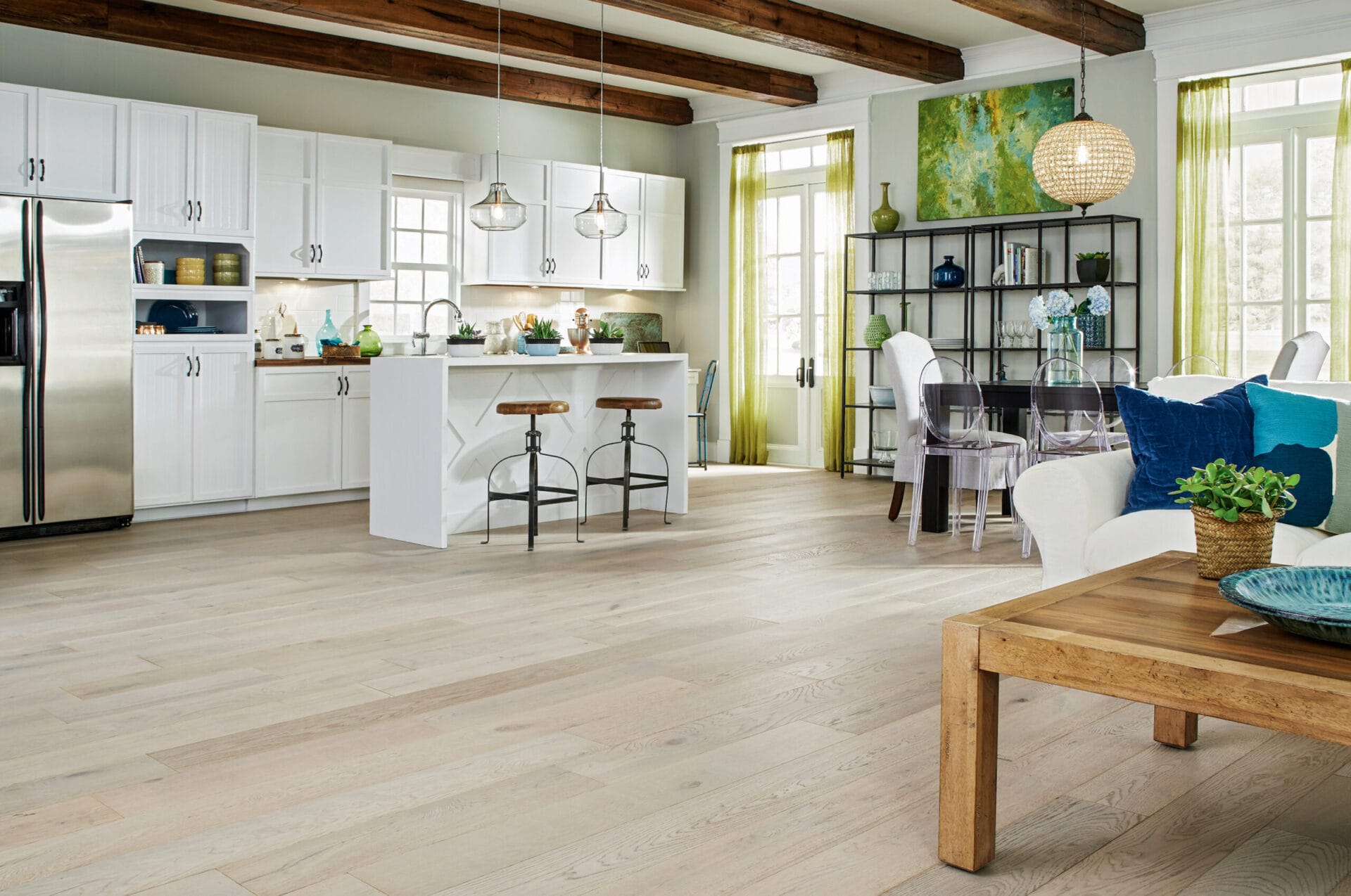
Light wood floors bounce natural light around a room, which makes them especially useful in smaller homes, apartments, townhouses, and older houses with limited window space. A pale oak floor can make a narrow hallway feel less like a tunnel and more like a design choice. In open-concept homes, lighter planks help connect the kitchen, dining area, and living room without creating heavy visual breaks.
That brightness is not only about looks. After years of moody interiors, many homeowners are craving spaces that feel restorative. Light wood flooring pairs beautifully with soft whites, warm neutrals, sage green, clay, linen, rattan, wool, brass, black accents, and natural stone. In other words, it plays well with almost every interior style that refuses to be dramatic before coffee.
The Gray Floor Era Is Fading
Cool gray wood floors had a long moment, especially in the 2010s and early 2020s. They looked sleek in photos, worked with modern farmhouse palettes, and helped homeowners escape the orange-heavy oak finishes of the past. But design preferences have warmed up. Today, many people want wood that looks like wood againnot driftwood that got lost in a parking garage.
That does not mean every gray plank is suddenly forbidden. Soft greige and taupe undertones can still work well, especially when balanced with warm walls and natural textures. The key difference is that newer light wood floors lean natural, creamy, sandy, and honeyed rather than blue-gray or chalky.
Natural Materials Are Taking Center Stage
One of the strongest design shifts in recent years is the move toward honest materials. Homeowners want texture, grain, knots, subtle variation, and finishes that look touchable. Light wood floors support that direction because they let the material speak. A clear matte finish on white oak, for example, can highlight the grain pattern without shouting, “Look at me, I was stained in 2008!”
Matte and satin finishes are also a major part of the lighter-floor movement. Instead of glossy coatings that reflect every footprint, low-sheen finishes create a soft, natural look. They are also more forgiving in busy homes because they do not spotlight every tiny scuff, crumb, and sock-slide incident.
What “Light Wood Floors” Really Mean Now
Light wood flooring is not one single color. It is a family of finishes that range from pale blonde to warm beige to soft honey. The best versions have enough warmth to feel welcoming and enough restraint to stay timeless.
Natural White Oak
White oak is the celebrity of light wood flooring, but unlike many celebrities, it has actually earned its popularity. It has a versatile grain, a light brown base, and a natural ability to take stains and sealers beautifully. Rift-sawn and quarter-sawn white oak can look especially refined because the grain appears cleaner and more linear. Plain-sawn white oak has more movement and character, which can be perfect for casual, cozy homes.
Natural white oak works in modern, transitional, coastal, Scandinavian, organic modern, and even traditional interiors. It is the flooring equivalent of a white button-down shirt: simple, flexible, and surprisingly hard to mess up.
Maple, Ash, and Birch
Maple, ash, and birch can also create a light and airy look. Maple tends to be smoother and more subtle, which makes it great for minimalist interiors. Ash often has a distinct grain pattern and a pale, clean tone. Birch can offer soft variation and a relaxed feel. These species may not have the same market dominance as oak, but they are worth considering if you want a lighter look with a slightly different personality.
Light Hickory
Hickory is more dramatic than white oak, with strong color variation and bold grain. In a light finish, it can look rustic, energetic, and full of character. This is a good choice for homeowners who like natural variation and do not want a floor that looks too uniform. If white oak is a calm playlist, hickory is live music in the kitchen.
Engineered Light Wood Flooring
Engineered hardwood has become a serious contender, not just a compromise. It uses a real wood veneer over a stable core, which can make it a smart option for concrete slabs, basements, condos, and regions with humidity swings. Wide-plank engineered hardwood is especially popular because it creates a seamless, upscale look while offering more dimensional stability than many solid wood options.
The important detail is veneer thickness. If you want the ability to refinish the floor later, choose an engineered product with a substantial wear layer. A beautiful light floor is great; a beautiful light floor that can survive life, pets, children, parties, and rolling office chairs is better.
The Best Finishes for Lighter Wood Floors
Clear Matte and Satin Finishes
Clear finishes are a top choice for homeowners who want the natural color of the wood to remain visible. A matte clear coat can create that “freshly sanded” appearance designers love. Satin adds a slight glow without becoming shiny. Both options work well when you want the floor to look relaxed, current, and easy to live with.
Natural Sealers
Natural sealers help reduce the raw, unfinished look while keeping the floor light. They can soften yellow or orange undertones and preserve a balanced pale tone. This is especially useful with oak, which can shift in color depending on the finish. A good natural sealer should make the floor look intentional, not washed out.
Whitewash and Bleached Looks
Whitewashed and bleached floors can be beautiful, but they require restraint. Too much white pigment can make wood look artificial, and heavy bleaching may not age as gracefully as a natural finish. The more current approach is subtle: a hint of softness, not a floor that looks like it got caught in a snowstorm.
Wire-Brushed and Lightly Textured Surfaces
Texture is another reason light floors are gaining traction. Wire-brushed finishes remove some of the softer wood grain, leaving a subtle texture that hides small scratches and daily wear. This is helpful in homes with pets, kids, and humans who occasionally forget that furniture is supposed to be lifted, not dragged like a treasure chest.
Where Light Wood Floors Work Best
Small Rooms and Dark Interiors
If a room lacks natural light, lighter floors can help it feel more open. Pair them with warm white walls, simple window treatments, and mirrors to maximize brightness. Avoid pairing very pale floors with cold gray walls unless you want the space to feel chilly.
Open-Concept Layouts
Light wood flooring works beautifully in open layouts because it creates continuity. A consistent floor from the entry to the kitchen to the living room can make the entire home feel larger and more cohesive. Wide planks enhance this effect by reducing visual seams.
Kitchens
Light wood floors are especially strong in kitchens with white, cream, green, blue, walnut, or natural wood cabinets. They soften stone countertops, warm up stainless steel appliances, and keep the room from feeling too heavy. If you cook often, choose a durable finish and use mats in splash-prone zones, especially near the sink and dishwasher.
Bedrooms
In bedrooms, light floors create a calm foundation. Add layered rugs, linen bedding, warm lamps, and textured curtains, and the room instantly feels more peaceful. It is the design version of lowering your shoulders after a long day.
How to Decorate Around Light Wood Floors
Add Contrast
Light floors need contrast so the room does not feel flat. Black lighting, bronze hardware, walnut furniture, dark picture frames, charcoal upholstery, or deep green cabinets can anchor the space. The goal is balance: bright foundation, grounded details.
Use Warm Neutrals
Instead of stark white everywhere, try cream, ivory, parchment, oatmeal, mushroom, warm gray, or soft taupe. These colors keep the room bright while adding depth. Light floors love warm neutrals the way pancakes love syrup: naturally, happily, and without needing a meeting about it.
Layer Rugs Strategically
Area rugs help define spaces, protect high-traffic zones, and add softness. In a living room, choose a rug large enough for at least the front legs of the furniture to sit on it. In bedrooms, place the rug so it extends beyond the sides and foot of the bed. Natural fiber rugs, vintage-style patterns, and wool blends all work well with pale wood.
Mix Wood Tones
You do not need every wood item to match the floor. In fact, matching everything can look stiff. Pair light floors with medium walnut, warm oak, painted furniture, black accents, or even darker antique pieces. The trick is to repeat each tone at least twice so it looks intentional.
Pros and Cons of Light Wood Floors
Pros
Light wood floors make rooms feel bigger, brighter, and more relaxed. They pair with many design styles, photograph well, and can improve the perceived freshness of a home. They also tend to hide light dust better than dark floors, which is excellent news for anyone who has ever watched pet hair drift across espresso hardwood like tumbleweed in a Western film.
Cons
Very pale floors can show dark debris, shoe marks, and stains more easily. Some light finishes may yellow over time if the wrong product is used. Cheap whitewashed flooring can look dated quickly, and overly uniform faux-wood products may lack the depth of real hardwood. Also, light floors need thoughtful decorating; without contrast, a room can feel washed out.
Refinishing Existing Wood Floors to Go Lighter
If you already have wood floors, refinishing may be better than replacing. Sanding can remove old stain, worn finish, surface scratches, and dated orange or reddish tones. Once the floor is back to raw wood, a professional can test sealers and finishes to achieve a lighter, more natural look.
However, not every floor can go pale. Red oak often has pink undertones that can be tricky to neutralize. Older floors may have deep stains, pet damage, or thin wear layers. Engineered floors may only be refinishable if the veneer is thick enough. Before committing, ask for sample patches in the actual room. Light changes everything, and what looks perfect in a showroom may look completely different beside your kitchen cabinets at 4 p.m.
How to Maintain Light Wood Floors
Maintenance is simple, but it matters. Sweep or vacuum regularly using a bare-floor setting. Wipe spills quickly with a dry or slightly damp cloth. Use cleaners recommended for your floor’s finish. Avoid steam mops, soaking wet mops, harsh chemicals, and mystery “miracle shine” products that promise to fix everything except your inbox.
Place mats at exterior doors to catch grit, use felt pads under furniture, and trim pet nails when needed. In sunny rooms, use window treatments or UV-protective film to reduce uneven fading. Light wood floors are durable, but they are still wood. Treat them like a beautiful natural material, not a waterproof sidewalk.
Experience Notes: What Light Wood Floors Feel Like in Real Homes
One of the biggest surprises with light wood floors is how much they change the mood of a home before you even bring in furniture. In a small living room, a natural oak floor can make the walls seem farther apart. The room feels less crowded, even if the sofa is the same sofa and the coffee table still has three remote controls on it for reasons nobody fully understands.
In kitchens, light floors have a way of softening hard surfaces. White cabinets can look crisp instead of sterile. Dark green cabinets feel rich but not heavy. Black hardware stands out without dominating the room. If the kitchen has marble-look quartz or natural stone, pale wood adds warmth so the space does not feel like a showroom where nobody is allowed to make toast.
Another real-life advantage is flexibility. Homeowners often change wall colors, rugs, chairs, bedding, and cabinet hardware long before they change floors. A light wood base can survive those style changes better than a highly specific stain. For example, a warm white oak floor can support coastal decor in summer, cozy wool and leather in winter, and a full “I bought too many plants” phase at any time of year.
Light floors also teach you about lighting. In morning sun, they can look creamy and fresh. Under warm evening lamps, they may lean honey or beige. Under cool LED bulbs, they can look flatter or slightly gray. That is why lighting tests are so important. A floor sample should be viewed in the actual home, at different times of day, beside cabinets, trim, and wall paint. The sample board deserves a full audition, not a two-minute cameo near the front door.
For families with pets, light wood floors can be both forgiving and honest. They usually hide pale fur and dust better than dark floors, but muddy paw prints still make their grand entrance. A matte or wire-brushed finish helps because it disguises small marks. Rugs in entryways and runners in hallways can protect the busiest paths. The goal is not to keep the floor perfect forever; the goal is to let it age gracefully without looking neglected.
In older homes, lightening the floors can completely change the architecture. Dark floors may make original trim, built-ins, and doors feel heavy. A lighter floor can reveal details that were visually buried. In newer homes, pale wood adds warmth to clean lines and open spaces. It prevents minimalism from feeling too sharp. Basically, light wood floors are the friend who brings snacks to the design party: practical, welcome, and quietly responsible for everyone having a better time.
Conclusion: Lighter Wood Floors Are Bright, Natural, and Built to Last
Wood floors are lightening up because homeowners want spaces that feel open, warm, natural, and easy to live in. The strongest looks today are not cold gray, high-gloss, or heavily bleached. They are soft, matte, lightly textured, and rooted in the natural beauty of the wood itself.
Whether you choose natural white oak, pale maple, light hickory, or wide-plank engineered hardwood, the best light wood floor should support your lifestyle as much as your style. Test samples, study undertones, think about maintenance, and choose a finish that works with real life. A beautiful floor should not require everyone in the house to hover three inches above it.
Note: This article is written in original wording for web publication and is based on current U.S. flooring, interior design, maintenance, and remodeling guidance.