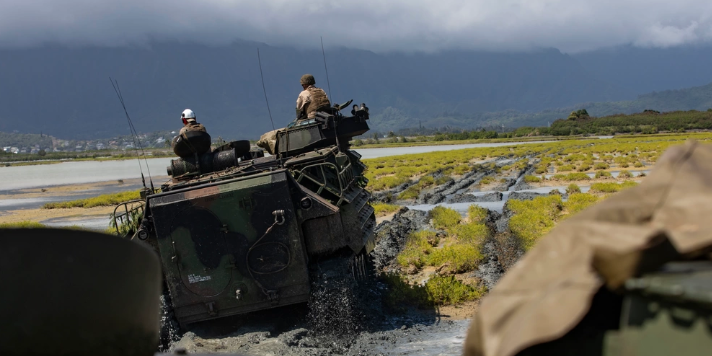
When most people picture military personnel at work, they imagine fighter jets, camouflage, field exercises, and enough acronyms to melt a keyboard. What they usually do not imagine is a wildlife biologist checking sea turtle nests at sunrise, a game warden tracking endangered birds near a training range, or an environmental manager making sure a launch site does not become a disaster movie for local habitat.
And yet, that is exactly what happens on military lands across the United States. On bases, ranges, shorelines, and islands managed by the Department of Defense, military personnel and civilian specialists work together to protect some of the nation’s most vulnerable species. It is one of the least flashy jobs connected to national defense, which is probably why it deserves a brighter spotlight. No medals made of acorns yet, but honestly, there should be.
The reality is simple: many military installations preserve large blocks of undeveloped land that have disappeared elsewhere under highways, subdivisions, strip malls, and parking lots the size of emotional damage. Because those lands remain relatively protected from private development, they have become crucial habitat for threatened and endangered animals and plants. That puts service members, environmental teams, and natural resource professionals in an unusual but important position. They are not only preparing for missions. In many places, they are also helping species survive long enough to have a future.
Why endangered animals end up on military land
Military land is not protected in the same way as a national park, but it often remains undeveloped for one very practical reason: you cannot exactly build a luxury subdivision next to artillery training and call it peaceful. That restriction has had an accidental environmental upside. Across the country, military lands include forests, wetlands, beaches, deserts, rivers, and island ecosystems that now function as refuges for rare wildlife.
That does not mean conservation happens by accident. Federal law and formal partnerships require planning, monitoring, and habitat management. The work is guided by environmental programs, species protections, and coordinated efforts with agencies such as the U.S. Fish and Wildlife Service and NOAA. In other words, this is not a case of a random lieutenant seeing a turtle and saying, “Guess we live here now.” It is organized conservation backed by science, regulation, and long-term land stewardship.
The balancing act is the fascinating part. Military leaders still need troops to train, aircraft to fly, vehicles to maneuver, and launch operations to proceed. Conservation staff, meanwhile, need nesting seasons respected, invasive species controlled, and habitat restored. The best installations do not treat those goals as enemies. They build systems that let both happen at once.
The people behind the work
So who are these wildlife defenders in uniform and around uniformed communities? They are a mix of active-duty personnel, installation commanders, civilian biologists, range managers, natural resources officers, conservation law enforcement staff, engineers, fire crews, environmental planners, and volunteers. Some wear camouflage. Some wear safety vests. Some spend their day with radios and checklists. Others spend it knee-deep in marsh water, squinting at tracks in the sand, or explaining to a beachgoer why an adorable nest full of eggs is not, in fact, a selfie backdrop.
What makes their job remarkable is that it is highly practical. They do not simply admire endangered wildlife from a respectful distance and post a nice Earth Day message. They move sand to restore bird nesting habitat. They use prescribed fire to maintain longleaf pine ecosystems. They monitor roosts and burrows. They cordon off turtle nests. They adjust access, training windows, and land-use plans. They collect data because conservation without data is basically just optimistic guessing in cargo pants.
The Navy’s island success story
If you want a headline-worthy example, look at San Clemente Island. The Navy uses the island for training, but it has also become one of the clearest examples of how military operations and species recovery can coexist. After decades of habitat damage from invasive animals and degraded landscapes, long-term restoration work helped native species rebound. The result was not a minor ecological pat on the back. Multiple species recovered enough to come off the endangered list.
That kind of outcome matters because it proves conservation on military land is not just about minimizing harm. Sometimes it actively moves species away from the brink. Behind those recoveries are biologists, botanists, land managers, and leaders who treated stewardship as part of the mission rather than an annoying footnote in a binder no one wants to read.
The San Clemente story also reveals a broader truth: military conservation is often collaborative. Service branches work with federal wildlife agencies, universities, nonprofits, and local partners. Recovery is rarely a solo act. It is more like a relay race where everyone is carrying clipboards, permits, field notes, and possibly sunscreen.
Marines, beaches, and birds that need the right kind of sand
Camp Pendleton offers another vivid example. The base is a major training installation, but it is also a critical home for endangered species and coastal habitat in Southern California. That means the same coastline used for amphibious training can also become nesting ground for sensitive bird populations. To outsiders, that sounds like a scheduling nightmare wearing boots. In practice, it has pushed the base toward creative habitat management.
When breeding grounds for the endangered California least tern were damaged by flooding, Marines and wildlife staff did not shrug and say, “Well, birds are resilient.” They repaired the habitat. Heavy equipment operators moved sand, biologists coordinated restoration, and the work helped keep the birds from shifting into areas that would create bigger conflicts with training. It was habitat repair with a mission-readiness bonus, which is the kind of sentence conservation nerds frame on the wall.
Camp Pendleton also shows how wildlife protection becomes part of daily base life. Game wardens monitor animal populations. Environmental staff track ecosystem health. Controlled burns and vegetation management are used not only to reduce fire risks but also to improve habitat conditions. The job is not glamorous in the Hollywood sense, but it is the kind of steady, technical work that actually changes outcomes.
Sea turtles do not care about your schedule
Marine Corps Base Hawaii knows this better than most. There, environmental teams monitor and protect green sea turtle nesting areas, sometimes fencing off nests, posting warnings, and coordinating with outside partners to make sure hatchlings have a fighting chance. Sea turtles are ancient, charismatic, and stubbornly indifferent to human calendars. If they want to nest during a busy operational season, guess what wins the conversation? The laws of biology, that is who.
Military personnel and environmental specialists on the base have had to respond quickly as turtle nesting activity increased. That means more observation, more protective perimeters, more public education, and more coordination with wildlife agencies. The work may seem small from a distance, but every protected nest matters when survival rates for hatchlings are so brutally low.
These efforts also show that conservation is not just about managing land. It is about managing human behavior. Lighting, vehicles, beach access, pets, noise, crowding, and curiosity can all become threats. Sometimes the most important wildlife defense is not a dramatic rescue. It is a sign, a barrier, a patrol, or one patient explanation repeated for the hundredth time.
The Army’s quiet victories in habitat management
Army installations across the country play a similar role, especially in the Southeast, where longleaf pine ecosystems and wetlands support species that have lost habitat elsewhere. Fort Stewart in Georgia is one strong example. There, proactive habitat management has helped protect species such as the red-cockaded woodpecker and others while keeping most training restrictions to a minimum.
That is a big deal. Endangered species are often framed as if they automatically shut down land use. In reality, smart management can reduce conflicts. Prescribed fire, timber stand improvement, annual monitoring, habitat restoration, and carefully designed access rules can protect wildlife while keeping training areas functional. It is not magic. It is disciplined management performed year after year by people who understand both ecology and operational reality.
The Army’s larger conservation partnerships make this even more significant. On Army lands, species protection is not handled as a side hobby for someone with binoculars and optimism. It is built into land planning across millions of acres. That kind of scale changes the story from isolated success to national relevance.
The Air Force and Space Force are doing this too
Air and Space installations are often overlooked in these conversations, which is unfair because they are doing serious work. In Florida, Air Force conservation programs have helped the red-cockaded woodpecker recover through longleaf pine restoration, prescribed burning, artificial nest cavities, and regional partnerships. Eglin Air Force Base and Avon Park Air Force Range have become important examples of how restoring habitat can directly support species recovery while keeping training lands useful.
Prescribed fire is one of the heroes of this story. It looks dramatic, smells like a campfire got promoted, and is absolutely essential in fire-adapted ecosystems. Without it, longleaf pine habitat degrades, understory conditions change, and species that depend on open pine systems struggle. Air Force managers have used fire, forestry, and long-term monitoring to help woodpecker populations rebound in places that still support demanding operational missions.
Then there is Vandenberg Space Force Base in California, where launch operations share the map with shoreline habitat and a surprising diversity of wildlife. Environmental personnel there monitor species, manage beach restrictions during nesting season, study native turtles, and work with regulators to reduce impacts from operations. That is right: while rockets are headed toward the sky, someone also has to make sure a threatened shorebird is not getting flattened by human carelessness on the beach. Welcome to modern mission support.
Why this matters beyond one base or one species
The phrase “defend endangered animals” may sound poetic, but the practical meaning is deeper. When military lands preserve habitat, the benefit extends beyond one charismatic bird or turtle. Whole ecosystems gain breathing room. Pollinators, amphibians, fish, native plants, and migratory birds all benefit from better land management. Water quality improves. Fire risks can be reduced. Invasive species are controlled. Connectivity between habitats gets stronger.
There is also a hard-nosed institutional reason this work matters: letting habitat collapse can create more restrictions later. Proactive conservation protects options. If installations manage species early and well, they often preserve greater flexibility for training, testing, and operations in the future. That is why so many military leaders now describe conservation not as an obstacle, but as part of readiness.
In other words, these personnel are not choosing between national defense and environmental responsibility. They are learning, sometimes the hard way, that the two are tied together. Healthy land supports realistic training. Stable habitat reduces legal and operational friction. Long-term stewardship helps keep the mission sustainable. It is not sentimental. It is strategic.
A different kind of service
There is something deeply American about this entire story: people trained for defense also helping preserve wild places that might otherwise vanish. It complicates the stereotype of what military service looks like, and that is a good thing. Not every defender carries a rifle. Some carry telemetry gear, habitat maps, nest records, and enough bug spray to qualify as a chemical weapon against mosquitoes.
These personnel defend something larger than a fence line. They defend the possibility that future generations will still see certain birds in flight, sea turtles returning to shore, bats emerging at dusk, or native fish surviving in waters that have not been paved, polluted, or forgotten. That is not a side plot. That is part of the national story too.
Experience on the ground: what this work really feels like
If you want to understand this mission emotionally, imagine reporting for duty before sunrise, not for a headline-grabbing operation, but to walk a beach in near silence. The wind is cool, the sand is marked with faint tracks, and every step matters because one careless boot print could destroy evidence of a nest. A biologist kneels to check the disturbed sand. A Marine helps place protective markers. Another team member logs coordinates, checks the perimeter, and updates the day’s access guidance. Nobody is dramatic about it. Nobody is making a speech. They are just doing the work because the work matters.
Later that same day, the setting might change completely. Instead of a beach, it is a pine forest, a marsh, an island bluff, or a training range. The personnel involved may be Air Force natural resources managers, Army environmental staff, Navy botanists, game wardens, engineers, or civilian conservation specialists embedded within the military world. Their routine is part science, part logistics, part diplomacy. They have to know species behavior, habitat needs, seasonal patterns, permit requirements, and the operational tempo of the installation. It is one thing to care about wildlife. It is another thing to protect it on land that is also used for training, testing, launch activity, and daily military life.
The experience is often less about grand gestures and more about disciplined attention. You notice fence gaps. You notice changing vegetation. You notice whether a nest has been disturbed, whether a burn unit is ready, whether invasive plants are moving into a sensitive patch of habitat, whether a storm just reshaped a breeding area, whether a scheduled exercise needs a timing adjustment. Conservation on military lands is not passive admiration. It is constant situational awareness, which happens to be a skill the military already understands very well.
There is also a strange kind of satisfaction in the overlap between mission and stewardship. Personnel do not always talk about wildlife work in sentimental terms. Often they describe it in practical ones: keeping the land healthy, preventing future restrictions, making the range sustainable, preserving operational flexibility. But beneath those phrases is something more human. People get attached to success. They remember the first hatchling crawl, the recovery of a damaged habitat patch, the return of birds to a restored area, the evidence that a species is rebounding where it once barely hung on.
And yes, there is frustration too. Weather ruins plans. Wildfire changes landscapes. Visitors ignore warnings. Funding is finite. Biology refuses to cooperate on command. Endangered species do not care that your meeting ran late or that the calendar is crowded. Still, teams keep showing up. They monitor, repair, educate, burn, replant, record, patrol, and adapt.
That may be the clearest picture of all. This work feels less like a publicity campaign and more like long-haul responsibility. It is muddy boots, clipped radio traffic, field notebooks, and patient problem-solving. It is quiet competence. And in many cases, it is one of the reasons endangered animals still have a place to nest, feed, migrate, and survive on landscapes that would otherwise be gone.
Conclusion
The military personnel and environmental professionals protecting endangered animals are not side characters in the American conservation story. They are central to it. On bases from Hawaii to California, Georgia to Florida, they are proving that stewardship and readiness do not have to cancel each other out. Sometimes they reinforce each other. Sometimes they even save one another from future trouble.
So the next time someone talks about military land as if it is only concrete, commands, and controlled chaos, remind them that some of the country’s most important conservation work is happening there too. Behind the gates, past the warning signs, among training ranges and coastlines, there are people defending species that cannot defend themselves. It is serious work, often quiet work, and very real work. Also, somewhere out there, a sea turtle is ignoring everyone’s timetable and proving once again that nature remains the most stubborn commanding officer of them all.