Midsummer has a way of making ordinary life feel slightly theatrical. Suddenly, a bowl of peaches becomes a centerpiece. A wrinkled linen napkin looks “intentional.” A pitcher of iced tea on the table feels like a lifestyle choice rather than a beverage. The season arrives with long light, warm evenings, garden color, and that collective urge to move dinner outside even when one mosquito has already submitted a formal invitation to your ankle.
Current Obsessions: Midsummer is more than a seasonal mood board. It is a celebration of the small, sensory details that make the middle of summer feel magical: breezy interiors, sun-washed colors, outdoor meals, farmers market produce, flower-heavy tables, practical shade, and the kind of slow living that does not require moving to a cottage in Swedenalthough, frankly, nobody would object.
This guide explores the design, food, garden, wellness, and hosting ideas defining the midsummer moment. Think of it as a curated field guide for enjoying the longest-feeling days of the year with style, comfort, and just enough sunscreen to avoid becoming a cautionary tale.
What “Midsummer” Really Means
Midsummer is commonly associated with the summer solstice, the point when the Northern Hemisphere receives its longest stretch of daylight. In many traditions, especially across Northern Europe, midsummer marks a time of abundance, fertility, outdoor celebration, and connection with nature. In modern American lifestyle culture, the word has expanded into a broader feeling: peak summer, golden evenings, garden parties, relaxed interiors, and everything that tastes better eaten outdoors.
That makes midsummer a useful design and lifestyle theme. It is not just a date on the calendar; it is a permission slip. Permission to bring flowers inside. Permission to eat watermelon over the sink. Permission to stop pretending that beige throw pillows can carry an entire personality. Midsummer asks for color, texture, freshness, and ease.
The Midsummer Aesthetic: Light, Color, and a Little Mischief
The strongest midsummer style is not overdecorated. It feels collected, fresh, and lived in. Instead of heavy materials and formal arrangements, the season favors movement: curtains that lift in the breeze, woven trays that travel from kitchen to patio, ceramic bowls full of berries, and furniture that invites bare feet.
1. Sun-Washed Colors
One of the most appealing midsummer decor trends is the return of warm, optimistic color. Butter yellow, soft peach, terracotta, tomato red, pale blue, mossy green, and faded coral all feel right at home in July light. These shades work because they echo what is happening outside: ripe fruit, garden blooms, clay pots, sunsets, and market baskets.
You do not need to repaint your whole house. Try a striped tablecloth, yellow taper candles, a tomato-red serving bowl, or a pair of patterned outdoor pillows. Midsummer color should feel like someone opened a window and let the farmers market stroll in wearing sunglasses.
2. Natural Materials That Age Gracefully
Rattan, cane, bamboo, linen, cotton canvas, jute, wicker, wood, clay, and enamelware all belong in the midsummer toolbox. These materials look better with use, which is ideal for a season that involves spilled lemonade, sandy shoes, and guests who say, “I’ll just have a tiny plate,” before building a salad mountain.
A linen runner, a wood salad bowl, a woven basket for napkins, or a canvas curtain can shift a room from “air-conditioned box” to “summer retreat.” The goal is not perfection. The goal is texture, breathability, and objects that feel pleasant to touch.
3. Outdoor Living That Feels Like an Actual Room
Patios, balconies, porches, and backyards are becoming more like true extensions of the home. Instead of a lonely plastic chair and one brave citronella candle, midsummer outdoor spaces now include rugs, layered lighting, comfortable seating, side tables, planters, throw pillows, and even outdoor games that do not look like they were rescued from a garage in 1998.
For a small balcony, start with a folding bistro table, two cushions, a potted herb, and one warm light source. For a larger yard, create zones: a dining area, a shaded lounge area, and a place for games or kids to roam. Add trays so snacks can travel easily. Midsummer hosting runs on trays. Trays are the unsung interns of civilization.
Current Obsessions for a Midsummer Home
The best midsummer home updates are simple, practical, and emotionally effective. They make everyday routines feel like rituals without turning your living room into a prop closet.
Breezy Curtains and Canvas Textiles
Light curtains can completely change the way a room behaves in summer. Organic cotton canvas, gauze, linen, and relaxed cotton panels soften harsh sun while keeping the room airy. Choose off-white, oat, muted yellow, pale blue, or botanical prints for a midsummer look that feels calm but not sleepy.
If the room gets intense afternoon light, hang curtains wider than the window frame so they can block glare without making the space feel closed. Pair them with woven shades if you need privacy. The result is shade without gloom, which is also a decent life philosophy.
Fruit Motifs Without Turning the House Into a Smoothie
Fruit motifs are having a cheerful moment, and midsummer is their natural habitat. Lemons, cherries, tomatoes, peaches, figs, strawberries, and oranges bring color and humor to tableware, textiles, prints, and centerpieces. The trick is restraint. One fruit-patterned tablecloth is charming. Fruit wallpaper, fruit lamps, fruit plates, fruit cushions, and a ceramic banana in every room may require a committee meeting.
Try fruit motifs in small doses: embroidered napkins, a tomato-shaped candle, lemon plates for dessert, or a bowl of actual peaches. Real fruit remains undefeated as decor because guests can eat it when the conversation stalls.
Enamelware, Carafes, and Pitchers
Midsummer entertaining is easier when drinks are visible, chilled, and self-serve. A speckled enamel pitcher, glass carafe, or ceramic jug instantly makes water feel more elegant. Add cucumber ribbons, mint, citrus slices, berries, or basil. It says, “I planned this,” even if the rest of the meal is chips, dip, and optimism.
Keep one pitcher on the dining table and one in the refrigerator. For parties, label drinks clearly: iced tea, lemonade, infused water, and the mysterious adult pitcher that your aunt keeps calling “just a spritz.”
Midsummer Food: Fresh, Flexible, and Not Too Fussy
Midsummer food should respect one sacred rule: do not make the kitchen hotter than the sun. The season calls for meals built around produce, herbs, grilling, chilled dishes, and family-style platters. Think tomatoes with flaky salt, corn with lime butter, cucumber salads, grilled fish, berry desserts, stone fruit, chilled soups, and big bowls of greens.
Build Menus Around Seasonal Produce
Summer produce is naturally generous. Blueberries, blackberries, watermelon, peaches, plums, tomatoes, bell peppers, cucumbers, zucchini, corn, basil, mint, and leafy herbs can do most of the work. A midsummer menu does not need twelve complicated recipes. It needs good ingredients, a little acid, something crunchy, and a host who is not quietly crying into the oven mitts.
A simple midsummer dinner might include grilled chicken or salmon, tomato and peach salad, corn on the cob, herbed yogurt sauce, crusty bread, and berry shortcake. For a vegetarian version, serve grilled halloumi or tofu, marinated white beans, cucumber-dill salad, roasted peppers, and watermelon with feta and mint.
The No-Stress Midsummer Table
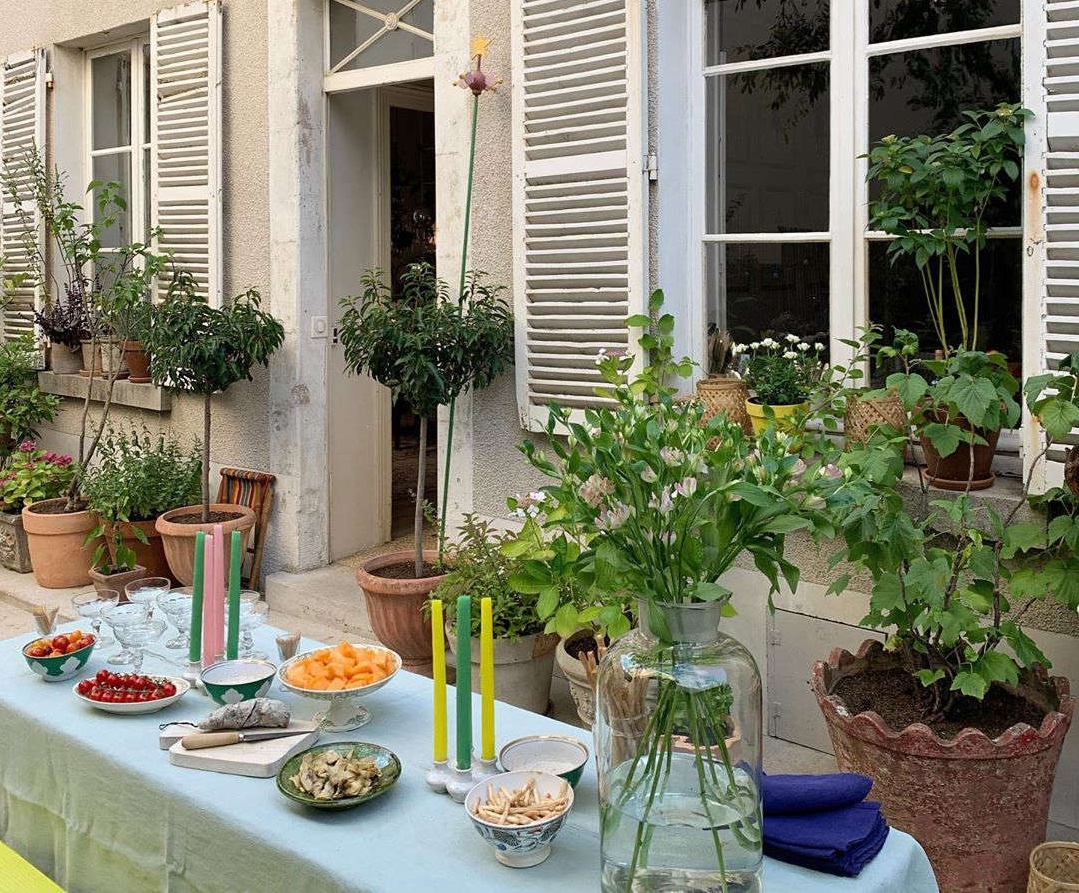
A midsummer table works best when it looks abundant but not precious. Mix plates. Use cloth napkins even if they are wrinkled. Scatter herbs down the center. Put flowers in jam jars. Add candles in hurricane glass if there is wind. Serve family-style so guests can help themselves and you can stop performing the emotional labor of asking whether everyone got enough corn.
For color, combine white plates with one lively accent: yellow napkins, blue glassware, a red serving bowl, or a striped runner. If the table feels too simple, add height with a pitcher of branches, a vase of wild-looking flowers, or a cake stand holding peaches.
Garden and Balcony Obsessions: Grow the Mood
Midsummer is the moment when gardens become dramatic. Herbs bolt, tomatoes get ambitious, hydrangeas show off, and every potted plant seems to want either more water or a handwritten apology.
Plant What You Actually Use
For small spaces, herbs are the best investment. Basil, mint, parsley, thyme, rosemary, chives, and cilantro can transform weeknight meals. If you have more room, add cherry tomatoes, peppers, cucumbers, zinnias, cosmos, lavender, or nasturtiums. Edible flowers are especially midsummer-friendly because they make salads look like they have a publicist.
Group containers by water needs and sunlight. Herbs near the kitchen door are more likely to be used. Flowers near seating areas create instant atmosphere. A few pots can do more for a midsummer mood than a cart full of decor that will need storage by September.
Let Wildness InPolitely
The midsummer garden aesthetic is not sterile. It allows movement, pollinators, seed heads, uneven blooms, and a little romance. That does not mean abandoning maintenance entirely. Deadhead flowers, trim herbs, refresh mulch, and keep paths clear. The look should say “abundant,” not “the zucchini has taken legal possession of the yard.”
Wellness for the Long, Hot Days
Midsummer living is beautiful, but it comes with practical responsibilities. Heat, sun exposure, dehydration, and overpacked schedules can turn the season from dreamy to draining. The stylish midsummer person is not the one who suffers for the aesthetic. It is the one who brings shade, water, and a backup plan.
Sun Protection Is Part of the Look
Wide-brimmed hats, breathable long sleeves, sunglasses, umbrellas, shade sails, and sunscreen are all midsummer essentials. A basket by the door with sunscreen, bug spray, a fan, and extra sunglasses makes outdoor time easier. Reapply sunscreen during long gatherings, especially after swimming or sweating. The sun may be romantic at golden hour, but at 1 p.m. it is basically a laser with branding.
Create Cooling Rituals
Cooling rituals make midsummer feel luxurious instead of exhausting. Keep chilled towels in the fridge for outdoor parties. Freeze grapes for snacks. Serve sparkling water with citrus. Close curtains during the hottest part of the day. Open windows in the morning and evening if the air cools. Use fans strategically to move air through rooms.
For sleep, choose breathable cotton or linen bedding, reduce heavy layers, and keep a glass of water by the bed. Summer sleep should not feel like a negotiation with a damp sponge.
How to Host a Midsummer Gathering
A midsummer gathering should feel easy, but ease usually requires a little planning. The secret is to simplify everything except atmosphere.
Choose a Loose Theme
Themes help guests understand the mood. Try “garden supper,” “solstice picnic,” “tomato night,” “white linen and berries,” “porch spritz hour,” or “Scandi-inspired midsummer.” A theme does not need costumes, although flower crowns are welcome if your friends are emotionally prepared.
Prepare Before the Heat Peaks
Do chopping, marinating, chilling, and table setting early. Put drinks on ice before guests arrive. Arrange shade before anyone starts melting. Make one main dish and let sides be simple. Good bread, salted butter, sliced tomatoes, and cold fruit can carry more charm than an overcomplicated menu.
Use Lighting as Decoration
As daylight fades, lighting becomes the entire personality of the party. Use string lights, lanterns, candles, solar path lights, or portable table lamps. Warm light flatters everyone and makes even a bowl of potato salad look emotionally complex.
Personal Experience: Living Through a Midsummer Mood
My favorite midsummer experiences have never been the perfectly planned ones. They are the evenings that begin with small intentions and somehow become memorable. One summer, I set out to have a simple dinner outside: tomatoes, bread, grilled vegetables, and a bowl of cherries. Nothing dramatic. No elaborate centerpiece. No table setting that required a diagram. But the light was soft, the plates were mismatched in a way that looked accidental but charming, and someone brought a bundle of flowers from a roadside stand. Suddenly, the whole table looked like it had been waiting all year for that exact hour.
That is the real power of midsummer. It makes ordinary gestures feel generous. Pouring water into a pitcher with lemon becomes hospitality. Cutting peaches over vanilla ice cream becomes dessert with a capital D. Moving a chair into the shade becomes design. The season rewards attention. It asks you to notice how basil smells when you brush past it, how linen dries on a line, how the sky changes color slowly enough that conversation naturally quiets.
I have also learned that midsummer is best enjoyed when you stop trying to control every detail. Outdoor dinners will have wind. Someone will drop a fork. The ice will melt faster than expected. A child may decide that the decorative bowl of lemons is now a bowling set. These are not failures; they are proof that people are actually living in the scene you created. A perfect table that makes everyone nervous is less successful than a relaxed table where guests reach across each other for more salad.
One of the most useful midsummer rituals is the “ready basket.” Mine includes sunscreen, matches, cloth napkins, bug spray, a bottle opener, a small flashlight, and a deck of cards. It is not glamorous, but neither is searching for a corkscrew while six guests stare at a bottle of rosé like it contains a prophecy. Practical preparation creates the freedom to be spontaneous.
Another midsummer habit worth keeping is the weekly market bowl. Once a week, fill a large bowl with whatever looks best: tomatoes, peaches, plums, cucumbers, cherries, peppers, or herbs. Leave it visible. This one act changes how you eat and how your kitchen feels. You snack better, cook faster, and accidentally decorate at the same time. A bowl of ripe fruit is the rare home accessory that improves lunch.
Midsummer also reminds us that atmosphere is not expensive. Open windows in the morning. Move flowers from the yard into a jar. Put a cotton cloth over a small table. Drink iced coffee outside for ten minutes before checking your phone. Hang a curtain that moves with the breeze. Walk after dinner. Turn off overhead lights and use lamps. These gestures are small, but together they create a season you can feel.
In the end, “Current Obsessions: Midsummer” is not about chasing every trend. It is about choosing the details that make life feel lighter, warmer, and more connected. Maybe your midsummer obsession is striped linens. Maybe it is cucumber salad. Maybe it is finally making the porch comfortable enough to use. Maybe it is doing absolutely nothing under a tree with a cold drink, which is not lazinessit is seasonal alignment.
Conclusion: The Joy of Being Seasonally Obsessed
Midsummer is the sweet spot between abundance and ease. It is a time to embrace color, natural materials, fresh food, outdoor rooms, garden beauty, and rituals that make hot days feel intentional. The best midsummer style does not demand perfection. It welcomes slightly wrinkled linen, melting ice, imperfect flowers, and guests who stay longer than planned.
Whether you are refreshing a room, hosting a backyard dinner, planting herbs on a balcony, or simply trying to make summer feel less rushed, the midsummer mindset is wonderfully practical: use what is fresh, make room for light, protect your skin, feed people generously, and let beauty be a little messy.
That is the obsession worth keepingnot a shopping list, not a trend report, but a seasonal way of paying attention. Midsummer is brief, bright, and a little unruly. Enjoy it while the tomatoes are ripe, the evenings are long, and the table still smells faintly of basil.