Wrapping your hands for Muay Thai looks simple until you are standing in the gym with two long sthat says, “Surely this came with instructions?” The good news: hand wrapping is not wizardry. The better news: once you learn a reliable method, it becomes as routine as tying your shoesonly with more Velcro and slightly more dramatic shadowboxing afterward.
Muay Thai hand wraps help support the wrist, stabilize the small bones of the hand, protect the knuckles, and reduce rubbing inside boxing gloves. They are not magic armor, and they will not fix poor technique, tired form, or a glove that fits like a toaster oven. But used correctly, wraps are one of the easiest habits that can make training feel safer, cleaner, and more comfortable.
This guide explains how to wrap your hands for Muay Thai in 11 beginner-friendly steps. You will learn what length to choose, how tight the wrap should feel, how to cover the knuckles and wrist, and how to avoid common mistakes that make your hands go numb halfway through pad rounds. Nobody wants to be the person unwrapping in the corner like they are defusing a fabric bomb.
Why Hand Wraps Matter in Muay Thai
Muay Thai uses punches, elbows, clinch work, blocks, catches, and lots of sweaty glove time. Your hands need to stay protected while still allowing you to grip, frame, and move naturally. A good wrap does three main jobs: it supports the wrist, adds padding over the knuckles, and keeps the hand compact inside the glove.
The wrist is especially important. When your wrist bends too much on impact or during awkward pad contact, it can become irritated or injured. Wraps help create a light brace so your fist, wrist, and forearm stay better aligned. Think of it like seatbelts for your hands: not flashy, but you will be very glad they are there when training gets bumpy.
Hand wraps also help with hygiene. They absorb sweat before it reaches the glove lining. Gloves are wonderful training tools, but once they become swampy, they can smell like a haunted gym bag. Washable wraps are easier to clean than gloves, so using them regularly helps keep your gear fresher.
What You Need Before You Start
For most adults, 180-inch hand wraps are the best choice for Muay Thai training. They provide enough length to cover the wrist, knuckles, thumb area, and spaces between the fingers. People with smaller hands may prefer 120-inch wraps, while larger hands often benefit from the full 180-inch length. Semi-elastic “Mexican-style” wraps are popular because they stretch slightly and mold around the hand, but traditional cotton wraps work well too.
You will also need clean hands, trimmed nails, and a little patience. The first few attempts may look like you gift-wrapped a potato. That is normal. Hand wrapping improves quickly with repetition, and after several sessions, you will be able to wrap while talking to a teammate, half-listening to the coach, and wondering why jump rope still feels personal.
Easy Ways to Wrap Your Hands for Muay Thai: 11 Steps
1. Start With the Wrap Rolled Correctly
Before wrapping, make sure the Velcro end is rolled inside and the thumb loop is visible at the outside end. This setup lets the wrap unwind smoothly as you work. If the wrap is rolled backward, you may end up twisting it every few seconds, which is annoying enough to test anyone’s inner peace.
Hold your hand open and relaxed. Spread your fingers slightly. Do not make a fist yet. Wrapping while your hand is relaxed helps avoid making the wrap too tight once your hand naturally expands during training.
2. Place the Thumb Loop Around Your Thumb
Slide the thumb loop over your thumb. Most wraps have a small label or printed side that says something like “this side down.” If yours does, follow it. The wrap should run across the back of your hand, not across the palm first.
Keep your wrist straight. The goal is to build support in a natural position. If you begin with a bent wrist, you may lock in a poor angle and feel uncomfortable later. Your wrist should look like it is ready for training, not like it is asking a question.
3. Wrap Around the Wrist Three Times
Take the wrap around your wrist three times. Each layer should overlap slightly and sit flat. This creates a supportive base. Keep the tension snug, but not tight. You should feel supported, not trapped.
A simple test: after wrapping the wrist, wiggle your fingers. If they tingle, turn pale, or feel cold, the wrap is too tight. Unwrap and start again. Pride is not worth numb fingers. In Muay Thai, your hands should be alert and useful, not quietly sending distress signals.
4. Bring the Wrap Across the Back of the Hand
From the wrist, guide the wrap diagonally across the back of your hand toward the knuckles. Keep your fingers spread slightly. Avoid bunching the fabric in the palm because thick folds can feel uncomfortable when you make a fist or grip during clinch work.
Flat layers matter. Wrinkles create pressure points inside the glove. A neat wrap may not win style points from the judges, but your hands will appreciate the effort.
5. Wrap Around the Knuckles Three Times
Wrap around the knuckles three times, covering the striking surface across the index, middle, ring, and pinky knuckles. Do not pull so hard that your fingers are forced together. The padding should feel secure and even.
This is where many beginners either under-wrap or over-wrap. Too little coverage may leave the knuckles feeling exposed. Too much bulk can make gloves tight and awkward. Aim for a smooth cushion, not a pillow fort.
6. Return to the Wrist to Anchor the Knuckle Pad
After covering the knuckles, bring the wrap back across the hand and around the wrist once. This locks the knuckle padding in place. Without this anchor, the wrap may shift as you train, especially when removing and putting gloves back on between drills.
Muay Thai classes often move quickly: jump rope, shadowboxing, pad work, bag rounds, partner drills. Your wraps need to survive more than one round of glove chaos. Anchoring helps keep everything tidy.
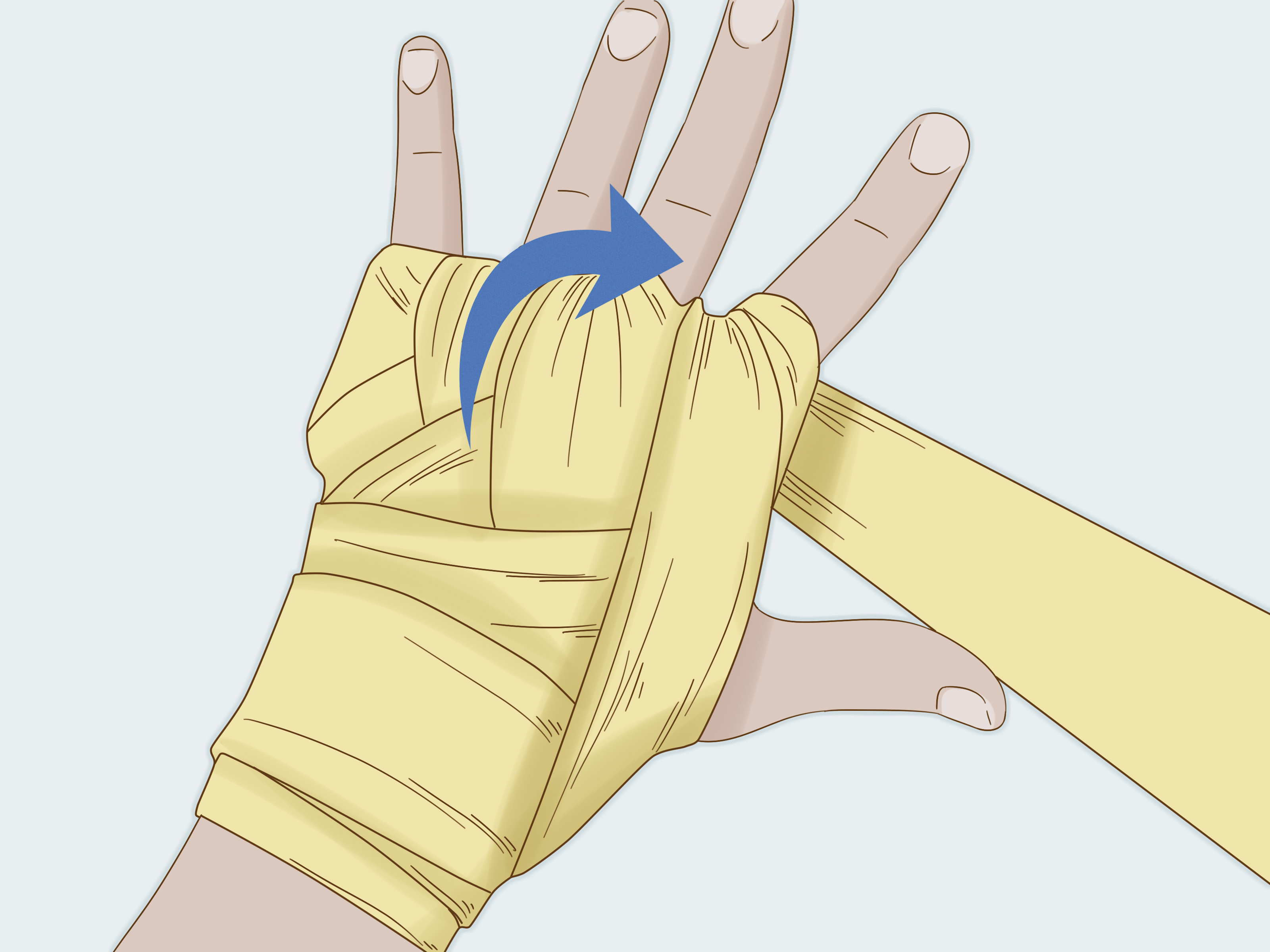
7. Wrap Between the Pinky and Ring Finger
Now guide the wrap from the wrist across the back of your hand and between the pinky and ring finger. Pull it down through the palm and back around the wrist. This helps separate and stabilize the knuckles so the wrap does not slide around.
Keep your hand open while doing this. If you clench too early, you may make the spaces between the fingers too tight. The wrap should guide the hand, not bully it.
8. Wrap Between the Ring and Middle Finger
Repeat the same movement between the ring and middle finger. Bring the wrap across the back of the hand, through the finger gap, into the palm, and back around the wrist.
This step adds structure across the knuckles. It also keeps the wrap from becoming one big floating band around the hand. If the fabric twists, flatten it before continuing. A twisted wrap can feel like a tiny rope pressing into your skin, and nobody needs extra character-building during round three.
9. Wrap Between the Middle and Index Finger
Repeat the process one more time between the middle and index finger. The three finger passes should form a supportive pattern across the back of the hand. When done correctly, your knuckles feel organized and your hand still moves naturally.
Some Muay Thai practitioners prefer fewer finger passes to keep the palm more open for clinching. Others like the extra structure. Both approaches can work. Beginners should learn the full method first, then adjust with guidance from a coach.
10. Secure the Thumb Area Lightly
Bring the wrap around the thumb once, then back toward the wrist. The thumb should feel protected but not pinned down. Muay Thai gloves already help position the thumb, so the wrap does not need to strangle it into place.
This step is about light support. If the thumb wrap feels restrictive when you make a fist or open your hand, loosen it. You should be able to grip, clinch, and open your palm comfortably. Muay Thai is not just punching; your hands need to be useful for more than looking heroic in glove photos.
11. Finish Around the Wrist and Secure the Velcro
Use the remaining fabric to wrap around the wrist and lower hand. Secure the Velcro firmly. Make a fist, open your hand, rotate your wrist, and check how everything feels. The wrap should be snug, flat, and supportive. It should not pinch, cut circulation, or create sharp pressure points.
Repeat on the other hand. Your non-dominant hand may be more awkward at first, which is completely normal. The first time you wrap the second hand, it may feel like your hand has been replaced by someone else’s. Keep practicing.
How Tight Should Muay Thai Hand Wraps Be?
The best hand wrap fit is snug but comfortable. You should feel supported when you make a fist, but you should not feel numbness, tingling, throbbing, or pressure that gets worse during training. If your fingers change color or feel cold, unwrap immediately and rewrap more loosely.
A wrap can also be too loose. Loose wraps bunch inside gloves, slide around during rounds, and fail to support the wrist properly. If you finish wrapping and the fabric shifts easily when you make a fist, add a little more tension next time. The sweet spot is firm, flat, and flexible.
Common Hand-Wrapping Mistakes Beginners Make
Wrapping Too Tight
Beginners often think tighter means safer. Not exactly. Too much tension can reduce circulation and make the hand feel stiff or numb. A good wrap supports movement; it does not turn your hand into a stressed-out burrito.
Skipping the Wrist
Some beginners focus only on knuckle padding and forget the wrist. In Muay Thai, wrist support is one of the main reasons to wrap. Spend enough time building a stable wrist base before moving to the knuckles.
Leaving Wrinkles and Twists
Twisted fabric creates uncomfortable pressure. Keep each layer flat and smooth. It may take a few extra seconds, but it saves you from adjusting your gloves every round like you are negotiating with your own equipment.
Using Dirty Wraps
Wash your wraps regularly and let them dry completely. Dirty wraps can smell bad and irritate the skin. Keep at least two or three pairs if you train often, so one pair can dry while the other is ready for action.
Traditional Wraps vs. Quick Wraps
Traditional cloth wraps offer more customization. You can adjust how much padding goes over the knuckles, how much support goes around the wrist, and how open the palm feels. They are usually the best long-term option for Muay Thai students who train consistently.
Quick wraps, also called gel wraps or inner gloves, are faster. They slip on like fingerless gloves and usually have a wrist strap. They are convenient for light bag work or fitness classes, but they may not offer the same custom fit as traditional wraps. For serious Muay Thai training, many coaches still prefer cloth wraps because they allow better control over support and tension.
How to Care for Your Hand Wraps
After training, do not leave wraps balled up in your gym bag. That is how smells are born, grow up, and start paying rent. Hang them to dry as soon as possible. Wash them after every session or every couple of sessions, depending on how sweaty training was.
Use a mesh laundry bag to keep wraps from tangling around every sock in the machine. Wash with mild detergent and air-dry when possible. Heat can shorten the life of elastic fibers and Velcro. Roll them neatly after drying so they are ready for the next class.
When to Ask a Coach for Help
Ask a coach to check your wraps if you are new, if your hands hurt during training, or if the wrap comes loose inside your gloves. A coach can spot problems quickly: too much wrist tension, not enough knuckle padding, a thumb wrap that is too tight, or fabric bunched in the palm.
You should also ask for guidance if you have a previous hand, wrist, or finger injury. Hand wraps can support training, but they are not a medical treatment. If pain, swelling, numbness, or weakness continues, stop training and speak with a qualified healthcare professional.
Beginner-Friendly Tips for Better Muay Thai Hand Wraps
First, practice at home when you are not rushing. Wrapping five minutes before class starts is useful, but learning under pressure is not ideal. Practice while watching a tutorial or sitting on the edge of your bed. Your future self, standing at the gym with class starting in thirty seconds, will be grateful.
Second, wrap both hands the same way. Consistency makes it easier to notice when something feels wrong. Third, replace worn-out wraps. If the Velcro barely sticks or the fabric has stretched into a sad ribbon, it is time for a new pair.
Finally, remember that wraps work with good technique, not instead of it. Keep your wrists aligned, listen to your coach, and do not treat the heavy bag like it owes you lunch money. Controlled training builds better habits and keeps your hands happier over time.
Real-World Experiences: What Wrapping Your Hands for Muay Thai Teaches You
The first experience most beginners have with Muay Thai hand wraps is mild confusion. The wrap seems impossibly long, the thumb loop feels like it should explain itself, and the Velcro somehow ends up facing the wrong direction. This is practically a rite of passage. Every experienced student has had at least one wrap job that looked like modern art and felt like a hand-shaped mistake.
After a few classes, though, the process starts to click. You learn that the wrap is not just about copying a pattern. It is about feel. Some days your hands feel slightly swollen from heat or previous training, so you use a touch less tension. Some gloves have a tighter hand compartment, so you avoid over-padding the knuckles. Some sessions focus more on bag work, while others include more clinch drills, so you may prefer a wrap that keeps the palm a little more open.
One useful lesson is that comfort matters before class begins. If something feels wrong during warmups, it will probably feel worse during training. A tiny wrinkle near the palm can become extremely annoying once your gloves are on. A thumb loop that pulls at a weird angle may distract you during drills. A wrap that is too tight may feel fine for thirty seconds, then become uncomfortable once your hands warm up. Good students learn to pause, unwrap, and fix the problem early instead of trying to “tough it out.”
Another common experience is discovering that wraps affect confidence. When your hands feel secure, it is easier to focus on technique, timing, breathing, and footwork. You are not constantly thinking about whether your wrist feels wobbly or whether the wrap is sliding inside the glove. That mental comfort matters. Muay Thai already gives beginners plenty to think about: stance, guard, balance, kicks, checks, knees, elbows, and why the round timer seems to slow down whenever conditioning starts.
Hand wrapping also becomes part of the training ritual. You arrive, change clothes, wrap your hands, and mentally shift into practice mode. The routine says, “Okay, it is time to train.” Many students find the ritual calming. It gives you a few quiet minutes before class begins. You can review what you want to improve that day: keeping your hands up, turning your hip, breathing better, or not making the same face every time the coach says “one more round.”
Over time, you may experiment with small changes. You might add more knuckle padding for bag-heavy days. You might use fewer finger passes if your hands feel cramped. You might choose a softer wrap for longer sessions or a slightly firmer wrap when you want more wrist structure. The key is to adjust thoughtfully, not randomly. If a change feels better and your coach approves, keep it. If it causes discomfort, go back to the basic method.
The biggest lesson is simple: hand wraps are not glamorous, but they are important. They are one of those small habits that separate casual guessing from responsible training. Wrapping well shows respect for your body, your coach, and your long-term progress. Plus, once you finally learn to wrap both hands cleanly without starting over three times, you get a tiny private victory before class even begins. In Muay Thai, take the wins where you can get them.
Conclusion
Learning how to wrap your hands for Muay Thai is one of the easiest ways to build better training habits. A proper wrap supports the wrist, protects the knuckles, keeps the hand compact, and helps your gloves feel more secure. The method does not need to be complicated: start at the wrist, cover the knuckles, pass between the fingers, support the thumb lightly, and finish with a firm wrist anchor.
The most important rule is comfort with support. Your wraps should feel snug, smooth, and stablenot painfully tight or loose enough to wander around inside your gloves. Practice the 11 steps regularly, ask a coach to check your technique, and keep your wraps clean. Your hands do a lot for you in Muay Thai. Give them a little fabric-based appreciation before asking them to survive another round.
Note: This article is for general training education. If you have pain, swelling, numbness, tingling, or a previous hand or wrist injury, stop training and consult a qualified coach or healthcare professional before continuing.