If you have ever stared at a length of pipe in the garage and thought, “How hard can this be?” you are in very good company. Bending pipe without a pipe bender sounds like one of those wonderfully thrifty DIY moves right up until the pipe kinks, flattens, cracks, or starts looking like it lost a fight with a shopping cart.
The good news is that sometimes you can bend pipe without a dedicated pipe bender. The less cheerful news is that the answer depends almost entirely on the material, the wall thickness, the bend radius, and whether you are talking about true rigid pipe or the more bend-friendly tubing people casually call pipe. Copper tubing may cooperate. PEX is already flexible. Certain PVC conduit products can be field-bent with controlled heat. Rigid steel pipe, on the other hand, usually responds to improvisation the way a cat responds to a bath: badly.
This guide breaks down what works, what is risky, what materials can be bent without a full-on pipe bender, and when the smartest move is to stop trying to be a hero and use a fitting, a bend support, a spring, or a rented tool instead. If you want neat results and fewer repair words that cannot be printed on a family website, keep reading.
First things first: are you bending pipe or tubing?
This is where a lot of confusion starts. In everyday conversation, people say “pipe” for almost everything round and hollow. In the real world, though, rigid pipe and bendable tubing are not the same beast.
Tubing is generally the easier material to bend. Soft copper tubing, some aluminum tubing, and PEX are designed to flex or form with the right support. True rigid pipe is stiffer, heavier, and more likely to need special equipment. That is why a project that feels simple with soft copper can turn into a headache with steel pipe or rigid PVC used in the wrong application.
So before you do anything, identify the material. If you skip that step, you are not “winging it.” You are auditioning for an expensive do-over.
Can you bend a pipe without a pipe bender?
Yes, sometimes. But the honest answer is really this:
Materials that may bend without a dedicated pipe bender
- Soft copper tubing: Often yes, especially for gentle bends.
- PEX: Yes, within its bend radius, usually with bend supports for tighter turns.
- Certain rigid PVC conduit: Yes, if the manufacturer allows field bending and heat is applied correctly.
- Small soft aluminum tubing: Sometimes, if supported and bent gradually.
Materials that usually should not be bent freehand
- Rigid steel pipe: Usually no, not cleanly and not safely for most DIY situations.
- Galvanized steel pipe: Not a good candidate for improvised heating or rough bending.
- Standard plumbing PVC pressure pipe: Usually better handled with fittings, not improvised sharp bends.
- Hard or thick-wall tubing: Possible with the right tool, but not ideal without one.
If the pipe carries water under pressure, gas, refrigerant, or electrical conductors, “close enough” is not the standard you want. That is where neat bends matter, because flattening, thinning, or stressing the material can create leaks, weak points, or code problems later.
What works instead of a pipe bender?
1. Bend by hand for soft copper tubing only
Soft copper tubing is one of the friendliest materials for gentle bending. For very small jobs, careful hand pressure can create a workable arc, especially if you bend slowly and use a broad curve instead of trying to force a sharp corner. Some DIY guides even mention simple hand bending for copper in light applications.
That said, “possible” does not mean “pretty.” Hand-bending copper is fine for shallow sweeps and forgiving spaces, but the tighter the bend, the higher the risk of kinking. A kinked water line is not charming. It is just a bottleneck with bad manners.
2. Use a bending spring
If you want one of the best no-bender solutions for copper supply lines, a bending spring is a strong contender. It slips over or into the tubing, supports the wall during the bend, and helps prevent flattening. This method is especially useful when shaping rigid supply lines under sinks, behind faucets, or in tight plumbing spots.
It is not fancy, but it is practical. Think of it as training wheels for copper.
3. Use a round form or template
For soft tubing, bending around a large round object can help you get a smoother arc than trying to bend it in midair. A bucket, round post, large can, or purpose-made form can work as a guide. The trick is to keep the bend gradual and consistent. Sudden force is what turns a nice curve into a crimped disaster.
This method works best when the bend radius is generous. If you are trying to pull off a tight 90-degree turn without support, the tubing will probably file a formal complaint.
4. Use bend supports for PEX
PEX is naturally flexible, which is one reason plumbers like it. You usually do not “bend” it the way you bend copper or metal conduit. You route it. For sharper turns, metal or plastic bend supports can hold the shape and reduce the chance of kinks.
This is important: PEX should be bent within the manufacturer’s minimum bend radius. For many systems, that is around six times the outside diameter. Also, the bend should not happen right at the fitting. The fitting is not supposed to do the heavy lifting.
In other words, if PEX seems like the easiest material here, that is because it mostly is. Just do not mistake flexibility for invincibility.
5. Heat and field-bend only when the PVC product allows it
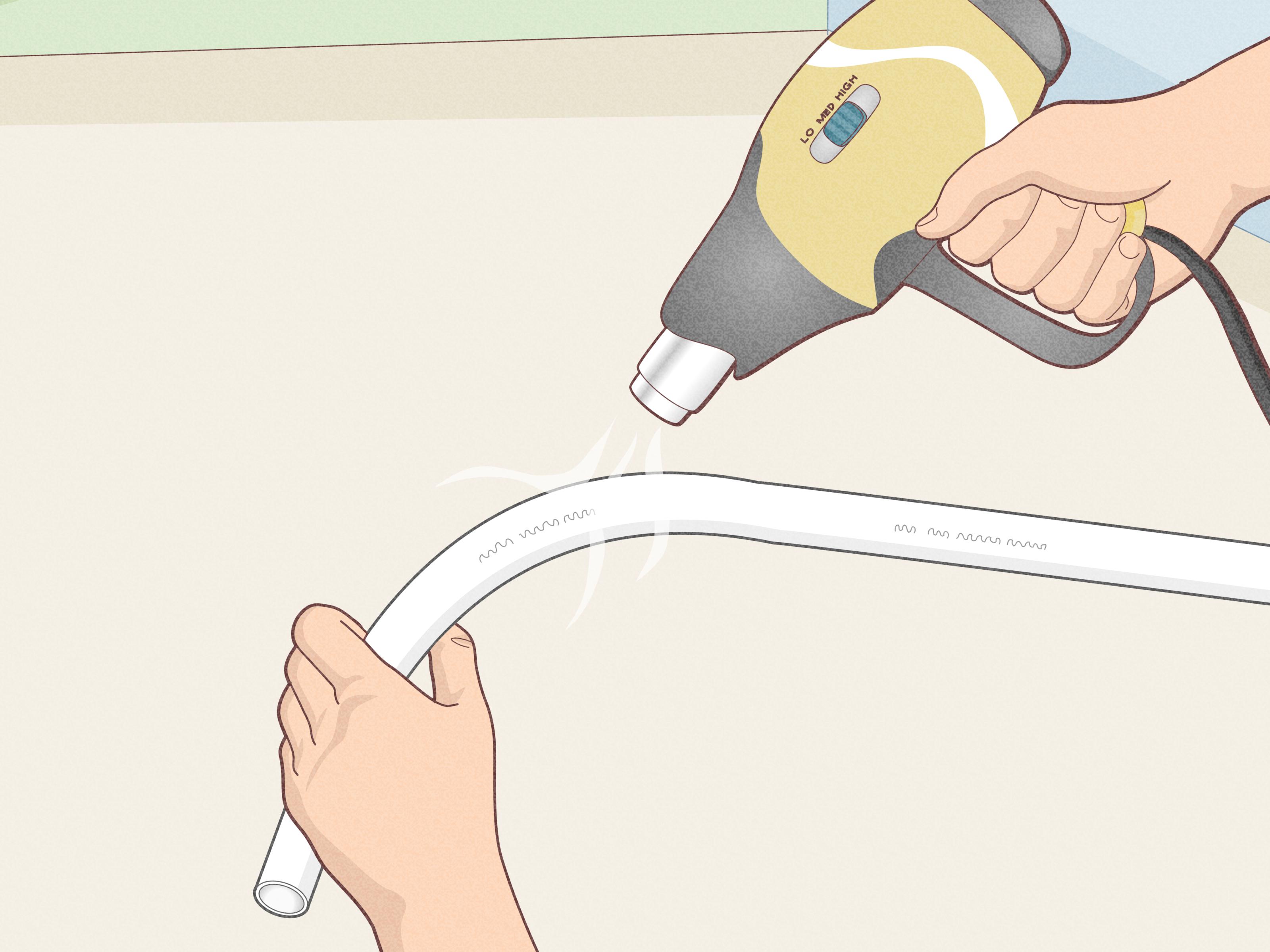
This is where DIY confidence can go off the rails. Some rigid PVC conduit products are designed to be field-bent with controlled, even heating. In those cases, the pipe must be heated gradually, evenly, and with a flameless heat source. Open flame is a bad idea. Uneven heat is also a bad idea. Rushing the process is, yes, another bad idea.
But here is the catch: that does not mean every piece of PVC plumbing pipe should be softened and bent like a breadstick. Standard plumbing PVC and pressure piping systems are typically installed with the proper fittings, especially for directional changes. If the product literature does not explicitly allow field bending for your exact pipe and use case, do not improvise.
PVC can be cooperative, but only when you follow the manufacturer’s rules. Otherwise it becomes brittle, scorched, misshapen, or all three.
What methods are risky or usually not worth it?
Trying to bend rigid steel pipe by brute force
If you are working with rigid steel pipe, galvanized pipe, or heavy conduit, the answer is usually simple: do not try to muscle it into shape without the right equipment. Real pipe is rigid for a reason. It generally needs special tools to bend cleanly, maintain its internal diameter, and avoid flattening.
For electrical conduit, proper conduit benders exist because accuracy matters. For plumbing and gas lines, damage from an ugly bend can mean weak spots, leaks, or replacement. “I almost had it” is not a plumbing standard.
Heating galvanized metal
This one deserves plain language: avoid heating galvanized steel to help it bend. Heating galvanized coatings can create zinc oxide fumes, which are associated with metal fume fever. That is not a fun little side effect. It is a real health hazard.
If a project seems to require heat plus galvanized pipe plus guesswork, that is your sign to stop and choose another method.
Using an open flame on PVC
Open flames and PVC are a terrible pairing. If a PVC product is designed for field bending, the guidance typically calls for a controlled, flameless heat source and evenly distributed heat. A torch may feel fast, but it can scorch the surface, weaken the wall, and create unsafe fumes. Fast is nice. Safe and functional is nicer.
Forcing a tight bend right next to a fitting
This is especially important with PEX and other flexible systems. A fitting should connect sections, not act as your bend point. Strain concentrated at the fitting can shorten the life of the connection and create failure points you will meet later at the worst possible time, usually while standing in socks.
When should you use fittings instead of bending?
Quite often, honestly.
There is a romantic DIY idea that a perfectly bent run is always better than a fitting. Sometimes that is true. Fewer joints can mean fewer potential leak points, and in tubing systems bends can improve flow compared with a cluster of elbows.
But in many household repairs, fittings are the smarter choice when:
- The material is rigid or thick-walled.
- You need a sharp, precise angle.
- The line is pressurized.
- You are working in a visible area where a sloppy bend will annoy you forever.
- You do not have the correct support tools.
PVC pressure systems, for example, are typically designed around the correct pressure-rated fittings. Copper can often be bent, but a fitting may still be the cleaner answer for a cramped or exact turn. PEX can snake around obstacles, but bend supports and fittings still have their place.
The point is not to prove you can bend everything. The point is to build something that works and keeps working.
How do you bend pipe without kinking it?
If your material is actually bendable, these habits make a huge difference:
- Identify the material first. Copper, PEX, PVC conduit, and rigid steel do not play by the same rules.
- Use support. Springs, bend supports, forms, and guides help the pipe keep its shape.
- Bend gradually. Slow pressure beats sudden force every time.
- Avoid tight radii unless the product allows them. Sharp bends are where kinks and flattening happen.
- Do not bend right at the fitting. Leave some straight run where required.
- Stop if the wall starts to flatten. That is the material telling you it is done cooperating.
- Test before closing up the wall or trench. A “looks fine to me” inspection is not enough.
Safety questions people forget to ask
Can I heat metal pipe to make bending easier?
For most DIY plumbing work, that is not the route to take. Heating metal changes the risk profile fast, especially with galvanized material or anything near combustibles. If you need heat and do not fully understand the metal, coating, and ventilation requirements, skip it.
Can I hot-bend PEX?
Do not treat heat as a shortcut for tighter bends. PEX is meant to flex within its bend radius, not to be bullied into a tighter turn. Some manufacturers allow careful heat-gun repair of a kink in certain PEX-a products, but that is a repair protocol, not a free pass to shape the pipe however you want.
Can I heat any PVC pipe and bend it?
No. Some rigid PVC conduit products allow controlled field bending. That should not be confused with every PVC plumbing product on the shelf. Always check the exact manufacturer guidance for the exact pipe you are holding.
The best practical answer for most DIYers
If you are trying to bend pipe without a pipe bender, here is the practical takeaway:
- Soft copper: Usually yes, with care. Better with a spring or simple support.
- PEX: Yes, within bend limits. Use bend supports when needed.
- PVC conduit: Sometimes, if the product specifically allows field bending with controlled heat.
- Rigid steel or galvanized pipe: Usually no. Use the proper bender, pre-bent sections, or fittings.
- Standard plumbing PVC pressure pipe: Usually use fittings, not improvised bends.
That may not be the swashbuckling answer some people want, but it is the one most likely to end with a working system and a dry floor.
Real-world experiences: what this looks like on actual jobs
In real life, the difference between a successful bend and a ruined section of pipe usually comes down to expectations. People tend to get into trouble when they assume all round things bend the same way. A soft copper refrigerator line feels easy, so they assume a rigid water line, steel conduit, or PVC pressure pipe will be similarly cooperative. That is usually the moment the project starts charging tuition.
One common experience is the “I only needed a tiny tweak” mistake. A DIYer has a copper supply line that is just slightly off. Instead of supporting the tubing and making a broad bend, they grab it with both hands and yank. The line flattens, the angle still looks wrong, and now the only real fix is cutting it back and starting over. The lesson is simple: gentle corrections can work, but unsupported force usually does not.
PEX creates a different kind of overconfidence. Because it is flexible, people assume it can be folded around corners however they like. Then the tubing kinks near a fitting or gets pulled too tight across a stud bay. The line may not fail immediately, which is what makes the mistake sneaky. It looks fine until stress, temperature change, or movement turns that “pretty close” bend into a future leak. Most experienced installers learn quickly to respect bend radius, leave slack, and use supports where the turn needs to stay clean.
PVC is where impatience loves to show up. Someone sees that PVC can be heated, reaches for a torch, and tries to speed-run the bend. The outside scorches before the inside softens, the wall thickness becomes uneven, and the bend ends up looking like a melted candy cane. The better experience comes from slow, even heating on products that are actually meant to be field-bent. Everything else is just a science fair with plumbing consequences.
And then there is rigid steel, the material that teaches humility. Many first-timers think a vise, some body weight, and determination will be enough. What they get is flattening, surface damage, or a bend that is technically curved but functionally useless. Pros do not use proper bending tools because they enjoy carrying extra gear for fun. They use them because rigid pipe fights back.
The best real-world lesson is this: successful bending is rarely about strength. It is about support, control, and choosing the right material for the shape you need. When experienced people make a bend look easy, it is usually because they have already learned where improvisation ends and good judgment begins. That is the part worth copying.
Conclusion
Can you bend a pipe without a pipe bender? Yes, in some cases. But the better question is whether your specific material should be bent that way. Soft copper and PEX give you room to work. Certain PVC conduit products can be field-bent under the right conditions. Rigid steel pipe usually wants proper equipment, not optimism.
If you remember one thing, make it this: the cleaner, safer, smarter result usually comes from matching the method to the material. A bending spring, a bend support, a broad form, a proper fitting, or a rented tool may not sound glamorous, but they beat replacing a split line on a Saturday night. Every time.