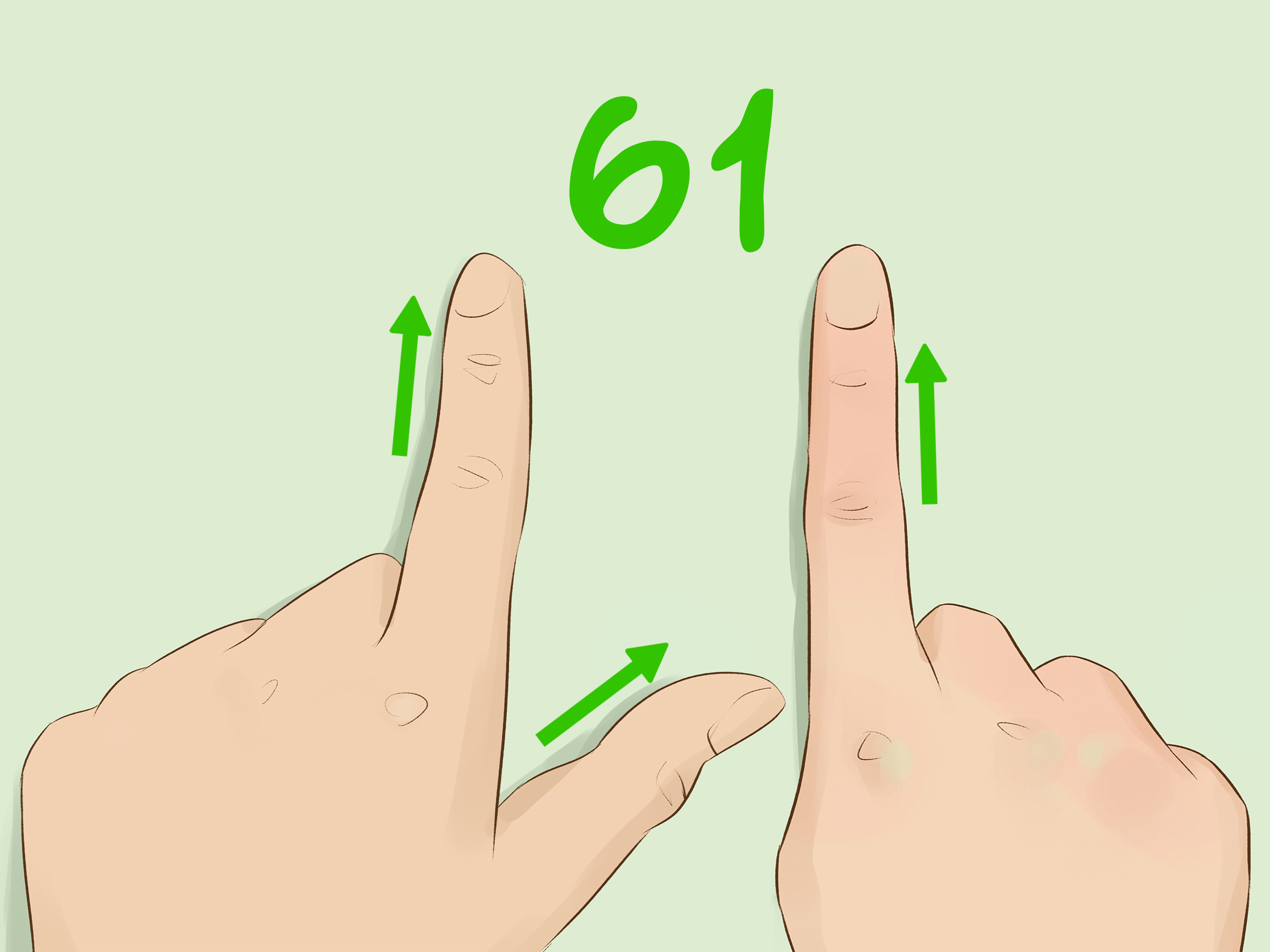
Many people think finger counting is only for little kids, quick grocery math, or pretending you definitely know how many cookies disappeared from the jar. But your fingers are far more powerful than the classic “one finger equals one number” system. With a simple method inspired by Chisanbop, also known as finger math, you can count all the way to 99 using only two hands.
The secret is not growing extra fingers. That would be impressive, but inconvenient for gloves. The secret is assigning values to your fingers in a smarter way. Instead of treating each finger as just “one,” you use your right hand for the ones place and your left hand for the tens place. Once you understand that pattern, your hands become a tiny human abacus.
This guide explains how to count to 99 on your fingers step by step, with clear examples, practice tips, and real-life ways to use the method. Whether you are a student, parent, teacher, puzzle lover, or someone who enjoys having a party trick that is secretly educational, this finger counting technique is practical, fun, and surprisingly satisfying.
What Is Finger Counting to 99?
Counting to 99 on your fingers usually refers to a finger math method based on Chisanbop, a Korean counting system that uses both hands to represent two-digit numbers. In this system, each hand can show a digit from 0 to 9. The right hand represents the ones digit, and the left hand represents the tens digit.
For example, the number 37 is split into 30 and 7. Your left hand shows 3 tens, while your right hand shows 7 ones. Together, your hands display 37. Once you understand the hand values, the method feels much less mysterious. It is simply place value with fingers.
Why This Method Works
The system works because it uses the same structure as our base-ten number system. Every two-digit number has a tens place and a ones place. In the number 48, the 4 means four tens, and the 8 means eight ones. Finger math turns that idea into something you can physically see and feel.
That physical connection is important. Many learners understand numbers better when they can touch, move, or visualize them. Your hands become a model for place value, similar to base-ten blocks, an abacus, or a number rack. The difference is that your hands are portable, free, and usually not hiding under the couch.
The Basic Finger Values
Before you start counting, learn the values assigned to each hand. You can practice with your palms facing down on a table, pressing fingers down to represent numbers. You can also hold your hands in the air, but using a table makes the method easier when you are just beginning.
Right Hand: The Ones Place
Your right hand represents the ones digit from 0 to 9. The four fingers are worth 1 each, and the thumb is worth 5.
| Right Hand Position | Value |
|---|---|
| No fingers pressed | 0 |
| Index finger | 1 |
| Index + middle fingers | 2 |
| Index + middle + ring fingers | 3 |
| All four fingers, no thumb | 4 |
| Thumb only | 5 |
| Thumb + index finger | 6 |
| Thumb + index + middle fingers | 7 |
| Thumb + index + middle + ring fingers | 8 |
| Thumb + all four fingers | 9 |
Left Hand: The Tens Place
Your left hand works the same way, but each value is multiplied by 10. The four fingers are worth 10 each, and the thumb is worth 50.
| Left Hand Position | Value |
|---|---|
| No fingers pressed | 0 |
| Index finger | 10 |
| Index + middle fingers | 20 |
| Index + middle + ring fingers | 30 |
| All four fingers, no thumb | 40 |
| Thumb only | 50 |
| Thumb + index finger | 60 |
| Thumb + index + middle fingers | 70 |
| Thumb + index + middle + ring fingers | 80 |
| Thumb + all four fingers | 90 |
How to Count from 0 to 9 on One Hand
Start with your right hand. Make a relaxed hand position with no fingers pressed. That represents 0. Press your index finger for 1, then add your middle finger for 2, your ring finger for 3, and your pinky for 4.
To show 5, lift the four fingers and press only your thumb. For 6, press your thumb and index finger. For 7, press your thumb, index, and middle fingers. Continue until 9, when your thumb and all four fingers are pressed.
This may feel unusual at first because most of us learned to count by simply raising one more finger at a time. Here, the thumb acts like a “five shortcut.” Once your brain accepts that the thumb equals 5, the right-hand pattern becomes easy.
How to Count by Tens on the Left Hand
Now practice the left hand by itself. No fingers pressed means 0 tens. Press your left index finger for 10, index and middle for 20, index, middle, and ring for 30, and all four fingers for 40.
For 50, press only the left thumb. For 60, press the left thumb plus the index finger. For 70, press the thumb plus two fingers. For 80, press the thumb plus three fingers. For 90, press the thumb plus all four fingers.
Think of your left hand as the “big spender” hand. Every small movement is worth ten times more than the same movement on the right hand. Your right index finger says “1.” Your left index finger says “10.” Same finger idea, different place value.
How to Combine Both Hands
To make any number from 0 to 99, split the number into tens and ones. Show the tens on your left hand and the ones on your right hand.
Example: 24
The number 24 has 2 tens and 4 ones. Press two fingers on your left hand to show 20. Press four fingers on your right hand to show 4. Together, your hands show 24.
Example: 58
The number 58 has 5 tens and 8 ones. Press your left thumb to show 50. On your right hand, press your thumb plus three fingers to show 8. Now your hands display 58.
Example: 99
The number 99 is the grand finale. On your left hand, press your thumb and all four fingers to show 90. On your right hand, press your thumb and all four fingers to show 9. Congratulations: you have reached 99 without borrowing anyone else’s hands.
A Step-by-Step Practice Routine
Learning finger math is like learning a new keyboard shortcut. At first, you think too much. Then one day your hands just know what to do, and you feel like a tiny wizard of arithmetic.
Step 1: Master 0 to 9
Practice only the right hand for a few minutes. Count slowly from 0 to 9, then back down from 9 to 0. Say each number out loud as you move your fingers. This connects the number, the sound, and the hand position.
Step 2: Master 0 to 90 by Tens
Practice the left hand next. Count 0, 10, 20, 30, and so on up to 90. Then reverse the sequence. Do not rush. Your goal is accuracy first, speed later.
Step 3: Build Two-Digit Numbers
Pick random numbers and show them with both hands. Try 13, 46, 72, 85, and 99. Break each number apart before moving your fingers. For 72, think “70 on the left, 2 on the right.”
Step 4: Read Numbers from Finger Positions
Once you can show numbers, reverse the exercise. Put your hands in a position and read the number. If your left thumb and two fingers are pressed, that is 70. If your right thumb and one finger are pressed, that is 6. Together, the number is 76.
Common Mistakes and How to Fix Them
The most common mistake is forgetting that the left hand represents tens, not ones. If you press two fingers on the left hand, that is 20, not 2. A simple fix is to say “tens hand” whenever you move the left hand.
Another mistake is treating the thumb as 1 instead of 5. In this method, the thumb is the shortcut. It replaces the first five counts. If you want to show 5, use only the thumb. If you want to show 6, use the thumb plus one finger.
Some beginners also try to move every finger in strict order when jumping from 9 to 10. The transition is easier if you think in place value: clear the right hand and press one finger on the left hand. You are moving from 9 ones to 1 ten and 0 ones.
Why Counting to 99 on Your Fingers Helps You Learn Math
Finger counting is sometimes treated like a habit students should abandon as soon as possible, but hands-on number work can support real understanding. When used thoughtfully, fingers are not a crutch; they are a visual and physical model.
This technique reinforces place value because every two-digit number becomes visible. You are not just memorizing that 63 means six tens and three ones. You are physically showing 60 on one hand and 3 on the other. That kind of concrete representation can make abstract math feel less like fog and more like furniture.
It also supports mental math. Once you can quickly represent numbers, addition and subtraction become easier to imagine. For example, if you show 24 and add 3, you only adjust the right hand from 4 to 7. If you add 10, you adjust the left hand from 20 to 30. This makes the structure of numbers clear.
Finger Math vs. Binary Finger Counting
There is another famous way to count high on your fingers: binary finger counting. In binary, each finger has a value based on powers of two, such as 1, 2, 4, 8, and 16. With one hand, binary counting can reach 31. With two hands, it can reach 1023.
So why use the 0-to-99 method instead? Because Chisanbop-style finger counting matches ordinary decimal place value. It is easier for many learners who are practicing tens and ones. Binary finger counting is excellent for learning computer science concepts, while counting to 99 on your fingers is especially useful for everyday arithmetic and number sense.
Quick Examples You Can Try Right Now
Try showing 12. Press one finger on your left hand for 10. Press two fingers on your right hand for 2. That makes 12.
Try showing 45. Press all four fingers on your left hand for 40. Press your right thumb for 5. That makes 45.
Try showing 67. Press your left thumb and one finger for 60. Press your right thumb and two fingers for 7. That makes 67.
Try showing 81. Press your left thumb and three fingers for 80. Press your right index finger for 1. That makes 81.
Try showing 90. Press your left thumb and all four fingers. Keep your right hand clear. That makes 90.
How Parents and Teachers Can Teach This Method
For younger learners, introduce the method slowly. Begin with the right hand only. Let students master 0 to 9 before adding the left hand. Moving too fast can make the system feel like a magic trick instead of a math tool.
Use simple language: “Right hand shows ones. Left hand shows tens. Thumb means five.” Repeat that often. Short phrases help students remember the system without needing a long explanation every time.
For classroom practice, call out numbers and ask students to show them. Then switch roles and let students show a number while a partner reads it. This turns place value practice into a quick game. It also gives students immediate feedback because hand positions are easy to check.
Fun Practice Games
Number Flash
Call out a number between 0 and 99. The learner has three seconds to show it on their fingers. Start slowly, then increase speed as confidence improves.
Guess My Number
One person shows a number with both hands. The other person reads it aloud. Add points for correct answers, or just play for bragging rights and dramatic finger wiggles.
Count Around the Room
In a group, each person shows the next number in a sequence. Try counting by ones, tens, fives, or twos. This helps learners see patterns in the finger positions.
Real-Life Uses for Counting to 99 on Your Fingers
This method can help with quick counting, mental math practice, classroom warm-ups, math games, memory tricks, and number demonstrations. It is also useful when teaching place value because it gives learners a compact visual model of two-digit numbers.
It can even be used as a quiet way to hold a number temporarily. If someone tells you a two-digit number and you need to remember it for a moment, you can set it on your hands. Just be subtle if you are in public, unless you enjoy strangers wondering why your fingers are doing accounting.
Experience: What It Feels Like to Learn Finger Counting to 99
The first time you try to count to 99 on your fingers, it may feel like your hands and brain are attending different meetings. Your brain says, “Show 36,” and your fingers respond with, “Best I can do is jazz hands.” That is normal. The method is simple, but it uses familiar fingers in an unfamiliar way.
A good learning experience begins with patience. Most people are comfortable counting to five or ten on their fingers because they have done it since childhood. Chisanbop-style counting asks you to reset that habit. The thumb becomes 5 instead of just another finger. The left hand becomes tens instead of a second batch of ones. At first, those rules can feel like someone changed the controls on your favorite video game.
After a few minutes, however, patterns start to appear. The right hand becomes predictable: 1, 2, 3, 4, thumb for 5, then thumb plus fingers for 6, 7, 8, and 9. Once that rhythm clicks, the left hand is much easier because it uses the same pattern with bigger values. The method becomes less about memorizing and more about recognizing structure.
One helpful experience is practicing with numbers you already know from daily life. Try your age, your favorite sports number, a classroom number, a calendar date, or the price of something under $100. Real numbers make the practice more meaningful. Showing 47 is fine, but showing “$47 for those sneakers” suddenly makes the number feel useful.
Another useful experience is teaching the method to someone else. The moment you explain that the right hand is ones and the left hand is tens, you strengthen your own understanding. Teaching also reveals where the confusing parts are. Most learners ask the same questions: “Why is the thumb five?” “Why is the left hand ten times more?” “How do I show zero?” Answering those questions helps the system become clearer.
With practice, you may notice that your fingers begin to move before you finish thinking through every step. That is the sweet spot. You are not blindly memorizing positions; you are building fluency. The hand shapes become number pictures. A left thumb plus two fingers and a right thumb plus four fingers no longer looks like random finger yoga. It looks like 79.
The best part is that this skill feels playful. It turns place value into a physical puzzle. It gives students a reason to laugh while learning. It gives adults a clever mental math trick. It gives everyone a reminder that math is not only something written on paper. Sometimes, math is sitting right at the ends of your arms, waiting to be useful.
Conclusion
Learning how to count to 99 on your fingers is a smart, hands-on way to understand two-digit numbers. By using your right hand for ones and your left hand for tens, you can turn ordinary fingers into a compact counting system. The method is simple enough for beginners, but clever enough to keep math lovers entertained.
Start slowly with 0 to 9, then practice counting by tens, and finally combine both hands to build numbers from 0 to 99. Once the pattern becomes familiar, you will see place value in a new way. Your fingers are not just counting tools anymore. They are a pocket-sized math machine, minus the batteries.
Note: This article is written for educational web publishing and focuses on safe, practical finger-counting methods that support number sense, place value, and mental math practice.