Construction projects are exciting right up until somebody says, “Wait, was that covered?” That sentence has ended many good moods, several budgets, and at least a few perfectly normal Tuesdays.
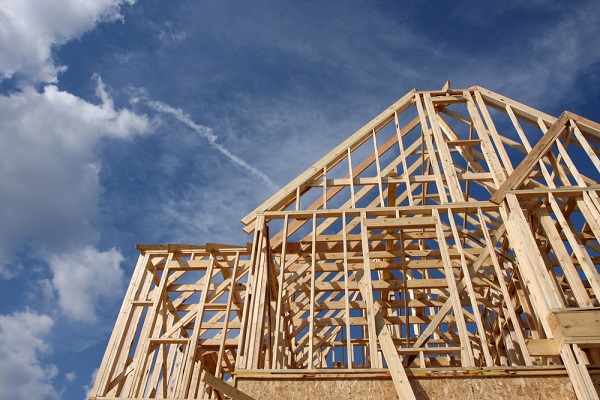
Builders risk insurance is supposed to be the financial hard hat for a project. It exists to protect a structure while it is being built, renovated, or remodeled. In general, these policies are designed to cover physical loss or damage from risks like fire, theft, vandalism, wind, hail, and certain other covered perils during the course of construction. Depending on the policy, they may also extend to materials, temporary structures, equipment, and even certain soft costs tied to delays. But here is the catch: builders risk coverage is powerful only when the policy actually matches the project.
That is why three real-life builders risk claims highlighted in IA Magazine are so useful. They are not just insurance war stories. They are reminders that small details can blow up into expensive problems when a loss hits. In these claim scenarios, the trouble did not start with the storm, the vandal, or the fire. It started earlier, with mismatched project descriptions, incomplete disclosure, and a change in occupancy that quietly changed the risk.
This article breaks down those three claims, explains what they teach builders, owners, agents, and contractors, and shows how to avoid turning a routine project into a very expensive lesson in policy language.
What Builders Risk Insurance Is Supposed to Do
At its core, builders risk insurance protects property under construction. Unlike standard property insurance, it is built for a structure whose value changes as the project progresses. As more labor and materials go into the job, the insured value rises too. That is why this coverage is often called course of construction insurance.
Typical builders risk coverage can apply to the building under construction, fixtures, materials, and equipment that will become part of the finished project. Many policies also offer endorsements for debris removal, increased cost of construction, temporary structures, soft costs, delay in completion, business interruption, or loss of rental income. In other words, the policy can protect more than “sticks and bricks,” but only if those extensions are actually added and correctly structured.
Just as important, builders risk is not a magical blanket for every construction problem. Standard exclusions often include faulty workmanship, design errors, wear and tear, mechanical breakdown, worker injuries, and third-party liability. Flood and earthquake are also commonly excluded unless specifically endorsed. That means the details of the project, contract, and policy wording matter a lot more than many insureds realize.
The First Claim: The Remodel That Was Not What It Seemed
The scenario
In the first real-life claim, a remodeling policy was issued for what was described as a second-story addition to a home. Sounds straightforward enough. But after vandalism triggered a claim, the investigation showed the work was not a typical “add a level on top” project. Instead, the additional story was being added underneath the original structure, which had been lifted about 15 feet in the air and was sitting on wooden pallets.
The immediate claim payout issue was limited because the repair cost fell below the deductible. But the bigger problem was underwriting mismatch. The policy that had been issued did not align neatly with the actual risk profile. The policy was later nonrenewed, which says a lot without needing to shout.
The lesson
This claim teaches a basic but brutally important truth: remodeling is not one-size-fits-all. A renovation involving an existing structure can have very different hazards from a ground-up build. And a project that sounds simple in conversation may look wildly different in real life once the house is elevated, partially exposed, structurally altered, or otherwise behaving like a stunt double.
For remodels, the scope needs to be described with precision. Does the policy cover only the new work, or both the renovation and the existing structure? Is the structure occupied during the work? Is the framing exposed? Has the building been lifted, shored, or partially demolished? These are not fussy insurance questions. They are the difference between appropriate coverage and a claim headache.
The Second Claim: A “New Construction” Project That Was Already Mostly Built
The scenario
The second claim involved a single-family home placed on a new construction policy. Shortly after the policy began, a hurricane damaged the roof and a claim was filed. During the investigation, however, it turned out construction had started the prior year and the project was already about 75% complete when the loss happened.
Because of that timing issue, the insured was reimbursed only for the portion of work completed after the policy effective date, which amounted to roughly 30% of the damage. Ouch. The storm was bad. The disclosure gap was worse.
The lesson
Builders risk coverage depends heavily on when coverage begins, what values were insured, and what stage the project was actually in when the policy attached. If a structure is already well underway, the insurer needs that fact up front. Otherwise, the policy may not reflect the true value at risk, the proper underwriting classification, or the actual exposure.
This is especially important because builders risk policies are meant to track construction progress. If a loss happens on a project that was already substantially complete before the policy started, the insured may discover that only part of the loss falls within the policy’s intended insured value. That is a terrible moment to learn that “we just started the policy” and “the project basically started last year” are not remotely the same sentence.
The Third Claim: Occupancy Changed, and Coverage Quietly Ended
The scenario
The third claim involved a large warehouse under construction. A builders risk policy had been secured for an unoccupied commercial new build. Before completion, the owner signed a pre-lease agreement, and a tenant began storing unrefrigerated goods in the building. Then a fire caused a total loss.
The claim was denied because the policy had been written for an unoccupied building, and the building was occupied with a tenant’s products at the time of loss. Many builders risk forms end coverage when the building is occupied in whole or in part, put to its intended use, or remains occupied past a stated time threshold. In plain English: once the project starts acting like a functioning building, the builders risk clock may stop.
The lesson
Occupancy is one of the sneakiest claim triggers in builders risk coverage. It can feel harmless to let a tenant store goods early, move in equipment, or start partial operations before the job is fully complete. From the owner’s perspective, that can look efficient. From the policy’s perspective, it can look like the end of builders risk coverage.
This is why owners and agents must talk early about when coverage ends. A structure that is occupied, partially occupied, or put to its intended use may need a transition to permanent property insurance or another form of coverage. If that handoff is not handled properly, the project can fall into a coverage gap at exactly the wrong time.
The Bigger Themes Behind All Three Claims
1. Project description is not paperwork fluff
The application is not just an annoying prelude to getting the certificate. It is the foundation of the underwriting decision. If the scope, stage, occupancy, or existing structure exposure is wrong, the entire policy can be misaligned.
2. Remodels deserve extra attention
Renovation projects carry quirky risks. Existing structures may or may not be included. Homeowners or tenants may still be on site. Temporary supports, exposed framing, and unfinished utility systems can increase both the hazard and the chance of confusion if the loss occurs mid-project.
3. Soft costs and delay issues do not fix themselves
Physical damage is only part of the loss story. Covered claims can also cause delays that lead to additional loan interest, permit extension fees, reinspection costs, lost rent, and missed business income. Those expenses are usually not covered automatically. They often require specific soft cost or delay-in-completion endorsements, and those coverages are often meant primarily for the project owner.
4. Water, fire, and theft remain the usual suspects
Industry claim discussions consistently point to theft, fire, and water damage as major builders risk troublemakers. Water losses can be especially tricky because policy wording may distinguish between internal water damage, flooding, storm surge, or repeated seepage. Fire risks rise with hot work, smoking, temporary electrical systems, and poor storage of combustibles. Theft risk climbs when sites have weak perimeter controls, early material delivery, or little after-hours monitoring.
How to Avoid Your Own Builders Risk Disaster
Visit the site or get current photos
If the project is unusual, do not rely on a vague verbal description. Photos, walkthroughs, and updated progress reports can reveal whether this is a standard remodel, a major structural lift, or a project that has quietly crossed into partial occupancy.
Document the existing structure question
For renovations, confirm in writing whether the existing structure is covered, excluded, or covered only in part. Never assume a standard homeowners or commercial property policy will automatically handle renovation-related damage.
Confirm start date, project stage, and values
The policy should reflect what has already been built, what remains to be built, and what the total completed value will be. Guessing here is a fine way to meet disappointment later.
Discuss occupancy before anyone moves anything in
Not tenants. Not inventory. Not operations. Not a forklift that “is just there for now.” Any early use of the building can affect the end of builders risk coverage. Address the transition to permanent property coverage before that happens, not after smoke becomes a personality trait of the project.
Plan for water, fire, and theft like they are coming
Because they might. Strong controls include perimeter fencing, lighting, intrusion detection, secure storage, just-in-time material delivery, leak detection, water response plans, safe hot-work practices, strict smoking rules, proper storage of flammables, and early activation of fire protection systems when practical.
Explain the policy to the client in plain English
Clients do not need a dramatic reading of the policy jacket. They do need to understand what is covered, what is excluded, what changes need to be reported, and what events can end coverage. Clarity before a loss is worth far more than confidence after one.
Field Experience: What These Claims Really Tell the Market
Step back from the three scenarios and a broader pattern appears. Builders risk claims often go sideways not because the peril was exotic, but because the risk description was stale. Construction projects evolve fast. A remodel becomes structural. A “new build” is actually already underway. An empty warehouse becomes a lightly used warehouse, then a definitely-not-empty warehouse. If the policy does not evolve along with the project, the claim file eventually becomes a detective novel nobody wanted to fund.
In real-world construction, people improvise. Owners chase schedules. Contractors try to keep crews moving. Lenders want milestones hit. Tenants want access yesterday. All of that pressure creates little decisions that seem harmless in the moment. Store a few pallets inside. Start receiving goods early. Leave expensive materials on site ahead of schedule. Delay a coverage update until next week. These decisions are understandable. They are also exactly how routine projects drift into uninsured territory.
Another recurring experience in this space is that insureds often think physical damage is the whole claim. It rarely is. A burst pipe, fire, or theft may be only the opening act. The expensive sequel is delay: extended financing costs, rescheduled subcontractors, permit renewals, temporary protection, reinspection fees, and lost revenue from opening late. When soft costs or delay coverages are not properly discussed, clients may feel blindsided by a loss they thought was fully insured. Technically covered does not always mean financially comfortable.
These claims also show why builders risk is part insurance product and part communication exercise. The best outcomes usually come from disciplined intake, clear documentation, and frequent updates during the job. Good agents and brokers ask nosy questions for a reason. Good insureds disclose changes early for a reason. Good underwriters want specifics for a reason. Nobody is trying to ruin the vibe. They are trying to make sure the policy still matches the building when something bad happens at 2:13 a.m. on a windy Thursday.
Perhaps the biggest market lesson is this: builders risk should be treated as a living coverage strategy, not a one-and-done purchase. Projects change. Values change. Occupancy changes. Exposure changes. Coverage should change too. The smartest players in construction already know that insurance works best when it is updated before the loss, not admired after it.
Final Takeaway
The three real-life builders risk claims from IA Magazine all point to the same conclusion: details drive outcomes. A policy can look perfectly adequate until the actual job site tells a different story. If the scope is misstated, the stage of construction is incomplete, or the building begins occupancy before the coverage transition is handled, the claim can shrink, stall, or disappear entirely.
For owners, contractors, and agents, the practical takeaway is simple: ask better questions, verify the answers, document the project carefully, and revisit coverage as the job changes. Builders risk insurance is incredibly useful, but only when it is matched to the real project and managed with the same discipline as the build itself. In construction, as in insurance, “close enough” is often another phrase for “surprisingly expensive.”