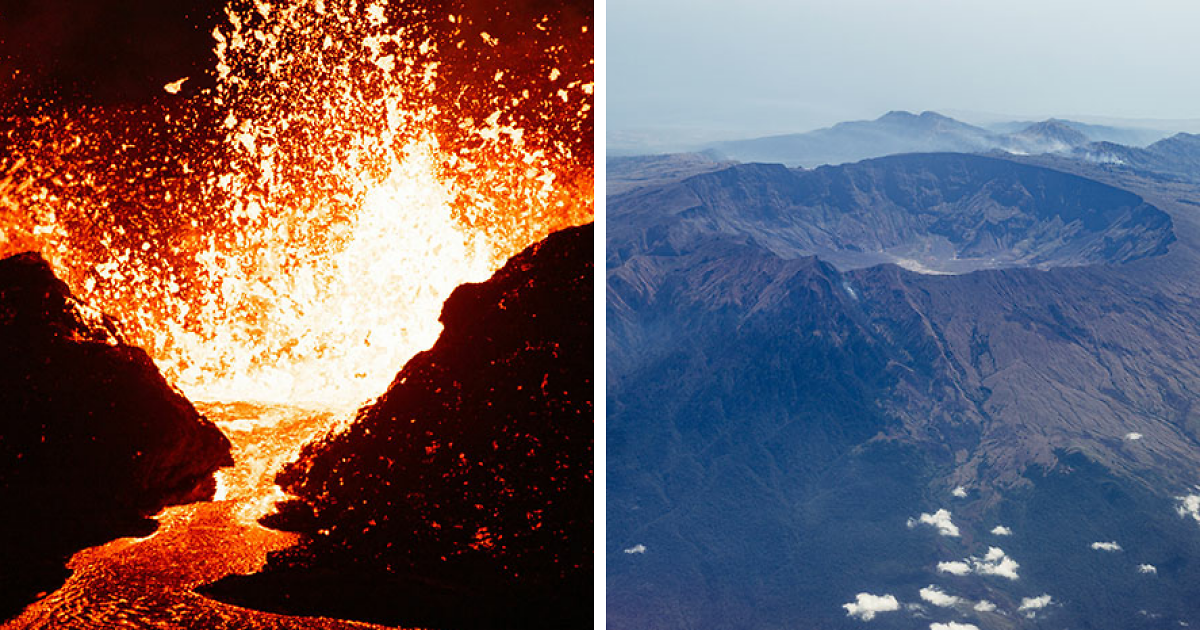
Editorial note: No scientific agency is currently predicting a specific, imminent civilization-scale volcanic eruption. The warning discussed here concerns the long-term probability of a major eruption and the world’s limited preparation for its global consequences.
Earth has a talent for looking peaceful while quietly operating an underground pressure cooker. Mountains sit politely on the horizon, tourists take selfies beside crater lakes, and somewhere below, magma is doing what magma does best: ignoring humanity’s schedule.
Scientists have warned that a very large volcanic eruption could occur within this century and that modern civilization is not adequately prepared for the cascading consequences. One widely reported statistical estimate places the probability of a magnitude-7 or larger eruption within the next 100 years at roughly one in six. That figure is not a countdown, a forecast for a named volcano, or evidence that Yellowstone has booked an appointment for Tuesday. It is a risk estimate derived from the geological record.
The concern is less about lava dramatically chasing people down highways and more about what happens after sulfur-rich gases and ash reach the upper atmosphere. A Tambora-scale eruption could interfere with sunlight, cool parts of the planet, reduce harvests, disrupt air travel, strain public-health systems, and send food prices upward just as governments begin arguing over whose emergency plan was supposed to include “temporary volcanic winter.”
Is a Massive Volcanic Eruption Really “Incoming”?
In geological language, “incoming” can mean next month, next century, or sometime after every person currently alive has become a confusing family-tree entry. Volcanologists cannot identify the date and location of the next enormous eruption from global statistics alone.
Scientists can monitor individual volcanoes for warning signs such as earthquake swarms, changes in gas emissions, rising ground temperatures, and swelling or deformation of the surface. These measurements may reveal that magma is moving. However, they do not always tell researchers exactly when an eruption will begin, how long it will last, or how large it will become.
The Smithsonian Institution’s Global Volcanism Program reports that approximately 40 to 50 eruptions are generally considered ongoing at any given time. Most are small or moderate events with regional effects. The program also says there is no evidence that volcanic activity worldwide is steadily increasing. In other words, Earth is volcanically busy, but it is not suddenly boiling over because the internet had a stressful week.
The one-in-six estimate needs context
A one-in-six probability over a century is serious enough to justify preparation, but it does not mean scientists have detected a particular eruption approaching. It is similar to estimating the chance of a major earthquake over several decades: the statistic describes accumulated risk, not a scheduled event.
Large eruptions are rare, and the geological record becomes less complete as researchers look further into the past. Some ancient eruptions occurred in remote regions, beneath oceans, or before reliable written observations. Consequently, estimates contain uncertainty. The reasonable response is neither panic nor dismissal. It is risk management.
Why Mount Tambora Still Haunts Volcanologists
To understand the warning, scientists frequently look back to the 1815 eruption of Mount Tambora in Indonesia. Tambora produced a magnitude-7 explosive eruption, formed a vast caldera, and killed tens of thousands of people through explosions, pyroclastic flows, famine, and disease.
The eruption injected enormous quantities of sulfur dioxide and volcanic material into the atmosphere. Sulfur dioxide was converted into sulfate aerosols, tiny reflective particles capable of reducing the amount of sunlight reaching Earth’s surface. The following year became known across parts of Europe and North America as the “Year Without a Summer.” Cold conditions, abnormal weather, failed crops, livestock losses, hunger, and social distress followed.
USGS accounts estimate that more than 70,000 people died in and around the affected region. In New England, some crop yields may have fallen by as much as 90 percent during the extreme conditions of 1816. Tambora demonstrated that an eruption does not need to bury the entire planet in ash to produce international suffering. It only needs to interfere with climate and agriculture at the wrong moment.
Modern civilization has more technologyand more dependencies
The world of 1815 lacked satellites, commercial aviation, container shipping, electrical grids, refrigerated supply chains, and social media accounts announcing that the apocalypse was “literally giving bad vibes.” Modern technology would help scientists observe and respond to an eruption, but modern society also depends on tightly connected systems.
A disruption in one region can now travel rapidly through commodity markets, manufacturing networks, insurance systems, transportation routes, and political relationships. A harvest failure in several major agricultural areas could increase global prices. Export restrictions could make shortages worse. Countries dependent on imported grain, fuel, medicine, or fertilizer could experience the sharpest impacts.
What Would a Giant Eruption Actually Do?
1. Devastate communities near the volcano
People close to an explosive eruption face the most immediate dangers. Pyroclastic flowsfast-moving mixtures of hot gas, ash, and rockcan destroy almost everything in their path. Ashfall can collapse roofs, contaminate water, damage machinery, block roads, and reduce visibility. Lahars, or volcanic mudflows, can travel down river valleys and strike communities far from the crater.
Depending on the volcano’s location and eruption mechanism, landslides or underwater explosions may also generate tsunamis. The 2022 Hunga Tonga–Hunga Haʻapai eruption showed how an explosive volcanic event could send atmospheric pressure waves around the globe and produce destructive waves across the Pacific.
2. Disrupt aviation
Volcanic ash is not the soft fireplace material its name suggests. It consists of hard fragments of rock, minerals, and volcanic glass. When aircraft enter an ash cloud, particles can damage windshields, sensors, ventilation systems, and engines. Ash may melt inside jet turbines and stick to internal components, potentially causing engine failure.
NOAA and international Volcanic Ash Advisory Centers use satellites, atmospheric observations, and dispersion models to track dangerous clouds. Nevertheless, a large eruption near heavily traveled flight corridors could close airspace, strand passengers, interrupt air cargo, and delay time-sensitive deliveries. The moderate 2010 Eyjafjallajökull eruption in Iceland caused extensive European aviation disruption, offering a relatively small preview of how volcanic ash can bully a global transportation system.
3. Temporarily alter the climate
Ash itself generally falls from the atmosphere too quickly to drive years of global cooling. Sulfur gases are the larger climatic concern. If a powerful eruption injects enough sulfur dioxide into the stratosphere, chemical reactions can create sulfate aerosols that reflect sunlight.
The 1991 eruption of Mount Pinatubo in the Philippines produced measurable global cooling of roughly 0.6 degrees Celsius during the following period. A larger eruption could cause a stronger or longer disturbance, although the exact response would depend on sulfur content, eruption latitude, plume altitude, aerosol size, season, and atmospheric circulation.
Researchers emphasize that super-eruption climate effects remain difficult to model. Bigger sulfur injections do not necessarily produce a perfectly proportional increase in cooling because aerosol particles can grow, interact, and settle in complicated ways. The atmosphere, apparently, refuses to behave like a simple thermostat.
4. Threaten food security
A sudden period of cooler temperatures, reduced sunlight, altered rainfall, or unusual frost could damage staple crops. Wheat, rice, corn, and soybeans are grown within specific climatic windows. Even modest temperature changes can matter when plants are flowering, when soil is already dry, or when harvests are simultaneously weakened by pests, conflict, or fertilizer shortages.
The danger would not be distributed evenly. Wealthier countries might purchase replacement supplies at higher prices. Poorer importing nations could be priced out of markets. Farmers might struggle to obtain seed, animal feed, fuel, or credit for the following season. Food insecurity could then contribute to migration, unrest, malnutrition, and disease.
5. Damage lungs, water systems, and infrastructure
Volcanic ash can irritate the eyes, skin, nose, throat, and lungs. It presents greater risks to children, older adults, and people with asthma or other respiratory conditions. Volcanic gases may also create hazardous air pollution.
Ash can clog filters, contaminate water supplies, disable electrical equipment, damage vehicles, and overload roofs when it accumulates or becomes wet. Public-health systems would need masks, clean indoor-air spaces, safe water, reliable communication, and plans for vulnerable residents. CDC guidance recommends properly fitted NIOSH-approved N95 respirators for reducing ash inhalation, while warning that particle-filtering masks do not protect against toxic gases.
Why Experts Say Humanity Does Not Have a Plan
The world does have volcano observatories, hazard maps, evacuation procedures, satellites, emergency agencies, and aviation-warning networks. The problem is that these systems mainly focus on monitoring eruptions and protecting nearby populations. There is no fully developed, rehearsed international strategy for managing years of global agricultural, economic, and humanitarian disruption after a Tambora-scale event.
Many potentially dangerous volcanoes remain inadequately monitored. Even in technologically advanced countries, instruments are not distributed equally across every volcanic system. Worldwide coverage is far more uneven. Some volcanoes have excellent seismic, deformation, gas, and satellite observations. Others receive limited ground monitoring because of cost, remoteness, conflict, difficult terrain, or lack of technical capacity.
The National Academies has concluded that scientists remain limited in their ability to predict an eruption’s timing, duration, style, size, and consequences. Better instruments help, but monitoring data must also be interpreted, communicated to officials, and converted into action. A warning that reaches the right person too late is scientifically impressive but operationally useless.
What a Serious Global Volcanic-Eruption Plan Would Include
Universal monitoring of high-risk volcanoes
Countries and international partners should prioritize volcanoes near large populations, agricultural centers, aviation corridors, ports, undersea communication cables, and major industrial facilities. Monitoring should combine seismometers, ground-deformation sensors, gas instruments, thermal cameras, satellite radar, and rapid ash detection.
Preplanned food-system responses
Governments need scenarios for simultaneous crop failures in multiple regions. Strategic reserves should contain nutritionally useful food rather than impressive mountains of a single commodity nobody can cook during a power outage. Plans should address seed supplies, fertilizer access, livestock feed, emergency imports, price stabilization, and support for low-income households.
Researchers are also exploring resilient food sources that require less sunlight or can grow in controlled environments, including mushrooms, seaweed, greenhouse crops, microbial proteins, and foods produced from agricultural residues. None is a magic replacement for global farming, but diversified options could reduce famine risk.
International trade agreements for emergencies
During a crisis, food-export bans may appear rational to individual governments while making the global situation more dangerous. International agreements could discourage unnecessary restrictions, improve data sharing, and establish priority routes for food, medicine, fuel, and emergency equipment.
Aviation and supply-chain alternatives
Airlines, shipping companies, manufacturers, and governments should identify alternative routes before ash closes major corridors. Businesses that depend on a single port, factory, semiconductor region, or transportation link should treat geographic concentration as a hazard rather than an accounting convenience.
Clear public communication
Officials must explain uncertainty without sounding either dismissive or apocalyptic. Saying “an eruption is possible” is not the same as saying “an eruption will happen tomorrow.” Alert systems need consistent terminology, trusted messengers, multilingual guidance, and specific instructions for evacuation, sheltering, respiratory protection, and ash cleanup.
Should People Be Worried About Yellowstone?
Yellowstone receives enormous attention because it has produced giant eruptions in the geological past. However, USGS scientists repeatedly state that Yellowstone is not “overdue” and shows no evidence of an approaching catastrophic eruption. Its current activityincluding earthquakes, hot springs, geysers, and gradual ground movementis expected for an active volcanic and hydrothermal system.
A future eruption at Yellowstone is possible, but a caldera-forming supereruption is not the most likely scenario. Smaller hydrothermal explosions or lava flows are more plausible than the continent-ending spectacle often advertised in online thumbnails. Monitoring would also likely detect substantial changes before a truly enormous event, although no forecasting system can promise perfect notice.
Experiences and Lessons From Past Volcanic Disasters
Historical experience shows that the eruption itself is only one part of a volcanic disaster. What determines the final death toll is often the quality of monitoring, communication, evacuation, public trust, infrastructure, and recovery planning.
The 1985 eruption of Nevado del Ruiz in Colombia offers one of the most painful lessons. The eruption melted snow and ice, generating lahars that traveled through river valleys and overwhelmed the town of Armero. Hazard maps had identified the danger, and warning signs were observed, yet communication failures, delayed decisions, uncertainty, and poor public readiness contributed to tens of thousands of deaths. Scientific knowledge existed. The final protective action did not happen quickly enough.
Mount Pinatubo produced a different outcome in 1991. Scientists from the Philippines and the United States tracked earthquakes, gas emissions, and other changes. Authorities organized evacuations before the largest explosion. The eruption still caused widespread destruction, roof collapses, displacement, and long-term hardship, but timely warnings saved many lives. Pinatubo demonstrated that volcano monitoring works best when scientists, emergency managers, military organizations, local leaders, and communities cooperate.
The 2010 Eyjafjallajökull eruption added another lesson: eruption size is not the only measure of global risk. The Icelandic volcano was not a Tambora-scale event, yet winds carried ash into heavily used European airspace. Flights were canceled, cargo was delayed, businesses lost money, and millions of travelers discovered that a volcano with a name they could not pronounce could still rearrange their week.
In 2022, Hunga Tonga–Hunga Haʻapai surprised researchers with an extraordinary atmospheric blast, tsunami, lightning activity, and a plume that carried a remarkable quantity of water vapor into the stratosphere. It reminded scientists that unusual eruption environmentsespecially shallow underwater settingscan produce combinations of hazards that do not fit familiar expectations.
Communities that live near frequently active volcanoes offer practical experience as well. Residents learn evacuation routes, keep masks available, protect water containers, clear ash from roofs, follow official alerts, and understand that valleys may be more dangerous than ridges because lahars follow drainage channels. These routines are not glamorous, but disaster preparedness rarely is. Nobody makes an action movie about the person who labeled emergency water correctly, even though that person may be the hero everyone needs.
For individuals, the most useful lesson is to prepare for realistic local hazards rather than spending every evening worrying about a hypothetical supervolcano. People living in volcanic regions should learn whether their homes, workplaces, and schools are inside ashfall, lahar, lava, landslide, or tsunami zones. Families should know evacuation routes, communication plans, medication needs, pet arrangements, and where official alerts are published.
For governments, the larger lesson is that preparedness must continue during quiet periods. Volcanoes can remain calm longer than political budgets, institutional memories, and public attention spans. Monitoring equipment requires maintenance. Emergency plans need drills. Hazard maps must be updated as populations and infrastructure expand. Relationships between scientists and decision-makers must exist before a crisis, not begin during a panicked conference call while ash is already falling.
Humanity is not helpless. We understand volcanic processes better than any previous civilization, observe Earth from space, model ash movement, forecast climate responses, and communicate across continents within seconds. The missing element is not knowledge alone. It is the willingness to turn low-frequency risk into sustained policy.
Conclusion: The Warning Is About Preparedness, Not Panic
A massive volcanic eruption will happen again someday because large eruptions are part of Earth’s natural behavior. What scientists cannot say is exactly where or when the next one will occur. Describing the event as “incoming” should therefore be understood as a warning about long-term risknot evidence that a particular volcano is about to explode.
The responsible approach is to expand global monitoring, strengthen food and transportation systems, prepare public-health responses, protect vulnerable communities, and practice international coordination. A civilization that plans for hurricanes, pandemics, cyberattacks, and financial shocks can also plan for volcanic climate disruption.
Earth may not send a calendar invitation. That is precisely why the planning should begin before the meeting starts.