Nature has never been particularly interested in straight lines. Vines wander, petals lean toward the light, mushrooms appear wherever they please, and tree branches behave as though rulers were personally offensive. That delightful unpredictability is exactly what makes nature embroidery so rewarding.
With a needle, a piece of fabric, and a slightly alarming collection of thread, an embroiderer can preserve a fleeting natural moment: sunlight on a fern, a moth resting beneath the moon, or the first red leaf of fall. Unlike a photograph, hand embroidery does not simply record the scene. It interprets it through color, texture, raised stitches, and thousands of tiny decisions.
This collection features 15 of my favorite nature-inspired embroidery pieces. Some are soft and botanical, while others are textured enough to make you wonder whether a small forest has taken up residence inside the hoop. Together, they celebrate flowers, wildlife, landscapes, and the gloriously imperfect shapes found outdoors.
Why Nature and Embroidery Belong Together
Flowers, birds, trees, fruits, and insects have appeared in embroidered textiles for centuries. Museum collections show natural forms used as decoration, storytelling devices, cultural symbols, and records of local landscapes. Historic embroiderers often studied botanical illustrations and pattern books, while some traditions used stitched motifs to preserve community history and relationships with the land.
Nature also provides an unusually forgiving subject. A slightly uneven leaf still looks like a leaf. A crooked stem may appear more convincing than a perfectly straight one. Melissa Galbraith, a botanical embroidery artist featured by the Embroiderers’ Guild of America, has similarly observed that plants grow in strange, irregular ways, making natural subjects ideal for embracing the handmade character of embroidery.
That freedom allows stitches to become more than outlines. Satin stitch can create glossy petals, French knots can suggest pollen or moss, stem stitch can follow curling vines, and turkey work can produce fuzzy seed heads. Layering colors and changing the direction of stitches can create depth, light, and remarkably convincing botanical textures.
15 Favorite Nature Embroidery Pieces
1. A Wildflower Meadow at Sunrise

This piece began with a pale wash of peach and blue thread near the horizon. Long running stitches form the distant grasses, while lazy daisy stitches create flowers in the foreground. I deliberately varied their height and spacing so the meadow would feel wild rather than landscaped by someone carrying a clipboard. Tiny French knots add yellow centers, and a few loose seed stitches suggest drifting pollen. The result is peaceful from a distance but wonderfully busy up close.
2. The Butterfly and the Thistle

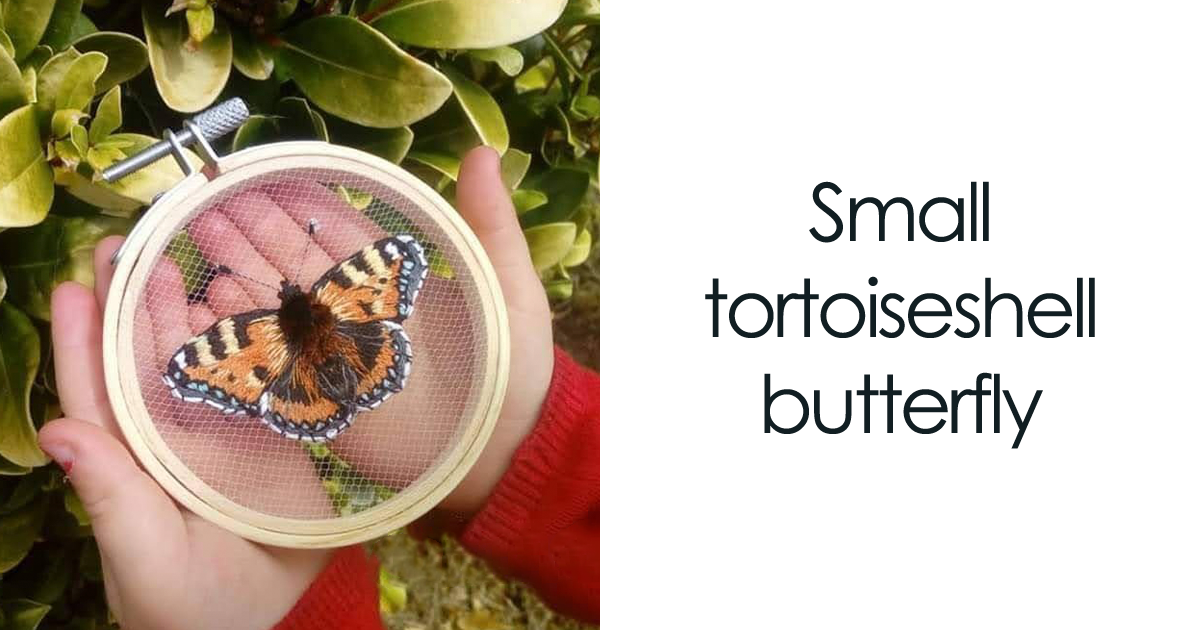
The butterfly is the star, but the thistle quietly steals several scenes. Its flower head combines densely packed French knots with straight stitches in violet, plum, and dusty pink. The wings use long-and-short stitch shading, moving from deep blue at the edges to pale turquoise near the center. Fine black backstitch outlines the wing structure without making it look like a coloring-book drawing. The challenge was creating symmetry while preserving a natural, living quality rather than producing a butterfly-shaped company logo.
3. Mossy Forest Floor

This hoop is all about texture. Green seed stitches overlap in several directions to create moss, while looped turkey work adds soft, raised areas around the roots. The ferns are stitched with narrow fishbone leaves branching from curved stems. Small mushrooms emerge in cream, rust, and brown, with padded satin stitch giving their caps a rounded shape. I also left patches of the linen visible because a forest floor needs visual breathing roomeven fictional moss should not have to fight rush-hour traffic.
4. Moonlit Moth

Worked on dark navy fabric, this design uses cream, silver-gray, and muted gold thread. Split stitch creates the moth’s fuzzy body, while satin stitch fills the wings with subtle bands of color. Metallic thread appears only in the moon and a handful of stars; too much sparkle would have turned the night sky into a craft-store emergency. The limited palette gives the piece a quiet, mysterious feeling and allows the change in thread direction to provide most of the visual detail.
5. A Tiny Tide Pool

This coastal embroidery combines watery blue layers with raised marine details. Curving rows of chain stitch suggest ripples, and translucent beads imitate bubbles catching the light. The seaweed is made with fly stitch and detached chain stitch in olive, teal, and kelp brown. A padded orange starfish rests near the center, surrounded by shell shapes worked in buttonhole stitch. The scene is not scientifically organized, but neither is the average beach bag after a long afternoon near the ocean.
6. Wild Strawberries

The berries use padded satin stitch so they rise slightly above the fabric. Tiny yellow seed stitches create the familiar dotted surface, while several shades of red help distinguish ripe fruit from berries still turning color. The leaves are filled with fishbone stitch, which naturally creates a central vein. White flowers keep the design bright and prevent the composition from becoming a red-and-green holiday decoration six months ahead of schedule.
7. The Fox Among the Ferns

Creating fur with thread requires restraint. Instead of filling the fox with one flat orange tone, I layered short stitches in rust, cinnamon, cream, and dark brown. Their direction follows the body, especially around the face and curled tail. The surrounding ferns overlap the fox in several places, making it appear tucked into the woodland rather than pasted on top. A few whiskers in single strands of thread provide the final detailand the greatest opportunity to accidentally knot everything at the last minute.
8. Autumn Leaves in Motion

Instead of arranging the leaves into a formal wreath, I placed them along a loose diagonal path. This gives the composition movement, as though a gust has just scattered them across the fabric. Long-and-short stitches blend yellow, copper, orange, and burgundy within individual leaves. Dark stem stitches define the veins. Several small leaves remain only partially filled, a reminder that negative space can be as useful as another twelve shades of orange.
9. Cardinal on Snowy Branches

The background is intentionally sparse, with thin gray branches and white knots representing clumps of snow. Against that softness, the cardinal appears almost luminous. Its feathers are built from overlapping red stitches, with darker maroon beneath the wing and near the tail. One tiny black bead forms the eye. The composition proves that winter embroidery does not require covering every inch in white thread and then wondering why your hands feel as tired as a snowplow driver.
10. Desert Cactus in Bloom

This design relies on directional chain stitches to give each cactus arm its rounded form. Two shades of green create areas of light and shadow, while tiny straight stitches suggest spines. The flowers combine buttonhole stitch, French knots, and loose loops in coral and magenta. Botanical terrarium embroidery often uses changes in stitch density, color, and raised techniques to distinguish plants, rocks, sediment, and prickly surfaces.
11. Honeybee and Clover

The bee is only a few inches wide, yet it contains some of the collection’s smallest stitches. Black and gold bands curve around the padded body, and a touch of fuzzy thread creates the thorax. The wings use pale gray thread laid in open, widely spaced stitches so the base fabric remains visible. Clover flowers are assembled from dozens of tiny loops and knots. It is a cheerful study of pollination, patience, and how often a needle can disappear into a carpet.
12. Rainy Window Garden

This piece brings nature indoors. The window is outlined with simple backstitch, while long silver and blue stitches run down the glass like rain. In front of it, three potted plants use contrasting leaf shapes: rounded satin-stitched leaves, narrow fly-stitched fronds, and a trailing chain-stitched vine. The muted background makes the greens feel especially fresh. It captures the pleasant side of rainy weatherthe side involving tea and plants, not the side involving wet socks.
13. Mushrooms Beneath the Oak

The mushroom caps are padded to create a three-dimensional effect, with soft color transitions from cream to chestnut. Their stems use vertical split stitches, while tiny straight stitches form the gills beneath several tilted caps. Above them, oak leaves frame the scene in deep green and bronze. The acorns are worked with knotted caps and smooth satin-stitched bodies. This is one of those pieces that begins as “just three mushrooms” and somehow becomes an entire woodland neighborhood association.
14. Lavender Field at Dusk

Perspective does most of the work here. Lavender rows begin wide and textured at the bottom, then become narrower and less detailed toward the horizon. French knots create the closest flowers, while simple straight stitches describe the distant field. The sky blends peach, lilac, and dusty blue with long horizontal stitches. The piece feels expansive despite fitting inside a small hoop, which is one of embroidery’s finest tricks: producing a landscape from less fabric than an average pillowcase.
15. The Four Seasons Wreath

The final design brings the entire collection together. Spring begins with pale blossoms and tender leaves. Summer introduces daisies, berries, and full greenery. Autumn shifts into acorns and copper foliage, while winter finishes with bare twigs, red berries, and a dusting of white knots. The transitions are gradual rather than divided into four obvious sections. Nature rarely changes seasons by flipping a switch, unless that switch controls unpredictable April weather.
How I Build a Nature Embroidery Design
Most pieces start with observation rather than stitching. I photograph plants, collect fallen leaves, sketch branch shapes, and record color combinations that would be difficult to remember accurately. A green leaf, for example, may contain yellow near its veins, blue in its shadows, and brown along one damaged edge. Those variations are what make botanical embroidery feel alive.
I then reduce the subject to its essential shapes. Too much detail can overwhelm a small hoop, so I decide which areas deserve dense stitching and which can remain open. The foundation fabric also matters. Linen gives botanical work a natural appearance, while tightly woven cotton supports finer details. Historically, stitch type and foundation fabric have often been selected together because different structures respond differently to tension and coverage.
Thread direction is another form of drawing. Stitches that follow the curve of a petal make it appear rounded. Short, irregular stitches create fur, while parallel stitches can suggest calm water or a distant sky. Contemporary fiber artists continue to use familiar materials such as cotton, felt, wool, and thread to produce highly personal artworks, reinforcing embroidery’s place far beyond the category of simple decoration.
Caring for Finished Embroidery Pieces
A finished embroidery should be handled with clean, dry hands and kept away from food, drinks, lotions, and jewelry that might snag the threads. Smithsonian conservation guidance recommends preparing a clean, flat work surface before examining or storing a textile.
Direct sunlight is particularly unkind to dyed thread. Textile specialists note that textiles are highly reactive to light and require careful control of illumination, humidity, handling, and storage. Displaying embroidery away from sunny windows and intense lamps can help preserve its colors. Older or especially valuable pieces may benefit from conservation-grade framing and periodic breaks from display.
When storing loose pieces, avoid placing heavy objects on top of them or creating sharp folds. Flat, supported storage with clean materials is generally preferable for smaller works. Finished hoop art should also be protected from dust, moisture, and curious pets who believe dangling thread is an invitation rather than an artistic medium.
Personal Notes From the Hoop: What These Pieces Taught Me
Working on this nature embroidery collection changed the way I look at ordinary outdoor scenes. Before I began stitching plants regularly, a roadside patch of weeds was simply a roadside patch of weeds. Now I notice the reddish edges of new leaves, the tangled geometry of dry grass, and the way one tiny flower can contain five colors that all insist on owning separate spools of thread.
The wildflower meadow taught me that looseness can be more convincing than precision. My first attempt was carefully organized, with each flower standing politely apart from its neighbors. It looked less like a meadow and more like a school photograph. Once I allowed stems to cross, petals to overlap, and colors to appear in uneven clusters, the scene finally felt natural.
The fox was a lesson in patience. I originally tried to fill its body with long, smooth stitches, but the result looked flat and strangely polished. Real fur breaks light into countless small changes, so I removed much of the stitching and rebuilt it with shorter marks. Unpicking several hours of work was not a spiritual experience I would recommend, but the second version had far more life.
The tide pool presented a different challenge. I wanted every shell, bubble, strand of seaweed, and pebble to be visible. Predictably, the first layout became crowded. Simplifying it improved the design. That experience reminded me that embroidery is not measured by the number of stitches squeezed into a hoop. Empty fabric can represent light, water, air, or distance. It gives detailed areas somewhere to shine.
I also became less afraid of changing a plan halfway through. The moonlit moth was supposed to include a large cluster of flowers, but the extra shapes competed with the wings. Removing them made the composition calmer. The lavender field began with a bright yellow sunset, which looked dramatic but distracted from the purple rows. Replacing it with softer peach and blue allowed the landscape to become the focus.
Some of my favorite discoveries happened accidentally. A French knot wrapped too many times became the perfect center for a wildflower. A loose loop looked exactly like a curling fern. Two shades of green threaded through the needle together produced a leaf more convincing than either color could create alone. Embroidery rewards preparation, but it also leaves room for improvisation.
Most importantly, stitching nature has taught me to slow down. A photograph can capture a flower in a fraction of a second; embroidering it may take several evenings. During that time, I study its shape repeatedly. I decide where the light falls, which curve defines the petal, and which details can be omitted without losing its character.
That slow attention is what connects these 15 pieces. They are not perfect replicas of nature, nor are they meant to be. They are records of looking closely. Every uneven leaf, layered color, and stubborn knot reflects the handmade process. Nature does not produce identical petals, and embroidery does not need to either.
In the end, the most satisfying moment is not tying the final knot. It is stepping back and realizing that a plain piece of fabric now holds a meadow, a forest, a shoreline, or an entire season. The hoop may be small, but the world inside it does not have to be.
Note: Replace the placeholder image filenames with the final uploaded photographs and verify that each alternative-text description accurately matches its corresponding embroidery piece before publication.