Editor’s Note: This article examines assassination as a historical force, not as something to admire, imitate, or romanticize. The focus is on political consequences, public memory, and the fragile moments when one violent act reshaped nations.
Introduction: When One Death Changes the Timeline
History is usually taught as a parade of laws, wars, speeches, elections, treaties, and very serious portraits of people who apparently never smiled. But sometimes, history turns on a single violent moment. An assassination can end a life, collapse a government, ignite a war, freeze a reform movement, or turn a leader into a symbol far larger than their actual time in power.
The phrase “successful assassination” sounds cold, almost like a scorecard. In this article, it simply means that the intended target died. There is no celebration here. These events were tragedies, crimes, and shocks to public life. Still, they remain among the most famous assassinations in world history because their consequences were enormous. They altered empires, shaped national identities, changed security practices, and forced societies to ask uncomfortable questions about extremism, polarization, and leadership.
Below are ten of the most famous successful assassinations, selected for historical impact, public recognition, and long-term influence. Some are ancient. Some are modern. Some involved heads of state; others involved civil rights leaders or peace advocates. Together, they show that assassination rarely produces the clean political result its perpetrators imagine. More often, it creates grief, instability, backlash, and a legacy no one can fully control.
1. Julius Caesar: The Ides of March and the Death of the Roman Republic
Few assassinations are as famous as the killing of Julius Caesar on March 15, 44 BCE. The date, remembered as the Ides of March, has become shorthand for betrayal with sandals on. Caesar had accumulated extraordinary power in Rome, and a group of senators believed his rule threatened the republic. Their plan was to remove a would-be monarch and restore political balance. History, being history, did not follow the memo.
Caesar’s death did not save the Roman Republic. Instead, it helped plunge Rome into more civil conflict, eventually leading to the rise of Augustus and the Roman Empire. The assassination became legendary not only because of the political drama but also because of its symbolism: friends, rivals, ambition, fear, and the failure of elite violence to solve a constitutional crisis. It remains one of the clearest examples of an assassination producing the opposite of what its organizers intended.
2. Abraham Lincoln: A Nation’s Mourning After the Civil War
President Abraham Lincoln was assassinated in April 1865, just days after General Robert E. Lee surrendered at Appomattox and the American Civil War was nearing its end. Lincoln had guided the United States through its greatest internal crisis, and his death came at the exact moment the country needed careful reconstruction, reconciliation, and moral clarity.
The assassination transformed Lincoln from a wartime president into a national martyr. It also left Reconstruction in the hands of Andrew Johnson, whose approach to rebuilding the South and protecting formerly enslaved people differed sharply from what many historians believe Lincoln might have pursued. Lincoln’s murder did not merely remove a president; it changed the political environment in which freedom, citizenship, and federal authority would be contested for generations. The country had survived the war, but the peace became far more difficult.
3. Archduke Franz Ferdinand: The Spark Before World War I
The assassination of Archduke Franz Ferdinand of Austria in Sarajevo on June 28, 1914, is often described as the spark that helped ignite World War I. That description is useful, as long as we remember that Europe was already sitting on a giant barrel of diplomatic fireworks. Rival alliances, nationalism, imperial competition, and military planning had made the continent dangerously unstable.
Franz Ferdinand’s death triggered a crisis between Austria-Hungary and Serbia, which widened through alliances and ultimatums until Europe descended into war. The assassination did not single-handedly cause World War I, but it gave existing tensions a dramatic point of ignition. Its fame comes from that terrifying chain reaction: one attack in a Balkan city helped open the door to a global conflict that killed millions and reshaped the twentieth century.
4. Mahatma Gandhi: The Murder of a Nonviolent Icon
Mahatma Gandhi was assassinated in New Delhi on January 30, 1948, only months after India achieved independence from British rule. Gandhi had become a global symbol of nonviolent resistance, moral discipline, and mass political mobilization. Yet independence had also arrived with Partition, communal violence, displacement, and deep anger between religious communities.
Gandhi’s assassin opposed his efforts toward Hindu-Muslim reconciliation. The killing stunned India and the world because Gandhi’s public life had been built around the idea that political change did not require hatred or revenge. His death exposed the dangers of extremism in a newly independent nation and made his teachings even more internationally influential. In the long run, Gandhi’s assassination did not erase his message. If anything, it amplified it, turning his life into a reference point for civil rights movements, anti-colonial struggles, and peace activism around the globe.
5. John F. Kennedy: The Assassination That Shaped Modern America
President John F. Kennedy was assassinated in Dallas, Texas, on November 22, 1963. Young, charismatic, and television-ready, Kennedy represented a new style of American politics. His presidency had already faced the Cuban Missile Crisis, civil rights tensions, Cold War pressure, and the early expansion of U.S. involvement in Vietnam.
Kennedy’s death became one of the defining public traumas of the twentieth century. Millions of Americans remembered exactly where they were when they heard the news. The assassination also placed Lyndon B. Johnson in the presidency, leading to major civil rights legislation, the Great Society, and a deeper commitment in Vietnam. Beyond policy, the event helped create a modern culture of suspicion, investigation, and conspiracy thinking. The Kennedy assassination remains famous not only because of who died, but because the unanswered questions surrounding it became part of American political culture.
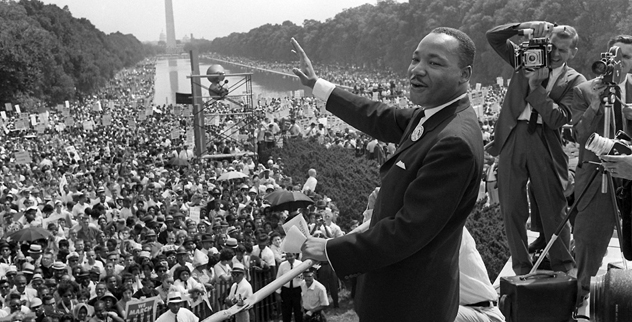
6. Martin Luther King Jr.: A Dream Interrupted, Not Defeated
Dr. Martin Luther King Jr. was assassinated in Memphis, Tennessee, on April 4, 1968. By then, King was no longer only the leader associated with the Montgomery Bus Boycott or the March on Washington. He had expanded his work to include opposition to the Vietnam War, economic justice, labor rights, and the Poor People’s Campaign.
King’s assassination triggered grief, anger, and unrest across the United States. It also accelerated the passage of the Fair Housing Act of 1968, one of the major civil rights laws of the era. His death turned him into a national symbol, but that symbolism sometimes softens the radical edge of his actual message. King was not simply asking everyone to be nicer over coffee. He challenged segregation, poverty, militarism, and political complacency. His assassination made him a martyr, but his writings and speeches continue to demand action, not just annual quotations.
7. Malcolm X: A Voice Silenced in a Time of Transformation
Malcolm X was assassinated on February 21, 1965, while speaking at the Audubon Ballroom in New York City. He had become one of the most powerful and controversial voices in the Black freedom struggle. His public life moved through several phases: from Nation of Islam minister, to fierce critic of white supremacy, to international human rights advocate after his pilgrimage to Mecca and travels abroad.
His assassination came during a period of intense tension after his break with the Nation of Islam. For decades, questions surrounding the case continued to trouble historians, activists, and legal observers. In 2021, two men who had been convicted in connection with the killing were exonerated, reminding the public that history is not always neatly closed. Malcolm X’s death remains famous because his influence kept growing after 1965. His speeches, autobiography, and evolving political thought continue to shape conversations about race, justice, dignity, and self-determination.
8. Anwar Sadat: Peace, Risk, and a Deadly Backlash
Egyptian President Anwar Sadat was assassinated on October 6, 1981. Sadat had led Egypt through the 1973 October War and later made one of the boldest diplomatic moves in modern Middle Eastern history: pursuing peace with Israel. Alongside Israeli Prime Minister Menachem Begin, he shared the 1978 Nobel Peace Prize, and Egypt signed a peace treaty with Israel in 1979.
That peace effort changed Egypt’s regional position and angered many opponents at home and across the Arab world. Sadat’s assassination showed the personal risk faced by leaders who attempt dramatic political realignment. His death did not undo the Egypt-Israel peace treaty, which remained a cornerstone of regional diplomacy, but it revealed how deeply divisive peace can become when it is seen by critics as betrayal. Sadat’s legacy is still debated: visionary statesman to some, controversial leader to others, and a reminder that peacemaking can require unusual courage.
9. Indira Gandhi: Power, Crisis, and Aftermath in India
Indian Prime Minister Indira Gandhi was assassinated on October 31, 1984, by two of her Sikh bodyguards. The killing followed Operation Blue Star, a military action ordered by her government at the Golden Temple complex in Amritsar, one of Sikhism’s holiest sites. The operation caused deep anger among many Sikhs and intensified already severe political tensions.
Indira Gandhi was one of the most dominant figures in modern Indian politics. She had led the country during war, centralized power, declared a controversial Emergency, and returned to office after defeat. Her assassination unleashed horrific anti-Sikh violence in India, leaving a painful legacy that still shapes public memory. The event is famous not only because a prime minister was killed, but because of the wider crisis it exposed: the danger of religious polarization, state force, revenge politics, and communal violence spiraling beyond control.
10. Yitzhak Rabin: The Assassination of a Peace Process
Israeli Prime Minister Yitzhak Rabin was assassinated on November 4, 1995, after attending a peace rally in Tel Aviv. A former general and military leader, Rabin had become a central figure in the Oslo peace process with the Palestinians. His military background gave him credibility among Israelis who might have distrusted a purely idealistic peacemaker.
Rabin’s assassin opposed the Oslo Accords and the territorial compromises associated with them. The killing shocked Israel and the world because it came not from an external enemy but from within Israeli society. Rabin’s death did not single-handedly end the peace process, but it badly weakened momentum and deepened political divisions. Today, his assassination is remembered as a warning about internal extremism, inflammatory rhetoric, and the fragility of democratic debate when compromise is treated as treason.
Why These Assassinations Remain So Famous
Not every assassination becomes a permanent chapter in world history. The events above remain famous because they occurred at moments of extraordinary pressure. Caesar’s Rome was already politically unstable. Lincoln’s America was emerging from civil war. Europe before 1914 was armed, anxious, and locked into rival alliances. India after Partition was wounded. The United States in the 1960s was wrestling with civil rights, war, and generational change. The Middle East faced peace efforts surrounded by suspicion and anger.
In each case, assassination did not create the larger conflict from nothing. Instead, it exposed the conflict, intensified it, or redirected it. That is the key pattern. Assassins often imagine themselves as history’s editors, cutting out one person to rewrite the ending. But history is stubborn. Remove a leader, and the forces around that leader do not disappear. Sometimes they become stronger. Sometimes they become more chaotic. Sometimes the victim becomes a symbol more powerful than any living politician could be.
Lessons and Reflections From Studying Famous Assassinations
Studying the most famous successful assassinations is not just an exercise in grim trivia. It is a way of understanding how societies handle fear, disagreement, power, and memory. The first lesson is that political violence is usually a sign of failure: failure of trust, failure of institutions, failure of civic language, and failure of people to accept that opponents can be challenged without being destroyed.
The second lesson is that public memory can simplify complicated people. Abraham Lincoln becomes the marble statue of national unity, but he was also a working politician making difficult choices in real time. Martin Luther King Jr. becomes the peaceful dreamer, but he was also a sharp critic of economic injustice and war. Malcolm X becomes a symbol of defiance, but his ideas evolved rapidly in the final years of his life. Gandhi becomes the saint of nonviolence, but he lived in a brutally complex political environment. Memory loves clean posters; history prefers messy notebooks.
The third lesson is that security changes after tragedy. The assassination of U.S. presidents reshaped presidential protection. The deaths of leaders such as Sadat, Rabin, and Indira Gandhi forced governments to rethink insider threats, crowd control, and political intelligence. Yet stronger security cannot solve the deeper causes of extremism. Guards can protect a stage, a motorcade, or a residence. They cannot, by themselves, repair a culture poisoned by conspiracy, dehumanization, or fanaticism.
The fourth lesson is that assassinations often backfire. Caesar’s killers wanted to preserve the republic; Rome moved toward empire. Lincoln’s killer wanted to damage the Union cause; Lincoln became one of the most revered figures in American history. Gandhi’s killer opposed reconciliation; Gandhi’s image became a global symbol of peace. Rabin’s killer wanted to stop a peace process, and while the process suffered, Rabin himself became an enduring symbol of the risks of pursuing compromise.
For writers, students, and readers, the responsible way to approach this topic is to focus on context and consequences rather than lurid detail. The important questions are not “How did the attacker do it?” but “Why was the society so tense?” “What changed afterward?” “Who benefited?” “Who suffered?” and “What warnings were ignored?” These questions turn a dark subject into a meaningful historical investigation.
Finally, studying assassinations reminds us that democracy and civil society depend on habits that sound boring until they disappear: peaceful disagreement, lawful transitions, credible institutions, public accountability, and the ability to see political opponents as human beings. That may not sound as dramatic as a palace conspiracy or a motorcade crisis, but it is the real machinery of a stable society. History’s loudest tragedies often teach the quietest lesson: when words fail, violence does not solve the argument. It only leaves the living to clean up the wreckage.
Conclusion: The Human Cost Behind Historical Turning Points
The 10 most famous successful assassinations are not just entries on a timeline. They are reminders that individual lives and global events can collide with terrifying force. Each case involved a person whose role had become larger than private life: emperor, president, prime minister, reformer, activist, or peace negotiator. Their deaths became public events because their lives were tied to unresolved conflicts.
The deeper lesson is that assassination rarely ends a debate. It changes the room in which the debate continues. Sometimes it radicalizes people. Sometimes it freezes a movement in grief. Sometimes it creates a martyr. Sometimes it exposes the weakness of institutions that looked strong from the outside. In every case, the cost is paid not only by the victim but by families, communities, nations, and future generations trying to understand what happened.
History should remember these events with seriousness, not fascination for violence. Their importance lies in what they reveal about power, fear, polarization, reform, and the fragile work of peace.