Some days, your energy disappears before lunch. One coworker delivers a dramatic monologue, your phone produces 47 notifications, and your calendar looks like it was designed by a raccoon with administrative access. By 2 p.m., you are technically awake but emotionally buffering.
Learning how to protect your energy is not about becoming cold, selfish, or mysteriously unavailable. It is about managing your attention, emotional capacity, physical stamina, and recovery time with intention. You cannot prevent every difficult conversation or deadline, but you can stop treating your inner resources like an unlimited group snack.
Note: In this article, “energy” means your practical mental, emotional, and physical capacity. It is not a medical diagnosis or a claim about invisible forces. Persistent exhaustion, major mood changes, anxiety, or problems functioning deserve attention from a qualified health professional.
What Does It Mean to Protect Your Energy?
Protecting your energy means noticing what repeatedly drains you, deciding what deserves access to you, and building habits that help you recover. The goal is not to feel cheerful every minute. That would be exhausting by itself. The goal is to remain steady enough to think clearly, respond deliberately, and spend your effort on people and priorities that matter.
Your energy can be depleted by obvious pressures, such as poor sleep, overwork, conflict, illness, and financial stress. It can also leak through tiny openings: constant notifications, unclear expectations, unfinished tasks, people-pleasing, doomscrolling, and saying “sure” while every cell in your body is quietly yelling, “Absolutely not.”
How to Protect Your Energy: 14 Powerful Techniques
1. Perform a Daily Energy Check-In
Before adding another task, ask three questions: What is draining me? What is restoring me? What actually needs my attention today? This two-minute inventory turns a vague sense of overwhelm into usable information.
Rate your physical, mental, and emotional energy from one to ten. A low score is not a character flaw; it is data. On a four-out-of-ten day, choose essential work, postpone optional decisions, and avoid volunteering to organize a surprise office carnival. Matching your workload to your real capacity is smarter than pretending every day is powered by premium fuel.
2. Set Clear Personal Boundaries
Personal boundaries define what you will do, when you are available, and how you expect to be treated. They are not punishments or walls. They are instructions for maintaining sustainable relationships.
Use direct language: “I cannot take that on this week,” “I am unavailable after 6 p.m.,” or “I am willing to discuss this when we can speak respectfully.” Avoid writing a courtroom defense for every limit. A boundary becomes weaker when it arrives wrapped in twelve apologies and a fruit basket.
3. Replace Automatic Yeses With a Pause
People often lose energy in the few seconds between receiving a request and reflexively agreeing to it. Create a standard pause: “Let me check my schedule and get back to you.” That sentence protects you from commitments made under surprise, guilt, or social pressure.
Before saying yes, calculate the hidden cost. A one-hour meeting may also require preparation, commuting, follow-up, and emotional recovery. Ask whether the request supports your responsibilities, values, or important relationships. A thoughtful no protects the quality of your future yes.
4. Build Digital Guardrails
Your phone is useful, entertaining, and occasionally behaves like a tiny casino manager. Every alert invites your brain to change direction. Protect your mental energy by disabling nonessential notifications, removing attention-hungry apps from your home screen, and creating specific times for email and social media.
Try a 30-minute notification-free period at the start of the day. Do not let other people’s messages write your morning agenda before you have located your socks. At night, charge your phone outside arm’s reach and give your mind a quiet landing strip before sleep.
5. Treat Sleep as Energy Infrastructure
Sleep is not leftover time after productivity has eaten everything else. It supports attention, emotional regulation, learning, decision-making, and physical recovery. Protect it with a consistent wake time, a calmer evening routine, and a bedroom that is dark, quiet, and comfortably cool.
Reduce late caffeine when it disrupts your sleep, and avoid turning bedtime into a second work shift. When you regularly struggle to sleep, snore heavily, wake gasping, or remain exhausted despite adequate time in bed, speak with a healthcare professional. A scented candle cannot negotiate with an untreated sleep disorder.
6. Move Your Body to Change Your State
Movement can interrupt mental stagnation and release some of the tension that accumulates during stressful days. You do not need an elaborate fitness identity. Walk for ten minutes, stretch between meetings, dance while making dinner, or take the stairs when your knees and circumstances agree.
The most protective routine is one you can repeat. Schedule movement before your energy reaches zero rather than waiting to feel inspired. Motivation is famously unreliable; it has missed more appointments than a fictional cable technician.
7. Use Slow Breathing as an Immediate Reset
When stress rises, breathing may become shallow or hurried. A brief period of comfortable, slower breathing can give you space before reacting. Try inhaling gently through your nose and exhaling a little longer than you inhale. Continue for one to five minutes without straining or holding your breath uncomfortably.
Use this technique before a difficult call, after reading an upsetting message, or while sitting in your car before going inside. The goal is not to erase the problem. It is to lower the internal volume enough to choose your next move.
8. Practice Mindfulness Without Making It a Performance
Mindfulness means paying attention to the present moment with less automatic judgment. It can be practiced during meditation, but also while showering, walking, washing dishes, or drinking coffee before it becomes mysteriously cold.
Start with three breaths. Notice physical sensations, sounds, and thoughts without chasing each one. When your attention wanders, return gently. Wandering is not failure; noticing it is the practice. Five consistent minutes are more useful than one heroic 45-minute session followed by a six-month spiritual sabbatical.
9. Stabilize Energy With Regular Food and Hydration
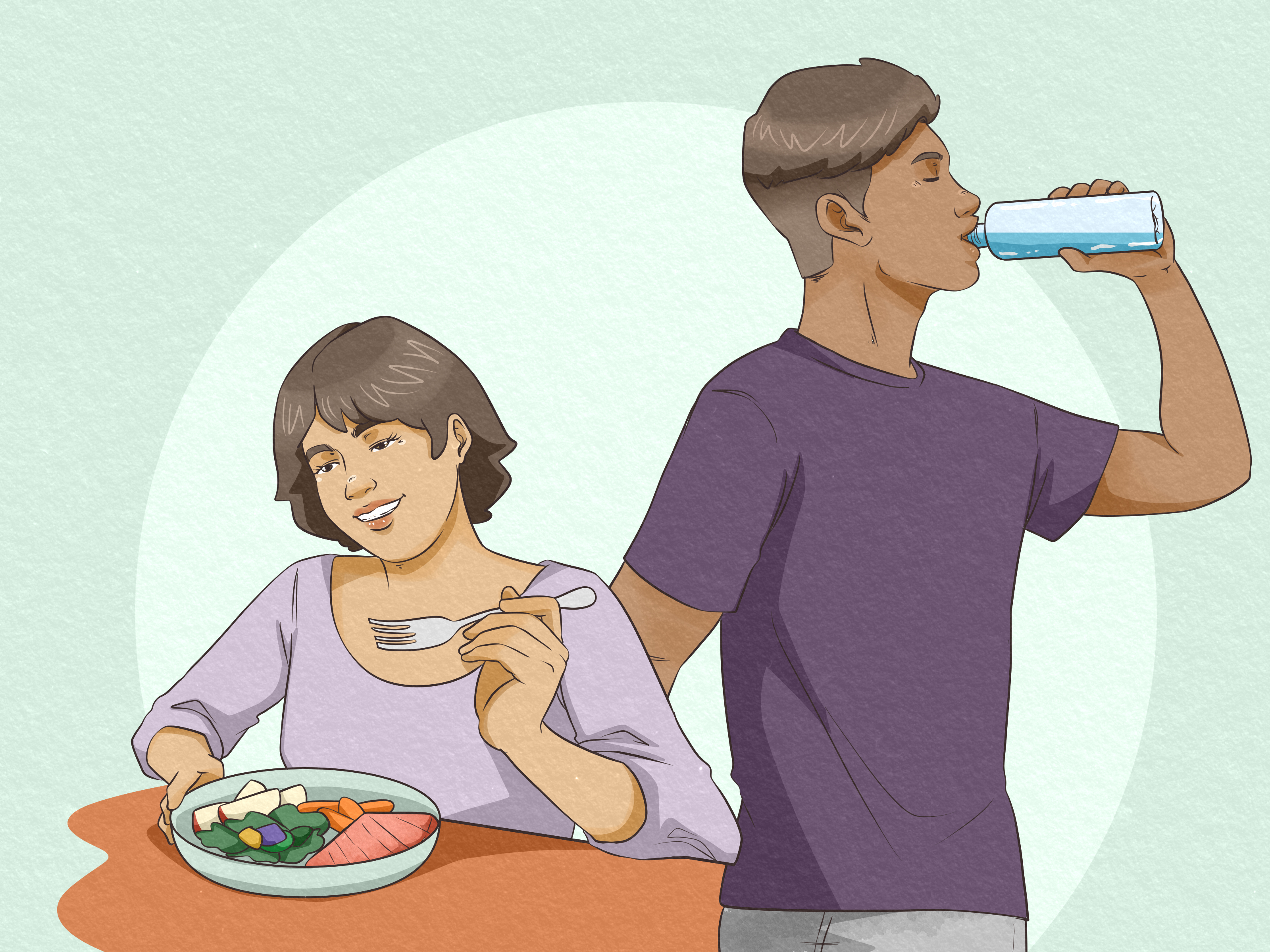
Long gaps between meals, dehydration, excess alcohol, or too much caffeine can make an already demanding day feel harder. Build simple meals around foods that provide lasting satisfaction, such as vegetables or fruit, protein, whole grains, and healthy fats, while adapting your choices to your health needs and preferences.
Keep water visible and convenient. When your afternoon routine consists of coffee, panic, and one decorative almond, your body may have reasonable complaints. Consistency matters more than dietary perfection.
10. Spend Intentional Time Outdoors
Outdoor time can create distance from screens, enclosed workspaces, and repetitive thoughts. You do not need a mountain retreat or a dramatic linen outfit. Sit near a tree, walk around the block, tend a garden, or eat lunch outside.
Make the experience sensory. Notice temperature, light, movement, sounds, and color. This gives your attention something immediate and concrete to do. Even a short outdoor break can become a transition ritual between work mode and personal time.
11. Choose Relationships That Allow Reciprocity
Healthy support is not perfectly equal every day, but it is reciprocal over time. Notice who listens, respects your limits, celebrates your progress, and accepts that you are a person rather than a 24-hour emotional help desk.
With chronically draining relationships, reduce exposure, shorten conversations, change the subject, or state a limit. You can care about someone without becoming responsible for every crisis they repeatedly manufacture. Compassion works better when it has a spine.
12. Stop Multitasking and Close Open Loops
Switching constantly among messages, documents, calls, and unfinished chores consumes attention. Choose one meaningful task, define a stopping point, and work on it for a protected block of time. Keep a capture list nearby so unrelated thoughts have somewhere to go besides running laps in your brain.
Close small open loops when practical: send the two-line reply, schedule the appointment, put the item where it belongs, or decide not to do the task at all. Mental clutter often survives because decisions remain half-made.
13. Journal to Separate Facts From Mental Noise
Writing can turn a swarm of thoughts into a sequence. Try four headings: What happened? What am I feeling? What is within my control? What is the next useful step? This structure prevents journaling from becoming a 17-page prosecution of everyone who annoyed you since breakfast.
Add one specific gratitude, not to deny difficulty but to widen your attention. “I am grateful my friend checked in” is more meaningful than forcing yourself to declare that everything is wonderful when it clearly needs repairs.
14. Create a Recovery Ritual and Know When to Seek Help
Energy protection requires recovery, not just better defense. Build a repeatable ritual that tells your mind the demanding part of the day is over: change clothes, take a shower, walk, stretch, play music, pray, read, prepare tea, or spend ten quiet minutes doing nothing productive.
Also recognize when ordinary self-care is not enough. Persistent exhaustion, hopelessness, panic, inability to function, major sleep disruption, or distress that keeps worsening may require professional support. A therapist, physician, or other qualified provider can help identify contributing factors and appropriate treatment options. Protecting your energy includes refusing to struggle alone when skilled help is available.
Conclusion
Learning how to protect your energy is a form of practical self-respect. It involves personal boundaries, sleep, movement, mindful attention, supportive relationships, sensible digital habits, and deliberate recovery. These techniques do not eliminate stress, difficult people, or printers with suspicious attitudes. They help you meet those realities without donating every available ounce of yourself.
Start small. Pause before saying yes, silence one category of notifications, take a brief walk, or create a firm end to the workday. Energy protection becomes powerful when it stops being an occasional rescue mission and becomes part of how you live.
A Realistic Experience: One Week of Protecting Your Energy
The following is a composite scenario based on common experiences. It is not presented as the writer’s personal story or as an individual clinical case.
Imagine Maya, a project coordinator who starts most mornings by checking email in bed. Before her feet touch the floor, she has absorbed a client complaint, three meeting changes, a family group-chat debate, and a video explaining why civilization may collapse before breakfast. She calls herself “bad at mornings,” although her morning has essentially been mugged by notifications.
On Monday, Maya performs an energy check-in. Her physical energy is six, mental energy is four, and emotional energy is three. Instead of making a giant improvement plan, she chooses two rules: no email for the first 30 minutes after waking and no work messages after 7 p.m. She tells her team when she will respond to urgent issues and defines what “urgent” actually means. The world continues rotating.
Tuesday brings a request to join a volunteer committee. Her automatic yes forms in her mouth, wearing a cheerful little hat. She pauses and says, “Let me check my schedule.” Later, she declines politely. Nothing explodes. The organizer simply asks someone else, revealing a shocking truth: many requests are not sacred destiny.
On Wednesday, a tense meeting leaves her replaying one colleague’s comment. She takes a ten-minute walk, breathes slowly, and writes three lines: the fact, her interpretation, and her next action. The fact is that the colleague questioned the timeline. Her interpretation is that everyone thinks she is incompetent. Her next action is to clarify the timeline and document the risks. Separating those pieces saves hours of emotional detective work.
Thursday is messy. She sleeps poorly, skips lunch, drinks too much coffee, and becomes irritated by a printer. Energy protection does not prevent bad days, and the printer may indeed have questionable motives. Instead of declaring the entire experiment a failure, she eats, hydrates, completes one priority, and moves two optional tasks to Friday.
On Friday evening, Maya uses a recovery ritual. She changes clothes, walks around the neighborhood, and listens to music before speaking about work. That small transition keeps workplace stress from arriving at dinner like an uninvited guest carrying spreadsheets.
Over the weekend, she notices that one friend leaves her feeling understood while another repeatedly calls only to unload problems and ignores every limit. Maya does not stage a dramatic friendship trial. She shortens the draining calls and schedules more time with the reciprocal friend.
She also discovers that small pauses protect more energy than occasional dramatic resets because they prevent stress, unfinished decisions, and resentment from compounding throughout the day.
After one week, Maya is not permanently calm, perfectly productive, or floating through life in expensive neutral-colored clothing. She is simply less reactive. Her energy improves because she has reduced preventable drains and added small recovery points.
The lesson is practical: protecting your energy rarely depends on one grand decision. It grows from repeated moments in which you pause, choose, communicate, and recover.