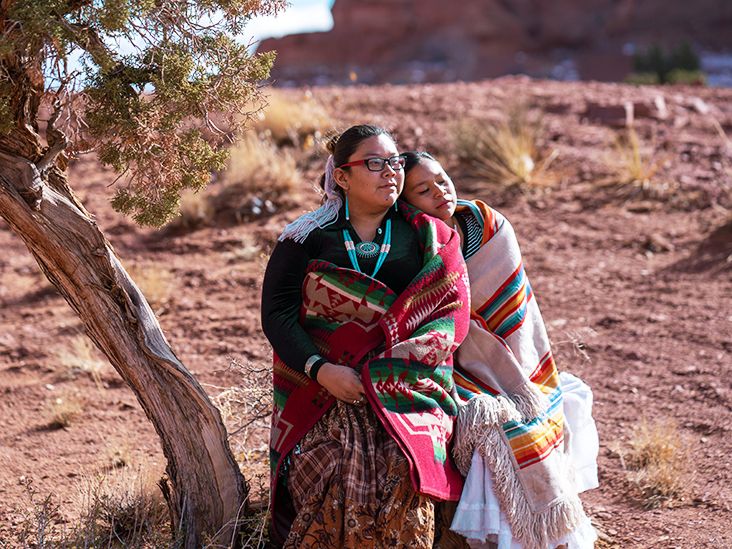
Trauma has a strange way of rearranging the furniture inside a person. Things that once felt familiar can suddenly seem distant. Family can feel complicated. Language can sound like something we should know but somehow do not. Cultural identity, which outsiders may imagine as permanent and automatic, can start to feel like a door we are standing outside of, wondering whether we still have the right key.
For me, getting back to my Navajo identity is not about pretending trauma never happened. It is not about becoming a perfect version of what somebody thinks a Diné person should look, sound, believe, or know. Reconnection is something quieter and more complicated. It is learning where I come from while deciding how I want to move forward.
It also means remembering something important: being disconnected from parts of culture does not erase belonging. History matters here. Generations of Native families lived through forced relocation, boarding-school policies, language suppression, family separation, discrimination, and other attempts at assimilation. The effects did not politely disappear when those policies changed. They continued through families, institutions, memories, and sometimes silence.
Healing, then, can be both personal and cultural. It can involve therapy, family conversations, language learning, community participation, art, land, humor, grief, boundaries, and the awkward courage required to be a beginner at something that is already part of you.
Research synthesis: Navajo Nation cultural and legal resources, Navajo Nation Office of the President, NPS, Smithsonian NMAI, UNM research.
Understanding Why Cultural Disconnection Can Hurt So Much
Individual trauma can disconnect us from ourselves. Historical and intergenerational trauma can add another layer by disrupting the relationships through which culture is normally passed along.
For Diné people, this history includes Hwéeldi, commonly discussed in English as the Long Walk, when thousands of Navajo people were forcibly removed from their homeland in the 1860s and incarcerated at Bosque Redondo. The Treaty of 1868 eventually made it possible for the Diné to return home. That return carries enormous historical meaning because land, community, family, and sovereignty are not separate little boxes in Diné life. They are connected.
Later assimilation policies created additional wounds across Native communities. The federal Indian boarding-school system separated Indigenous children from their families and often attempted to replace Native names, languages, cultural practices, and identities with Euro-American ones. The U.S. Department of the Interior has formally documented these policies and their intergenerational consequences.
This history matters without having to become the entire story. Diné history is not simply a history of suffering. It is also a history of survival, adaptation, rebuilding, humor, creativity, language preservation, community responsibility, and political sovereignty.
That distinction changed the way I thought about healing. I did not want trauma to become the main character forever. It had already taken enough screen time.
Historical trauma and boarding-school research basis.
I Had to Stop Treating Identity Like a Test
One of the hardest parts of reconnecting with Navajo identity can be the fear of not being “Navajo enough.” Maybe you do not speak Diné Bizaad fluently. Maybe you grew up away from the Navajo Nation. Maybe important teachings were not passed down in your household. Maybe family relationships are strained. Maybe trauma made cultural spaces feel unsafe or inaccessible for years.
It is tempting to imagine there is an invisible cultural exam somewhere:
Question one: Introduce yourself perfectly. Question two: Know every relative. Question three: Never mispronounce anything. Question four: Explain your entire identity while an imaginary committee silently judges your vowels.
Fortunately, culture does not work like a driver’s-license test.
Reconnection can begin with curiosity rather than performance. Instead of asking, “Do I know enough?” I can ask, “What can I learn today?” Instead of wondering whether other people will approve of my journey, I can focus on building respectful relationships with family, community, language, and history.
That shift matters because shame is not a very good teacher. Curiosity is much better.
Language Became a Path Back Toward Identity
Diné Bizaad carries far more than vocabulary. Navajo Nation language initiatives describe the language as carrying history, teachings, values, identity, and a distinct way of understanding the world.
That makes language reclamation powerful, but it can also make learning emotional. Someone reconnecting may hear fluent relatives and immediately think, “I should already know this.” Yet the reasons for language loss are larger than individual effort. Federal assimilation policies historically targeted Native languages, and today Native Nations across the United States are working to preserve and revitalize them.
I learned to think of every word as a connection rather than evidence of what I had missed.
Starting Small With Diné Bizaad
Relearning language does not have to begin with an ambitious plan to become fluent before breakfast next Tuesday. It can start with greetings, family terms, numbers, place names, introductions, everyday phrases, or listening carefully to fluent speakers.
Official Navajo Nation language resources increasingly include stories and audio designed to help learners hear pronunciation and understand language in cultural context. Community classes, schools, relatives, elders, fluent speakers, and Diné-led educational resources may also provide opportunities to learn.
The important part is humility. A language is not merely content to download into the brain. It lives through people and relationships.
Language revitalization basis.
Learning My Clans and Kinship Was More Than Memorization
Diné identity is deeply connected with kinship. Navajo Nation educational frameworks describe clanship as a way of understanding self-identity, relationships, responsibilities, and one’s place within family and community.
Learning clans, therefore, is not simply collecting genealogical trivia. It can be a way of answering much bigger questions: Who are my relatives? Where do I come from? How am I connected to other people? What responsibilities travel with those relationships?
The principle of K’é is especially meaningful in conversations about reconnection. It involves relationships, kinship, respect, compassion, and responsibility. When trauma has damaged trust, family relationships can become complicated, so rebuilding cultural relationships may require patience.
Sometimes reconnecting means asking relatives questions. Sometimes it means listening instead of trying to impress anyone. Sometimes it involves learning family history that is beautiful. Sometimes the history is painful.
And sometimes Auntie gives you a fifteen-minute answer to a thirty-second question. That may simply be part of the educational package.
Homeland Can Be Part of Healing, Even When Life Takes Us Elsewhere
Dinétah and Diné Bikéyah carry geographical, historical, cultural, and spiritual importance. Navajo Nation sources describe Diné identity in relationship to homeland, social kinship, language, and traditional values.
That does not mean every Navajo person must live within the Navajo Nation to possess an authentic identity. Diné people live throughout the United States and around the world. Modern Native life is modern life: people attend universities, serve in the military, work in hospitals, write software, raise children in cities, run businesses, make art, scroll too long on their phones, and occasionally forget where they put their keys like everybody else.
Connection to homeland can nevertheless provide context. Visiting relatives, learning local history, understanding important places, supporting community institutions, listening to stories connected to land, or simply becoming more knowledgeable about Navajo Nation sovereignty can make identity feel less abstract.
I do not need to romanticize the land to respect what it represents. Homeland is not a movie backdrop. It is where history, family, governance, memory, and future generations meet.
Trauma Recovery and Cultural Reconnection Can Work Together
There is sometimes a false choice presented between Indigenous cultural healing and modern mental health care, as though a person has to pick a team.
In reality, culturally responsive care can recognize both.
The Indian Health Service acknowledges the effects of individual, historical, and systemic trauma within American Indian and Alaska Native communities and promotes trauma-informed approaches that recognize resilience as well as harm. Research involving Diné families has likewise emphasized the potential importance of traditional knowledge, cultural reconnection, intergenerational education, family relationships, and community strengths.
That does not mean one cultural activity is a guaranteed treatment for trauma. Trauma can affect sleep, relationships, emotions, concentration, the body, and a person’s sense of safety. Professional counseling or other behavioral health care may be valuable, particularly when symptoms significantly affect daily life.
For someone seeking professional support, culturally knowledgeable or culturally humble providers can make a major difference. A good provider should not treat Navajo identity as an exotic side note. Culture may be one of the resources through which a person understands family, resilience, spirituality, grief, responsibility, and healing.
Trauma-informed and culturally grounded behavioral health basis.
Reclaiming Culture Without Forcing the Process
After trauma, it is easy to approach healing like a construction project: buy supplies, make a schedule, finish by Friday.
Human beings stubbornly refuse to cooperate with that plan.
Healing tends to be uneven. Cultural reconnection can be uneven too. One month I may feel hungry to learn everything. Another month I may need rest. A family conversation might make me feel connected, while another exposes an old wound.
That does not mean reconnection has failed.
Practical Ways to Reconnect
There is no universal checklist for Navajo identity, but several respectful starting points can help someone explore their own connection:
- Learn what you can about your clans and family history from trusted relatives and Diné resources.
- Practice Diné Bizaad regularly, even if progress begins with only a few words.
- Listen to fluent speakers rather than relying exclusively on generic online translations.
- Read Diné history through Navajo Nation, Native-led, academic, museum, and community sources.
- Attend public community or cultural events when appropriate and follow local expectations.
- Explore weaving, art, foodways, music, agriculture, storytelling, or other cultural knowledge through qualified Diné teachers.
- Spend time with relatives and elders when those relationships are healthy and available.
- Learn about Navajo Nation government and sovereignty as part of understanding contemporary Diné identity.
- Seek trauma-informed professional support when emotional wounds are making everyday life difficult.
Most importantly, reconnect in ways that respect cultural boundaries. Not every teaching, ceremony, story, or practice is public information. Internet curiosity does not automatically equal cultural permission.
Identity Is Also About the Future
Reconnection is often described as looking backward, but I increasingly see it as preparation for what comes next.
Language revitalization is about future speakers. Teaching children their clans is about future relationships. Supporting Native artists helps traditions continue evolving. Learning Navajo history can create future citizens who understand sovereignty. Conversations with elders can become knowledge that younger relatives someday receive from us.
That is one reason cultural survival cannot be reduced to nostalgia.
Diné culture has never been frozen in a museum display. Navajo people have adapted repeatedly while maintaining identity through extraordinary political, economic, and social changes. Today, language programs use digital technology. Artists combine inherited knowledge with contemporary forms. Diné professionals work in fields their ancestors could scarcely have imagined while remaining connected to family and community.
Culture survives because people carry it forward, not because they perfectly reproduce the past.
Experiences That Changed How I Think About Reconnection
One of the most meaningful realizations in this journey has been understanding that embarrassment and belonging can exist in the same room.
I can stumble over a Diné word and still belong. I can need help remembering family relationships and still belong. I can discover that something I confidently believed about Navajo history was approximately 73 percent nonsense and still belong. Learning does not cancel identity. Learning is one way identity continues.
Another important experience is realizing how emotional ordinary questions can become. “What are your clans?” sounds simple until a person has gaps in family history. “Do you speak Navajo?” can feel harmless to one person and painfully loaded to another.
Trauma sometimes creates those gaps. Adoption, relocation, family conflict, boarding-school experiences, substance misuse, premature death, poverty, violence, or generations of pressure to assimilate can interrupt how information moves through a family.
Instead of treating those gaps as personal failures, I can approach them as places where careful rebuilding may begin.
The Experience of Being a Beginner
Being a beginner inside your own culture can feel uniquely uncomfortable.
If I start learning Italian at age 35, nobody says, “Wow, you seriously don’t know the Italian word for refrigerator?” But cultural language carries different expectations. Relearning Diné Bizaad can awaken feelings about family, childhood, identity, and lost opportunities all at once.
The solution is not to avoid learning until I magically become knowledgeable.
I have to tolerate being new.
That might mean pronunciation corrections. It might mean asking a relative to explain something twice. It might mean discovering that the online source I trusted was inaccurate. Humility becomes a practical skill rather than an inspirational slogan.
The Experience of Hearing Family Stories Differently
Reconnection can also change the way family stories sound.
A story about a grandparent who refused to speak Navajo around children may initially sound like rejection of culture. Historical context can reveal something more complicated. Some Native people learned through punishment or discrimination that speaking their language could make life harder or less safe.
Understanding that context does not erase every consequence. But it can replace simplistic judgment with compassion.
Sometimes what looks like cultural rejection was survival behavior.
The next generation may have the opportunity to make a different decision because previous generations endured circumstances they never should have faced.
The Experience of Setting Boundaries
Cultural reconnection does not require returning to every unhealthy relationship.
This lesson matters enormously after trauma.
Family and kinship are central within Diné cultural frameworks, but respect does not mean tolerating abuse, manipulation, violence, or constant emotional harm. Rebuilding identity can include learning healthy ways of practicing responsibility and compassion without surrendering personal safety.
I can seek knowledge from safe relatives, community educators, language teachers, official Diné resources, and trusted mentors. There may be more than one road back toward cultural understanding.
The Experience of Discovering Joy Again
Perhaps the biggest surprise is that cultural reconnection does not have to be relentlessly serious.
Trauma deserves seriousness. History deserves honesty. But Native life also contains humor, teasing, creativity, family gatherings, food, children, music, art, celebrations, and ordinary everyday nonsense.
Research about historical trauma often emphasizes something equally important: resilience.
Survival is not merely the absence of death. It is the continuation of relationships, knowledge, government, language, art, families, and identity despite enormous disruption.
That means laughter can belong in healing too.
It is possible to study painful history in the morning and laugh with relatives that afternoon. Those experiences do not cancel each other. Together, they create a fuller understanding of what survival actually looks like.
Getting Back Does Not Mean Becoming Who I Was Before Trauma
The phrase “getting back” can be misleading because trauma changes people. I may never become exactly who I was before difficult experiences occurred.
Maybe that is not the goal.
I can become someone who knows more about where I come from. Someone who recognizes historical trauma without letting it define every possibility. Someone willing to learn Diné Bizaad imperfectly, ask family questions respectfully, understand my clans more deeply, support Navajo sovereignty, listen to elders, and pass useful knowledge forward.
I can also recognize that there is no single correct modern Navajo life. Diné people are rural and urban, traditional and contemporary, fluent speakers and beginning learners, artists and engineers, ranchers and physicians, grandparents and teenagers. Experiences differ enormously.
Identity is not strengthened by squeezing everyone into the same mold.
Conclusion: Reconnection Is a Relationship, Not a Finish Line
Getting back to my Navajo identity after trauma is not a dramatic return to some untouched version of the past. It is a relationship I continue building.
Some days that relationship may involve language. Other days it may involve family history, land, art, counseling, community, boundaries, or simply learning something about Diné history that I was never taught.
Trauma may explain why certain connections became difficult, but it does not have to make cultural disconnection permanent.
The history of the Diné makes that especially clear. There have been forced removals, assimilation campaigns, suppression of Native languages, and generations of structural hardship. Yet Diné language, families, government, cultural knowledge, art, and community remain alive.
Reconnection becomes part of that larger story of continuity.
I do not have to know everything before I begin. I do not have to perform identity perfectly. I do not need somebody else’s checklist to prove that my questions are worth asking.
I can start with one word. One conversation. One family story. One visit. One lesson. One healthier boundary.
Then another.
That may be what returning really looks likenot traveling backward, but learning how to walk forward while knowing more clearly who is walking with me.
Note: Diné experiences, teachings, family histories, and healing practices vary widely. This article offers a trauma-informed reflection rather than claiming that one path represents every Navajo person or community. Cultural or ceremonial knowledge should be learned through appropriate Diné family, community, and cultural authorities.
Additional research basis: IHS, SAMHSA, Department of the Interior, CDC and peer-reviewed U.S. research.