The Lisilux Ceiling Lamp-Globe is proof that a ceiling light does not need crystals, remote controls, or an app that asks for your email address. With a porcelain base and a rounded opal-glass shade, this compact surface-mounted fixture delivers light in the most straightforward way possibleand somehow looks sophisticated while doing it.
Its design belongs to the practical side of European industrial lighting, where materials are expected to survive real rooms rather than merely look attractive in a showroom. The result is a globe ceiling lamp that fits naturally into bathrooms, hallways, kitchens, utility rooms, covered porches, and minimalist living spaces. It is understated, durable, easy to clean, and refreshingly uninterested in passing trends.
However, American buyers should examine more than its photogenic glass globe. Socket type, voltage, electrical certification, moisture exposure, bulb choice, and installation method all matter. This guide explores the Lisilux lamp’s history, construction, design possibilities, practical limitations, and everyday ownership experience.
What Is the Lisilux Ceiling Lamp-Globe?
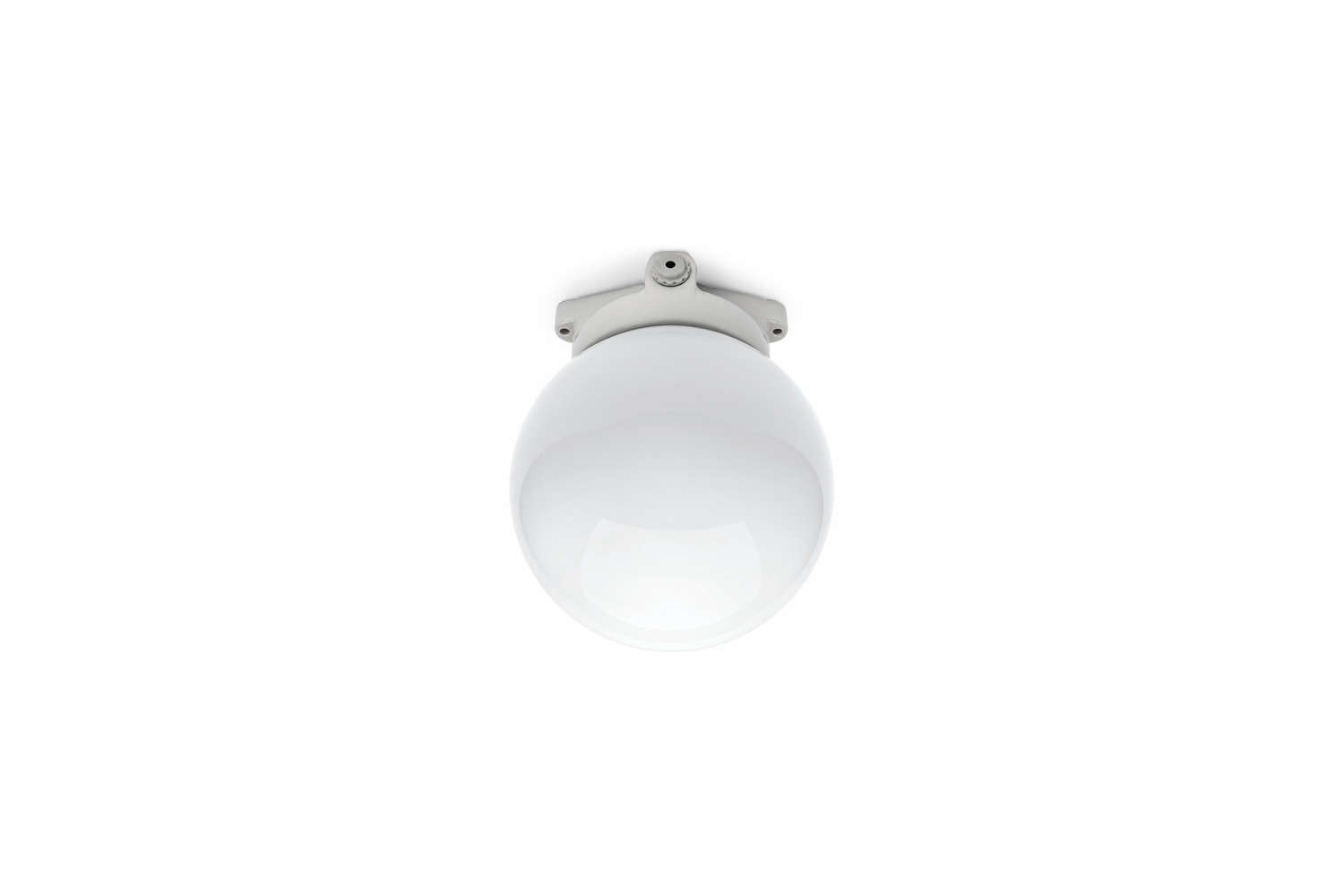
The Lisilux Ceiling Lamp-Globe is a compact surface-mounted luminaire built around a sturdy porcelain base and a threaded glass globe. Depending on the version, the globe may be clear, frosted, or opalized. The opal-glass model produces the softest appearance because the glass diffuses the bulb’s brightness instead of displaying the light source directly.
The broader LISILUX range has roots in functional lights produced since the 1940s. The LISILUX name was introduced by Lindner in the late 1960s and is derived from “Lindner Safety Light.” The collection continued using original molds and tools after its production rights were acquired in 2011.
That history explains the lamp’s no-nonsense personality. It was not designed as a decorative imitation of industrial lighting. It came from the world of technical porcelain, damp-room fixtures, workshops, utility buildings, and other locations where fragile finishes and fussy details would have had a difficult life.
Construction and Technical Features
A Porcelain Base
Porcelain is the visual and structural anchor of the Lisilux ceiling lamp. Its hard, smooth surface resists corrosion, does not require a painted metal finish, and can be wiped clean without complicated maintenance. The white version almost disappears against a pale ceiling, while darker versions create a stronger industrial outline.
The material also gives the lamp a pleasant sense of permanence. Plastic fixtures may yellow, crack, or begin to look inexpensive over time. Porcelain ages more gracefully. It is not indestructibleyou should not test it with a hammer merely to satisfy your curiositybut it handles normal household use remarkably well.
A Threaded Opal-Glass Globe
The glass globe screws directly onto the base rather than relying on a decorative center nut or a cluster of tiny shade screws. A rubber gasket sits between the glass and porcelain components. This helps create a tighter enclosure and reduces the likelihood of the globe rattling against the base.
Retail descriptions list porcelain, a ceramic inset, opal glass, an E27 lampholder, side cable entrances, IEC Class II construction, and an IP54 rating. The fixture is intended for surface mounting, with wiring entering through the side of the base on the commonly sold version.
Several Globe Sizes
The range is commonly offered in small, medium, large, and extra-large sizes. Published globe diameters include approximately 12.5, 15, 18, and 21.5 centimeters, or about 4.9, 5.9, 7.1, and 8.5 inches. Availability, maximum wattage, dimensions, and mounting details can differ among versions, so buyers should verify the specification sheet for the exact model rather than treating every Lisilux lamp as identical.
Why the Globe Design Works
A globe is one of the most adaptable shapes in lighting. It has no obvious front, back, top, or decorative “correct angle.” Once mounted, it looks composed from every direction. That makes the Lisilux particularly useful in narrow hallways, stair landings, low-ceiling rooms, and small spaces where an elaborate fixture would feel oversized.
The opal shade also distributes light more gently than a bare clear bulb. Instead of producing a concentrated point of glare, it turns the whole globe into a softly illuminated surface. The effect is practical rather than dramatic, but that is exactly the appeal. The Lisilux does not shout across the room. It quietly makes the room usable.
As a flush or near-flush ceiling fixture, it preserves headroom. Flush-mounted lighting is generally well suited to lower ceilings and compact rooms where hanging fixtures could interrupt movement or make the ceiling feel crowded.
Where the Lisilux Ceiling Lamp Looks Best
Bathrooms and Powder Rooms
The combination of porcelain, glass, a gasketed globe, and an IP54 specification makes this lamp attractive for moisture-prone interiors. An IP54 rating generally indicates protection against limited dust ingress and splashing water, but it does not mean the fixture can be placed anywhere water may strike it heavily.
Bathroom installation must still respect local electrical rules and the fixture’s approved location. A lamp suitable for moderate moisture is not automatically approved for a shower enclosure, an exposed wet location, or direct water spray. UL guidance distinguishes among dry, damp, wet, and covered wet-location applications, so the exact installation zone matters.
Hallways and Entry Areas
In a hallway, the Lisilux provides illumination without creating a visual obstacle. A row of small globes can establish a useful rhythm in a long corridor, especially when the fixtures are aligned with doorways or architectural bays.
The lamp also works well in an entry where a dramatic chandelier would compete with coat hooks, doors, art, and everyday clutter. Its simple form welcomes guests without looking as though the ceiling is auditioning for a Broadway production.
Kitchens and Pantries
Porcelain and glass make sense in rooms where airborne grease, flour dust, and mysterious kitchen particles eventually settle on everything. Both exposed surfaces are relatively straightforward to clean. The opal globe also softens overhead light, although a kitchen will usually need additional task lighting beneath cabinets or above work surfaces.
Laundry Rooms, Mudrooms, and Utility Spaces
This may be the lamp’s natural habitat. Laundry rooms and utility areas benefit from fixtures that are compact, enclosed, bright, and easy to maintain. The Lisilux adds enough visual character to avoid looking institutional while preserving the practicality expected in a hardworking room.
Covered Outdoor Areas
Some sellers describe the IP54 Lisilux as appropriate for minor splashes and dust while recommending protection from heavy weather, such as installation beneath a porch roof or eave. It should not be assumed suitable for fully exposed outdoor use without confirmation from the manufacturer and the authority responsible for local electrical compliance.
Choosing a Bulb for the Lisilux Lamp
Although older product descriptions may provide a maximum wattage based on incandescent lamps, modern owners will usually obtain better results from an LED bulb. LEDs produce the same useful light with much lower power consumption and generally last substantially longer than traditional incandescent bulbs. ENERGY STAR states that LED products can operate up to 90 percent more efficiently, while the U.S. Department of Energy notes significant reductions in energy use and replacement frequency.
Use an Enclosed-Fixture-Rated LED
The glass globe creates an enclosed environment around the bulb. Not every LED is designed to operate in that setting. Heat can accumulate around the bulb’s electronic components, reducing performance or shortening its life.
Look for packaging that specifically states that the bulb is suitable for enclosed fixtures. This matters even when the LED uses only a modest number of watts. Low wattage does not automatically mean zero heat, and the tiny driver inside an LED bulb is considerably less enthusiastic about being baked than a loaf of bread.
Select the Right Color Temperature
For bedrooms, living areas, and welcoming hallways, a warm white bulb around 2700K usually complements the opal globe beautifully. A 3000K bulb offers a slightly cleaner appearance that works well in modern bathrooms and kitchens. Neutral white in the 3500K to 4000K range can be useful in utility rooms, although it may make the lamp feel more commercial.
Lower Kelvin values appear warmer and more yellow, while higher values appear cooler and bluer. The globe will soften the visual effect, but it cannot completely disguise an overly cold bulb.
Think in Lumens, Not Just Watts
Watts describe energy use, not the amount of visible light. For a small hallway or powder room, a bulb in the neighborhood of 450 to 800 lumens may be sufficient. Larger rooms may require a brighter bulb, multiple fixtures, or supplementary task lighting.
The globe itself absorbs and diffuses a portion of the output, so a bulb may appear less intense inside the Lisilux than it does in an open table lamp. This is usually beneficial for comfort, but it should be considered when planning illumination.
Important Considerations for American Homes
E27 Is Not the Standard U.S. Base
The traditional Lisilux specification uses an E27 socket, while the common American household medium base is E26. The two sizes are very close and are often described by bulb retailers as mechanically interchangeable, but E27 is not the standard base designation used in the United States. Voltage, bulb construction, wattage, clearances, and electrical approval must still match the intended installation.
Check Voltage and Certification
A product sold for the European market should not automatically be treated as ready for installation on a U.S. branch circuit. Before purchasing, verify its voltage rating, conductor requirements, mounting arrangement, cable-entry hardware, and recognized safety certification.
NFPA 70, the National Electrical Code, is the principal U.S. benchmark for safe electrical design and installation. Local requirements may add further rules. A licensed electrician or local inspector can determine whether a particular imported fixture is acceptable for your project.
The Side Cable Entry May Affect Installation
The standard product description indicates that the cable enters through the side of the porcelain base. That makes sense for surface-mounted European wiring systems, but it may not align neatly with a typical American ceiling junction box.
Do not drill random holes in the porcelain, remove protective components, or improvise wiring modifications. Altering a fixture can damage its moisture resistance, insulation, or structural integrity. It can also turn a charming design purchase into an unusually expensive paperweight.
Installation and Safety
Replacing an existing ceiling light may look simple, but safe installation requires more than matching wire colors. The electrical box must be secure, the fixture must be properly supported, the conductors must be protected, and all connections must comply with the manufacturer’s instructions and local code.
Power should be turned off at the breaker and verified with an appropriate tester before any wiring is handled. Consumer installation guides also emphasize confirming that the electrical box is securely attached and capable of supporting the fixture.
Professional installation is particularly wise when dealing with an imported fixture, older household wiring, a bathroom, a porch, a missing grounding conductor, or an unconventional surface-mount cable route. The lamp is small; the consequences of incorrect electrical work are not.
Styling the Lisilux Ceiling Lamp
Minimalist Interiors
Pair a white Lisilux with white walls, pale ceilings, simple cabinetry, and natural flooring. The lamp becomes part of the architecture rather than a decorative object applied afterward.
Industrial and Workshop-Inspired Rooms
Use the fixture with exposed conduit, painted brick, concrete, stainless steel, or black hardware. Unlike imitation factory lights covered in decorative cages and artificial rust, the Lisilux offers genuine functional character.
Traditional Homes
The lamp also works surprisingly well in older houses. Porcelain and opal glass have a timeless quality that can sit beside beadboard, traditional tile, brass hardware, and painted wood trim without looking aggressively modern.
Grouped Installations
One globe is discreet. Three or four evenly spaced globes become an architectural statement. Repetition is especially effective along a corridor, beneath a covered walkway, or across a long kitchen ceiling.
Maintenance and Cleaning
Turn off the fixture, allow the bulb and glass to cool, and support the globe with both hands while unscrewing it. Glass threads can be damaged if the shade is forced or tilted. Never rely on the gasket to catch a globe that has slipped from your grip; rubber gaskets are useful, but they are terrible goalkeepers.
Clean the glass with a soft cloth and mild soap, avoiding abrasive pads that could scratch a frosted or opalized finish. Wipe the porcelain base with a slightly damp cloth. The gasket should remain clean, flexible, and correctly seated before reassembly.
Replacement globes, mounting rings, cable fittings, and other components have been offered separately within the LISILUX range, which may make long-term repair more practical than replacing the complete lamp.
Advantages and Limitations
Advantages
- Timeless porcelain-and-glass construction
- Compact profile for low ceilings and small rooms
- Soft, evenly diffused light from the opal globe
- Hard surfaces that are relatively easy to clean
- Multiple sizes and glass treatments
- Authentic industrial design history
- Replaceable bulb and potentially replaceable components
Limitations
- European E27 and wiring specifications require careful U.S. compatibility checks
- Side-entry wiring may not suit a standard junction-box installation
- IP54 does not equal unrestricted wet-location or exposed outdoor approval
- The glass globe can break if dropped or overtightened
- Enclosed-fixture-rated LED bulbs should be selected
- Its utilitarian appearance may be too plain for highly ornamental rooms
Is the Lisilux Ceiling Lamp-Globe Worth Buying?
The Lisilux is worth considering when you value honest materials, compact proportions, repairability, and industrial simplicity. It is particularly appealing for renovation projects where a mass-produced plastic disk would feel too generic but an elaborate designer fixture would feel excessive.
It is not the best choice for someone seeking built-in smart controls, color-changing LEDs, a dramatic chandelier effect, or guaranteed plug-and-play compatibility with every American ceiling box. This lamp rewards buyers who appreciate design history and are willing to verify the technical details before installation.
In the right setting, the Lisilux Ceiling Lamp-Globe has a rare quality: it can look both completely ordinary and exceptionally well chosen. That is much harder to achieve than it sounds.
Extended Experience: What Living With a Lisilux Lamp Feels Like
The first impression after installing a Lisilux-style globe is usually not “What an incredible ceiling light.” That reaction comes later. Initially, the room simply feels calmer. The ceiling looks less cluttered, the light has fewer sharp shadows, and the fixture seems to belong there even when the surrounding furniture comes from several different decades.
During the day, the white porcelain base and pale globe behave almost like architectural hardware. They do not demand attention from artwork, shelving, patterned tile, or a carefully chosen wall color. At night, the opal glass becomes more noticeable as the entire sphere glows. A warm LED creates the feeling of a small indoor moonalthough, fortunately, one that does not control the tides or encourage neighborhood werewolves.
In a hallway, the low projection is immediately practical. Tall people can carry boxes, ladders, or rolled rugs without calculating a route around a pendant. The rounded globe also avoids the dusty visual complexity of multi-arm fixtures. When several Lisilux lamps are installed in sequence, their repetition makes an ordinary corridor feel intentionally designed.
A bathroom provides a different experience. The enclosed shade reduces the visual harshness of the bulb, especially early in the morning when the human eye has not yet agreed to participate in the day. The glass and porcelain surfaces also feel appropriate around tile, mirrors, and water-resistant finishes. Cleaning is simple: remove the globe carefully, wash away dust or residue, dry it completely, and reinstall it without overtightening.
Bulb selection makes a surprisingly large difference. A cheap LED with poor color quality can make skin tones, towels, wood, and paint look lifeless. A good warm or neutral-white enclosed-rated LED creates richer color and a more comfortable atmosphere. The fixture is therefore simple, but it is not completely indifferent to what you place inside it.
Owners may also appreciate the absence of integrated electronics. When a replaceable bulb fails, the fixture itself does not automatically become waste. Unscrew the globe, replace the lamp, and continue using the same porcelain base. That feels almost rebellious in an age when some products require an account, a firmware update, and emotional preparation before they will turn on.
The main frustration appears during installation rather than everyday use. Imported versions may not align with American expectations for junction boxes, cable entry, socket standards, voltage markings, or safety listings. Resolving those questions before ordering is far less painful than discovering them while standing on a ladder with the power switched off and dinner getting cold.
Once correctly specified and professionally installed where necessary, the Lisilux tends to disappear into daily life. That is its greatest success. It illuminates the room, survives changing décor, cleans up easily, and rarely looks dated. Years later, you may replace the paint, floor, mirror, cabinets, and every optimistic houseplant in the room while the little glass globe continues glowing overhead as though none of this concerns it.
Note: Product dimensions, wattage limits, certifications, voltage ratings, moisture approvals, and installation details may vary by model and market. Confirm the exact specification and local electrical requirements before purchasing or installing a Lisilux ceiling lamp in the United States.