Every party begins with hope. You put on a decent outfit, convince yourself you are “being social,” and walk in expecting music, laughter, snacks, and maybe one conversation that does not involve weather, traffic, or someone’s extremely detailed gym routine. Then reality arrives wearing a name tag. The music is too quiet, the chips are too salty, and the most dramatic thing happening is a slow debate over whether the dip is homemade.
Good news: a boring party does not have to become a personal hostage situation. With a little strategy, a touch of charm, and the emotional resilience of someone standing near a lukewarm cheese plate, you can turn a dull gathering into something useful, funny, or at least survivable. The goal is not to become the loudest person in the room. The goal is to stay relaxed, make the best of the situation, and leave without looking like you are escaping a tax audit.
This guide breaks down five practical ways to survive a boring party while still being polite, socially smart, and maybe even unexpectedly memorable. Whether you are an introvert, an extrovert running on 12% battery, or someone who came only because a friend said, “It’ll be fun,” these tips will help you handle awkward silences, stale conversations, and parties that peaked emotionally when someone opened sparkling water.
Why Some Parties Feel So Boring
A party can feel boring for many reasons. Sometimes the guest list is full of people who do not know each other. Sometimes the host is too busy refilling ice to introduce anyone. Sometimes the room is split into tiny social islands, and you are floating somewhere between the couch and the snack table like a decorative buoy.
Boredom at a party often comes from low social momentum. Nobody wants to be the first person to ask a real question, suggest an activity, or move the conversation beyond “So, how do you know the host?” That means the party may not actually be hopeless. It may simply need a little structure, curiosity, or gentle human effort. Yes, unfortunately, sometimes we are the adults in the room.
1. Give Yourself a Small Mission
The fastest way to survive a boring party is to stop treating it like a test of whether you are having “enough fun.” Instead, give yourself a small mission. A mission gives your brain something to do besides count ceiling tiles or check your phone under the table like a secret agent with no assignment.
Try a Simple Social Goal
Before or shortly after you arrive, choose one realistic goal. For example, you might decide to talk to three people, learn one interesting fact about someone, compliment the host, help with one small task, or stay for at least 45 minutes before reassessing. This keeps the party from feeling endless. You are no longer trapped; you are completing a social side quest.
A small mission also reduces pressure. You do not need to become best friends with everyone or perform charisma like a Broadway understudy. You only need to do one manageable thing. Ask a guest how they know the host. Find out who brought the best dessert. Introduce two people who might have something in common. Suddenly, you are participating instead of just standing there wondering if it is socially acceptable to eat seven crackers in a row.
Help the Host Without Becoming Staff
If conversation is crawling, offer to help the host with something easy: carrying plates, opening drinks, setting out napkins, or rescuing the playlist from a tragic loop of 2011 acoustic covers. Helping gives you movement, purpose, and a natural reason to interact with others. It also makes you look thoughtful, which is a nice upgrade from “person hovering near hummus.”
Do not overdo it. You are not applying for assistant manager of the party. A short, useful gesture is enough. After that, you can rejoin the room with a little momentum and possibly a snack you earned through good citizenship.
2. Upgrade the Conversation
Most boring parties are not boring because people are boring. They are boring because everyone is using default conversation settings. The default setting sounds like this: “What do you do?” “Busy week?” “Can you believe this weather?” These questions are not evil, but they are conversation oatmeal. Perfectly acceptable, rarely thrilling.
Ask Better Questions
The best party conversations usually start with questions that are easy to answer but not painfully generic. Instead of “What do you do?” try “What has been keeping you busy lately?” Instead of “Do you like it here?” ask “Have you tried anything good from the snack table, or are we all pretending the carrots are exciting?” Humor helps because it lowers the pressure and gives the other person permission to be human.
Here are a few conversation starters that work well at slow parties:
- “How do you know the host?”
- “What is the best thing you watched, read, or listened to recently?”
- “What is something you are weirdly good at?”
- “If you could leave right now and teleport anywhere for dinner, where would you go?”
- “What is your low-stakes hot take?”
These questions are playful without being intrusive. They let people reveal personality without feeling like they are in a job interview conducted beside a bowl of pretzels.
Listen Like You Are Not Waiting for Your Turn
Good conversation is not just about asking clever questions. It is also about listening well. That means making eye contact without staring like a haunted painting, nodding naturally, and asking follow-up questions based on what the person actually said. If someone mentions they just moved, ask what surprised them about the new place. If they talk about a hobby, ask how they got into it.
Active listening makes even ordinary conversations feel better. People enjoy feeling heard, and when they feel heard, they usually become more interesting. It is one of the great mysteries of social life: the more attention you give someone, the more likely they are to stop talking like a weather app and start sounding like a person with stories.
3. Change Your Location
At a boring party, where you stand matters. The wrong spot can trap you in a conversational swamp. The right spot can give you fresh energy and easier interactions. If the party feels dead, move. You are not a houseplant. You are allowed to relocate.
Find the Social Hot Zones
Most parties have natural gathering points: the kitchen, the snack table, the balcony, the backyard, the drink station, or the area where people are pretending not to monitor the playlist. These spots create easy conversation because there is something to comment on or do. “Have you tried this?” is much easier than launching a philosophical discussion from the corner of a silent living room.
The kitchen is especially powerful. People pass through, tasks happen, and conversations tend to be more casual. You can ask where something goes, offer to open a bottle, or discuss the heroic role of chips in modern society. Movement makes socializing feel less intense because you are not locked into one face-to-face exchange forever.
Join a Small Group, Not a Wall of People
Large groups can be difficult to enter, especially when everyone already seems to know the rhythm. Look for pairs or groups of three with open body language. If people are standing in a loose circle, smiling, and leaving space, you can usually step in with a friendly comment like, “Mind if I join you?” or “I heard the word tacos, and I respect that conversation direction.”
If a group feels closed off, do not take it personally. Social circles are sometimes accidentally sealed like Tupperware. Move on. The room has other possibilities, and possibly better snacks.
4. Become a Low-Key Spark Plug
You do not need to be the life of the party to improve the party. In fact, trying too hard can make people nervous, especially if you suddenly clap your hands and announce team-building exercises. Instead, become a low-key spark plug: someone who gently adds energy without demanding the spotlight.
Suggest a Small Activity
If the mood is flat, suggest something simple. A card game, a quick group photo, a music request round, a casual trivia question, or a “best/worst” story prompt can change the room. The key is to make it optional and easy. Nobody wants to be forced into a dramatic icebreaker called “Share Your Deepest Fear” while holding a paper plate.
Try phrases like:
- “Should we put on something more upbeat?”
- “Anyone want to play a quick round of cards?”
- “Let’s settle something important: best road trip snack?”
- “What song would immediately improve this room?”
These small prompts work because they do not require much vulnerability. People can answer quickly, laugh a little, and build momentum. A boring party often needs only one low-pressure spark to become less beige.
Connect People Who Might Click
One underrated way to survive a boring party is to introduce people to each other. If you discover that two guests both love hiking, horror movies, baking, basketball, vintage clothes, or complaining about airline fees, connect them. Say, “You two should talk. You both have strong opinions about sourdough.” Then let the conversation grow.
This makes you useful, kind, and socially graceful. It also saves you from carrying every conversation yourself. Think of it as party matchmaking, but for hobbies, not romance. Less pressure, fewer awkward texts tomorrow.
5. Make a Graceful Exit
Sometimes a boring party cannot be saved. The playlist is sleepy, the conversations are fossilized, and the highlight of the evening was watching someone successfully parallel park outside. In that case, surviving means leaving well.
Set a Time Limit
A time limit can make any social event easier. Tell yourself, “I will stay for one hour, talk to a few people, thank the host, and then decide.” This gives you control without making you rude. If you end up having fun, stay longer. If not, you have fulfilled your guest duties and can exit with dignity.
Time limits are especially helpful if you feel socially drained. Parties require mental energy: listening, responding, reading the room, remembering names, and laughing at stories that may or may not have needed eight minutes. It is perfectly reasonable to manage your energy instead of pretending you are a party robot with unlimited battery life.
Leave With Appreciation, Not a Disappearing Act
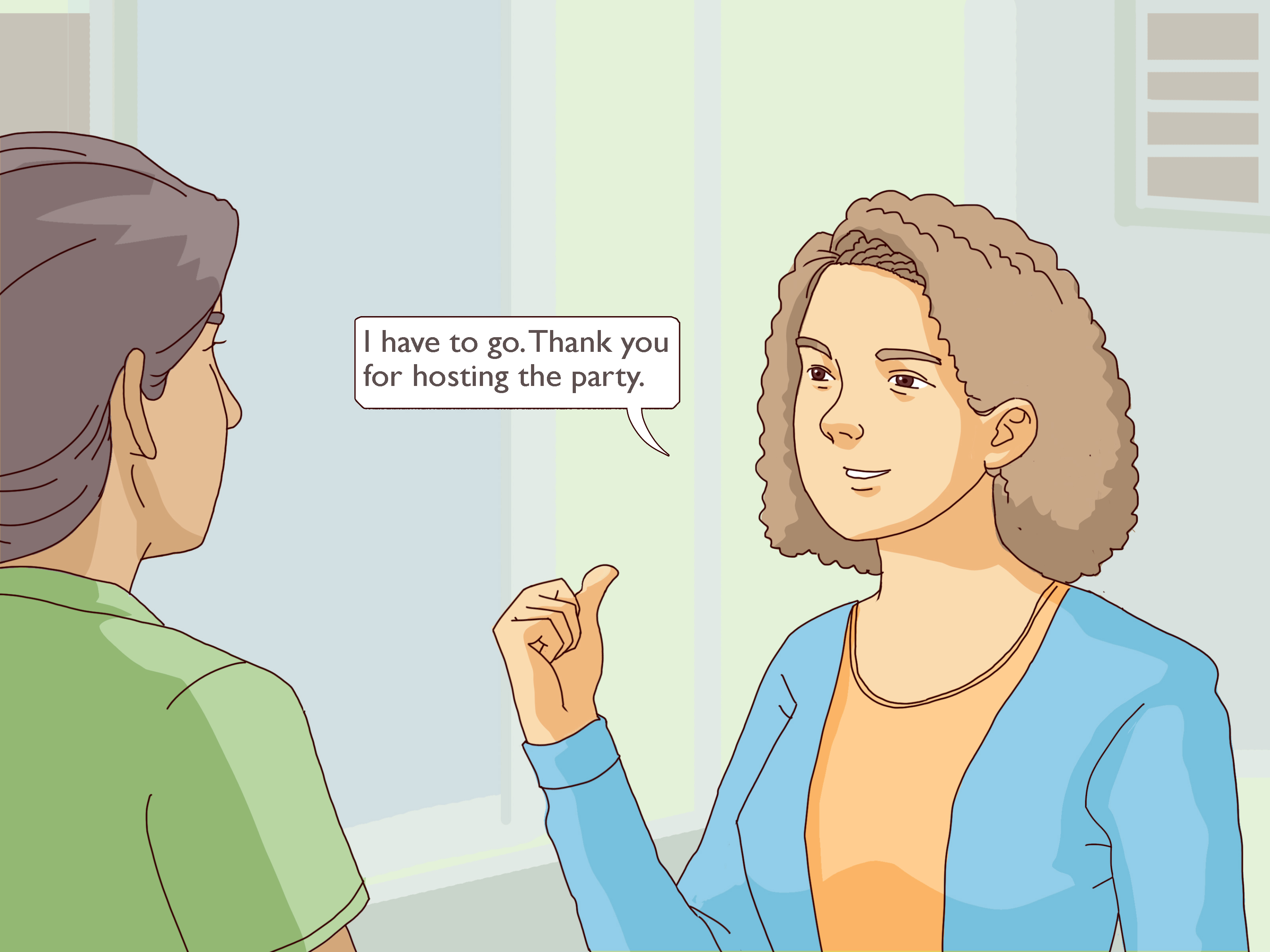
When you are ready to go, thank the host. A simple “Thank you for having meI’m glad I could stop by” works beautifully. You do not need to deliver a courtroom-level explanation. Avoid dramatic excuses, fake emergencies, or the classic “I have an early morning” delivered at 8:12 p.m. with suspicious intensity.
If the host is busy, a quick goodbye is enough. If you genuinely enjoyed one moment, mention it: “I loved meeting your friend Jamie” or “The food was great.” Appreciation softens the exit and shows respect for the effort behind the gathering. Even a boring party takes planning, cleaning, and at least one person panic-buying napkins.
Extra Tips for Handling a Truly Dull Party
If the party is not terrible but simply slow, give yourself permission to experiment. Talk to someone outside your usual type. Ask an unexpected but friendly question. Move rooms. Try the food. Compliment the decor. Offer to take a photo. Pet the dog if there is one and the dog consents. The dog is often the most emotionally available guest.
Also, avoid hiding on your phone for too long. A quick check is normal, but constant scrolling makes you look unavailable and makes the party feel even worse. Phones are boredom amplifiers. They promise escape but often leave you standing alone beside the bookshelf, reading an email from a store you bought socks from in 2019.
Finally, do not confuse a slow start with a failed night. Many parties warm up gradually. People need time to arrive, settle in, and remember how to speak to each other without sending a meme first. Give the event a fair chance before declaring it socially deceased.
Common Mistakes to Avoid at a Boring Party
Do Not Announce That You Are Bored
Even if you are correct, saying “This party is boring” helps no one. It makes the host feel bad, makes other guests uncomfortable, and does not magically summon a DJ, fireworks, or a charismatic stranger named Marco who knows close-up magic. Keep the diagnosis private.
Do Not Corner One Person All Night
If you finally find someone interesting, great. But avoid trapping them in a conversation marathon unless the enthusiasm is clearly mutual. Watch body language. If they start looking around, giving short answers, or slowly angling their feet toward freedom, let them go. A graceful “I’m going to grab a drink, but it was great talking with you” keeps the interaction positive.
Do Not Overcorrect With Chaos
Trying to “save” a party by becoming wildly loud, starting controversial debates, or forcing everyone into intense games can backfire. The goal is to add warmth, not become a one-person weather event. Keep your energy friendly, flexible, and respectful of the room.
Real-Life Experiences: What Boring Parties Teach You
One of the strangest things about boring parties is that they often become funny later. In the moment, you may feel trapped between a potted plant and a conversation about mortgage rates. But afterward, the memory turns into a story: the party where no one knew who invited Greg, the birthday dinner where the cake was served before the guest of honor arrived, or the housewarming where everyone stood in the kitchen because the living room lighting felt like a dentist’s office.
I once attended a party where the main activity seemed to be watching the host adjust the thermostat. People were polite, but the room had the energy of a waiting area. At first, I did what many people do: I checked my phone, hovered near the food, and silently judged the playlist, which was brave of me considering I had contributed absolutely nothing. Then I decided to give myself a mission. I would talk to three people and find one genuinely interesting detail from each.
The first conversation started with the safest possible question: “How do you know the host?” The answer was not exciting at first. They worked together. But the follow-up changed everything: “What is the funniest thing that has happened at work?” Suddenly, this quiet guest told a story about an office printer that had been given a name, a personality, and eventually a farewell party when it broke. Was it life-changing? No. Was it better than staring at the thermostat? Absolutely.
The second guest was standing alone near the drinks. I asked what they would play if they controlled the music. That led to a discussion about guilty-pleasure songs, childhood road trips, and the strange power of one-hit wonders. Two other people joined in. Within ten minutes, the room was not exactly electric, but it had a pulse. Sometimes a party does not need a grand transformation. It just needs one question that people actually want to answer.
The third interaction happened when I helped the host carry plates to the table. That small task made conversation easier because we were doing something instead of standing face-to-face trying to manufacture chemistry from thin air. The host relaxed, thanked me, and introduced me to another guest who liked the same show I had just finished. We talked for twenty minutes, and I left feeling like the night had been worth it.
That experience taught me a useful lesson: boredom is not always a signal to escape immediately. Sometimes it is a signal to participate differently. A dull party can become a practice ground for better questions, better listening, and better exits. You learn how to enter conversations, how to read energy, how to help without taking over, and how to leave kindly when the night has given all it can give.
Of course, not every party can be rescued. Some gatherings are simply not your scene, and that is fine. You can be polite, stay a reasonable amount of time, thank the host, and go home to your couch, where the dress code is elastic and the conversation never includes someone explaining cryptocurrency unless you personally make that mistake. But when you do choose to engage, even a boring party can become surprisingly useful. At minimum, you get a story. At best, you make a connection. And sometimes, against all odds, the dip improves.
Conclusion
Surviving a boring party is not about pretending every gathering is magical. Some parties are slow. Some conversations wobble. Some snack tables are built entirely on baby carrots and broken dreams. But with the right approach, you can make the experience better for yourself and for the people around you.
Start with a small mission. Upgrade the conversation with better questions and active listening. Move to a better spot in the room. Add a little spark without hijacking the event. And when it is time to leave, do it gracefully. These five strategies help you stay confident, polite, and socially flexibleeven when the party itself has the personality of unsalted toast.
The next time you walk into a dull gathering, remember: you are not powerless. You are equipped with curiosity, manners, humor, and the sacred right to leave after thanking the host. That is not just party survival. That is social wisdom in comfortable shoes.
Note: This article is original, web-ready content based on widely accepted etiquette, communication, and social confidence guidance. It is written for publication without citation placeholders or unnecessary source-code elements.