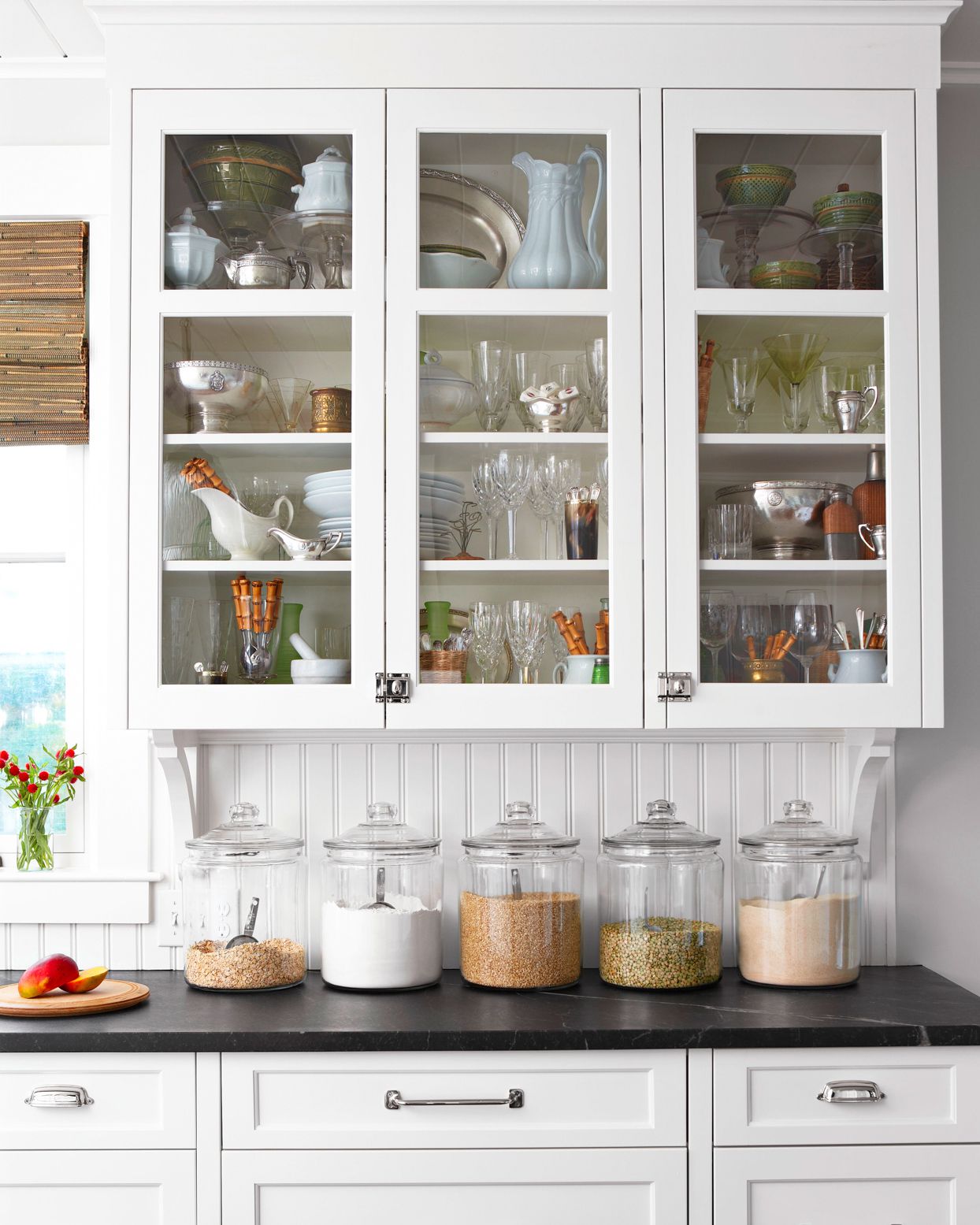
Your laundry room may be one of the hardest-working spaces in your home, yet it has an uncanny ability to become the household’s unofficial witness protection program for random objects. Missing socks? Laundry room. Half-empty bottle of cleaner? Laundry room. Shopping bag containing clothes you meant to donate six months ago? Naturally, laundry room.
The problem is not always a lack of shelves, baskets, or beautifully labeled glass jars. In many homes, the real problem is simply too much stuff competing for too little functional space. Before buying another organizer, the smartest move is often to remove the things that no longer deserve valuable laundry-room real estate.
A well-organized laundry room should support a simple workflow: dirty clothes arrive, laundry gets sorted and treated, garments are washed and dried, clean items are folded or hung, and everything leaves the room. Anything that repeatedly interrupts that process is a candidate for decluttering.
Ready for a reset? Start with these seven categories. Your washer and dryer may not send you a thank-you card, but at least you’ll finally be able to see the top of them.
1. Empty, Expired, or Abandoned Laundry Products
Begin with the easiest category because quick wins make decluttering much less painful: products you clearly aren’t using.
Pull out every bottle, box, spray, packet, stain treatment, fabric refresher, and mysterious laundry potion hiding behind everything else. You may discover an impressive archaeological record of past purchases.
Look for products that have reached the end of the road
Remove empty containers, damaged packages, products you stopped using, and old specialty cleaners you bought for one specific stain three years ago. Also inspect products that have changed noticeably in appearance, consistency, or smell and follow the manufacturer’s directions regarding storage and disposal.
If you switched detergents because the previous formula irritated someone’s skin, smelled too strong, or simply didn’t perform well, there is little reason to let the rejected bottle occupy prime shelf space indefinitely.
Don’t keep products out of guilt
One of the sneakiest forms of clutter is something you dislike but feel obligated to finish because you paid for it. If a usable product isn’t right for your household, consider whether an appropriate friend, family member, or community organization could use it rather than storing it for another two years.
After decluttering, keep your everyday detergent, stain remover, and frequently used laundry essentials within easy reach. Less frequently used backstock can go higher up or farther back.
2. Duplicate Products You Don’t Actually Need
Once the obvious trash is gone, examine your duplicates.
Buying a backup bottle of detergent during a sale makes sense. Owning five open detergents, four different scent boosters, two boxes of dryer sheets, three stain sprays, and a collection of laundry additives requiring their own zoning permit may not.
Separate useful backstock from accidental inventory
Group similar items together so you can see exactly how much you own. This simple step often reveals why clutter accumulates: when supplies are scattered across cabinets and shelves, people forget what they already have and buy more.
Choose one working container for products you use regularly and consolidate unopened backups into one designated backstock zone. When that area is full, consider it a visual signal that you do not need another bottle simply because the store has put a bright red SALE sign underneath it.
Use the one-open-at-a-time approach
Whenever practical, finish one detergent, stain remover, or laundry booster before opening another version. This reduces partially used containers and makes it easier to know when something actually needs replacing.
The goal isn’t extreme minimalism. You can absolutely keep products that serve different purposes. The question is whether each item performs a real job in your laundry routine.
3. Lonely Socks and the Never-Ending Clothing Repair Pile
Almost every laundry room eventually develops a small retirement community for single socks.
At first, keeping an unmatched sock makes perfect sense. Its partner may be stuck inside a fitted sheet, hiding under a bed, or conducting classified business somewhere behind the dryer.
But there should be a deadline.
Create a temporary lost-sock container
Instead of allowing orphan socks to spread across folding surfaces, give them one small basket or bin. Check it periodically when sorting clean laundry. If a sock has been waiting for its soulmate through multiple laundry cycles, decide whether you’re realistically going to keep searching.
The same principle applies to damaged clothes.
A shirt missing one button can be repaired. Jeans with a torn seam can be fixed. But a laundry room can quickly become packed with garments awaiting imaginary future sewing sessions.
Create a small repair basket and give yourself a deadline. Repair the item, take it to a tailor, repurpose it where appropriate, or let it go. Do not allow a three-minute repair project to become a three-year permanent resident.
4. Excess Hangers, Dry-Cleaning Bags, and Clothing-Care Accessories
Hangers reproduce when nobody is looking. This is the only reasonable explanation.
Start with hangers that are bent, broken, badly tangled, or incompatible with your clothing. Then determine how many you realistically need in the laundry room for air-drying or transporting clean clothes.
Keep a controlled supply
A small collection of hangers near your drying area is useful. A giant knot of 47 mismatched hangers falling onto your head every time you open a cabinet is less useful.
Also review dry-cleaning bags, garment bags, disposable packaging, clothespins, mesh laundry bags, ironing accessories, and similar items. Keep enough to support your actual habits rather than every theoretical laundry situation you could encounter during your lifetime.
Give specialty items dedicated homes
Mesh bags can be stored together in a small container. Clothespins can live in one basket. Your steamer and accessories can share a shelf. An ironing board can hang vertically or fold away if your layout allows it.
The less time you spend untangling supplies, the easier wash day becomes.
5. Random Household Items That Don’t Belong in the Laundry Room
This may be the biggest decluttering category of all.
Laundry rooms frequently double as mudrooms, cleaning closets, utility spaces, pet stations, storage rooms, and entrances. Multipurpose spaces are perfectly reasonable, but without boundaries they can become dumping grounds.
Look around. Are there packages waiting to be opened? Old paintbrushes? Batteries? Tools? Seasonal decorations? Children’s sports equipment? Grocery bags? Mail? Shoes nobody wears?
Ask one simple question:
Does keeping this item here make the laundry process easier?
If the answer is no, determine where it actually belongs.
Create zones when the room must multitask
Sometimes items legitimately need to share the space. In that case, create clear zones rather than mixing everything together.
- Laundry products stay near the washer.
- Cleaning supplies occupy one cabinet or shelf.
- Pet supplies have their own basket.
- Mudroom accessories stay near the door.
- Household tools move to a separate utility zone.
Defined zones make it easier to spot objects that have wandered into the room without permission.
6. Bulky Packaging and More Backstock Than Your Space Can Handle
Buying household staples in bulk can save money, but a small laundry room isn’t a warehouse.
Oversized packages of paper towels, cleaning products, detergent, trash bags, and other supplies can consume shelving surprisingly quickly. Before declaring that you need more cabinets, evaluate whether your inventory is appropriate for the space you actually have.
Set a physical limit for backstock
Choose one shelf, cabinet, or bin for extras. Once the space is full, stop buying backups until you’ve used what you already own.
This strategy is far easier than trying to remember whether you have two detergent bottles or six hiding somewhere in the house.
Remove unnecessary shipping boxes and retail packaging when appropriate, while keeping important labels and safety information with products that require them. Laundry and cleaning chemicals should be stored safely according to their original instructions and kept appropriately secured from children and pets.
Don’t decant everything just because it looks pretty
Matching containers can create visual calm, but functionality and safety matter more than creating a laundry room that looks ready for a magazine cover.
Use organizers where they genuinely simplify your routine. You do not need to transfer every object you own into a beige container with a handwritten label.
7. Permanent Piles of Clean Clothes, Donations, and “I’ll Deal With It Later” Stuff
The final category isn’t one specific object. It’s unfinished decisions.
Clean laundry sits on the dryer waiting to be folded. Folded towels wait another two days to leave. A donation bag remains beside the washer for three months. Clothes that no longer fit occupy a basket because nobody knows whether to donate, sell, repair, or store them.
These temporary piles slowly become permanent fixtures.
Make laundry leave the room
One of the best organization habits is completing the full laundry cycle. Washing isn’t finished when the dryer buzzes. Whenever possible, fold or hang items and send them back to their proper rooms.
If different family members are responsible for putting away their own clothes, individual baskets can help. The important part is giving those baskets a predictable destination rather than letting them accumulate indefinitely.
Finish donations quickly
A donation bag isn’t decluttered if it simply moves from your closet to the laundry room.
Once the bag is full, move it toward its final destination. Put it near your exit, load it into the car when appropriate, or schedule your preferred donation method. Completing the last step prevents your laundry room from becoming a storage facility for things you already decided to remove.
How to Keep Your Laundry Room Organized After Decluttering
Removing clutter is satisfying. Preventing its return is even better.
Fortunately, you don’t need an elaborate home organization system. A few simple rules can keep the room functional long after today’s decluttering session.
Give everything a permanent home
Every item you keep should have an obvious destination. When people know where detergent, stain remover, hangers, cleaning cloths, and dryer balls belong, putting them away requires almost no thought.
Keep frequently used supplies close to the action
Store your daily or weekly laundry essentials near the washer and dryer. Reserve higher shelves and less accessible cabinets for backup products and occasionally used supplies.
Protect your folding surface
A clear counter, tabletop, or appliance top can dramatically improve workflow. Treat the folding surface as workspace rather than storage.
Once random objects begin landing there, move them immediately instead of allowing the first object to invite nineteen friends.
Use vertical space before sacrificing floor space
If your laundry room is small, wall shelves, hooks, door organizers, hanging rails, cabinets, pegboards, and foldaway drying racks can provide useful storage without crowding walkways.
Floor space is especially valuable in small laundry rooms because baskets, appliance doors, and people all need somewhere to go.
Do a five-minute reset regularly
You don’t need to repeat today’s full decluttering project every month. A quick maintenance session can prevent clutter from rebuilding.
Throw away empty packaging, return stray items to their proper rooms, reunite lost socks, check your repair basket, and move completed laundry out.
Five minutes now can save you from another Saturday afternoon spent wondering why there is a screwdriver, a Christmas tablecloth, and four empty detergent bottles sitting beside your washing machine.
A Real-World Laundry Room Reset: What the Experience Usually Teaches You
Consider a typical household laundry-room reset. This is a composite example rather than one specific family’s story, but the experience is remarkably familiar in homes where the laundry area has gradually turned into overflow storage.
At first glance, the room doesn’t look disastrous. There are a few bottles on top of the washer, two baskets on the floor, some clothes hanging from a rack, and a cabinet that closes as long as nobody makes sudden movements near it.
Then everything comes out.
Suddenly the household discovers three stain removers, two nearly empty detergent bottles, a fabric softener nobody has used in a year, eleven lonely socks, a bag of children’s clothes intended for donation, an iron that stopped working, two functioning irons, twenty-six extra hangers, lightbulbs, dog shampoo, batteries, extension cords, old towels, and enough reusable shopping bags to open a small grocery store.
The surprising part is that no single category looks enormous. The clutter is created by dozens of small things that were placed in the room temporarily and never moved again.
The first pass is usually easy. Empty bottles and obvious trash disappear. Unrelated household objects are returned to their proper locations. Donation items are moved toward the door rather than reorganized into a prettier donation pile.
The second pass requires more decisions. Does the household really need four kinds of laundry scent products? Will anyone repair those pants? How many old towels are genuinely useful as cleaning rags? Why are there seven reusable tote bags living above the dryer?
Once those questions are answered, something interesting happens: the existing storage suddenly seems much larger.
A shelf that previously looked too small can comfortably hold the detergent and stain products actually being used. One bin becomes enough for backups. Hangers fit on a single rail. The folding counter reappears.
This is why decluttering before buying organizers is so valuable. Storage products can organize useful possessions, but they can also provide expensive housing for clutter.
The biggest lesson from a reset like this is that maintenance becomes easier when the system matches real behavior. If your family drops dirty towels near the washer, put a hamper there. If socks frequently lose partners, create one small lost-sock container. If people air-dry shirts after washing, provide a reachable hanging rod instead of pretending everyone will use a drying rack stored behind six boxes.
A successful laundry room doesn’t need to look perfect. It needs to make the next load easier.
After several weeks, the best sign that the decluttering project worked isn’t that every label remains perfectly aligned. It’s that detergent is easy to reach, dirty clothes have somewhere to go, clean laundry can be folded without clearing a countertop first, and stray household objects don’t automatically migrate back.
That is the difference between organizing a laundry room for a photograph and organizing one for everyday life.
Conclusion: Less Clutter Makes Laundry Easier
You probably can’t make laundry disappear unless your household embraces a bold new commitment to wearing the same outfit forever. What you can do is make the process less frustrating.
Start by removing empty or unused products, unnecessary duplicates, orphan socks, neglected repairs, excessive hangers, unrelated household clutter, oversized backstock, and permanent piles waiting for a decision. Then organize what’s left according to how you actually wash, dry, fold, and store clothes.
The key to keeping a laundry room organized forever isn’t creating a complicated system. It’s keeping fewer things, assigning those things logical homes, and finishing small tasks before they become permanent clutter.
Declutter first. Organize second. Then enjoy that rare and beautiful moment when you can actually put a laundry basket on the counter without moving twelve other objects first.