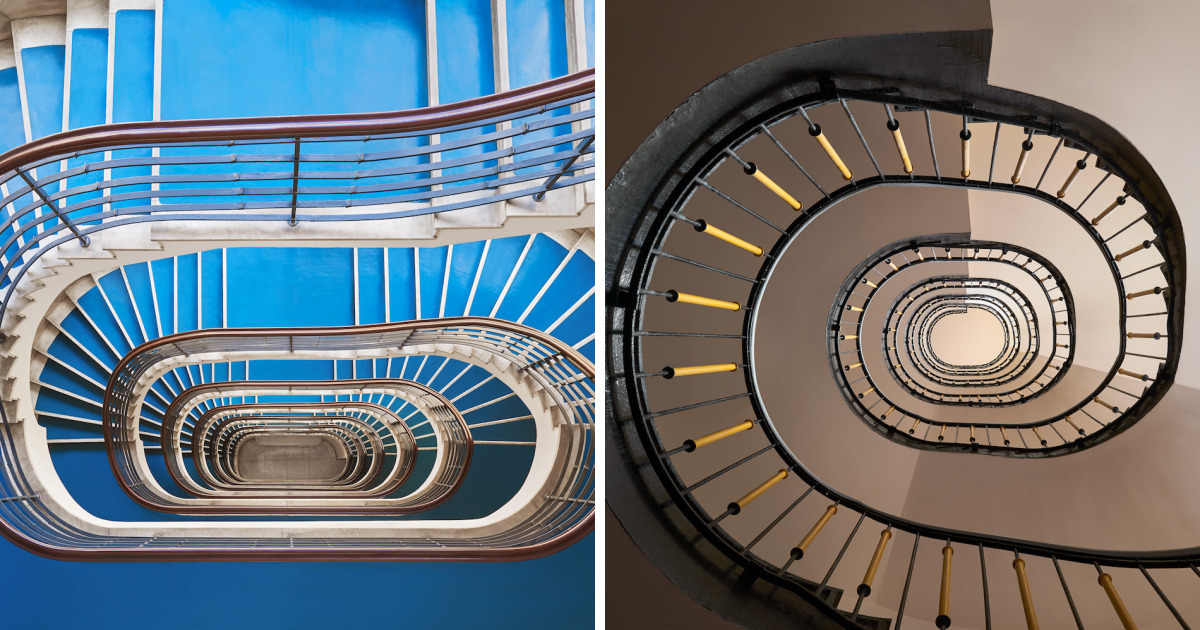
Budapest has a funny habit: it hides its best stories in the places you’d normally speed-walk through while
muttering, “Sorrywrong building.” I’m talking about staircases. Specifically, spiral staircasesthe city’s
unofficial time machines disguised as emergency exits.
You don’t just climb a Budapest spiral staircase. You orbit history. One step is Baroque drama, the next is
Habsburg elegance, thensurprisean Art Nouveau ironwork flourish that makes you question whether you’ve been
living your life with enough decorative bees and ceramic tiles. (Spoiler: you haven’t.)
In a city built from layersBuda and Pest stitched together by bridges and centuriesspiral staircases are the
tight, vertical bookmarks. They compress Budapest into a corkscrew: old stone, polished brass, chipped plaster,
and the soft echo of footsteps that sound suspiciously like they’re wearing better shoes than you.
Why Spiral Staircases Feel Like Time Machines (And Why Budapest Is Basically Their Headquarters)
Spiral staircases do two things extremely well: they save space and they create drama. Budapest loves both.
Space is precious in dense historic neighborhoodsespecially in older residential buildings built around
courtyardswhile drama is practically a municipal service.
But “time machine” isn’t just poetic fluff. Spirals reveal how the city evolved. In sacred buildings, they’re
purposeful and hushed, funneling pilgrims up to domes and towers. In civic monuments, they’re ceremonialdesigned
to make leaders feel heroic even when they’re just trying not to trip. In old apartment houses, they’re intimate
and everyday, where laundry, gossip, and history share the same railing.
Photographing them is like photographing the city’s heartbeat. You’re not capturing a postcard skyline. You’re
catching the mechanics of Budapest: how people moved, who was allowed where, what a building wanted you
to feel as you rose from street-level chaos to rooftop calm.
The Spiral Staircase Safari: Where Budapest Twists Best
Budapest has spirals everywheresome famous, some gloriously un-famous. Here are the places where I found the
most “hidden time machine” energy, plus what each one taught my camera (and my knees).
1) St. Stephen’s Basilica: A Spiral That Earns Its Skyline Bragging Rights
If you want a spiral staircase with a mission statement, start at St. Stephen’s Basilica. The dome climb is
iconic for a reason: you rise into the belly of a landmark and emerge to panoramic views that make you forgive
every questionable decision you’ve ever made about comfortable footwear.
The climb (or partial elevator + stairs combo, depending on your relationship with cardio) includes a long,
coiling ascent that turns the light into a moving target. One moment, your frame is all shadowy geometry; the
next, it’s bright highlights bouncing off painted surfaces and railings. It’s also one of the best examples of
how Budapest uses height symbolicallywhere church and state share the skyline in a deliberate visual balance.
Photography note: the basilica spiral is a masterclass in rhythm. The repetition of steps and rails creates a
hypnotic patternperfect for leading lines, especially if you shoot from above and let the curve pull the viewer
inward like a polite architectural whirlpool.
2) The Hungarian Parliament Building: Where Staircases Dress for a State Occasion
Some staircases whisper. Parliament staircases give speeches.
The Hungarian Parliament Building is one of those places where the staircase isn’t just a routeit’s part of the
performance. Visitor routes highlight ornate stairways and corridors with lavish decoration and carefully staged
views. It’s not subtle. It’s not trying to be subtle. It’s a building that essentially says, “Welcome. Please be
impressed. Also, look at the ceiling.”
The fun part, photographically, is the contrast: monumental space with intimate details. Shoot wide to capture
scale, then go tight on the patternsstained glass, gilding, sculpted figures, the kind of craftsmanship that
makes your phone’s portrait mode feel emotionally inadequate.
Practical tip: interiors like this punish sloppy exposure. If you’re handholding, stabilize against a column or
railing (gentlythis is history, not a gym). Look for moments when groups move out of frame so the staircase can
breathe.
3) Castle Hill and Fisherman’s Bastion: Spirals With a View (And Tourists Who Love Them)
If you’re chasing that fairytale Budapest lookwhite stone, turrets, panoramic Danube viewsCastle Hill delivers.
Fisherman’s Bastion, with its terraces and towers, is a magnet for photographers for one simple reason: it frames
the city like a cinematic establishing shot.
But don’t ignore the stairs themselves. In and around Castle Hill, you’ll find tighter stairways and tower
climbsoften narrow, sometimes steep, always atmospheric. These are the spirals that feel medieval even when
they’re part of later historicist fantasy architecture. They’re also the spirals where you practice patience,
because you’re rarely alone. (Consider it part of the local culture: sharing space while pretending you’re not
sharing space.)
Composition trick: use people intentionally. A single figure halfway up a spiral gives scale and story. A swarm
of matching puffer jackets gives… proof that you visited a popular place.
4) Art Nouveau Budapest: When Ironwork Starts Showing Off
Budapest’s design scene has a signature flavorespecially around the late 19th and early 20th centurieswhen
Art Nouveau and local “national style” ideas began to bloom. This is where staircases become jewelry.
You’ll see it in lavish hotels and landmark buildings near the Danube, where stained glass and ironwork turn
stairwells into galleries. Budapest’s architectural reputation even spills into film and fashion aesthetics;
it’s a city that looks expensive on camera, which is why it’s been used as a stand-in for other European capitals
in big productions.
If your goal is “spiral staircase as sculpture,” look for these elements:
- Curved wrought iron railings with floral or folk-inspired motifs
- Stained glass panels that paint the steps with colored light
- Mosaic floors that echo the spiral’s rhythm
- Ceramic details and decorative tilesBudapest loves them
This is also where your sense of humor helps. You will see details so ornate you’ll wonder if the staircase was
designed by someone who feared emptiness the way other people fear spiders.
5) The Szabó Ervin Library: A Spiral Staircase That Feels Like a Secret Level
Want a spiral staircase that feels like it belongs in a novel where someone finds a clue inside a book that
smells like 1931? The Metropolitan Ervin Szabó Library is the place.
This is the kind of interior that makes you lower your voice automatically. And then you spot it: a spiral
staircase leading up to a gallery in a richly decorated rooman architectural flourish that turns “I’m just
returning a book” into “I’m auditioning for a period drama.”
For photos, you’ll work with warm, low light and a lot of dark wood tones. Embrace it. Shoot for mood. Let the
shadows do their thing. This isn’t a bright, airy Scandinavian stairwellit’s Budapest saying, “Please respect
the atmosphere.”
6) Courtyard Apartment Buildings: The Everyday Spirals (And the Real Time Travel)
The most moving staircases aren’t always the famous ones. Budapest’s historic residential buildings often hide
their best geometry behind an unassuming entrancethen suddenly you’re in a courtyard with multiple levels of
balconies and staircases wrapping upward like a practical, lived-in amphitheater.
These stairwells show how people actually lived: the “main” route versus service routes, the way courtyards
bring light into deep buildings, the wear patterns where generations have taken the same turn at the same landing.
Photography is trickier here because these are real homes, not museum sets. The rule is simple:
don’t be weird. If a door is locked, it’s locked. If someone lives there, they’re not a prop.
But when you find a public or openly accessible passage, the rewards are hugebecause these staircases tell
Budapest’s story from the inside out.
How I Photograph Spirals Without Making Them Look Like Every Other Spiral on the Internet
Spiral staircases are popular subjects, which means the internet is full of “spiral for the sake of spiral.”
To make yours feel like Budapest (not just “geometry content”), you need intent.
Start with the question: what is this staircase for?
- Sacred spirals feel focused and ascendantshoot upward, emphasize height and light.
- Civic spirals feel theatricalinclude decorative detail, symmetry, and scale cues.
- Residential spirals feel intimateinclude texture, wear, and small human hints (without invading privacy).
Use these composition moves (they work absurdly well)
- Top-down vortex: stand above, center the curve, and let the staircase become a whirlpool.
- Side sweep: shoot at an angle to exaggerate the arc and make the railing your leading line.
- One human for scale: a single person adds story; a crowd adds chaos. Choose wisely.
- Frame the light: stained glass and windows are your spotlight operatorswait for the best cue.
Timing is everything (because tourists have excellent cardio)
Early morning is your best friend. Even busy places feel calmer, and you’re more likely to catch clean lines
without a procession of selfie sticks. If you can’t do mornings, aim for “in-between hours”when tour groups
rotate or weather shifts people indoors.
Budapest Staircase Etiquette: How Not to Become a Cautionary Tale
Staircase photography is surprisingly easy to do badlynot artistically, but socially. Budapest is welcoming,
but like any city, it has real people living real lives behind those gorgeous doors.
- Follow rules and signs in monuments, churches, and government buildings.
- Respect private propertycourtyards and stairwells may look public, but often aren’t.
- Keep gear minimal; big tripods and flash setups can be disruptive and may be prohibited.
- Be quick, be quiet, and if someone looks uncomfortable, leave.
Also: if you’re photographing in a place that feels like a library (because it is), let your camera clicks be
polite. This is not the moment for “machine-gun shutter confidence.”
What the Spirals Taught Me About Budapest
Budapest is often described through its big iconsParliament on the river, domes on the skyline, bridges that
look best at blue hour when everything is lit like a jewelry store. But spiral staircases are the city’s quiet
proof that history isn’t flat.
In one day, you can climb through layers of identity: the city’s religious symbolism, its state grandeur, its
imperial past, its design experimentation, and its everyday resilience. And you can do it all in the same motion:
step, turn, step, turnlike winding a clock that still runs.
That’s why I call them hidden time machines. Not because they teleport you. Because they remind you that time is
already herestacked above you, beneath you, and curling around you in stone and iron.
Extra Field Notes: From My Budapest Staircase Diary
I started the week thinking I’d collect “cool spiral shots.” I ended it with a camera roll full of staircases
and a brain full of oddly specific memorieslike how Budapest sounds when it echoes inside a stairwell.
The first morning, I went earlybecause photographers are basically vampires with better luggage. The city was
still stretching awake. In the basilica climb, the air felt cooler and drier than outside, and every footstep
turned into a soft metallic tap that bounced ahead of me like a scout. The spiral tightened, then loosened, then
tightened again, and I realized I was photographing more than a shape. I was photographing effort. A staircase
is honest about what it asks from you.
Later, near the river, I watched the city’s “grand” side do what it does best: look spectacular without
apologizing. Parliament and its ceremonial spaces felt like architecture wearing formalwear. Even when you’re
just a visitor, the building makes you move differentlyslower, quieter, like you don’t want to scuff the
narrative. I tried a few frames where the stairs were the star, then a few where the stairs were a runway for
light and shadow. The best shot wasn’t the most symmetrical. It was the one where a single person paused,
hand on the rail, as if the building had told them a secret mid-climb.
On Castle Hill, I learned the opposite lesson: sometimes the story is the crowd. Fisherman’s Bastion was
bustling, and I stopped fighting it. I let the movement become part of the patternpeople rising and falling,
the city behind them, the Danube turning everything into a reflective strip of calm. The staircase wasn’t only a
subject; it was a stage.
My favorite moment, though, was inside a quieter interior where the light felt amber and the room smelled faintly
of old paper and polished wood. The spiral there wasn’t monumental. It was almost playfula curl up to a gallery,
a gentle invitation to look at the room from a different height. I took fewer photos and spent more time just
watching how the curve changed the space. It made the room feel like it had a heartbeat, like it was alive in
the way only well-used places are.
By the end, I stopped hunting “perfect spirals.” I started hunting “true spirals.” The ones with worn steps,
little chips in the paint, a handprint shine on the railing where thousands of palms had steadied themselves.
Those were the real time machinesnot the fanciest ones, but the ones that quietly proved Budapest has been
moving, adapting, and climbing for a long, long time.
Conclusion
If you visit Budapest and only photograph the skyline, you’ll go home with beautiful images. But if you
photograph its spiral staircases, you’ll go home with something rarer: a sense of how the city works from the
insidehow it leads you upward through faith, power, art, and ordinary life, one turn at a time.
So yes, chase the river views. But also chase the stairwells. Budapest’s best stories don’t always hang on walls.
Sometimes they’re under your feetcurling upward, waiting for you to step in.